
TL;DR

Get everyday essentials delivered free with Prime
- Fast, free delivery on millions of items
- Prime Video, Amazon Music and more included
- Member-only deals all year
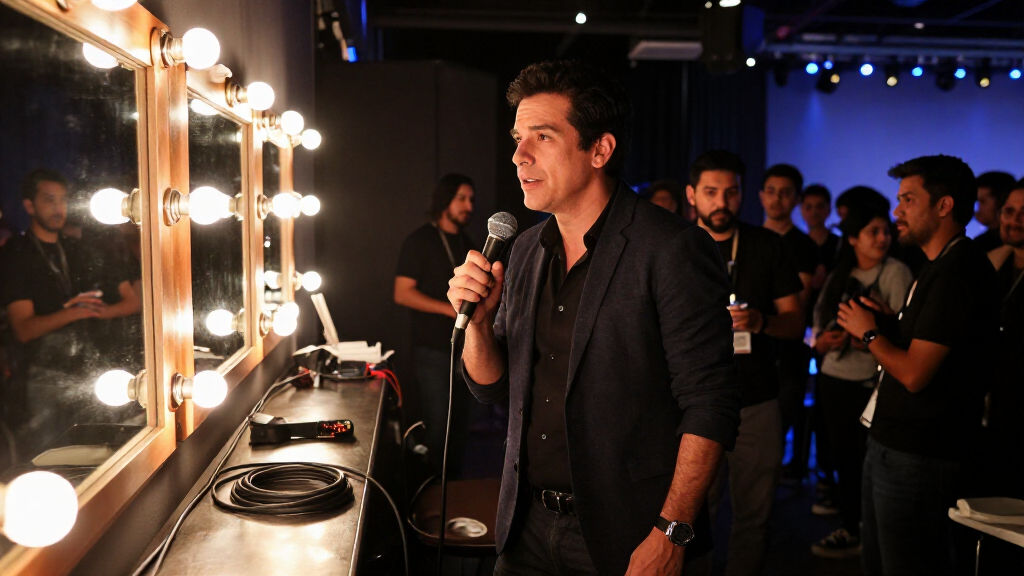
Guillermo Rodriguez, Jimmy Kimmel’s longtime sidekick, has become an unexpected fan favorite on the current season of Dancing With the Stars, dancing with Witney Carson. Psychology Today suggests his appeal may reflect both his perceived authenticity and “basking in reflected glory,” a psychological effect in which fans share in a favorite’s success.
Guillermo Rodriguez, the Jimmy Kimmel sidekick competing with professional dancer Witney Carson on the current season of Dancing With the Stars, has become an unexpected audience favorite despite low judges’ scores. Psychology Today argues that his appeal may stem from his perceived authenticity and underdog status, as well as a social-psychology effect called basking in reflected glory, or BIRG, in which fans take emotional satisfaction from a person’s success.
Rodriguez’s reach as a public figure predates the dance competition. Psychology Today describes how he moved from working as a security guard to appearing as a quirky onstage sidekick for Jimmy Kimmel, building a following around his relaxed manner and willingness not to take himself too seriously. The article says viewers respond to what they see as his lack of pretense and comfort with being himself.
His performance on the show has added an underdog narrative. The report says Rodriguez has acknowledged that dancing is not his strength, while continuing in a competition with more technically skilled performers. After one dance, he opened his shirt to reveal the words “Dancing 4 The People”, a gesture the article interprets as crediting fans’ enthusiasm rather than his own dancing ability for his progress.
The report points to his Samba with Carson as a recent example of the gap between judges’ scores and audience support: the pair received 13 out of 30 from the judges, yet remained in the competition after viewer voting. The report does not provide a vote count or a comparison with other contestants. It says judges also voiced enthusiasm: Derek Hough said, “Just like everybody else, I’m obsessed with you,” while Bruno Tonioli said, “I understand why you’re becoming a national obsession.” The show’s official Instagram account praised the pair’s Samba, writing, “We couldn’t be more obsessed with Guillermo and Witney’s Samba.”
Audience psychology · DWTS
How Guillermo Rodriguez Found a Place in the Spotlight
A familiar TV sidekick, an unlikely dance run and an audience that keeps cheering. Psychology Today explores how authenticity, underdog appeal and shared excitement may help explain Guillermo Rodriguez’s rise as a fan favorite.
01 / The appeal
What viewers may see in Guillermo
His appeal has grown from a public persona built over years and a competition role that makes persistence part of the story.
01 · Familiar face
From security guard to sidekick
Rodriguez became known alongside Jimmy Kimmel, bringing an existing audience into the dance competition.
02 · Perceived sincerity
Comfortable being himself
Psychology Today points to his relaxed humor and lack of pretense as qualities viewers may find appealing.
03 · Underdog story
Persistence over polish
He has acknowledged that dancing is not his strength, yet continues alongside more technically experienced performers.
02 / Scores & support
One Samba, two kinds of response
Judges’ scores and audience voting both shape who advances. The report confirms the pair returned, but supplies no vote totals or contestant comparisons.
Guillermo Rodriguez + Witney Carson
Their Samba score was low, yet the pair remained in the competition after viewer voting. That establishes advancement from the round, not the size or cause of their support.
03 / On the record
Enthusiasm from judges and the show
The pair’s Samba drew praise even as judges’ scoring remained a separate part of the competition.
“Just like everybody else, I’m obsessed with you.”
Derek Hough · Judge, as quoted by Psychology Today
“I understand why you’re becoming a national obsession.”
Bruno Tonioli · Judge, as quoted by Psychology Today
“We couldn’t be more obsessed with Guillermo and Witney’s Samba.”
Official Dancing With the Stars Instagram
04 / The psychology
How reflected glory can work
BIRG offers a framework for thinking about fan identification. It does not prove what motivated Rodriguez’s voters.
Pick a favorite
A viewer identifies with a person or team they want to see succeed.
Follow the effort
Progress, humor and persistence make the competition personally engaging.
Share the win
Basking in reflected glory describes feeling good through a favorite’s success.
Keep it in context
It is one possible explanation, alongside personality and an existing fan base.
05 / What we know
Reported facts—and open questions
The available account supports a few clear points. It leaves important details about voting and the rest of the season unresolved.
Reported in the account
- The Samba earned 13 out of 30 from the judges.
- Viewer voting kept Rodriguez and Carson in the competition for that round.
- Psychology Today discusses authenticity, underdog appeal and BIRG as possible factors.
Still unknown
- How many viewers voted, or how his vote total compared with others.
- Whether BIRG motivated any particular viewer’s vote.
- How long the pair will remain, or whether they will reach the final.
Next round
The story continues performance by performance.
New dances, judges’ evaluations and viewer votes will determine who advances. The report gives no next episode date, future score or final placement. The possibility of a mirror-ball run remains an open question.
How Fan Votes Shape His Run
Rodriguez’s continued presence highlights the role of viewer voting in a televised competition where judges’ scores are only one part of the outcome. A low score does not by itself determine who leaves; audience support can keep a contestant in the field. In this case, the article says fans voted in sufficient numbers for Rodriguez and Carson to return after the Samba episode, though it gives no figures that would show how large or decisive their support was.
Psychology Today offers BIRG as one possible explanation for why the run resonates. Social psychologist Robert Cialdini and colleagues introduced the term in a 1976 study of football fans. The concept describes how people may feel better about themselves by identifying publicly with someone or a team that is succeeding. Applied to Rodriguez, it suggests that fans can enjoy the progress of a contestant they support as a shared emotional win, even though they did not cause it.
The explanation is a psychological interpretation, not a measurement of why individual viewers voted. The report also emphasizes more direct elements of his appeal: viewers may enjoy his humor, his perceived sincerity, and the challenge of watching a less experienced dancer persist. Together, those factors help explain why an entertainment contest can become a point of identification for audiences beyond the scores themselves.
Products Worth Considering

TCL T7 Series 85-Inch 4K 144Hz QLED Smart Google TV

Levoit Core 600S-P Smart Air Purifier for Large Rooms

Samsung 85-Inch QN70H Neo QLED 4K Smart TV (2026)
As an affiliate, we earn on qualifying purchases.
From Kimmel Sidekick to Contestant
Rodriguez became familiar to television audiences through his appearances alongside Jimmy Kimmel, first as a security guard and later as an onstage sidekick. Psychology Today says that existing visibility gave him a fan base before his Dancing With the Stars appearance. The competition did not create his public persona from scratch; it placed a known figure in a setting where his skills could be compared directly with professional dancers and other contestants.
The term basking in reflected glory comes from work published by Cialdini and colleagues in 1976. A later study by C. R. Snyder, Mary Lassegard and Carol Ford, published in 1986, examined how people distance themselves after group success or failure. Psychology Today connects that opposite response, known as cutting off reflected failure, to the way fans may withdraw from a favorite after a loss. These studies offer a framework for understanding fan identification; they do not establish what motivated each person voting for Rodriguez.
In the competition, the audience’s enthusiasm has drawn attention alongside his scores. The psychology article describes viewers praising his lack of pretense and others objecting that he should leave because of his dancing. That mix reflects a contest in which fans can value entertainment, personality and perseverance as well as technical performance.
“Just like everybody else, I’m obsessed with you.”
— Derek Hough, Dancing With the Stars judge, as quoted in Psychology Today
What Drives the Audience Support
Neither the report nor the quoted comments establish how many viewers voted for Rodriguez, how his vote total compared with other contestants, or what proportion of his supporters are motivated by BIRG. The psychological account is presented as a possible explanation, alongside his existing fan base and perceived authenticity, rather than as a proven account of individual voting choices.
The supplied report also describes accusations from some viewers that the competition is rigged, but provides no evidence supporting those allegations. Other viewers have argued that Rodriguez’s dancing is not strong enough to merit staying. The available information does not settle either dispute, and a single judges’ score cannot establish how the voting process works or whether it was manipulated.
It is also unknown how long Rodriguez and Carson will remain in the competition or whether fan support will carry them to the final. The report poses a possible run to the mirror ball as an open question, not a confirmed outcome.
The Next Voting Round
The immediate test is whether Rodriguez and Carson can remain in the competition as new performances, judges’ scores and viewer votes determine who advances. The report does not state a specific next episode date or provide a future score, vote result or final placement. Their return after the Samba episode confirms only that they advanced from that round.
As the season continues, audiences will be able to see whether enthusiasm for Rodriguez persists alongside the judges’ evaluations. Psychology Today’s explanation offers one way to interpret that support, but the next results—not the concept alone—will show whether it is enough to keep the pair on the show.
Key Questions
Who is Guillermo Rodriguez?
Guillermo Rodriguez is a Jimmy Kimmel sidekick who became known to television audiences after working as a security guard and later appearing onstage with Kimmel. He is competing on Dancing With the Stars with professional partner Witney Carson.
Why has Rodriguez attracted so much support?
Psychology Today points to his perceived authenticity, humor and underdog position as possible reasons. It also suggests that some fans may enjoy his success through BIRG, or basking in reflected glory. The report does not establish the motives of individual voters.
What does BIRG mean?
BIRG stands for “basking in reflected glory.” It describes the tendency to feel connected to, or take pride in, the success of someone or a group one supports. Psychology Today links the concept to social-psychology research by Robert Cialdini and colleagues.
How did Rodriguez and Carson do in the Samba episode?
According to Psychology Today, the pair received 13 out of 30 from the judges for their Samba but advanced after viewer voting. The report does not give their vote count or a comparison with other contestants.
Has the show been proven to be rigged?
No evidence of rigging is provided in the report. It says some viewers have made allegations, but those remain unsubstantiated claims in the information available.
Source: psychologytoday.com