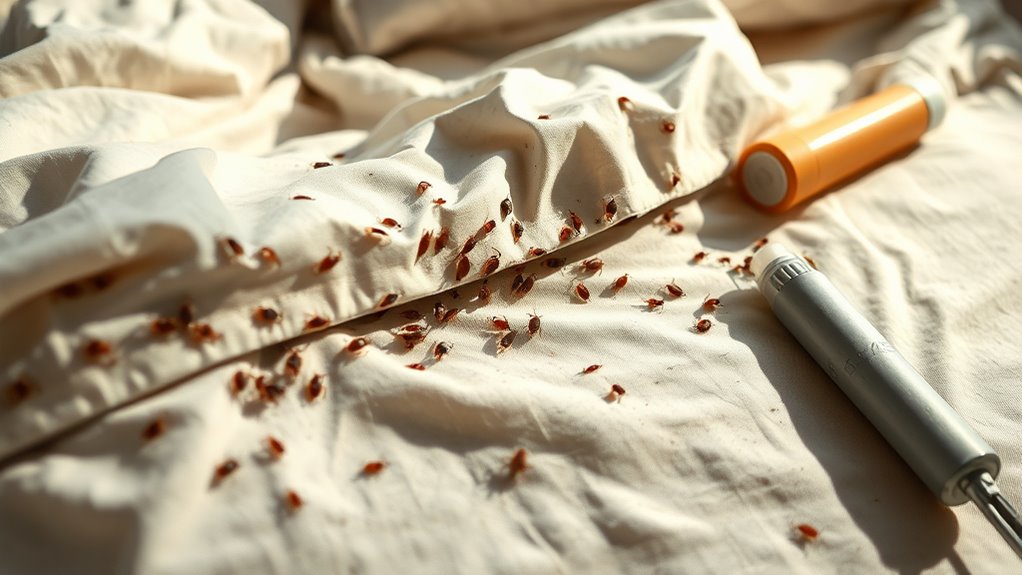

If you’re facing a bed bug nightmare, look for signs like rusty blood stains, dark fecal spots, shed skins, tiny eggs, or a musty odor. Check your mattress, seams, and furniture cracks regularly, and take immediate DIY steps like vacuuming, washing bedding in hot water, and using mattress encasements. To truly eliminate the infestation, consider professional help if signs persist—stay tuned for detailed strategies to reclaim your space.
Key Takeaways
- Look for signs like blood stains, dark fecal spots, shed skins, tiny eggs, and a musty odor around your mattress and furniture.
- Inspect seams, cracks, and hidden spots regularly using a flashlight to detect early bed bug presence.
- Identify bites by noticing red, swollen, or itchy skin, often in lines or clusters on exposed areas after sleep.
- Remove bed bugs by vacuuming thoroughly, washing bedding in hot water, applying steam, and encasing mattresses.
- Seek professional pest control if DIY methods fail or infestation spreads, and minimize clutter to reduce hiding spots.

Utopia Bedding Zippered Mattress Encasement Full – 100% Waterproof and Bed Bug Proof Mattress Protector – Absorbent, Six-Sided Mattress Cover
360° Coverage Protection – Fits 54 inches by 75 inches full size mattress up to 13 inches deep,…
As an affiliate, we earn on qualifying purchases.
As an affiliate, we earn on qualifying purchases.
Recognizing the Signs of a Bed Bug Infestation
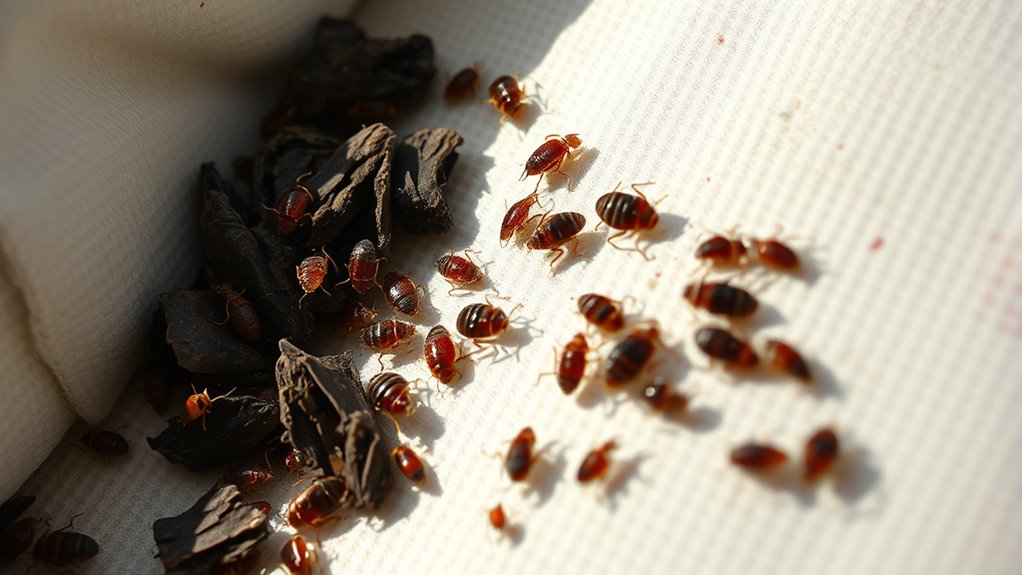
Recognizing a bed bug infestation begins with noticing telltale signs on your bedding and furniture. Look for small, rusty or reddish blood stains on sheets, mattresses, or nearby furniture caused by crushed bugs. Dark fecal spots that bleed on fabric, often found along mattress seams or furniture joints, are another clue. You might also spot shed exoskeletons—pale yellow skins left behind as they grow. It’s common to find tiny, pale yellow eggs in mattress crevices or furniture cracks. Additionally, a faint, sweet musty odor can indicate a heavy infestation. Most importantly, wake up with itchy, swollen red bites, often clustered or aligned on exposed skin like your face, neck, arms, or hands. Recognizing these signs early helps you take swift action. Environmental factors, such as lighting and contrast ratios in your environment, can influence how well you notice these signs, especially in poorly lit areas. Being aware of bed bug behavior can also aid in detection and prevention efforts. Moreover, understanding infestation patterns helps anticipate where bugs may hide and proliferate, making inspections more effective. Paying attention to sanitation and clutter around your home can further reduce hiding spots and discourage infestations.

ESCO LITE UV Flashlight Black Light, 51 LED 395 nM Ultraviolet Blacklight Detector for Dog Urine, Pet Stains and Bed Bug
Efficient Pet Urine & Stain Detector Blacklight Flashlight: The upgraded ultraviolet light LED can show food stains and…
As an affiliate, we earn on qualifying purchases.
As an affiliate, we earn on qualifying purchases.
Common Characteristics and Biology of Bed Bugs
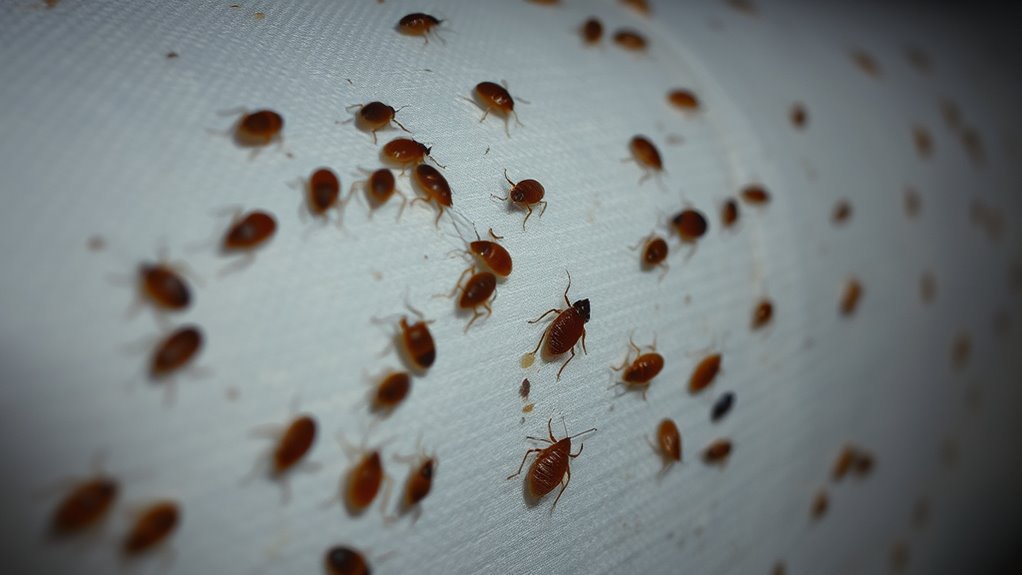
You’ll notice that bed bugs are small, flat, and reddish-brown, about the size of an apple seed. They hide in cracks, mattress seams, and furniture during the day, making them hard to spot. As they grow, they shed their skins and lay tiny eggs in hidden spots, continuing their lifecycle unnoticed. Understanding their biology and behavior can help in effectively identifying and eliminating infestations. Additionally, knowing their study techniques can aid in developing effective strategies for pest control efforts. Familiarity with their movement patterns can also improve detection and treatment success. Recognizing their typical feeding habits and preferred hiding spots allows for more targeted and successful eradication measures. Regular inspection and understanding of their hiding places are crucial for early detection and control.
Bed Bug Appearance
Bed bugs are small, reddish-brown insects with a flat, oval-shaped body about the size of an apple seed. Their size allows them to hide in tiny cracks and crevices around your bed and furniture. When viewed closely, you’ll notice they have six legs and no wings, but they are strong climbers. Bed bugs undergo several molts, leaving behind shed skins that are pale yellow and resemble tiny shells. Their eggs are tiny, about 1mm, and pale yellow, often hidden in mattress seams or furniture joints. These pests are nocturnal feeders, injecting an anesthetic and anticoagulant to make feeding painless. Their appearance and biology make them elusive, but understanding their small size and flat bodies helps you recognize them during an infestation. Their ability to hide in tiny spaces makes detection challenging without careful inspection. Additionally, their flat bodies enable them to squeeze into very narrow areas, complicating eradication efforts.
Hiding and Growth Habits
Because of their small size and flat bodies, bed bugs are expert hiders, often slipping into tiny cracks and crevices around your sleeping area. They tend to hide in mattress seams, box springs, bed frames, and headboards during the day, emerging at night to feed. As they grow, bed bugs molt, leaving behind shed skins and pale yellow eggs in hidden spots. They can also hide behind wallpaper, electrical outlets, and furniture joints. Bed bugs are nocturnal and feed silently, injecting an anesthetic and anticoagulant to numb and thin your blood. Their ability to hide and their rapid growth through molting make infestations challenging to detect early. Understanding their hiding and growth habits helps you identify and eliminate them more effectively. Recognizing the cultural symbols associated with resilience can also inspire persistence in your pest control efforts. Additionally, their small size and hiding strategies allow them to evade many common detection methods, making early intervention crucial. Being aware of their biological traits can also aid in choosing the most effective treatment methods.

Hot Shot Bed Bug Killer Aerosol, Bed Bug Treatment, 17.5 oz
This product kills bed bugs and bed bug eggs, as well as crawling insects, brown dog ticks, fleas,…
As an affiliate, we earn on qualifying purchases.
As an affiliate, we earn on qualifying purchases.
Identifying Bed Bug Bites and Skin Reactions

You might notice red, swollen bites that often appear in clusters or lines on your exposed skin after sleeping. The way your skin reacts can vary widely, from no signs at all to intense itching or allergic responses. Recognizing these patterns and reactions can help you identify if bed bugs are the culprit. Identifying bed bug symptoms early can prevent further infestation and discomfort. Additionally, observing water-related signs, such as small blood spots on bedding or dark spots from droppings, can further confirm their presence. Monitoring infestation indicators like shed skins or tiny eggs can also aid in early detection. Being aware of lifestyle changes that can reduce the risk of infestation, such as inspecting secondhand furniture, is also beneficial. Regularly checking your sleeping areas and understanding common signs can help prevent a severe problem from developing.
Bite Appearance Patterns
Have you ever noticed how bed bug bites tend to appear in specific patterns on your skin? These patterns can help you identify an infestation early. Bed bug bites often show up as small, red, inflamed spots that may cluster or form lines. They typically appear on exposed skin areas like the face, neck, arms, and hands. Sometimes, bites align in a linear pattern, resembling a trail, or cluster densely. Here’s a quick overview:
| Pattern Type | Description |
|---|---|
| Linear | Bites form a straight line, indicating repeated feeding. |
| Clustered | Multiple bites grouped closely together. |
| Random | Bites scattered without clear pattern. |
Recognizing these patterns helps differentiate bed bug bites from other skin reactions.
Skin Reaction Variability
Skin reactions to bed bug bites can vary widely from person to person, making it challenging to identify an infestation based solely on appearance. Some people don’t react at all, while others develop intense itching, swelling, or large welts. Your response depends on allergies, skin sensitivity, or previous exposure. To better understand your reactions:
- Some may see no visible signs, even after bites.
- Others develop small, red, itchy bumps that may cluster or line up.
- Severe allergic reactions can cause painful swelling or large welts.
- The timing of reactions varies: bites may appear days after exposure or immediately.
- Regularly inspecting your bedding and furniture can help detect air purifier maintenance and other signs early.
This variability makes detection tricky. Pay attention to your skin’s response and look for additional signs of bed bugs to confirm an infestation.

FEPPO Mattress Vacuum Cleaner, 16Kpa Bed Vacuum Cleaner with 253.7nm UV-C Light, 140°F Heat, HEPA Filter & Ultrasonic, Versatile Handheld Vacuums for Bed, Sofa, Couch, Crib(Corded, 500W)
【High-Efficiency Deep Cleaning】Our UV mattress vacuum cleaner features a powerful 500W motor, providing 16kPa of strong suction and…
As an affiliate, we earn on qualifying purchases.
As an affiliate, we earn on qualifying purchases.
Effective DIY Strategies for Bed Bug Removal
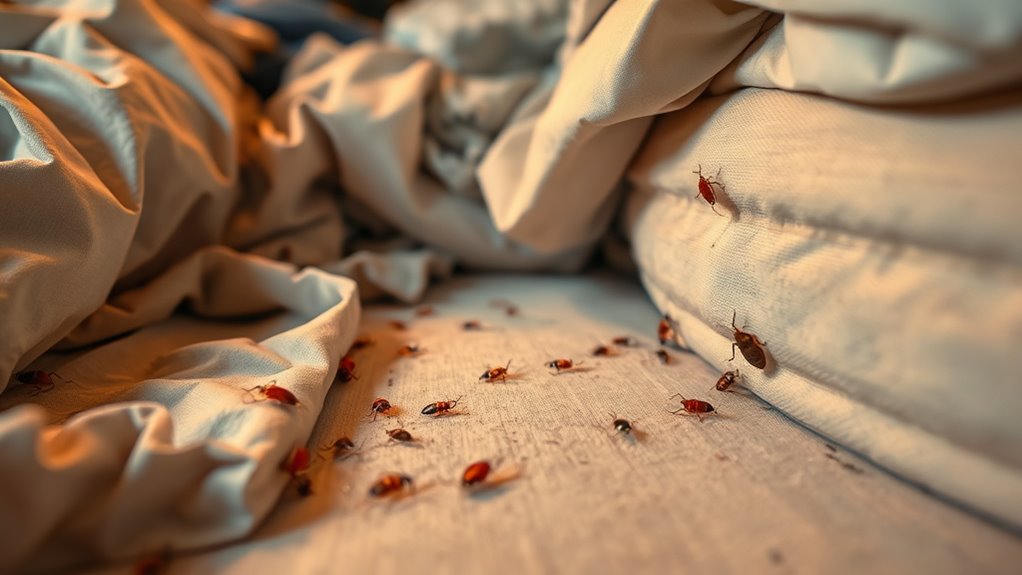
Effective DIY strategies for bed bug removal start with thorough cleaning and inspection. Begin by vacuuming your mattress, bed frame, furniture, and surrounding areas to remove bugs, eggs, and shed skins. Dispose of vacuum contents immediately in a sealed bag. Next, wash all bedding, clothing, and fabrics in hot water (at least 120°F) and dry on high heat to kill remaining bugs and eggs. Use mattress encasements designed to trap bed bugs inside and prevent new ones from entering. Apply steam treatments to mattress seams, furniture joints, and cracks—heat above 120°F effectively kills bugs. Regularly inspect your sleeping area and keep clutter minimal to reduce hiding spots, making detection easier. Consistency is key to preventing a full-blown infestation.
The Importance of Regular Inspection and Clutter Reduction

Regular inspection and reducing clutter are essential steps in maintaining control over a bed bug infestation. By regularly checking your mattress, bed frame, and nearby furniture, you catch early signs before they spread. Clutter provides hiding spots, making detection and treatment more difficult, so minimizing it is vital.
Regularly inspect your bed and furniture, and keep clutter minimized to prevent a bed bug infestation.
Here are four tips to stay vigilant:
- Inspect bedding, seams, and furniture edges weekly for bugs or blood stains.
- Clear clutter from around your bed and furniture to limit hiding spots.
- Use a flashlight to check dark corners and cracks thoroughly.
- Keep items off the floor and store belongings in sealed containers to prevent spreading.
Consistent inspection and clutter reduction make it easier to identify and address bed bugs quickly.
When to Seek Professional Pest Control Assistance
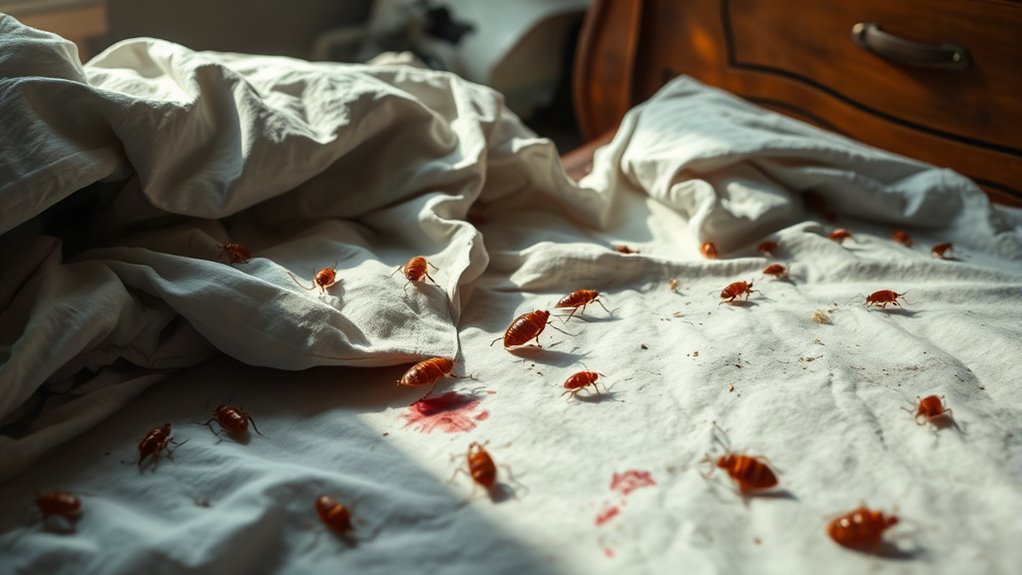
Knowing when to call in a professional pest control service is crucial to effectively eliminate a bed bug infestation. If you’ve tried DIY methods like vacuuming, washing bedding, and encasements without success after a few weeks, it’s time to seek expert help. Heavy infestations that spread across multiple rooms or involve hidden hiding spots require specialized treatments, such as heat or chemical applications, which only professionals can safely and effectively perform. Persistent bites or a strong, musty odor indicate a severe infestation that’s unlikely to resolve on its own. Additionally, if you find shed skins, eggs, or blood stains despite your efforts, professionals can accurately assess and target the problem. Ignoring these signs risks prolonged discomfort and further spreading of bed bugs.
Preventative Measures to Avoid Re-Infestation

Preventing a bed bug re-infestation requires vigilance and proactive steps to eliminate potential hiding spots. You need to stay alert and regularly inspect your home to catch any signs early. Here are four key measures:
- Reduce clutter around your sleeping areas to limit hiding places and make inspections easier.
- Encase mattresses and box springs with specially designed covers to trap any remaining bugs and prevent new ones from hiding inside.
- Vacuum thoroughly and often, especially around beds, furniture, and cracks, to remove bugs and eggs.
- Inspect secondhand furniture carefully before bringing it into your home, and consider heat-treating or cleaning items to kill hidden pests.
Managing Health Risks and Bite Reactions
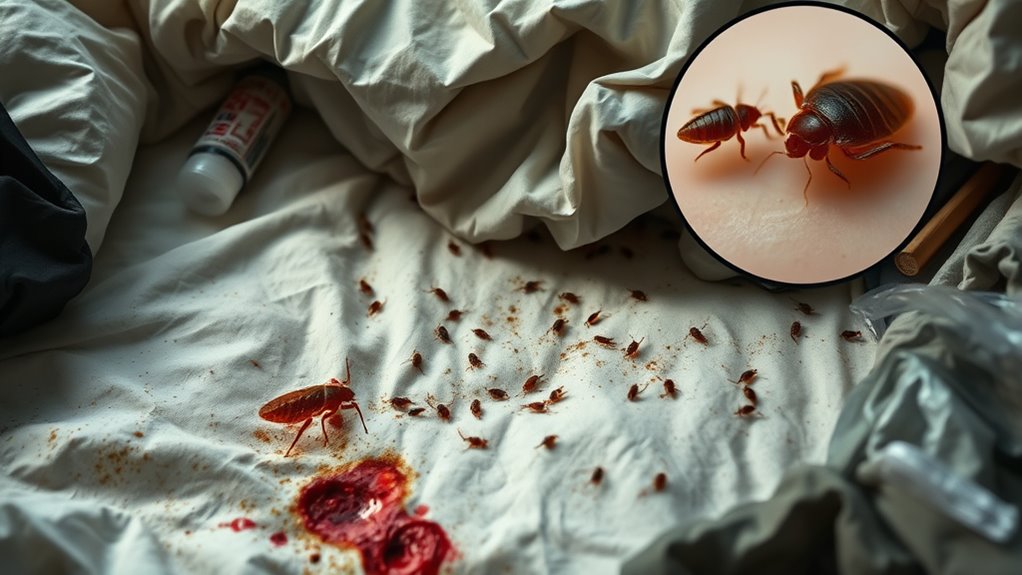
Managing health risks and bite reactions is essential because, although bed bugs don’t transmit diseases, their bites can cause discomfort and health problems. You may experience itching, swelling, or allergic reactions, which vary from mild to severe. To reduce risks, keep skin protected during sleep and avoid scratching, which can lead to infections. Use topical creams or antihistamines to ease symptoms, and seek medical help for large welts or persistent issues. The table below highlights key reactions and precautions:
| Reaction Type | Recommended Action |
|---|---|
| Mild itching and swelling | Apply antihistamine creams or lotions |
| Severe allergic response | Seek immediate medical attention |
| Secondary infections | Keep bites clean and monitor healing |
Frequently Asked Questions
How Long Can Bed Bugs Live Without Feeding?
You might be surprised, but bed bugs can live for up to a year without feeding, especially in cooler environments. During this time, they hide in cracks and crevices, waiting patiently for your next sleep cycle. To eliminate them effectively, you need to focus on thorough cleaning, vacuuming, and heat treatments, as these methods can kill both active bugs and eggs, reducing their chances of survival during their long fasting periods.
Are Bed Bugs More Active at Night or During the Day?
You should know that bed bugs are more active at night when you’re sleeping. They come out to feed on exposed skin, such as your face, neck, arms, and hands. During the day, they hide in cracks, crevices, and furniture, staying out of sight. Their nocturnal activity makes it tricky to spot them, so being vigilant and inspecting your sleeping area regularly can help catch an infestation early.
Can Bed Bugs Infest Items Like Luggage or Electronics?
Think of your luggage and electronics as hidden treasure chests in a pirate’s cove. Bed bugs can indeed infest these items, hiding like secret pirates in cracks and seams. They hitch rides on your belongings, especially after travel, and settle in dark corners of electronics or luggage zippers. To protect your ship, inspect and clean these items thoroughly, using heat or vacuuming, to keep those sneaky pests at bay.
What Natural Remedies Can Help Repel Bed Bugs?
You can try natural remedies like spraying a mixture of tea tree oil and water around your mattress and furniture, as the scent repels bed bugs. Using diatomaceous earth on infested areas can also dehydrate and kill them. Additionally, place lavender sachets or peppermint oil near sleeping areas; these strong scents deter bugs. Regularly vacuum and keep your space clutter-free to reduce hiding spots and improve the effectiveness of natural repellents.
How Effective Are DIY Treatments Compared to Professional Methods?
They say, “You get what you pay for,” and that’s true with bed bug treatments. DIY methods can help reduce minor infestations, but they’re often less effective for full-blown problems. Professional pest control uses powerful, targeted treatments and heat solutions that reach hidden bugs and eggs. If you want lasting results, investing in experts usually beats DIY efforts, especially in severe cases. Don’t gamble with your comfort—choose proven professional methods.
Conclusion
If you’ve spotted the signs and taken steps to eliminate those pesky bed bugs, you’re on the right track. But remember, they’re masters of hiding, waiting for the perfect moment to strike again. Stay vigilant, keep inspecting, and don’t let your guard down. With persistence and awareness, you can break the cycle. The battle isn’t over yet — but with each careful move, you’re one step closer to reclaiming your peaceful sleep.