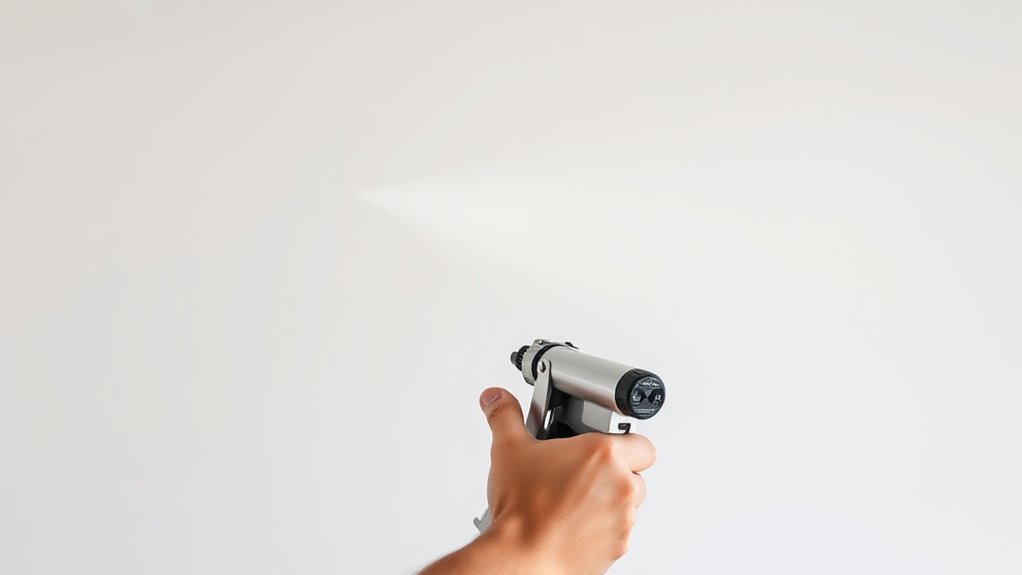

To achieve a smooth, professional finish with your paint sprayer, start by thoroughly cleaning and maintaining the equipment before use. Always check and replace worn filters, nozzles, and seals, and wear safety gear like goggles and masks. Practice spraying on scrap surfaces to perfect your technique and keep the sprayer at a consistent distance from the surface. Proper prep, safety measures, and troubleshooting tips will help you get the best results—continue exploring for more expert advice.
Key Takeaways
- Thoroughly clean and flush the sprayer after each use to prevent clogs and ensure smooth operation.
- Check and replace filters regularly to maintain consistent spray patterns and avoid uneven finishes.
- Use proper protective gear and work in well-ventilated areas to ensure safety and better control during spraying.
- Adjust the spray pressure and nozzle settings according to the paint type for a uniform, professional finish.
- Maintain the sprayer’s parts, including hoses and seals, in good condition to prevent leaks and ensure optimal performance.
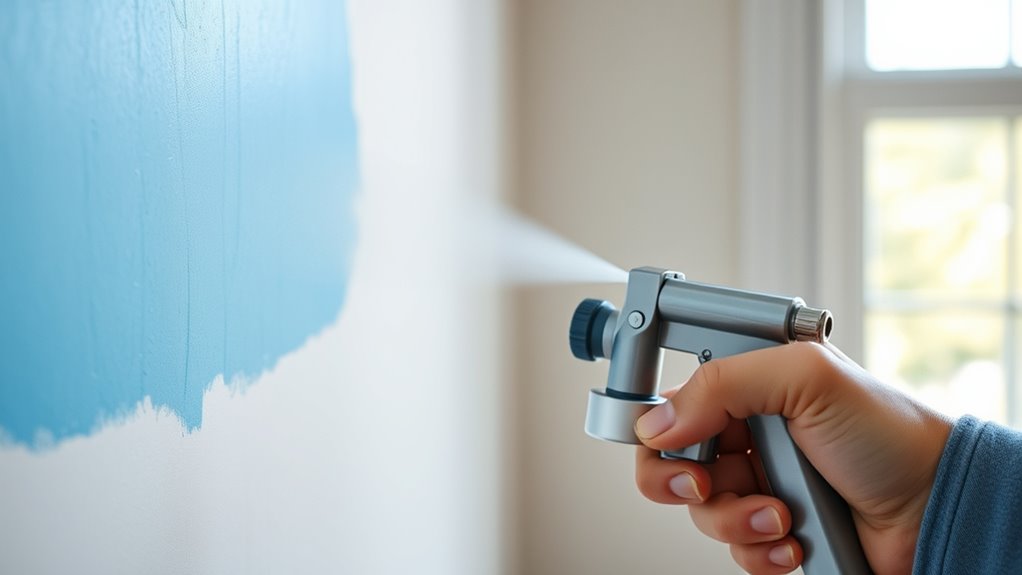
Using a paint sprayer can substantially speed up your painting project and achieve a smooth, professional finish. However, to get the best results and guarantee safety, you need to pay close attention to sprayer maintenance and follow proper safety precautions. Regular maintenance keeps your sprayer functioning efficiently and prevents costly repairs, while safety measures protect you from potential hazards.
Start by thoroughly cleaning your sprayer after each use. Residual paint can clog the nozzles and cause uneven spray patterns, so disassemble the parts as instructed in the manufacturer’s manual. Use appropriate cleaning solutions—water for water-based paints and mineral spirits for oil-based paints—and flush out all components until they’re free of paint residue. Proper cleaning not only maintains consistent spray quality but also extends the lifespan of your equipment. Keep an eye on the filters and replace or clean them regularly to prevent blockages, which can compromise your finish and strain the motor.
Thoroughly clean your sprayer after each use to prevent clogs and maintain optimal performance.
When it comes to sprayer maintenance, checking hoses, nozzles, and seals before each use is essential. Look for cracks, leaks, or wear that could impact performance or safety. Replacing damaged parts immediately reduces the risk of leaks or malfunctions during painting. Lubricate moving parts as recommended by the manufacturer to ensure smooth operation. Keeping your sprayer in good condition saves you time and effort and guarantees a more professional result.
Safety precautions are equally critical when operating a paint sprayer. Always wear appropriate protective gear, including goggles, a mask or respirator, gloves, and coveralls. Paint fumes and overspray can harm your respiratory system and skin, so protecting yourself is non-negotiable. Work in a well-ventilated area to disperse fumes and reduce inhalation risks. When handling paint and cleaning solutions, avoid spills and splashes—use proper containers and tools for pouring and cleaning.
Additionally, read the manufacturer’s instructions carefully before starting. Familiarize yourself with the sprayer’s controls and safety features, like shut-off switches and pressure regulators. Never point the sprayer at yourself or others, and always disconnect it from power when cleaning or adjusting parts. Keep your workspace free of clutter and flammable materials, and store paints and solvents safely away from heat sources.
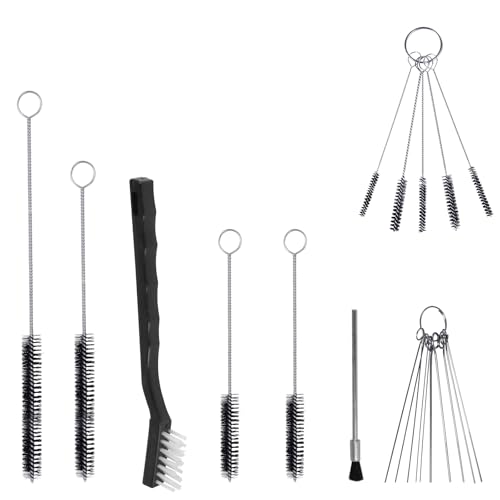
17pcs Multi-Purpose Spray Gun Cleaning Kit,Nylon Brushes Paint Gun Cleaning Kit Mini Brushes & Needles for Clean Airbrush Nozzles Spray Guns Tattoo Equipment (17)
★ This handy spray guns cleaning kit is all you need to keep your spray guns clean and…
As an affiliate, we earn on qualifying purchases.
As an affiliate, we earn on qualifying purchases.
Frequently Asked Questions
What Type of Paint Is Best for a Paint Sprayer?
You should choose a paint that’s compatible with your sprayer, typically thin latex or acrylic paints. Check the paint compatibility to make sure it flows smoothly without clogging. Opt for the right sprayer nozzle types—like a 517 or 415 tip—for your paint consistency. Avoid thick paints unless you thin them properly. Always follow manufacturer instructions to prevent clogs and achieve a smooth, even finish.
How Do I Clean My Paint Sprayer After Use?
To clean your paint sprayer after use, start by disconnecting it and emptying any remaining paint. Use cleaning supplies like water or solvent suitable for your paint type, and flush the system thoroughly. Run the cleaning solution through the sprayer until it runs clear. Afterward, disassemble the parts for a detailed cleaning, and dry everything to prevent corrosion. Proper paint sprayer maintenance guarantees smooth operation for your next project.
Can I Use a Paint Sprayer Indoors Safely?
Think of your indoor space as a delicate greenhouse, where ventilation is the sunlight that keeps everything safe. You can use a paint sprayer indoors, but you must guarantee excellent indoor ventilation to disperse paint fumes. Open windows, turn on fans, and wear a mask to protect yourself. With proper airflow, you create a safe environment, allowing your creative project to flourish without risking health or lingering fumes.
How Do I Prevent Drips and Uneven Coverage?
To prevent drips and guarantee coverage consistency, you should keep your sprayer at the right distance from the surface, typically about 6-12 inches. Start spraying with smooth, overlapping passes and avoid pressing the trigger too hard. Thin your paint if needed, and maintain a steady hand to prevent uneven coverage. Regularly check your spray pattern, and practice on scrap material to build confidence and achieve a flawless finish.
What Safety Gear Should I Wear When Spraying?
Wearing safety gear is like armor for your project. You should always wear protective goggles, a mask or respirator, gloves, and a long-sleeved shirt to shield your skin and eyes. Make certain proper ventilation to avoid inhaling fumes and keep the air fresh. These precautions help protect you from paint splatters, fumes, and airborne particles, making your spraying experience safer and more comfortable.

10 Pack Spray Can Nozzle for Female Cans – Universal Spray Paint Nozzles for Cans Bottle Nozzle Replacement – Universal Spray Can Tips – for DIY Paint Art Street Art and Home Improvement (10)
Package Included: You will receive 10pcs Female Spray Can Nozzle. 10 kind different of spray paint nozzles of…
As an affiliate, we earn on qualifying purchases.
As an affiliate, we earn on qualifying purchases.
Conclusion
Using a paint sprayer can save you time and give your projects a professional look. With proper technique, you’ll achieve a smooth, even finish that enhances your space. Did you know that using a sprayer can reduce painting time by up to 50% compared to traditional brushes and rollers? So, embrace the process, follow these tips, and enjoy the impressive results. Happy spraying!

Tesoro Moda Respirator Mask for Spray Painting, Woodworking, Welding, Dust, and General Safety with Clear Eye Goggles, 10 Replacement Filters, Half Face Cover with Safety Glasses
【REUSEABLE RESPIRATOR MASK SET】An all-purpose painter’s mask with half face cover, clear safety glasses, and replacement cotton air…
As an affiliate, we earn on qualifying purchases.
As an affiliate, we earn on qualifying purchases.

Multi-Purpose Spray Tool Cleaning Kit with Spray Tools Filters, Paint Tools Clean Kit Airbrush Cleaning Kit for HVLP Gravity, Suction, Detail Paint Tool, Airbrush
COMPLETE KIT: Comprehensive cleaning set includes multiple spray bottles, cleaning brushes of various sizes, and specialized cleaning tools…
As an affiliate, we earn on qualifying purchases.
As an affiliate, we earn on qualifying purchases.