
If your dishwasher isn’t draining, start by inspecting and cleaning the filter beneath the bottom rack to remove debris blocking water flow. Check the garbage disposal connection for clogs and run the disposal to clear it. Also, examine the drain hose for kinks or blockages, ensuring it’s properly connected. Finally, listen for the drain pump during a cycle; if it’s silent or making odd sounds, it may need cleaning or replacement. Keep these tips in mind to resolve drainage issues effectively.
Key Takeaways
- Check and clean the dishwasher filter to remove debris causing drainage blockages.
- Inspect the garbage disposal connection for clogs or obstructions in the inlet and outlet.
- Examine the drain hose for kinks, bends, or clogs, and clean or replace if necessary.
- Test the drain pump and clean its filter to ensure proper operation during draining cycles.
- Perform routine maintenance to prevent future backups, including inspecting all drain components regularly.
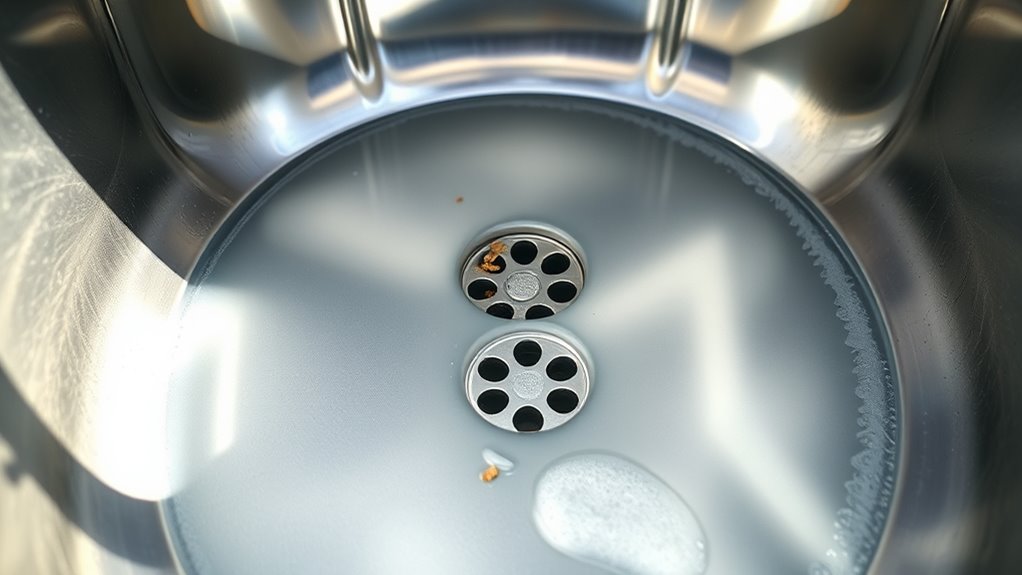
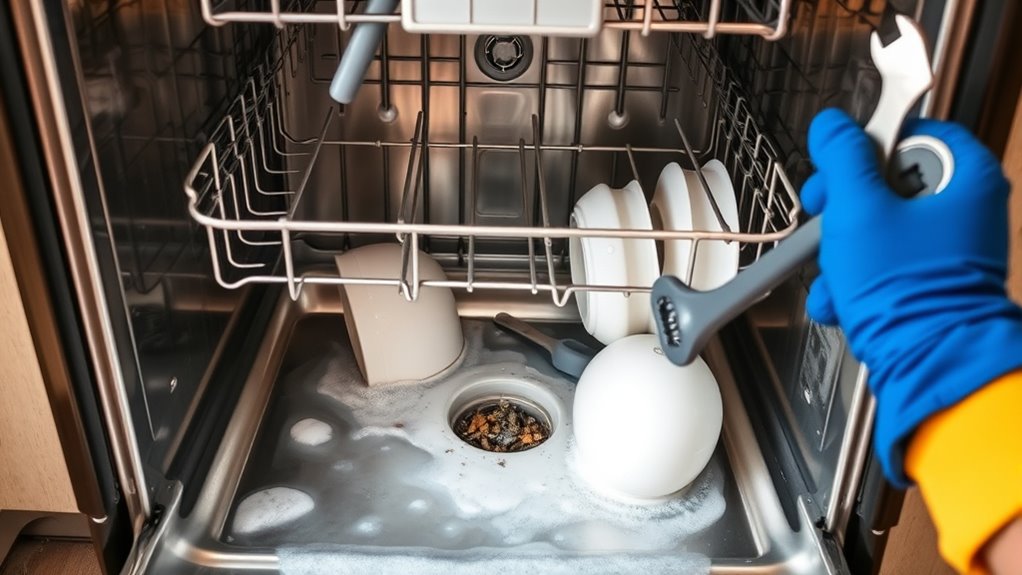
If your dishwasher isn’t draining properly, it can quickly become frustrating and leave your dishes soggy or dirty. The first step you should take is to check for any blockages in the dishwasher’s filter. Dishwasher filter cleaning is essential because food particles, grease, and debris tend to accumulate over time, restricting water flow and causing backups. To do this, remove the bottom rack and locate the filter, usually near the drain. Carefully detach it and scrub away any debris with a soft brush or cloth. Rinse the filter thoroughly before reinstalling it. This simple task can often resolve drainage issues caused by clogged filters.
Check and clean your dishwasher filter to prevent drainage issues and keep your dishes dry.
Next, you want to examine the garbage disposal connection if your dishwasher shares a drain line with it. Many dishwashers drain through the same line as the garbage disposal, and if the disposal is clogged or not functioning properly, it can prevent the dishwasher from draining. Run the disposal to see if it’s clear; if not, turn it off and inspect the inlet and outlet for blockages. Sometimes, a small object or accumulated debris can obstruct the flow. Clearing these obstructions can restore proper drainage. Additionally, ensure that the knockout plug in the disposal inlet has been removed if it’s a new installation, since leaving it in can block water from flowing into the disposal.
You should also look for any kinks or clogs in the drain hose. Disconnect the hose from the sink or disposal and run water through it to check for obstructions. If it’s clogged, clean it out thoroughly or replace it if necessary. Sometimes, a buildup of soap scum or food residue inside the hose causes slow drainage or backups. After cleaning, reconnect everything securely, making sure there are no bends or kinks that could restrict water flow.
Another common culprit is a faulty drain pump or a clogged pump filter. If cleaning the filter and checking the hose doesn’t solve the problem, listen for the sound of the drain pump during the drain cycle. If you don’t hear it running, or if it sounds unusual, it might need replacement. Some models have a pump filter that can be removed and cleaned, which can help remove debris that’s preventing the pump from working correctly. Regular appliance maintenance and understanding how the drain components work can help prevent future drainage issues.
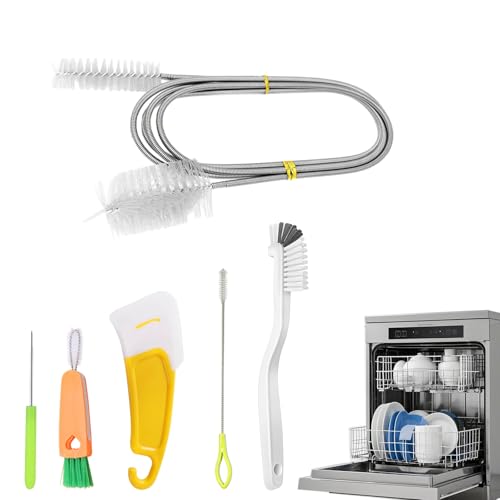
Dishwasher Cleaner Brush Kit – 6PCS Deep Cleaning Tools with Pick, Scraper, Straw Brush, Gap & Angle Brush, Flexible Tubes Brush for Spotless Dishwasher
- Complete 6-Piece Cleaning Kit: Includes various brushes and tools for thorough cleaning
- Removes Food Residue & Limescale: Effectively cleans stubborn buildup and deposits
- Silicone Scraper for Buildup: Safely removes hardened grease and residue
As an affiliate, we earn on qualifying purchases.
As an affiliate, we earn on qualifying purchases.
Frequently Asked Questions
Can I Use a Chemical Drain Cleaner for My Dishwasher?
You shouldn’t use chemical drain cleaners in your dishwasher because they can damage its components and pose safety risks. These cleaners are designed for regular drains, not dishwasher plumbing, which requires specific methods for clearing clogs. For dishwasher safety, opt for manual removal of debris or use a dishwasher-safe cleaner recommended by the manufacturer. This guarantees your appliance stays safe and functions properly without risking damage or leaks.
How Often Should I Clean the Dishwasher Filter?
You should clean your dishwasher filter at least once a month to maintain proper filter maintenance and make sure it functions efficiently. Check the filter regularly, especially if you notice poor drainage or lingering odors. Remove the filter, rinse it under hot water, and scrub away debris. Regular cleaning frequency prevents buildup, keeps your dishwasher running smoothly, and helps avoid drainage issues. Make filter maintenance a routine part of your dishwasher care.
Is It Safe to Run the Dishwasher Without a Filter?
You should never run your dishwasher without filters, as they play a vital role in trapping food particles and debris. Skipping regular cleaning routines for your dishwasher filters can lead to clogs and poor drainage, increasing the risk of backups. Always keep your filters clean to guarantee peak performance and longevity. Running the dishwasher without filters compromises cleanliness and can cause damage, so make sure to maintain them regularly.
What Is the Average Lifespan of a Dishwasher Pump?
The average lifespan of a dishwasher pump is about 5 to 10 years, depending on usage and maintenance. Pump durability varies based on the model and how well you care for your dishwasher. You can extend its lifespan by regularly cleaning filters and avoiding overloading. If your pump starts to fail, replacing it promptly ensures your dishwasher continues to run smoothly, protecting your investment and maintaining ideal dishwasher lifespan.
Can a Clogged Garbage Disposal Affect Dishwasher Drainage?
Oh, the irony! A clogged garbage disposal connection can definitely mess with your dishwasher’s drainage. When there’s a disposal blockage, water backup can occur, causing your dishwasher to not drain properly. You should check the disposal for any obstructions and clear out any debris. Ensuring the disposal connection is clear helps maintain smooth drainage, preventing your dishwasher from becoming a mini swimming pool after every cycle.

Haiouus Garbage Disposer Unjamming Wrench Compatible With M-oen Garbage Disposals Garbage Disposal Wrench for Dislodge Jams or Clutter From Above The Sink
- Easy blockage removal: Designed for simple debris clearance
- Safe repair instructions: Avoid hot water and disconnect power
- Convenient clog handling: Break blockages from above the sink
As an affiliate, we earn on qualifying purchases.
As an affiliate, we earn on qualifying purchases.
Conclusion
Think of your dishwasher as a busy river, smoothly carrying away the debris. When it backs up, it’s like a dam blocking the flow—stopping everything in its tracks. But with a little effort, you can clear the blockage and let the water flow freely again. Just like opening a dam’s sluice gate, fixing your dishwasher’s drain restores its rhythm, ensuring your kitchen stays calm and functional. Keep the flow moving, and your appliance will thank you.

TTFLEX 12 FT Dishwasher Drain Hose, Flexible Dishwasher Discharge Hose
- Universal Fit: Fits multiple relief nozzle sizes
- Easy Installation: Trim and clamp for quick setup
- Durable Material: Industrial-grade polypropylene construction
As an affiliate, we earn on qualifying purchases.
As an affiliate, we earn on qualifying purchases.
As an affiliate, we earn on qualifying purchases.