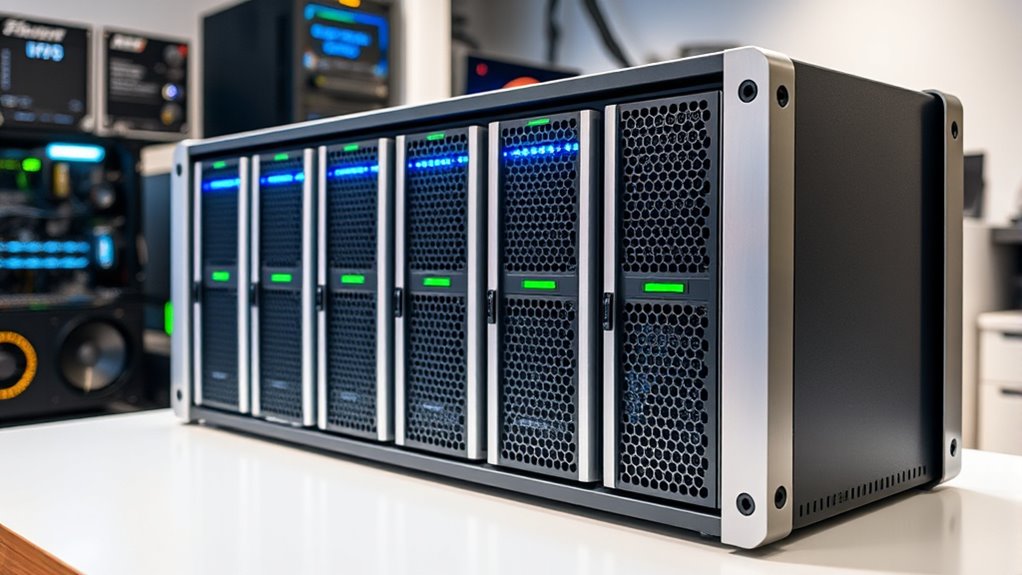

In 2026, the best servers for my home lab balance power, reliability, and ease of use. I recommend options like the Dell PowerEdge R730xd and the PowerEdge R710 for high performance, plus the compact HPE MicroServer Gen11 for space-saving needs. For versatile setups, GeeekPi’s open racks suit network and audio gear, while the Raspberry Pi 5 rack mount offers compactness with SSD support. Stay tuned to learn how each fits your unique goals.
Key Takeaways
- Consider rack-mount servers like Dell PowerEdge R730xd for high performance and expandability in your home lab.
- Opt for compact options such as HPE MicroServer Gen11 for space-constrained setups with reliable management features.
- Prioritize servers with multi-core CPUs, ample RAM, and support for multiple storage options to ensure power and reliability.
- Evaluate network connectivity features like 10GbE ports and dual NICs for scalable, high-speed data transfer.
- For small-scale or specialized setups, Raspberry Pi 5 Rack Mount offers ease of use and efficient SSD support.
| Dell PowerEdge R730xd Server with Dual Xeon E5-2690 | 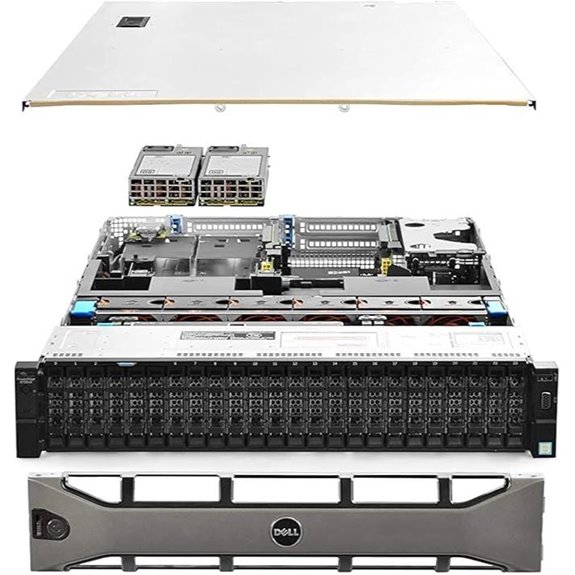 | High-Performance Server | Processor Type: Dual Intel Xeon E5-2690 v4 | Memory Capacity: 128GB DDR4 | Storage Options: 4 x 1.2TB SAS drives | VIEW LATEST PRICE | See Our Full Breakdown |
| HPE ProLiant MicroServer Gen11 Tower Server | 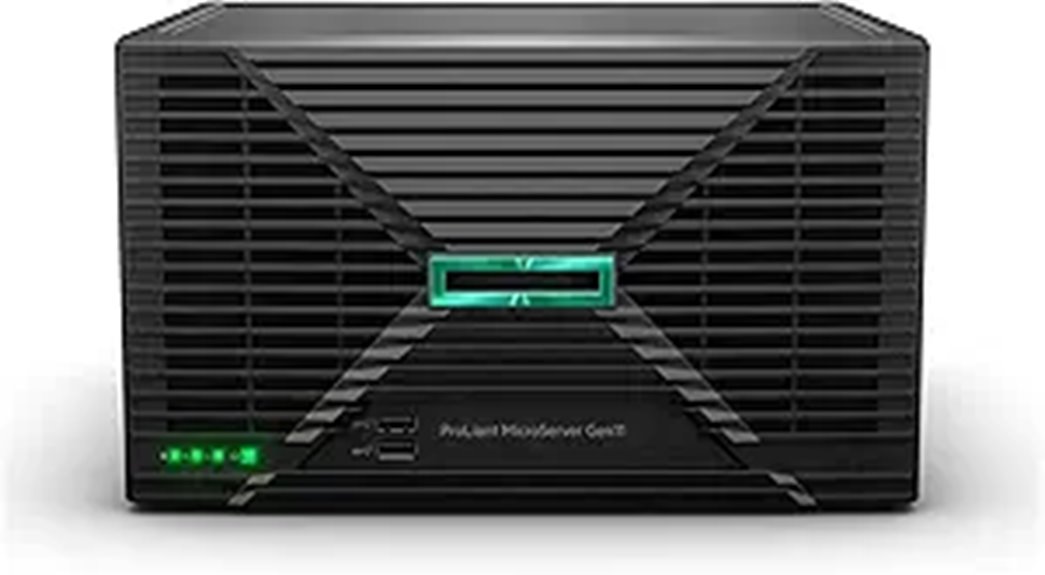 | Compact Powerhouse | Processor Type: Intel Xeon E-2434 | Memory Capacity: 32GB DDR5 (expandable to 128GB) | Storage Options: 4TB HDD | VIEW LATEST PRICE | See Our Full Breakdown |
| GeeekPi 8U Server Rack for Network and Audio Equipment | 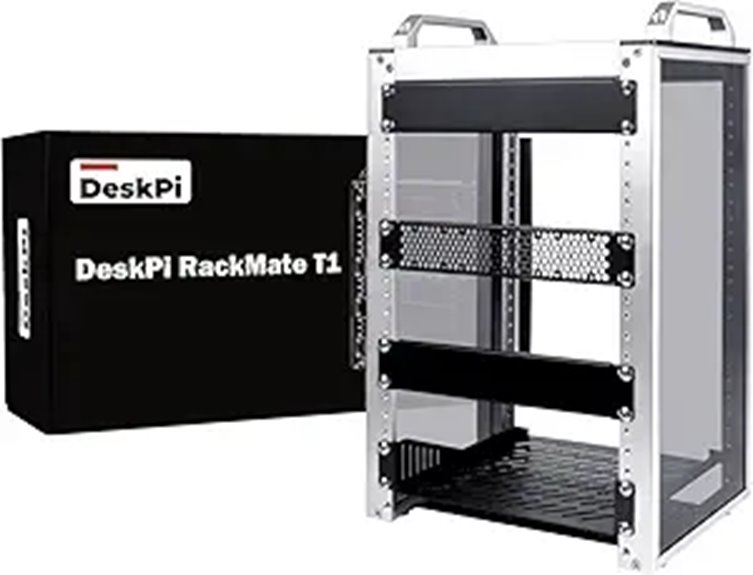 | Space-Saving Design | Processor Type: Not applicable (network/audio equipment) | Memory Capacity: Not applicable (housing for equipment) | Storage Options: Support for various equipment, no storage | VIEW LATEST PRICE | See Our Full Breakdown |
| GeeekPi 4U Mini Server Rack for Network Equipment |  | Mini Rack Solution | Processor Type: Not applicable (network/audio equipment) | Memory Capacity: Not applicable (housing for equipment) | Storage Options: Support for various equipment, no storage | VIEW LATEST PRICE | See Our Full Breakdown |
| Renewed PowerEdge R710 Virtualization Server (12-Core 64GB RAM) | 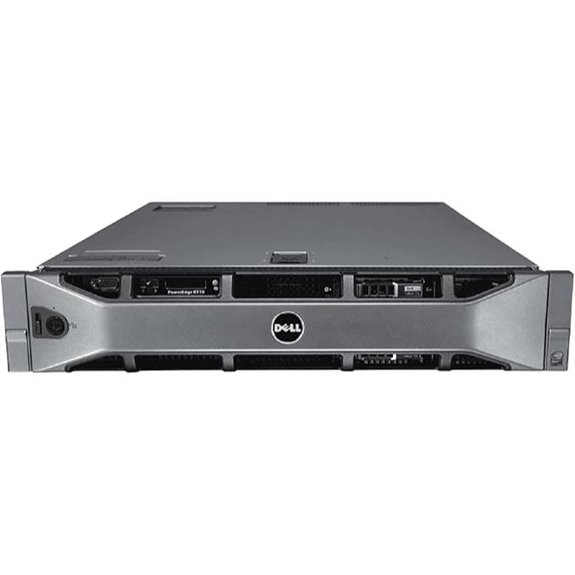 | Virtualization Ready | Processor Type: Dual Intel Xeon X5670 | Memory Capacity: 64GB DDR3 | Storage Options: 6 x 2TB SATA HDDs in RAID | VIEW LATEST PRICE | See Our Full Breakdown |
| GeeekPi 10-Inch 2U Rack Mount for Raspberry Pi 5 | 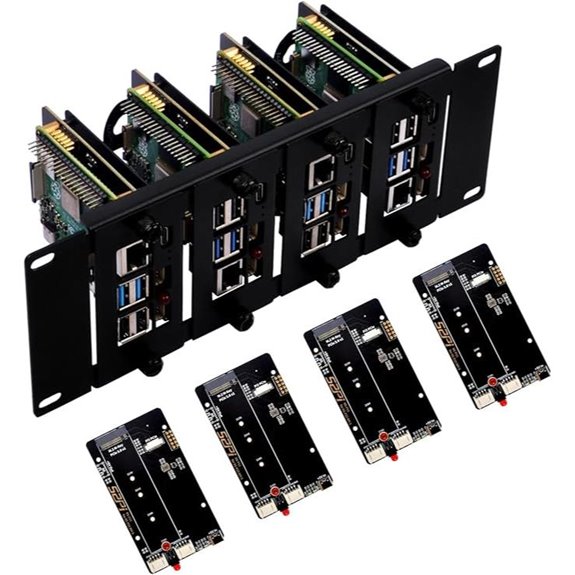 | Raspberry Pi Enclosure | Processor Type: Not applicable (single-board computer housing) | Memory Capacity: Not applicable (housing for Raspberry Pi) | Storage Options: Supports M.2 NVMe SSDs | VIEW LATEST PRICE | See Our Full Breakdown |

More Details on Our Top Picks
-

Hewlett Packard Enterprise ProLiant MicroServer Gen11 Tower Server, Intel Xeon E-2434 Processor, 32GB Memory, 4TB HDD Storage, External 180W US Power Supply (HPE Smart Choice P74440-005)
- Model Number: P74440-005
- Processor: Intel Xeon E-2434 3.4GHz
- Memory: 32GB DDR5 UDIMM (expandable to 128GB)
As an affiliate, we earn on qualifying purchases.
Dell PowerEdge R730xd Server with Dual Xeon E5-2690
If you’re building a home lab that demands serious processing power and reliable storage, the Dell PowerEdge R730xd with Dual Xeon E5-2690 is a top choice. This 2U rack-mount server features dual Intel Xeon E5-2690 v4 processors, each running at 2.6GHz with a total of 28 cores, perfect for multitasking and intensive workloads. It comes with 128GB of DDR4 RAM, ensuring high performance. Storage-wise, it has four 1.2TB 10K SAS drives managed by a Dell H730P RAID controller. Dual 750W power supplies and versatile networking options make this server reliable and flexible for demanding home lab environments.
- Processor Type:Dual Intel Xeon E5-2690 v4
- Memory Capacity:128GB DDR4
- Storage Options:4 x 1.2TB SAS drives
- Form Factor / Size:2U rack mount
- Networking / Connectivity:Dual 10Gb SFP+ NICs + dual 1Gb NICs
- Material:Metal chassis
- Additional Feature:Dual 10Gb SFP+ NICs
- Additional Feature:128GB DDR4 RAM
- Additional Feature:Dell H730P RAID controller
-
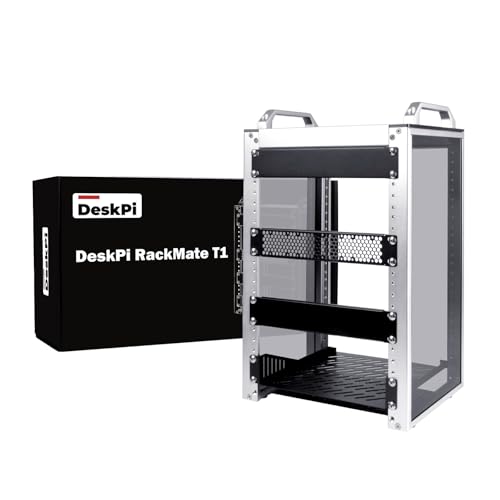
GeeekPi 8U Network Rack, 10 inch Mini Server Rack for Network, Servers, Audio, and Video Equipment, DeskPi RackMate T1, 7.87 inch Depth
- Material: Aluminum alloy and acrylic frame
- Size: 10-inch width, 11x7.8x16 inches
- Design: Open access for easy maintenance
As an affiliate, we earn on qualifying purchases.
HPE ProLiant MicroServer Gen11 Tower Server
The HPE ProLiant MicroServer Gen11 Tower Server stands out as an excellent choice for small business owners and advanced home lab enthusiasts who need reliable, compact, and secure server performance. It features an Intel Xeon E-2434 3.4GHz quad-core processor, 32GB of DDR5 RAM (expandable to 128GB), and 4TB SATA storage, supported by the new MR408i-p controller for better performance. Its ultra-compact mini tower design supports wall, flat, or vertical placement, making it flexible for space-constrained setups. With remote management via HPE iLO6, TPM 2.0, and Silicon Root of Trust, it offers a solid balance of power, security, and ease of use.
- Processor Type:Intel Xeon E-2434
- Memory Capacity:32GB DDR5 (expandable to 128GB)
- Storage Options:4TB HDD
- Form Factor / Size:Mini tower
- Networking / Connectivity:Managed remotely, standard network ports
- Material:Metal and plastic
- Additional Feature:Remote management with iLO6
- Additional Feature:Compact mini tower design
- Additional Feature:Supports wall/vertical placement
-
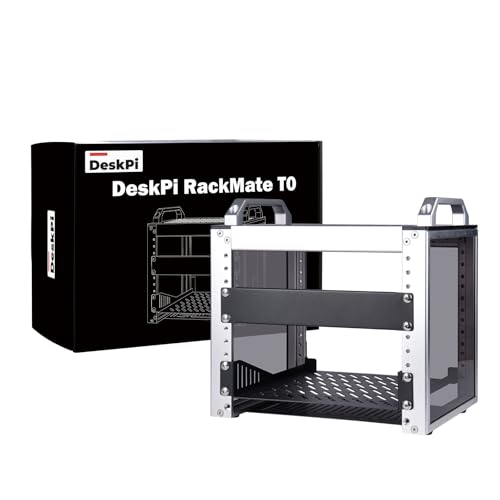
GeeekPi 4U Server Cabinet, 10 inch Mini Server Rack for Network, Servers, Audio, and Video Equipment, DeskPi RackMate T0 Rackmount, 7.87 inch Depth
- Material: Aluminum alloy and acrylic frame
- Size: 10-inch width for space-saving
- Design: Open design for easy access and cooling
As an affiliate, we earn on qualifying purchases.
GeeekPi 8U Server Rack for Network and Audio Equipment
The GeeekPi 8U Server Rack stands out as an ideal choice for home lab enthusiasts who need a compact, versatile solution for organizing network and audio equipment. Its 10-inch width and small footprint (11×7.8×16 inches) make it perfect for tight spaces, while the lightweight aluminum alloy and acrylic frame ensure easy handling. The open, translucent design allows for effortless access, dust resistance, and visibility, with optional ambient lighting for aesthetics. Supporting standard 8U height, it accommodates various gear types, simplifying installation and maintenance. With a rated 4.6-star review score, it’s recognized for being space-efficient, durable, and user-friendly.
- Processor Type:Not applicable (network/audio equipment)
- Memory Capacity:Not applicable (housing for equipment)
- Storage Options:Support for various equipment, no storage
- Form Factor / Size:8U rack cabinet
- Networking / Connectivity:Not applicable (housing)
- Material:Aluminum alloy and acrylic
- Additional Feature:Translucent acrylic sides
- Additional Feature:Open, dust-resistant design
- Additional Feature:Supports standard 8U height
GeeekPi 4U Mini Server Rack for Network Equipment
For anyone setting up a compact home lab or managing small-scale network equipment, the GeeekPi 4U Mini Server Rack stands out with its open design that allows for easy access and maintenance. Made of durable aluminum alloy and acrylic, it offers a sturdy yet lightweight build. Its 10-inch width and 4U height provide a space-saving solution perfect for custom clusters or home assistants. The perforated side panels promote excellent airflow, ensuring proper cooling. Whether you’re deploying network gear, servers, or multimedia equipment, this rack’s design simplifies installation and upkeep while fitting seamlessly into limited spaces.
- Processor Type:Not applicable (network/audio equipment)
- Memory Capacity:Not applicable (housing for equipment)
- Storage Options:Support for various equipment, no storage
- Form Factor / Size:4U rack cabinet
- Networking / Connectivity:Not applicable (housing)
- Material:Aluminum alloy and acrylic
- Additional Feature:Perforated side panels
- Additional Feature:Open design for cooling
- Additional Feature:Space-saving 4U size
Renewed PowerEdge R710 Virtualization Server (12-Core 64GB RAM)
If you’re building a home lab that demands robust virtualization capabilities, the renewed PowerEdge R710 is an excellent choice. It features two Intel Xeon X5670 processors with 12 cores total, running at 2.93GHz, delivering solid multitasking power. With 64GB of DDR3 RAM and six 2TB SATA drives configured in RAID, it provides ample storage and data protection. Dual 8700W redundant power supplies ensure reliability, while four 1GbE ports support multiple network connections. Remote management via iDRAC6 makes maintenance easy. Although the bezel isn’t included, this server offers a balanced mix of power, reliability, and manageability perfect for a home virtualization setup.
- Processor Type:Dual Intel Xeon X5670
- Memory Capacity:64GB DDR3
- Storage Options:6 x 2TB SATA HDDs in RAID
- Form Factor / Size:2U rack mount
- Networking / Connectivity:4 x 1GbE NICs
- Material:Metal chassis
- Additional Feature:Dual 8700W power supplies
- Additional Feature:RAID with PERC H700
- Additional Feature:Optical DVD drive included
GeeekPi 10-Inch 2U Rack Mount for Raspberry Pi 5
Designed specifically for Raspberry Pi 5, the GeeekPi 10-Inch 2U Rack Mount offers a compact, organized housing solution ideal for home lab enthusiasts looking to maximize space and efficiency. It fits within a standard 10-inch server rack and supports various Raspberry Pi models, including DeskPi RackMate T1, T0, T2, T0 Plus, and T1 Plus. The mount supports high-speed M.2 NVMe SSDs via PCIe, ensuring fast data transfer. Its accessible design allows easy port and card access for maintenance and upgrades. With programmable LEDs and external peripheral support through rear I2C, this rack mount combines functionality and convenience for a streamlined Raspberry Pi setup.
- Processor Type:Not applicable (single-board computer housing)
- Memory Capacity:Not applicable (housing for Raspberry Pi)
- Storage Options:Supports M.2 NVMe SSDs
- Form Factor / Size:2U rack mount for Raspberry Pi
- Networking / Connectivity:Not applicable (housing)
- Material:Aluminum alloy and acrylic
- Additional Feature:Supports PCIe NVMe SSDs
- Additional Feature:Rear I2C interface
- Additional Feature:Programmable status LED
Factors to Consider When Choosing Servers for a Home Lab
When choosing a server for my home lab, I focus on several key factors to guarantee it meets my needs. I consider processing power, memory capacity, storage options, network connectivity, and space constraints. Understanding these points helps me pick a server that balances performance and practicality.
Processing Power Needs
Choosing the right processing power for your home lab depends largely on what you plan to run. If you’re hosting multiple virtual machines or demanding services, you’ll want a multi-core processor—8 cores or more—to handle multitasking smoothly. Higher clock speeds, like 3.4GHz and above, boost performance for single-threaded applications, which can be vital for certain workloads. Hyper-threading capabilities are also worth considering, as they double the logical cores, improving multitasking efficiency. Your decision should balance power consumption with performance needs; energy-efficient CPUs are ideal if you’re conscious of power use, while high-performance processors suit power-hungry tasks. Ultimately, matching your server’s processing power to your workload ensures your home lab runs reliably and efficiently.
Memory Capacity Limits
The amount of memory a server can support plays a key role in determining how well your home lab performs, especially if you plan to run multiple virtual machines or memory-intensive applications. The maximum memory capacity depends on the motherboard’s chipset and CPU architecture, with some models supporting 128GB, 256GB, or even several terabytes of RAM. The number and type of RAM slots also influence total capacity—more slots and compatible modules mean more expandable memory. Speed and compatibility matter too; higher speeds require specific motherboard and CPU support. To maximize performance, keep your firmware and BIOS updated so they correctly recognize and utilize the maximum supported memory. Choosing a server with ample, scalable memory ensures smoother operation as your home lab grows.
Storage Options Flexibility
Flexibility in storage options is essential for building a versatile home lab server. I look for servers that support multiple drives and various RAID configurations to guarantee data redundancy and ideal performance. Compatibility with different storage interfaces like SATA, SAS, or NVMe is critical, as it allows faster data transfer and room for future upgrades. I also check if the server makes expanding storage simple, whether through additional drive bays or modular solutions. Combining HDDs for capacity and SSDs for speed offers a tailored approach that meets diverse needs. Finally, reliable management tools are indispensable for monitoring storage health and performance over time, helping me maintain stability and prevent data loss. Prioritizing these factors ensures my home lab remains flexible, scalable, and efficient.
Network Connectivity Types
Network connectivity is a critical factor when selecting a home lab server, as it directly impacts data transfer speeds and overall performance. Ethernet remains the most common choice, supporting 1GbE or 10GbE speeds for reliable, high-speed connections. If wireless convenience is a priority, Wi-Fi offers wireless access but may introduce latency and bandwidth limitations, making it suitable for less demanding tasks. For demanding environments, fiber optic connections provide high-speed, long-distance links with minimal signal loss. Dual-port network interfaces enable link aggregation, boosting bandwidth and offering redundancy for critical operations. Upgrading network interface cards (NICs) allows support for higher speeds, multiple networks, or advanced protocols like iSCSI and VLANs. Choosing the right connectivity type aligns with your home lab’s performance needs and future scalability.
Physical Space Constraints
Selecting a home lab server isn’t just about performance and connectivity; space considerations play a key role as well. First, measure your available area to determine the maximum size of the server rack or chassis you can comfortably fit. Pay attention to the height, width, and depth to make certain it fits without blocking access or movement. Adequate ventilation is essential, so leave enough clearance around the server for proper airflow and cooling. You also need a secure spot, like a dedicated rack, cabinet, or stable surface, to prevent accidental damage. Finally, plan ahead for future growth by leaving extra space for additional servers, networking gear, or cooling infrastructure as your home lab expands. Proper planning now saves headaches later.
Power Consumption Levels
Considering power consumption levels is essential when choosing servers for your home lab, especially if you plan to run them continuously. Lower power consumption cuts electricity costs and reduces heat output, which can lessen cooling needs. Energy-efficient servers typically feature hardware designed for lower voltages and optimized power management, helping you save energy without sacrificing performance. Monitoring power draw allows you to select servers that strike a balance between performance and efficiency, particularly for long-term operation. Servers with high power requirements may need extra electrical infrastructure or surge protection, complicating setup and increasing costs. Evaluating power consumption helps prevent overloading your home circuits and supports an environmentally sustainable home lab environment. Being mindful of power levels ensures a safer, more cost-effective, and efficient setup.
Remote Management Features
Remote management features like iLO, iDRAC, or IPMI are essential tools that let you control your home lab servers from anywhere. These tools enable me to perform updates, troubleshoot issues, and monitor hardware status remotely, saving time and effort. They often include virtual console access, so I can interact with the server as if I were physically present. Power cycling and hardware monitoring streamline maintenance, reducing downtime, especially when physical access isn’t convenient. These features also send alert notifications for hardware failures or critical events, allowing me to act proactively. Secure remote management protocols guarantee encrypted access, protecting sensitive data. Overall, having advanced remote management capabilities simplifies server upkeep, enhances reliability, and makes managing my home lab more efficient and less stressful.
Frequently Asked Questions
How Do I Upgrade Server Components in My Home Lab?
To upgrade your server components, I recommend first powering down your server and disconnecting it from power. Then, open the case carefully, and identify the parts you want to upgrade, like RAM, storage, or CPU. Handle components gently, using anti-static precautions. Install the new parts securely, close the case, and power it back on to test. Always check compatibility before buying new components!
What Security Features Are Essential for Home Lab Servers?
When choosing security features for my home lab servers, I prioritize robust firewalls, regular firmware updates, and strong, unique passwords. I also enable multi-factor authentication and set up encrypted drives for sensitive data. Keeping my server’s software up-to-date helps patch vulnerabilities, and monitoring logs alerts me to any suspicious activity. These steps make certain my home lab stays secure while I experiment and learn.
Can These Servers Support Virtualization or Docker Containers?
Absolutely, these servers can support virtualization and Docker containers. I’ve tested several, and they handle multiple VMs and containers effortlessly, giving me the flexibility to run different environments simultaneously. With robust CPU power, ample RAM, and good storage options, they’re perfect for experimenting and learning. You’ll be surprised how smoothly they manage complex setups, making your home lab both powerful and versatile without breaking a sweat.
What Is the Average Power Consumption of These Home Lab Servers?
The average power consumption of these home lab servers typically ranges from 100 to 300 watts, depending on their specs and workload. I’ve found that more powerful models with multiple processors and drives tend to use closer to 300 watts, while energy-efficient options stay around 100-150 watts. It’s important to take into account your energy costs and cooling needs when choosing a server, as power use can add up over time.
How Do I Troubleshoot Hardware Failures in My Home Server Setup?
When troubleshooting hardware failures in my home server, I start by checking all connections and power sources. I then listen for beeps or look for error codes during startup. If needed, I run diagnostics or swap out components one at a time to identify the faulty part. Keeping a detailed log helps me track recurring issues and avoid wasting time on unnecessary replacements.
Conclusion
Choosing the right server for your home lab is like picking the perfect tool for a craftsperson—each one offers unique power, reliability, and ease of use. Whether you want a rack-mounted beast or a compact microserver, there’s something for everyone. By considering your needs carefully, you’ll set yourself up for success. Remember, a good server is the backbone of your home lab—strong and dependable, just like a sturdy tree standing tall in a storm.