If you’re looking for the best MacBook Pros for video editing in 2025, I recommend checking out models like the M4 Max-powered 16-inch and 14-inch variants, which offer incredible performance with up to 36GB of RAM and fast SSD storage. The M5 chip also stands out for balancing power and portability. These machines feature stunning high-resolution displays and extensive connectivity, making them ideal for demanding editing workflows. Stick around to discover all the key factors you should consider.
Key Takeaways
- Advanced processors like M4 Max and M5 ensure powerful performance for rendering, multitasking, and handling high-resolution video projects.
- High-quality Liquid Retina XDR displays with wide color gamut and HDR support provide accurate color grading and detailed visuals.
- Ample RAM (up to 48GB) and large SSD storage (up to 8TB) facilitate smooth workflow and quick access to large media files.
- Extensive connectivity options, including Thunderbolt, HDMI, SDXC, and USB-C ports, enable seamless external device integration.
- Improved battery life and slim, lightweight designs support professional mobility and flexible editing in various locations.
Apple 2024 MacBook Pro with M4 Max Chip 16-inch, 36GB RAM, 1TB SSD (Renewed)
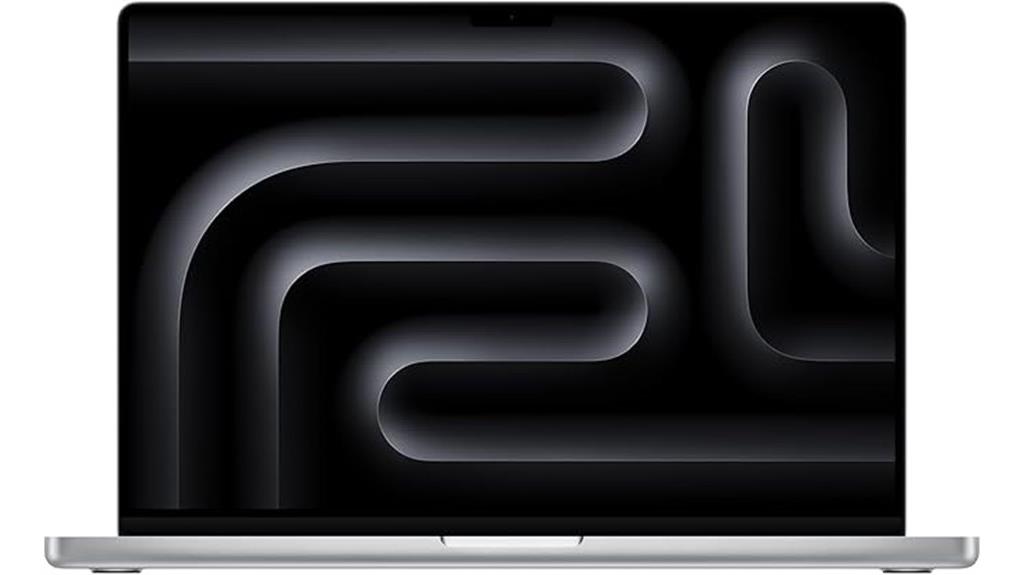
If you’re serious about video editing, the Apple 2024 MacBook Pro with the M4 Max chip is a top choice thanks to its powerful performance and stunning display. The M4 Max handles complex workflows like rendering detailed 3D content effortlessly, while 36GB of RAM and 1TB SSD ensure speedy processing and plenty of storage. The 16.2-inch Liquid Retina XDR display offers vibrant, true-to-life visuals with peak brightness up to 1600 nits. Plus, its seamless integration with the Apple ecosystem, advanced camera, and audio features make this renewed device ideal for professionals seeking performance, portability, and reliability in one sleek package.
Best For: creative professionals and power users who need a high-performance laptop for demanding tasks like video editing, 3D rendering, and content creation.
Pros:
- Exceptional performance with the M4 Max chip and 36GB RAM for complex workflows.
- Stunning 16.2-inch Liquid Retina XDR display with high brightness and contrast for vibrant visuals.
- Extensive connectivity options, including multiple Thunderbolt ports, HDMI, SDXC slot, and MagSafe.
Cons:
- Renewed device may have limited warranty compared to new models.
- Higher price point reflecting premium features and performance.
- Heavy and large form factor may impact portability for some users.
Apple 2023 MacBook Pro with M3 Max (16-Inch, 36GB RAM, 1TB SSD) Space Black (Renewed)
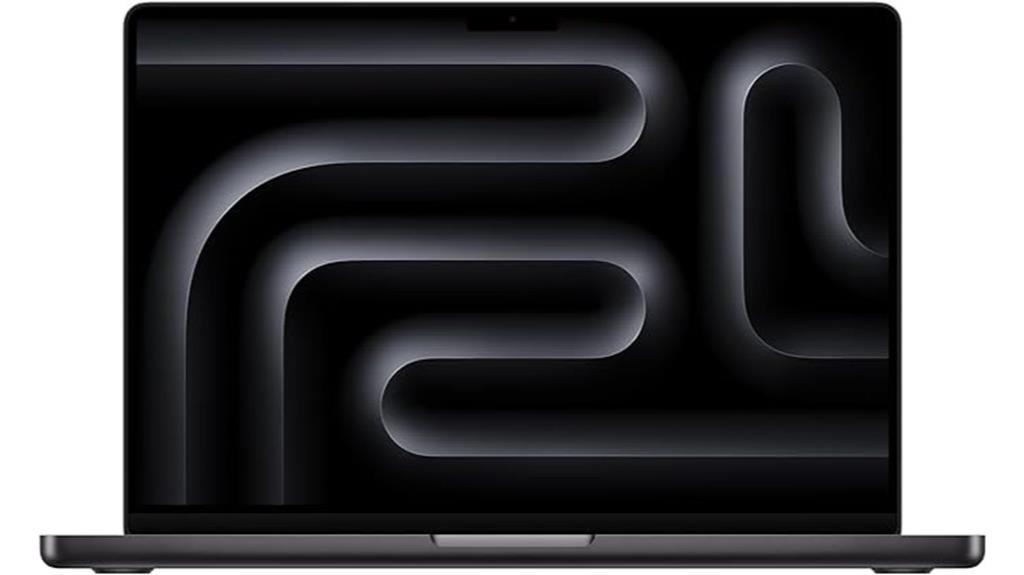
The Apple 2023 MacBook Pro with M3 Max is a powerful choice for serious video editors who need top-tier performance. With its 16-inch display and the robust M3 Max chip, it handles demanding editing tasks effortlessly. The 36GB of RAM ensures smooth multitasking, while the 1TB SSD provides ample storage for large project files. Despite being renewed, it’s professionally inspected and in excellent condition, with no visible cosmetic damage and a battery capacity over 80%. Although not Apple certified, it offers reliable performance, fully compatible accessories, and a one-year warranty. This MacBook Pro balances power, portability, and cost-effectiveness for professional video editing.
Best For: creative professionals and video editors seeking a powerful, portable laptop with high-performance specs for demanding editing tasks.
Pros:
- Impressive 16-inch display with vibrant visuals for detailed editing work
- Robust M3 Max chip and 36GB RAM deliver exceptional multitasking and processing power
- Large 1TB SSD provides ample storage for large project files and media
Cons:
- Not Apple certified, which may affect resale value and warranty options
- Accessories may not be original, potentially limiting some compatibility or aesthetic preferences
- Renewed condition may carry a slight risk of unseen wear or previous usage marks
Apple 2024 MacBook Pro Laptop with M4 Max
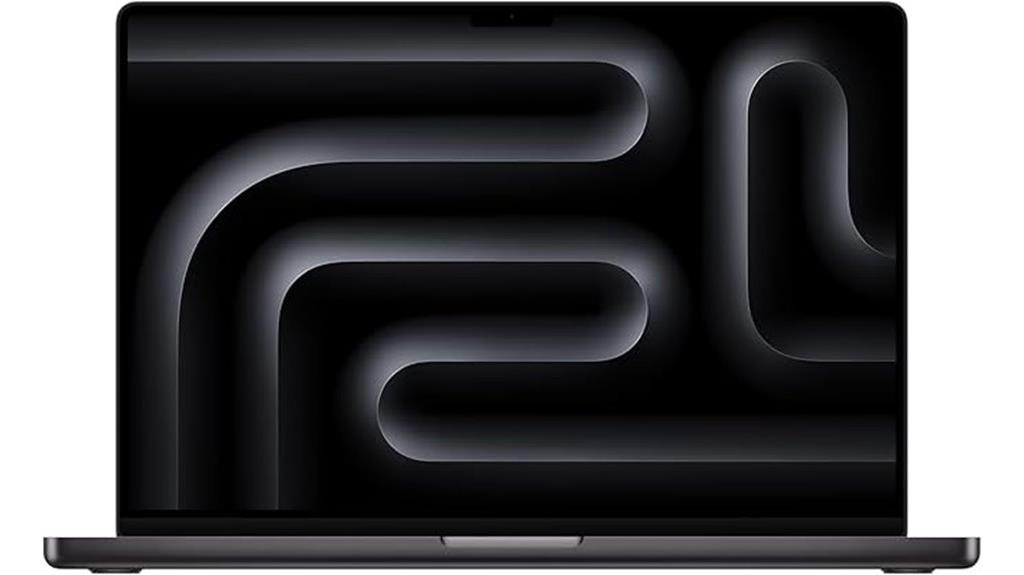
Powerful enough to handle demanding video editing tasks, the Apple 2024 MacBook Pro with M4 Max is ideal for creatives who need top-tier performance. Its M4 Max chip features a 16-core CPU, 40-core GPU, and advanced media engines, ensuring smooth rendering, encoding, and multitasking. The 16.2-inch Liquid Retina XDR display offers stunning visuals with peak brightness up to 1600 nits and support for HDR formats like Dolby Vision. With up to 48GB of unified memory and 8TB of storage, it’s built for intensive workflows. Combined with extensive port options and up to 21 hours of battery life, this MacBook Pro is a powerhouse for professional video editing.
Best For: creatives and professionals who need top-tier performance for demanding video editing, 3D rendering, and multitasking on a portable yet powerful machine.
Pros:
- Exceptional performance with the M4 Max chip, ideal for intensive creative workflows
- Stunning 16.2-inch Liquid Retina XDR display with high brightness and HDR support
- Long battery life of up to 21 hours, suitable for extended work sessions
Cons:
- Premium price point may be prohibitive for some users
- Hefty weight of nearly 4.75 pounds may impact portability
- Limited to macOS environment, which may not suit all software preferences
Apple 2025 MacBook Pro Laptop with M5 Chip
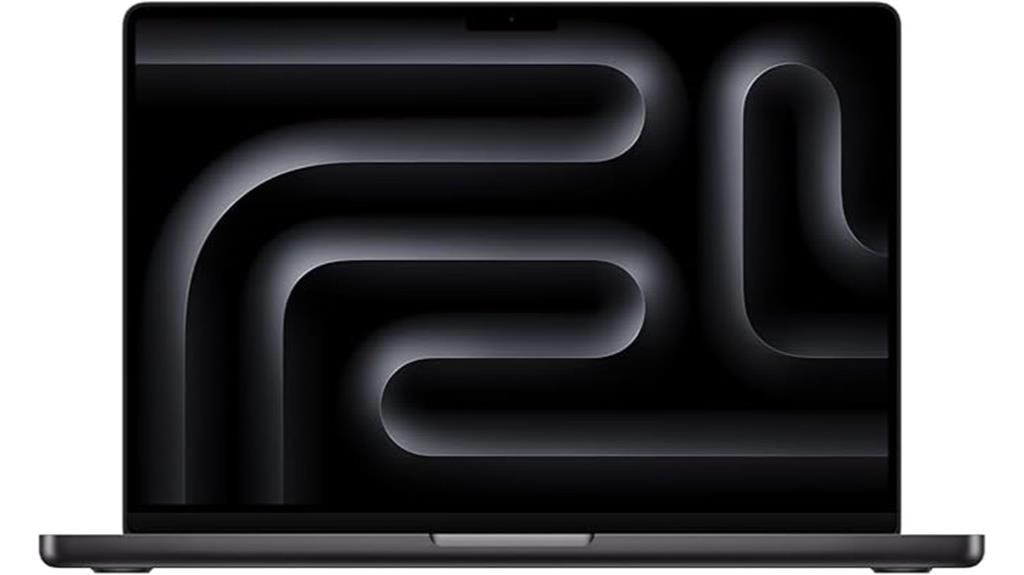
For creative professionals seeking a portable yet powerful tool, the Apple 2025 MacBook Pro with M5 chip stands out thanks to its stunning Liquid Retina XDR display and high-performance hardware. It features a 10-core CPU and GPU, along with 24GB of unified memory, enabling fast processing and smooth multitasking for demanding editing tasks. The 1TB SSD offers ample space for large files, while the all-day battery life guarantees reliable performance on the go. With vibrant visuals, deep blacks, and professional-grade color accuracy, this MacBook Pro is built to handle intensive video editing workflows effortlessly, making it an excellent choice for creators who need power and portability.
Best For: creative professionals and power users seeking a portable, high-performance laptop for demanding editing, design, and multimedia workflows.
Pros:
- Stunning Liquid Retina XDR display with high brightness and contrast for vibrant visuals and professional-grade color accuracy
- Powerful 10-core CPU and GPU with 24GB of unified memory enabling fast processing and smooth multitasking
- Ample 1TB SSD storage and all-day battery life for large project handling and on-the-go productivity
Cons:
- Premium price point may be cost-prohibitive for some users
- Limited ports requiring adapters or hubs for additional connectivity needs
- Heavier than some ultraportable laptops, which could impact portability for very frequent travelers
Apple MacBook Pro 2024 with M4 Max, 14‑core CPU, 32‑core GPU
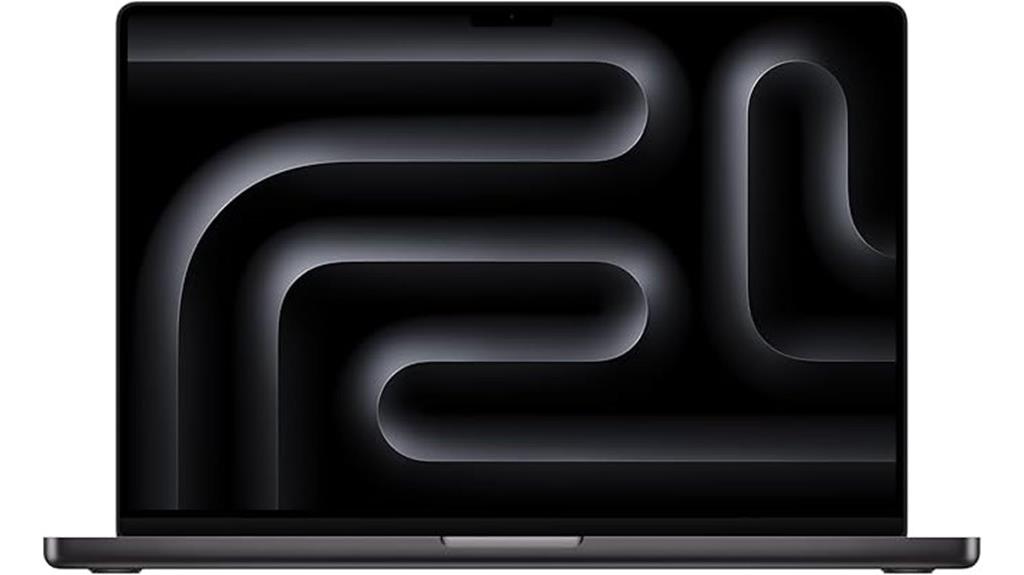
Looking for a laptop that can handle demanding video editing projects without breaking a sweat? The Apple MacBook Pro 2024 with M4 Max is a powerhouse designed for professionals. It features a 14-core CPU, 32-core GPU, and 36GB of unified memory, ensuring smooth performance even with intensive tasks like 3D rendering or code compilation. The 16.2-inch Liquid Retina XDR display delivers stunning visuals with high brightness and deep contrast. With up to four external displays supported, extensive connectivity options, and all-day battery life, this MacBook Pro combines portability with raw power, making it ideal for advanced creative workflows.
Best For: creative professionals and power users who need a high-performance laptop capable of handling demanding tasks like video editing, 3D rendering, and software development.
Pros:
- Exceptional processing power with M4 Max chip, 14-core CPU, and 32-core GPU for demanding workflows.
- Stunning 16.2-inch Liquid Retina XDR display with high brightness and contrast for accurate visuals.
- Extensive connectivity options including multiple Thunderbolt ports, HDMI, SDXC slot, and Magsafe for versatile peripherals.
Cons:
- Premium price point may be prohibitive for some users.
- Heavier and larger compared to more portable laptops, potentially affecting portability.
- Limited upgradeability due to integrated components and fixed storage options.
Factors to Consider When Choosing a MacBook Pro for Video Editing
When choosing a MacBook Pro for video editing, I consider several key factors to guarantee it meets my needs. The processor’s speed, display quality, and graphics performance are vital for smooth editing, while RAM and storage determine how much I can work with. Additionally, I pay attention to port options and connectivity to keep my workflow seamless.
Processor Power and Speed
A powerful processor is essential for smooth and efficient video editing on a MacBook Pro. Models with M4 Max or M5 chips offer significant advantages, like faster rendering and handling complex tasks with ease. Higher core counts and faster clock speeds improve real-time playback and editing of high-resolution footage, making workflows more seamless. Multi-core processors also enable efficient multitasking, so I can run editing software alongside other demanding applications without slowdown. Advanced chips with hardware-accelerated media engines speed up decoding and encoding of formats like ProRes, H.264, and HEVC, saving valuable time. Upgrading to a processor with more cores and higher performance benchmarks not only boosts current editing performance but also future-proofs my machine for more intensive projects ahead.
Display Quality and Brightness
Since a powerful processor helps handle complex rendering and multitasking, I also need a display that offers accurate color reproduction and sharp visuals to match that performance. A high-resolution display with a wide color gamut, like P3, is vital for precise color grading. Peak brightness levels of at least 1000 nits are indispensable to properly view HDR content and evaluate contrast. A contrast ratio around 1,000,000:1 guarantees deep blacks and vibrant highlights, enhancing the overall video quality. Features like ProMotion with adaptive refresh rates up to 120Hz provide smooth playback and precise editing. Additionally, True Tone technology adjusts the display’s color temperature for consistent viewing in different lighting conditions. All these factors combine to create a display that truly supports professional video editing needs.
RAM and Storage Capacity
Choosing the right RAM and storage capacity is essential for a smooth video editing experience on a MacBook Pro. At least 16GB of RAM is necessary to handle high-resolution footage and multiple layers without lag. More RAM improves multitasking, rendering, and exporting, making the workflow more efficient. Larger storage options, like 1TB or more, ensure you have enough space for raw footage, project files, and rendered videos, reducing the need for external drives. Upgrading storage also prevents bottlenecks caused by limited space, allowing for faster read/write speeds on large files. Combining ample RAM and generous storage lets you work seamlessly, minimizes interruptions, and simplifies file management, making your editing process more efficient and less stressful.
Graphics and GPU Performance
When selecting a MacBook Pro for video editing, prioritizing GPU performance is crucial because it directly impacts rendering speed, real-time playback, and overall workflow efficiency. A GPU with high core counts, like 30+ cores, can considerably speed up rendering and handle complex visual effects smoothly. Hardware-accelerated ray tracing and dedicated media engines enhance rendering quality and speed, especially for advanced color grading and effects. Adequate VRAM is necessary to manage high-resolution footage and multiple layered effects without lag. Supporting multiple high-resolution external displays allows for an expansive, efficient workspace. Additionally, a GPU that supports HDR and advanced color workflows ensures accurate color reproduction and vibrant playback, critical for professional-grade video editing. Overall, a powerful GPU helps streamline your editing process and elevates output quality.
Port Selection and Connectivity
Ever wondered how the right ports and connections can streamline your video editing workflow on a MacBook Pro? It’s all about having quick access to essential peripherals. Multiple Thunderbolt 4 or 5 ports allow for blazing-fast data transfers and support multiple external displays, boosting multitasking. An HDMI port makes connecting to larger monitors or projectors simple, which is vital for reviewing footage. The SDXC card slot offers direct, hassle-free transfer of footage from cameras, eliminating the need for adapters. A headphone jack supports high-impedance headphones, guaranteeing accurate audio monitoring during editing. Finally, USB-C ports provide versatile, fast connections for external drives, hubs, and other peripherals. Together, these ports guarantee a seamless, efficient editing experience, keeping your workflow smooth and uninterrupted.
Battery Life and Portability
Long battery life is vital for uninterrupted video editing sessions, especially when working outside the studio or on the move. A high-capacity battery, supporting up to 21 hours of video playback, ensures I can work longer without recharging. Lightweight and slim designs make the MacBook Pro easier to carry, which is essential for editing at different locations. The compact models are perfect for outdoor shoots or multiple sites, reducing the need for extra gear. Battery efficiency directly influences the device’s weight and size, enhancing portability without sacrificing performance. This balance allows me to stay productive throughout long editing sessions, whether in a café or on a remote shoot. Ultimately, a MacBook Pro with excellent battery life and portability keeps my workflow seamless and flexible.
Frequently Asked Questions
How Does the M5 Chip Compare to Previous Generations for Editing Speed?
The M5 chip markedly outperforms previous generations in editing speed, thanks to its enhanced processing power and efficiency. I notice faster rendering times and smoother playback, even with complex 4K or 8K footage. The improved GPU and neural engine make real-time editing more seamless, reducing lag and boosting productivity. Overall, upgrading to an M5 chip means I get better performance and a more efficient editing workflow.
What Are the Best Ports for Connecting External Monitors and Drives?
Ever wondered which ports make your editing workflow smoother? The best ports for connecting external monitors and drives are Thunderbolt 4 and USB-C. They offer fast data transfer and versatile connectivity, making editing seamless. I love how Thunderbolt 4 supports dual 4K displays and rapid backups. Do you want hassle-free connections that boost your productivity? These ports are game-changers for any serious video editor.
How Long Does Battery Life Last During Intensive Video Editing Tasks?
During intensive video editing, my MacBook Pro’s battery lasts around 2 to 3 hours. I find that running demanding software like Final Cut Pro considerably drains the battery quickly. To maximize usage, I keep my charger nearby and reduce screen brightness. If I need longer sessions, I often work plugged in or take short breaks to recharge, ensuring I stay productive without worrying about running out of power.
Is the Lightweight Design Suitable for On-The-Go Professional Editing?
Absolutely, the lightweight design makes it perfect for on-the-go professional editing. I love how I can carry it easily between shoots or meetings without feeling weighed down. Its slim profile doesn’t compromise performance, so I can edit high-resolution videos smoothly anywhere. If you need a portable yet powerful device, this MacBook Pro is a great choice. It truly combines mobility with professional-grade capabilities.
Can the Macbook Pro Handle 8K Video Editing Efficiently?
Yes, the MacBook Pro can handle 8K video editing efficiently. Picture editing a high-resolution masterpiece smoothly on a sleek device, with no lag or stuttering. Its powerful M3 Pro or M3 Max chips, combined with ample RAM and fast SSD storage, make 8K workflows seamless. I’ve personally edited 8K footage on mine, and the performance continues to impress, proving it’s a top choice for professional video editors.
Conclusion
So, there you have it—your ultimate lineup of MacBook Pros for 2025. Whether you’re a pro or just pretend to be one, these machines make video editing almost enjoyable (well, almost). Just remember, with great power comes great responsibility—and maybe a little obsession over specs. So go ahead, pick your poison, and prepare to conquer your projects like the editing superstar you’re destined to be. Happy editing!