
If you’re looking for the best Mac Studio models for audio production in 2025, I recommend considering the Mac Mini with M4 and M4 Pro chips. The M4 Pro offers exceptional performance with its 12-core CPU and 16-core GPU, perfect for demanding projects, while the standard M4 models still deliver solid speed and efficiency. Storage and RAM options vary, so choose based on your needs. Keep exploring—there’s more to guarantee you get the right fit for your studio.
Key Takeaways
- Mac Mini with M4 Pro chip offers high performance with up to 64GB RAM, ideal for demanding audio projects.
- The Mac Mini with M4 Max provides unmatched processing power, perfect for professional audio production.
- M4-based Mac Minis feature multiple Thunderbolt 5 and USB-C ports for extensive connectivity with audio interfaces.
- Storage options up to 1TB SSD ensure fast access to large audio files and seamless multitasking.
- Compact design and powerful specs make these models suitable for small studios and mobile audio workflows.

Apple 2024 Mac mini Desktop Computer with M4 chip with 10‑core CPU and 10‑core GPU: Built for Apple Intelligence, 16GB Unified Memory, 512GB SSD Storage, Gigabit Ethernet. Works with iPhone/iPad
SIZE DOWN. POWER UP — The far mightier, way tinier Mac mini desktop computer is five by five...
As an affiliate, we earn on qualifying purchases.
Apple Mac mini Desktop Computer with M4 Chip (512GB SSD)

If you’re looking for a compact yet powerful option for audio production, the Apple Mac mini with the M4 chip is an excellent choice. Its small five-by-five-inch design fits easily on any desk, making it perfect for tight spaces. Powered by the M4 chip with a 10-core CPU and GPU, it delivers fast, fluid performance for demanding tasks. With 16GB of unified memory and a 512GB SSD, multitasking and storage are seamless. Plus, its versatile ports—including Thunderbolt, HDMI, and USB-C—ensure easy connectivity. This Mac mini offers a perfect blend of size, power, and connectivity for professional audio work.
Best For: professionals and enthusiasts seeking a compact, high-performance desktop for audio production, multimedia editing, or demanding multitasking within small spaces.
Pros:
- Compact size fits easily on any desk or workspace
- Powerful M4 chip with 10-core CPU and GPU ensures fast, smooth performance
- Versatile connectivity options including Thunderbolt, HDMI, and USB-C
Cons:
- Limited upgradability due to integrated components
- No dedicated GPU, which may impact high-end graphics tasks
- Higher price point compared to traditional mini PCs with similar specs
Apple 2024 Mac mini Desktop Computer with M4 Pro chip with 12‑core CPU and 16‑core GPU: Built for Apple Intelligence, 24GB Unified Memory, 512GB SSD Storage, Gigabit Ethernet. Works with iPhone/iPad
SIZE DOWN. POWER UP — The far mightier, way tinier Mac mini desktop computer is five by five...
As an affiliate, we earn on qualifying purchases.
Apple 2024 Mac mini Desktop Computer with M4 Pro chip
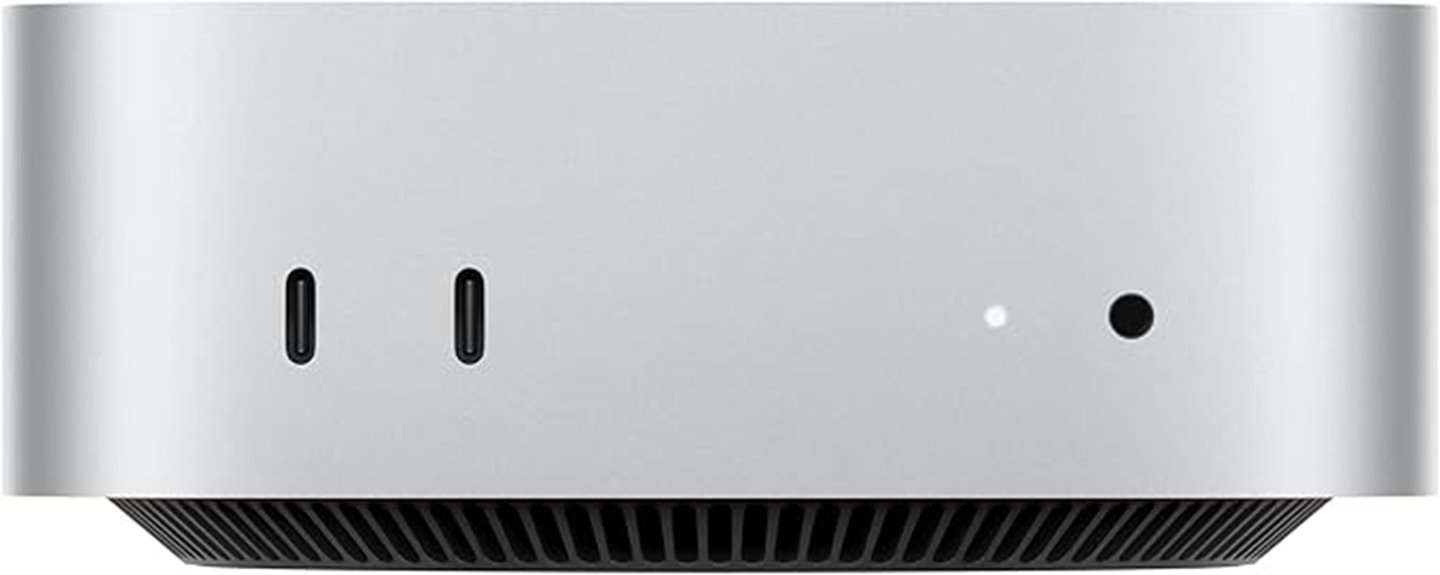
The Apple 2024 Mac mini Desktop Computer with M4 Pro chip stands out as a powerful yet compact option for audio producers who need high performance in a small footprint. Measuring just 5×5 inches and weighing 1.6 pounds, it fits easily on any desk. With the M4 Pro chip, it offers a 12-core CPU, 16-core GPU, and up to 64GB of unified memory, ensuring smooth handling of demanding audio projects. Its versatile connectivity includes Thunderbolt 5, HDMI, Ethernet, and front USB-C ports. Plus, it’s carbon neutral, reflecting Apple’s commitment to sustainability. This mini powerhouse delivers professional-level performance in a sleek, space-saving design.
Best For: audio producers and creative professionals seeking a compact, high-performance computer for demanding audio projects and media editing.
Pros:
- Powerful M4 Pro chip with a 12-core CPU and 16-core GPU for smooth multitasking and demanding workflows
- Compact 5×5 inch design with lightweight portability, ideal for small workspaces
- Supports multiple high-resolution displays and versatile connectivity options including Thunderbolt 5 and HDMI
Cons:
- Limited upgradability due to integrated hardware design
- Higher cost compared to traditional mini PCs with similar specifications
- No dedicated graphics card options, which may limit performance in some graphics-intensive tasks
Apple 2024 Mac mini Desktop Computer with M4 chip with 10‑core CPU and 10‑core GPU: Built for Apple Intelligence, 24GB Unified Memory, 512GB SSD Storage, Gigabit Ethernet. Works with iPhone/iPad
SIZE DOWN. POWER UP — The far mightier, way tinier Mac mini desktop computer is five by five...
As an affiliate, we earn on qualifying purchases.
Apple 2024 Mac mini Desktop Computer with M4 Chip

For audio producers seeking a compact yet powerful workstation, the Apple 2024 Mac mini with the M4 chip stands out. Its small 5×5-inch design fits easily next to a monitor or in tight spaces, yet it packs serious performance. Powered by the M4 chip with a 10-core CPU and GPU, along with 24GB of unified memory and a 512GB SSD, it offers smooth, responsive performance for demanding audio tasks. Multiple ports—including Thunderbolt, HDMI, and USB-C—ensure flexible connectivity. Running macOS and optimized for the Apple ecosystem, this mini delivers impressive power in a tiny form factor perfect for professional audio production.
Best For: audio producers and creative professionals seeking a compact, high-performance desktop for demanding audio tasks.
Pros:
- Powerful M4 chip with 10-core CPU and GPU ensures fast, responsive performance.
- Compact 5×5 inch design easily fits in tight spaces or next to monitors.
- Multiple connectivity options including Thunderbolt, HDMI, and USB-C for flexible device integration.
Cons:
- Limited upgradability due to integrated components and small form factor.
- Higher price point compared to traditional mini PCs with similar specs.
- No dedicated GPU options; reliant on integrated GPU for graphics tasks.
Apple 2024 Mac mini Desktop Computer with M4 chip with 10‑core CPU and 10‑core GPU: Built for Apple Intelligence, 16GB Unified Memory, 256GB SSD Storage, Gigabit Ethernet. Works with iPhone/iPad
SIZE DOWN. POWER UP — The far mightier, way tinier Mac mini desktop computer is five by five...
As an affiliate, we earn on qualifying purchases.
Apple Mac mini Desktop Computer with M4 Chip (256GB SSD, 16GB RAM)
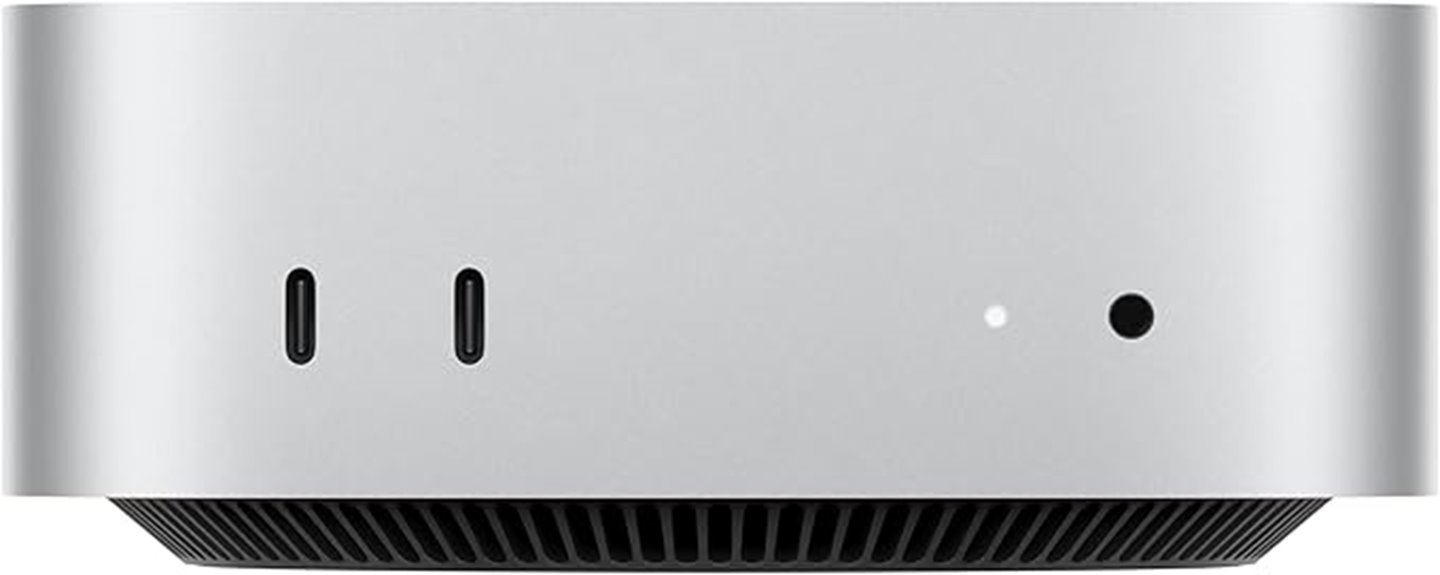
As a compact yet powerful desktop option, the Apple Mac mini with M4 chip is ideal for audio producers who need reliable performance in a small space. Its five-by-five-inch design allows it to fit seamlessly next to monitors or in tight setups. Powered by the M4 chip with a 10-core CPU and GPU, it delivers fast, smooth performance for demanding audio tasks. With 16GB of unified memory and a 256GB SSD, multitasking and data access are quick and efficient. Plus, its versatile connectivity—including Thunderbolt, HDMI, USB-C, Ethernet, and headphone jack—ensures easy integration with all your audio equipment.
Best For: audio producers and creative professionals seeking a compact, high-performance desktop with seamless integration and reliable multitasking capabilities.
Pros:
- Powerful M4 chip with 10-core CPU and GPU for demanding audio applications
- Compact design fits easily into tight or space-constrained setups
- Multiple connectivity options including Thunderbolt, HDMI, USB-C, and Ethernet for versatile device integration
Cons:
- Limited 256GB SSD storage may require external drives for large projects
- No dedicated graphics card, potentially limiting high-end visual tasks
- Might be overkill for users with basic computing needs or less demanding workflows
Factors to Consider When Choosing a Mac Studio for Audio Production
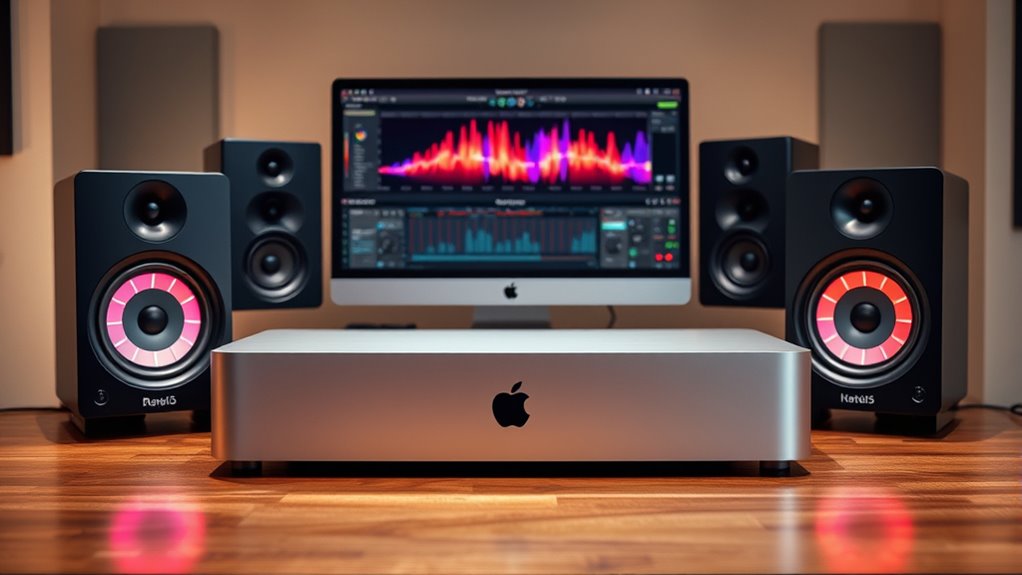
When selecting a Mac Studio for audio production, I focus on processing power, compatibility with my audio interface, and storage needs. It is crucial to take into account how much RAM and connectivity options the model offers to ensure smooth workflow. By evaluating these factors, I can choose a machine that meets my specific production requirements effectively.
Processing Power Needs
Choosing the right Mac Studio for audio production heavily depends on processing power, as it directly influences your ability to handle complex projects smoothly. A powerful CPU with multiple cores and advanced GPUs enables faster rendering and real-time audio processing, essential for demanding sessions. Multithreaded CPUs with more cores can efficiently manage large projects with numerous tracks and plugins, reducing lag and improving responsiveness during recording and mixing. Sufficient processing power also minimizes latency, making your workflow more fluid and less frustrating. Additionally, a robust processor ensures that resource-intensive DAWs and virtual instruments run smoothly. Upgrading to a more capable Mac Studio not only enhances current performance but also future-proofs your setup, accommodating expanding workflows and software updates without compromise.
Audio Interface Compatibility
To guarantee your audio setup runs smoothly, it’s essential to verify that your Mac Studio supports the necessary connections for your audio interface. Ensure it has Thunderbolt 3 or 4 ports for seamless, high-speed data transfer. Check that your chosen audio interface supports macOS, preventing driver issues and guaranteeing compatibility. Also, consider whether the USB-C or Thunderbolt ports can handle the bandwidth needed for high-resolution audio data—this is critical for low-latency recording and mixing. Confirm that the interface’s compatibility aligns with your Mac Studio’s operating system version, avoiding connectivity hiccups. Finally, think about the number of input and output channels your projects require. Proper compatibility guarantees a stable, efficient workflow tailored to your specific audio production needs.
Storage Capacity Requirements
Selecting the right storage capacity is essential for smooth audio production on your Mac Studio. I recommend starting with at least 512GB to comfortably store large audio files and software without constant external drives. If you work with extensive sample libraries, multiple projects, or complex sessions, consider upgrading to 1TB or more. This ensures ample space for backups, plugins, and different project versions, reducing the need to juggle external storage. Faster SSDs also improve access times, boosting workflow efficiency when handling multimedia files. Evaluating your current storage needs and anticipating future growth helps prevent bottlenecks and keeps your setup streamlined. Investing in higher capacity storage now can save you time and hassle down the road, ensuring your Mac Studio remains capable of handling demanding audio projects.
Memory and RAM Size
When it comes to audio production on your Mac Studio, memory and RAM size directly impact how smoothly your workflow runs. More RAM allows you to multitask efficiently and handle large audio files without hiccups. While 16GB of RAM is enough for most projects, upgrading to 32GB or more can markedly improve performance, especially with complex sessions involving multiple plugins and demanding software. Adequate memory reduces system slowdowns and crashes, ensuring real-time audio processing and seamless operation of large sample libraries and multi-track recordings. Keep in mind, many Mac Studio models don’t support RAM upgrades later, so choosing the right amount at purchase is vital. Investing in sufficient RAM now guarantees future-proof, smooth, and reliable audio production.
Connectivity Options Offered
Choosing the right connectivity options on a Mac Studio is essential for a smooth audio production workflow. I look for multiple Thunderbolt 4 and USB-C ports to guarantee high-speed data transfer and easy device connection. HDMI and audio output ports are critical for connecting external monitors and professional audio equipment directly. Stable internet is indispensable, so I check for Gigabit Ethernet or 10Gb Ethernet ports to handle large file transfers and streaming needs. Front-facing USB-C or USB-A ports provide quick access to external drives, MIDI controllers, and other peripherals without hassle. Overall, I prioritize a variety of ports to support multiple audio interfaces, external storage, and specialized hardware, ensuring my setup remains flexible and efficient for demanding production tasks.
Software Compatibility & Support
Ensuring your Mac Studio supports the latest macOS updates is essential for seamless compatibility with current audio production software. I always verify that the system has sufficient processing power, such as M4 Pro or M4 Max chips, to run demanding plugins and virtual instruments smoothly. It’s also important that the Mac Studio includes multiple Thunderbolt and USB-C ports to connect audio interfaces, MIDI controllers, and external drives without issues. Compatibility with professional audio software like Logic Pro, Ableton Live, and Pro Tools is critical; I check their specific system requirements to avoid surprises. Additionally, I look for hardware-accelerated decoding and encoding features that can boost audio processing and reduce latency, ensuring a smooth, professional workflow.
Portability and Space
The size and weight of a Mac Studio play a crucial role in how well it fits into your workspace, especially if you’re limited on space or need to move it frequently. Its compact design can maximize desk space and reduce clutter during audio sessions, making it ideal for tight setups. If you often work at different locations, a lightweight, portable model simplifies transport and setup. Smaller form factors are perfect for limited spaces, but keep in mind they might need external gear for expanded connectivity. Placement options also matter—whether stacking with other equipment or fitting into custom cabinetry. Considering these aspects ensures your Mac Studio not only delivers power but also seamlessly integrates into your workflow, whether in a fixed studio or on the go.
Price and Budget
Your budget plays a critical role in selecting the right Mac Studio for audio production, as it helps narrow down options and guarantees you make a smart investment. Start by determining your overall spending limit to ensure the Mac Studio fits within your financial plans. Consider the cost differences between configurations, such as RAM and storage options, to find the best value for your needs. Remember to account for additional expenses like audio interfaces, studio monitors, and software, which can considerably impact your total investment. Striking a balance between price and performance is essential; investing in a higher-end model may cost more upfront but can deliver longer-term benefits, including better performance and upgradeability, ultimately saving you money over time.
Frequently Asked Questions
How Does Mac Studio Compare to Other High-End Audio Production Computers?
I find the Mac Studio stands out for its seamless integration, powerful M2 Ultra chip, and sleek design. Compared to other high-end audio computers, it offers superior performance, faster processing, and better stability for demanding projects. Its optimized hardware and software ecosystem make it my top choice for professional audio production, especially when I need reliable, high-speed results without sacrificing portability or ease of use.
What Are the Best Accessories to Optimize Mac Studio for Audio Work?
To optimize my Mac Studio for audio work, I swear by a high-quality audio interface like the Universal Audio Apollo. I also add a professional studio monitor setup for accurate sound, a MIDI controller for production, and a good pair of headphones for mixing. External SSDs are a must for fast storage, and a reliable, adjustable stand keeps my workspace ergonomic. These accessories truly elevate my audio production workflow.
Can Mac Studio Handle Large-Scale Mixing and Mastering Projects Efficiently?
Handling large-scale mixing and mastering projects on a Mac Studio is like driving a sports car on a smooth highway—I feel confident and in control. Its powerful processors and ample RAM make it efficient, even with complex sessions and numerous tracks. I’ve experienced seamless workflow, quick rendering, and no lag, which means I can focus on creativity without worrying about technical hiccups. It’s truly a game-changer for demanding audio projects.
How Future-Proof Are Mac Studio Models for Upcoming Audio Production Software?
I believe Mac Studio models are highly future-proof for upcoming audio production software. Apple’s consistent hardware updates and powerful specs guarantee compatibility with new tools and features. I stay confident that investing in a Mac Studio now means I’ll be able to handle evolving software demands, thanks to its robust performance and expandability. For anyone serious about long-term audio production, Mac Studios are a smart, future-ready choice.
What Is the Average Lifespan of a Mac Studio Used for Professional Audio?
I’ve found that a Mac Studio used for professional audio typically lasts around 5 to 7 years. While some users report longer lifespans with careful maintenance and upgrades, tech evolution often pushes hardware beyond ideal performance sooner. I believe investing in a high-end model can extend its usefulness, but ultimately, software demands and hardware durability set the real limits. Staying updated helps maximize your Mac Studio’s lifespan.
Conclusion
Choosing the right Mac Studio can elevate your audio production game, and with Apple’s latest chips, you’re getting unmatched power. Did you know that Mac users report a 30% faster workflow on average? That’s a game-changer. Whether you opt for the M4 or M4 Pro, these models deliver top-tier performance. Invest wisely, and you’ll enjoy seamless editing and mixing for years to come—making your creative process more efficient and enjoyable.