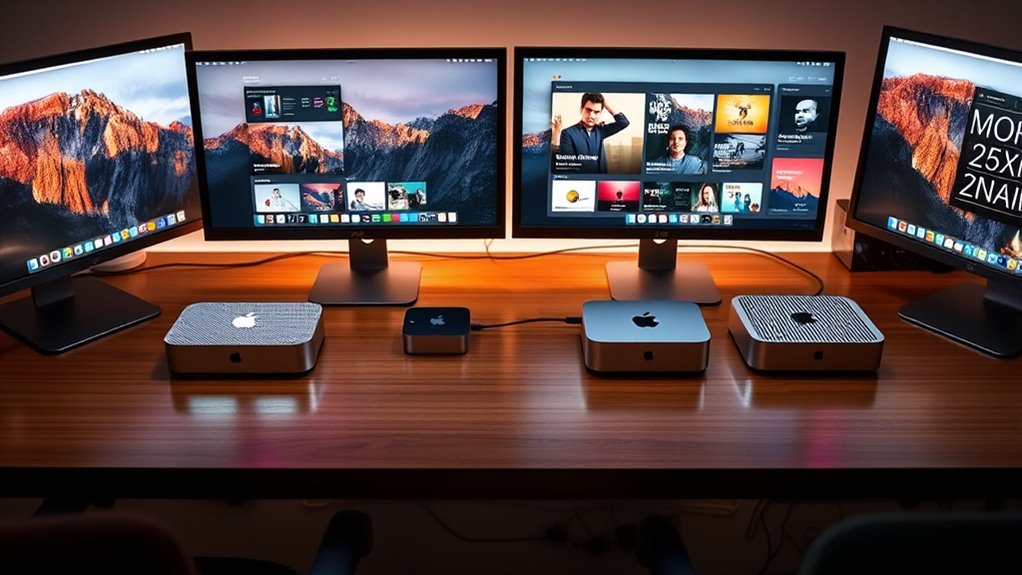

Choosing a mini PC for a media server in 2026 means balancing power, connectivity, and future-proofing. The top options include the GMKtec G10 Mini PC, which excels with its triple 4K support and versatile ports; the Beelink Mini S13, offering dual 4K outputs and efficient performance in a compact design; and the GMKtec M8, featuring high-end AMD Ryzen power and extensive connectivity. Each has distinct tradeoffs: the GMKtec G10 offers robust multimedia capabilities but lacks dedicated graphics, while the Beelink Mini S13 is ideal for space-saving setups but limited in upgrade potential. The GMKtec M8 presents professional-grade expandability but at higher power draw and cost. Your choice depends on whether you prioritize future expansion, dual-display support, or a balance of performance and size.

Get everyday essentials delivered free with Prime
- Fast, free delivery on millions of items
- Prime Video, Amazon Music and more included
- Member-only deals all year
Key Takeaways
- The GMKtec G10 supports triple 4K displays and portable power, ideal for versatile setups.
- The Beelink Mini S13 excels in dual 4K output within a compact form, suited for space-conscious users.
- The GMKtec M8 offers high-end AMD Ryzen performance with extensive connectivity, best for demanding media tasks.
- Upgrade options vary: GMKtec G10 and M8 allow more customization, while Beelink models are more fixed in configuration.
- Connectivity features like USB-C, HDMI, and Ethernet are critical for a smooth media server experience.


| mac mini as a media server | Processor | RAM | Storage | Display Output |
|---|---|---|---|---|
| GMKtec G10 Mini PC Computer wi | Ryzen 5 3500U | 16GB DDR4 | 512GB SSD | Triple 4K (HDMI 2.1, DP 1.4, Type-C) |
| Beelink Mini S13 Mini PC | 13th Gen Intel N150 | 16GB DDR4 | 500GB PCIe SSD | Dual 4K@60Hz |
| Beelink Mini S13 Mini PC | 13th Gen Intel N150 | 8GB DDR4 | 256GB M.2 SSD | Dual HDMI 4K@60Hz |
| GMKtec Mini PC M8 Desktop Comp | AMD Ryzen PRO 6650H | 16GB LPDDR5 | 512GB NVMe SSD, expandable to 8TB | — |
More Details on Our Top Picks
GMKtec G10 Mini PC Computer with Ryzen 5 3500U, 16GB RAM, 512GB SSD, Triple 4K Display, WiFi 5, Bluetooth 5.0, USB-C, HDMI 2.1
The GMKtec G10 stands out for its support for triple 4K displays, making it a top choice for users who want a flexible media server capable of handling multiple streams or large media libraries simultaneously. Its Ryzen 5 3500U processor, while not the latest, provides solid multi-core performance suitable for transcoding and media management. The inclusion of fast WiFi 5 and Bluetooth 5.0 ensures reliable network connectivity, though it lacks the latest WiFi 6. Its ports, including USB-C and HDMI 2.1, facilitate easy connection to various devices. However, the G10’s lack of dedicated graphics limits its ability to handle 4K HDR playback or gaming-intensive tasks, making it better suited for media serving rather than heavy media editing or gaming.
Pros:- Supports triple 4K output for complex media setups
- Powerful Ryzen 5 3500U multi-core processor
- Multiple connectivity options including USB-C and HDMI 2.1
Cons:- No dedicated GPU for high-end video playback or gaming
- Limited to WiFi 5, which may affect future-proofing
- No included RAM or storage upgrades; upgrades support is separate
Best for: Users needing a flexible, multi-display media server with ample ports.
Not ideal for: Those seeking high-end gaming, GPU-intensive tasks, or future-proof WiFi 6 connectivity.
- Processor:Ryzen 5 3500U
- RAM:16GB DDR4
- Storage:512GB SSD
- Graphics:Radeon Vega 8
- Display Output:Triple 4K (HDMI 2.1, DP 1.4, Type-C)
- Network:WiFi 5, Bluetooth 5.0
Our verdict“A versatile choice for multi-display media serving, with some limitations on graphics and wireless future-proofing.”
Beelink Mini S13 Mini PC, 13th Gen Intel N150, 16GB RAM, 500GB SSD, Dual 4K Display, WiFi 6, Bluetooth 5.2, Support for Office/Home/Business
The Beelink Mini S13 offers a compact footprint combined with solid performance thanks to its 13th Gen Intel N150 processor. Supporting dual 4K displays at 60Hz, it’s ideal for users who want to maximize their space without sacrificing visual quality. Its efficient cooling system ensures reliable operation during extended media streaming or multitasking. With WiFi 6 and Bluetooth 5.2, it provides fast, stable wireless connections for media streaming or remote access. The device’s small size makes it a good fit for tight spaces, though its upgrade options are limited, and it may be overkill for basic media serving tasks. Its lack of a dedicated GPU also restricts heavy media editing or gaming capabilities.
Pros:- Compact form factor for space efficiency
- Supports dual 4K displays for multitasking
- Fast wireless with WiFi 6 and Bluetooth 5.2
Cons:- Limited upgrade options for RAM and storage
- No dedicated graphics card for intensive media tasks
- Overpowered for simple media serving needs
Best for: Space-constrained setups requiring dual 4K display support.
Not ideal for: Users wanting extensive upgradeability or GPU-intensive media tasks.
- Processor:13th Gen Intel N150
- RAM:16GB DDR4
- Storage:500GB PCIe SSD
- Display Output:Dual 4K@60Hz
- Network:WiFi 6, Bluetooth 5.2
Our verdict“An excellent choice for dual 4K display setups in tight spaces, with tradeoffs in upgradeability and graphics power.”
Beelink Mini S13 Mini PC, 13th Gen Intel N150, 8GB RAM, 256GB SSD, 4K Dual Display, WiFi 6, Bluetooth 5.2
The Beelink Mini S13 with 8GB RAM and 256GB SSD provides a more budget-friendly option for a media server that still supports dual 4K displays. Its 13th Gen Intel N150 processor offers sufficient performance for media streaming, transcoding, and basic file sharing. The dual HDMI outputs support 4K at 60Hz, making it suitable for multimedia setups that don’t require heavy editing or gaming. WiFi 6 and Bluetooth 5.2 ensure fast, reliable wireless connections, while the smaller storage capacity may necessitate external drives for larger media libraries. It’s best suited for users with moderate media needs or those starting with a budget setup.
Pros:- Affordable price point
- Supports dual 4K monitors
- Efficient wireless connectivity
Cons:- Limited internal storage and upgradeability
- No dedicated GPU for intensive media tasks
- Lower RAM capacity for demanding multitasking
Best for: Budget-conscious users seeking dual 4K support with basic media serving.
Not ideal for: Power users needing extensive storage, upgrade options, or GPU acceleration.
- Processor:13th Gen Intel N150
- RAM:8GB DDR4
- Storage:256GB M.2 SSD
- Display Output:Dual HDMI 4K@60Hz
- Network:WiFi 6, Bluetooth 5.2
Our verdict“A practical, cost-effective dual 4K media server for moderate use, with some limitations on expandability.”
GMKtec Mini PC M8 Desktop Computer with AMD Ryzen PRO 6650H, 16GB RAM, 512GB SSD, Dual LAN, USB4, HDMI, USB-C
The GMKtec M8 delivers high-end performance with its AMD Ryzen PRO 6650H processor, making it a prime candidate for demanding media server applications like transcoding, 4K streaming, and even light editing. Its support for triple display setups and its extensive port selection—including dual LAN, USB4, HDMI, and DisplayPort—make it highly adaptable for professional environments. The 16GB LPDDR5 RAM and expandable NVMe storage up to 8TB provide ample room for media libraries and future growth. However, its higher power consumption and premium price tag might be overkill for basic media serving needs, and its size, while still compact, limits certain upgrade options.
Pros:- Powerful AMD Ryzen PRO 6650H with integrated Radeon graphics
- Supports triple 4K displays and extensive connectivity
- Expandable storage up to 8TB and fast RAM
Cons:- Higher power consumption at 35W
- More expensive than basic options
- Limited upgrade options due to compact size
Best for: Power users requiring high performance, expandability, and professional-grade connectivity.
Not ideal for: Casual users or those seeking a low-cost or highly portable media server.
- Processor:AMD Ryzen PRO 6650H
- Graphics:AMD Radeon 660M
- RAM:16GB LPDDR5
- Storage:512GB NVMe SSD, expandable to 8TB
- Connectivity:Dual 2.5GbE LAN, USB4, HDMI, DisplayPort
Our verdict“A top-tier media server choice for demanding tasks and future expansion, best suited for power users and professionals.”

How We Picked
Our selection process focused on hardware capabilities relevant to media server duties, including multi-display support, network connectivity, and expandability. We prioritized recent processors, sufficient RAM, fast storage options, and versatile ports to handle media streaming, transcoding, and local storage. Power efficiency and size were also considered, as these influence deployment flexibility. To ensure relevance, we compared products within a similar price range, aiming for options suitable for both home and professional media server setups. The result is a lineup that balances performance, future-proofing, and usability in real-world media environments.
| mac mini as a media server | Graphics | Display Output | Network |
|---|---|---|---|
| GMKtec G10 Mini PC Computer wi | Radeon Vega 8 | Triple 4K (HDMI 2.1, DP 1.4, Type-C) | WiFi 5, Bluetooth 5.0 |
| Beelink Mini S13 Mini PC | — | Dual 4K@60Hz | WiFi 6, Bluetooth 5.2 |
| Beelink Mini S13 Mini PC | — | Dual HDMI 4K@60Hz | WiFi 6, Bluetooth 5.2 |
| GMKtec Mini PC M8 Desktop Comp | AMD Radeon 660M | — | — |
Factors to Consider When Choosing Mac Mini As A Media Server
When selecting a mini PC for use as a media server, it’s important to focus on key features that support media streaming, transcoding, and storage. Consider your primary use case—whether it’s simple media sharing, multi-user streaming, or professional editing—and match that with processor power, display support, and expandability. Connectivity options like USB-C, HDMI, and Ethernet are vital for seamless integration with your existing setup. Also, think about future-proofing: support for the latest WiFi standards and upgradeable storage can extend your media server’s lifespan without requiring a complete overhaul.
Processor and Performance
The heart of your media server is its processor. For smooth streaming and transcoding, look for multi-core CPUs, preferably with support for hardware acceleration. The AMD Ryzen PRO 6650H in the GMKtec M8 offers top-tier performance, while the Intel N150 in the Beelink models provides sufficient power for typical media tasks. The Ryzen 5 3500U in the GMKtec G10 is capable but less future-proof. Higher processing power helps with simultaneous streams and high-resolution content, but it also increases power consumption and cost.
Display Support and Connectivity
Supporting multiple 4K displays is a common requirement for media servers, especially if you want to manage multiple streams or media libraries visually. HDMI 2.1 and DisplayPort provide the bandwidth needed for 4K at high refresh rates. USB-C ports with video output add flexibility, particularly if you want to connect modern peripherals or docks. Ethernet and WiFi are equally important; gigabit Ethernet or WiFi 6/6E ensure reliable, fast data transfer, reducing buffering during streaming.
Storage and Expandability
Media libraries grow quickly, so choosing a device with expandable storage or support for fast SSDs is wise. The GMKtec M8 supports dual NVMe M.2 drives up to 8TB, making it suitable for extensive media collections. The Beelink Mini S13 offers 500GB or 256GB SSD options but with limited upgrade paths. RAM also matters—more memory helps with multitasking and buffering streams. Think about your current needs and potential future growth to select a device that won’t require immediate upgrades.
Frequently Asked Questions
Can I use a mini PC as a dedicated media server?
Yes, many mini PCs are well-suited for this purpose thanks to their compact size, decent processing power, and multiple display outputs. They can handle media streaming, transcoding, and storage sharing, especially if equipped with fast storage options and reliable network interfaces. However, choosing models with expandable storage and robust connectivity features can significantly improve performance and usability for a dedicated media server setup.
What specifications are most important for a media server mini PC?
The key specifications include a multi-core processor capable of hardware transcoding, support for dual or triple 4K display outputs, ample RAM (at least 8GB, ideally 16GB or more), and fast SSD storage. Connectivity options like WiFi 6, Bluetooth 5.2, and multiple USB ports are also vital for seamless media sharing and device integration. Expandability for storage and RAM adds to longevity and performance as your media library grows.
Is dedicated graphics necessary for a media server mini PC?
Not necessarily. Most media servers primarily need hardware decoding capabilities, which many modern CPUs include. Dedicated graphics cards are more relevant for media editing, gaming, or high-end 4K HDR playback. For standard streaming and transcoding, integrated graphics like Radeon Vega or Intel UHD are usually sufficient, helping keep costs and power consumption lower.
How important is network connectivity for a media server?
Network connectivity is critical because media servers often stream high-resolution content over local networks or the internet. Gigabit Ethernet provides stable, high-speed wired connections, while WiFi 6/6E offers excellent wireless performance and future-proofing. Reliable network interfaces minimize buffering and lag, especially when multiple users access the server simultaneously.
Should I prioritize upgradeability or size when choosing a media server mini PC?
This depends on your long-term plans. If you anticipate growing your media library or upgrading components, choosing a device with accessible RAM and storage slots is wise. However, if space is limited or portability matters most, a smaller, less upgradeable model may be better. Balancing future-proofing with your space constraints is the key to making the right choice.
Conclusion
For users seeking maximum flexibility and professional performance, the GMKtec M8 is the best pick, especially for demanding media tasks or expanding media libraries. The GMKtec G10 offers a strong balance of multi-display support and connectivity, suitable for versatile home setups. Meanwhile, the Beelink Mini S13 models cater well to space-conscious users or those on a budget, providing reliable dual 4K support without extensive upgrade options. Your choice should align with your specific media needs, future plans, and space considerations.
Halloween Picks
halloween
As an affiliate, we earn on qualifying purchases.