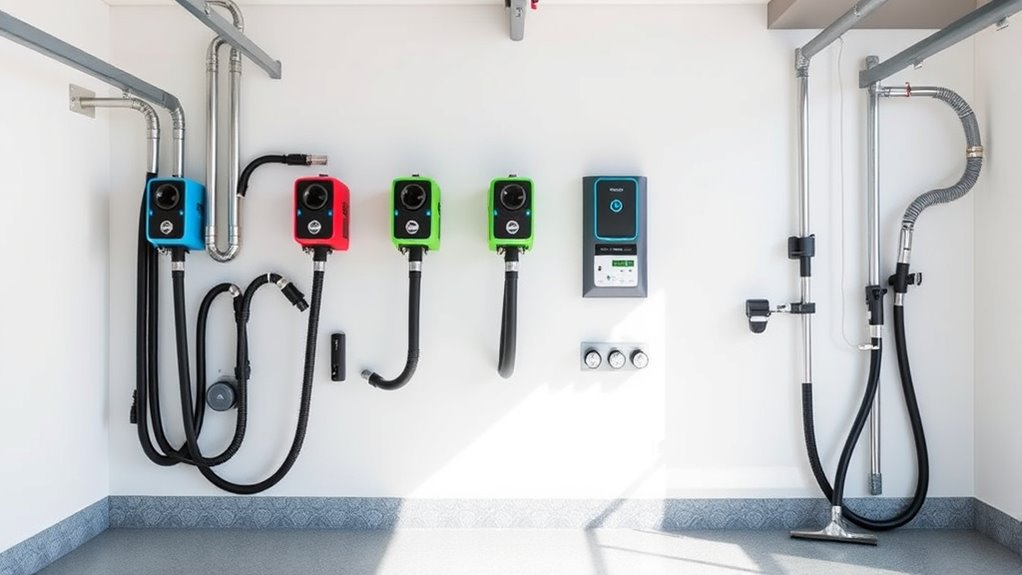
If you’re looking for the best central vacuum kits for DIY installation that are both easy to set up and deliver powerful cleaning, I’ve explored top options like kits with 110 to 130 feet of pipe, compatible inlets, and simple wiring. These kits include everything from pipes and fittings to hoses and accessories, making installation straightforward. Keep exploring to discover the ideal system that fits your home and skill level for hassle-free, efficient cleaning.
Key Takeaways
- Choose kits with comprehensive components, including long pipes and fittings suitable for your home size and layout.
- Ensure wiring and control systems meet electrical standards for safe, reliable operation across multiple inlets.
- Opt for lightweight, compatible hoses and accessories that facilitate easy installation and versatile cleaning.
- Select modular piping and clear manuals to simplify DIY setup and reduce installation complexity.
- Verify system compatibility with existing inlets and accessories for seamless integration and optimal cleaning performance.

Central Vac Electric Installation Kit (4), 110 ft. of Pipe
Includes All Materials Necessary to Install a Central Vacuum System
As an affiliate, we earn on qualifying purchases.
Central Vac Electric Installation Kit (4), 110 ft. of Pipe

If you’re installing a central vacuum system in your home and need a reliable, all-in-one kit, the Central Vac Electric Installation Kit with 110 feet of pipe is an excellent choice. It includes everything you need: 22 sections of pipe, various fittings like sweep 90’s, tees, and 45’s, plus pipe straps and stop couplings. The kit also provides 80 feet of wiring plus an extra 30 feet, ensuring ample electrical connection. Compatibility with all direct connect hoses and Hayden 1760 inlets makes it versatile. With a detailed manual included, you’ll find installation straightforward, making this kit a practical solution for a powerful, DIY-friendly setup.
Best For: homeowners seeking an all-in-one, DIY-compatible central vacuum system installation kit with comprehensive piping and wiring components.
Pros:
- Includes all necessary materials for a complete installation, simplifying setup.
- Compatible with a wide range of hoses and inlets, offering versatility.
- Comes with detailed instructions, making DIY installation straightforward.
Cons:
- The kit may be too large or complex for very small or simple vacuum system setups.
- Additional customization or parts might be needed for specific home configurations.
- Heavy piping sections could be cumbersome to handle during installation.

Central Vacuum Cleaner Installation Set for 3 Suction Boxes with Pipes, Fittings etc. DIY Mounting Kit for Vacuum Cleaner System Suction Box Lid Round Rectangular
Central vacuum cleaner installation set with 3 suction cans and vacuum pipes
As an affiliate, we earn on qualifying purchases.
Central Vacuum Cleaner Installation Kit for Suction Boxes

The Central Vacuum Cleaner Installation Kit for Suction Boxes is an ideal choice for DIY enthusiasts and homeowners looking to set up their own central vacuum system. It includes three suction cans with round or rectangular white lids, along with 13 vacuum pipes—eight with 90° bends and six with 45° bends—for flexible installation. The kit also features 10 pipe connectors, including safety bends and branches, plus three suction boxes with mounting frames. With essential hardware like pipe clamps, a control cable, and adhesive, this kit covers basic pipe setup and connects suction boxes to the vacuum source. It’s an all-encompassing, easy-to-use solution for a powerful, custom vacuum system.
Best For: DIY homeowners and enthusiasts seeking an easy, comprehensive solution to install a custom central vacuum system.
Pros:
- Includes all essential components for a complete installation, simplifying the process
- Compatible with both round and rectangular suction box lids for versatile use
- Designed for easy DIY setup with detailed hardware and fittings
Cons:
- May require additional tools or expertise for complex or large-scale installations
- Limited to basic pipe setup; advanced features or accessories are not included
- The kit’s size and component variety might be overwhelming for absolute beginners

My Filtered Home Compatible Install Kit Replacement for Central Vacuum Includes 48 ft Pipe for Nutone, Beam, Eureka, Vacuflo, Vacumaid, Hayden, Broan, Electrolux, Honeywell, Canavac, Riccar, Cyclovac
Professionally packed central vacuum kit featuring 48 ft. of pipe and most commonly used fittings for a 3...
As an affiliate, we earn on qualifying purchases.
My Filtered Home Vacuum Replacement Kit

My Filtered Home Vacuum Replacement Kit is an ideal choice for homeowners seeking a reliable, easy-to-install solution for upgrading their central vacuum system. It’s compatible with brands like Nutone, Beam, Eureka, and more, making it versatile for many setups. The kit includes 48 feet of pipe, essential fittings, and three white wall valves designed for a 3-valve installation, ensuring a straightforward setup. Professionally packed guarantees quality and accuracy. Whether you’re replacing an old system or upgrading your current one, this kit provides all the necessary components for efficient installation and powerful cleaning without hassle.
Best For: homeowners seeking a reliable, easy-to-install central vacuum upgrade compatible with popular brands like Nutone, Beam, Eureka, and others.
Pros:
- Includes 48 ft. of pipe and essential fittings for comprehensive installation
- Compatible with multiple major vacuum brands for versatile use
- Professionally packed for quality assurance and accuracy
Cons:
- Designed specifically for systems with a 3-valve setup, limiting flexibility for other configurations
- May require basic DIY skills for installation
- Does not include detailed installation instructions in the provided overview

Universal Low Voltage Installation Kit (5), 130' of Pipe
Includes All Materials Necessary to Install a Central Vacuum System
As an affiliate, we earn on qualifying purchases.
Universal Low Voltage Installation Kit (5), 130′ of Pipe

Designed for versatility, the Universal Low Voltage Installation Kit (5) with 130 feet of pipe is an ideal choice for homeowners or professionals seeking a reliable, all-in-one solution to install or upgrade their central vacuum system. It includes everything needed—pipe sections, fittings, wire, inlet options, and mounting hardware—making installation straightforward. Compatible with most brands and models, especially Hayden 1500-style low voltage inlets, it ensures flexibility for various setups. The exhaustive manual guides you through the process, helping you achieve efficient, seamless installation. This kit simplifies DIY projects while delivering powerful cleaning performance.
Best For: homeowners and professionals seeking a comprehensive, versatile central vacuum installation kit compatible with most brands and models, especially Hayden 1500-style low voltage inlets.
Pros:
- Includes all necessary components for a complete installation, reducing the need for additional purchases
- Compatible with nearly all central vacuum brands and models, offering great flexibility
- Comes with a detailed manual to guide users through the installation process
Cons:
- The length of pipe and wire might be excessive for small installations, leading to potential waste
- The kit may be overwhelming for DIY beginners due to the variety of fittings and components
- Limited to low voltage systems, so incompatible with high voltage vacuum setups
OVO Central Vacuum Carpet Deluxe Kit
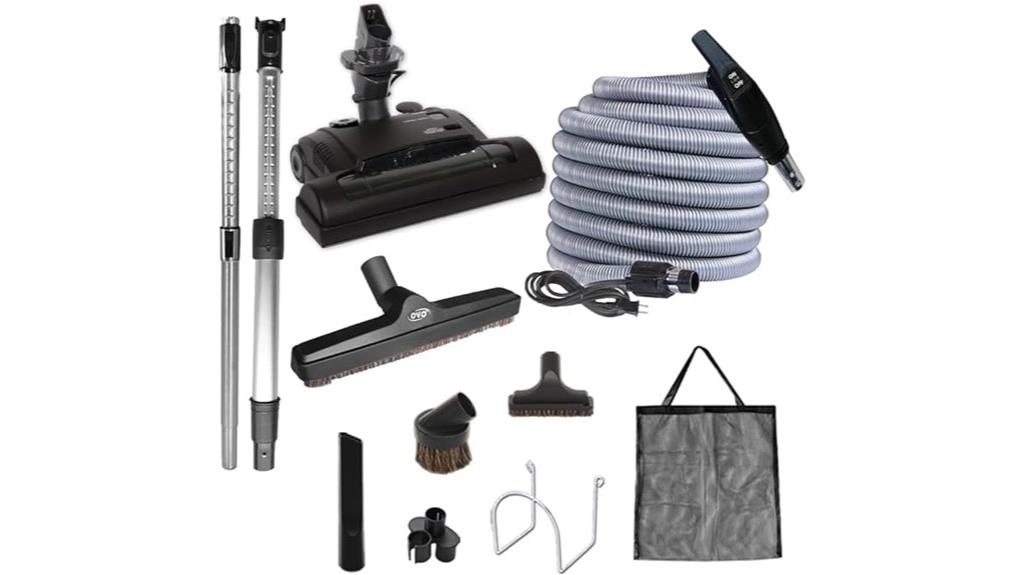
Looking for a versatile vacuum system that handles both carpets and hard surfaces with ease? The OVO Central Vacuum Carpet Deluxe Kit is a great choice. It features a lightweight, crushproof 35ft hose with an ON/OFF switch, compatible with most inlet sizes. The kit includes a 72” power cord (sold separately) and tools like an adjustable electric carpet beater with LED light, a pivoting floor brush, and soft-bristle accessories. Easy to store with a deluxe bag and chrome hose hanger, it supports major brands like Hoover and Electrolux. With a 2-year warranty and reliable support, it’s perfect for DIY installation and versatile cleaning.
Best For: homeowners seeking a versatile, easy-to-use central vacuum system suitable for both carpets and hard floors with convenient storage and reliable support.
Pros:
- Lightweight, crushproof 35ft hose with ON/OFF switch for easy operation.
- Includes multiple tools like adjustable electric carpet beater with LED light and soft-bristle accessories for delicate surfaces.
- Comes with organized storage options, such as a deluxe bag and chrome hose hanger, plus a 2-year warranty.
Cons:
- Requires manual filter replacement; not a cordless or self-cleaning system.
- Power cord sold separately, which may add to overall cost and setup complexity.
- Rated 3.9/5 stars, indicating some users may experience issues with compatibility or performance.
Factors to Consider When Choosing Central Vacuum Kits for DIY Installation
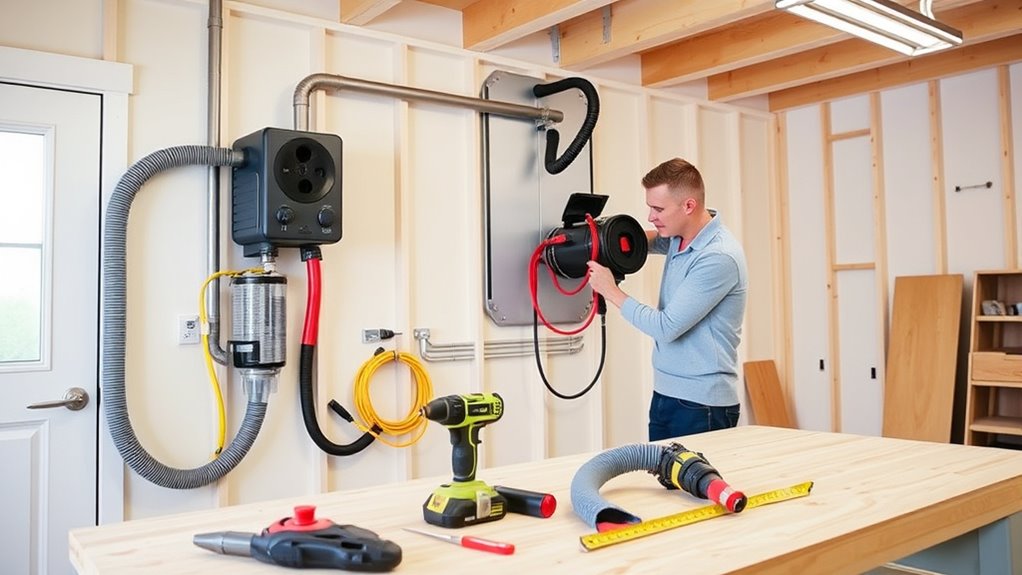
When selecting a central vacuum kit for DIY installation, I consider how well it fits my home’s layout and the length of piping needed. I also check the electrical wiring requirements, inlet options, and whether the tools and accessories are compatible. These factors help guarantee a smooth installation process and effective cleaning performance.
Compatibility With Home Layout
Choosing the right central vacuum kit starts with ensuring it fits your home’s layout. I recommend checking that the inlet sizes and types match your existing or planned inlet configurations to avoid compatibility issues. Also, verify that the pipe length and fittings can cover your home’s square footage and layout, especially if you have multiple floors or large open areas. It’s important to have enough pipe sections and fittings to reach all spaces without adding too many joints, which can reduce suction power. Additionally, confirm that the installation kit supports your wall construction—whether drywall, plaster, or other materials—and that it can be securely mounted. Flexible inlet options and adjustable hardware help tailor the system to your home’s specific design, ensuring an efficient and seamless setup.
Pipe Length and Quantity
Selecting the right pipe length and quantity is essential for a DIY central vacuum installation because it directly impacts coverage and system performance. Longer pipes, such as 110 or 130 feet, let you cover large homes without extra fittings, simplifying setup. The number of pipe sections, usually in 5-foot segments, influences how easily you can navigate around obstacles and customize the layout. Having enough pipe ensures seamless operation and reduces the need for connectors, which can cause leaks or suction loss. Kits with more sections offer flexibility to tailor the system to your home’s specific needs, with ideal placement of inlets. Accurately evaluating your home’s size and layout helps determine the right amount of pipe, ensuring efficient, effective cleaning without unnecessary complexity.
Electrical Wiring Requirements
Proper electrical wiring is a key factor in guaranteeing your central vacuum system works reliably and safely. Most kits come with 80 to 130 feet of wire, providing enough length for typical home layouts. Using heavy-duty wire, such as 14 or 16 gauge, is vital to safely handle the system’s power demands. Following manufacturer instructions and local electrical codes is essential to prevent hazards and ensure proper connections. Many kits also include control cables or low-voltage wiring to activate switches and maintain compatibility with different inlet styles. Adequate wiring length and quality are especially important when installing multiple inlets or lengthy pipe runs, as reliable electrical connections ensure consistent power and operation. Paying attention to these wiring requirements helps achieve a safe, efficient installation.
Inlet Type Options
When considering inlet types for your central vacuum system, it’s vital to understand how square and round inlets differ in compatibility and installation. Square inlets often look more modern and are easier to connect, making them popular for DIY projects. Round inlets are traditional and may fit certain system models better. Some kits come with low-voltage or direct connect inlets, which influence the type of hose and electrical connections needed. Compatibility with your existing or planned hose connectors and wiring is essential to ensure everything works smoothly. Additionally, inlet size and mounting style vary, so selecting the right type helps your system integrate seamlessly into your home’s walls or ceilings. Making the right choice minimizes installation hassle and maximizes performance.
Tool and Accessory Compatibility
Choosing the right central vacuum kit involves making sure that the tools and accessories will work seamlessly with your system. I look for kits that include compatible hoses and fittings suited to my preferred cleaning tools. It’s important to verify that the electrical connections and low-voltage wiring match my inlet system and control switches. I also check if the kit offers a variety of nozzle sizes and attachment types to suit different cleaning needs and existing tools. Ensuring the accessories, like brushes and wands, are designed to work with the included inlet and hose connections is essential. Lastly, I confirm that the fittings and adapters support my desired setup, so my system integrates smoothly with my home’s infrastructure for reliable, powerful cleaning without compatibility issues.
Installation Complexity Level
Ever wondered how difficult it is to install a central vacuum system yourself? The complexity depends on the kit’s design and wiring requirements. Low-voltage systems are generally simpler, with fewer electrical concerns. Kits that come with detailed manuals and pre-cut pipes make assembly straightforward, reducing the need for custom fitting or special tools. Electrical systems that require 110V or higher voltage connections tend to be more challenging because they involve complex wiring and compliance with electrical codes. Flexible, lightweight piping and fewer fittings can make routing easier and speed up installation, especially for beginners. Modular kits with clear, step-by-step instructions are ideal for DIYers, as they simplify the process and make it more manageable without professional help.
Budget and Cost Factors
Budget considerations play a essential role in selecting the right central vacuum kit for DIY installation because prices can vary widely based on features and quality. First, determine your overall budget, as options range from affordable entry-level models to high-end systems with advanced features. Don’t forget to account for additional costs like accessories or fittings needed for your specific setup, which can add to the total expense. If DIY skills are limited, factor in the potential costs of professional help and compare these to investing in a thorough DIY kit. Also, consider the difference between low-voltage and high-voltage systems; high-voltage models tend to be more expensive but offer greater power. Remember, investing in higher-quality components often results in better durability and long-term savings.
Frequently Asked Questions
Can I Install a Central Vacuum System in a Multi-Story Home?
Yes, I can install a central vacuum system in a multi-story home. I find it practical because you can run the main unit on the ground floor and install inlets on each level for easy access. Planning the layout carefully is key, especially for stairwells and long runs. With the right tools and guidance, I believe DIY installation is doable and saves money while providing powerful, convenient cleaning across all floors.
What Is the Typical Lifespan of a Central Vacuum Unit?
A central vacuum unit typically lasts around 10 to 15 years, but with proper maintenance, it can go even further. Think of it as a trusty workhorse—if you keep it clean and check the filters regularly, it’ll serve you well for many years. I’ve seen units thrive beyond 15 years when cared for properly. Regularly empty the canister, replace filters, and schedule professional check-ups for maximum longevity.
Are There Specific Tools Required for DIY Central Vacuum Installation?
Yes, there are specific tools you’ll need for DIY central vacuum installation. I recommend a drill, stud finder, measuring tape, level, pipe cutter, and screwdriver. Sometimes, you’ll also need a hacksaw for cutting pipes and pliers for tightening fittings. Having these tools prepared makes the installation smoother and safer. Make sure to follow the kit’s instructions carefully, and don’t hesitate to ask for help if needed to guarantee everything is installed correctly.
How Much Noise Should I Expect During and After Installation?
During installation, you can expect some noise from drilling and cutting, but it’s usually manageable with ear protection. Once everything is set up, central vacuum systems are generally quiet during operation, often just as loud as a whisper or a soft conversation. Post-installation, you won’t notice much noise unless you’re actively using the vacuum, making it a great choice for maintaining a peaceful home environment.
Can I Upgrade My Existing Vacuum System to a Central One Later?
Absolutely, you can upgrade your existing vacuum system to a central one later, much like upgrading from a bicycle to a motorcycle. I recommend planning for it early, ensuring your current setup can support the new system. When you’re ready, installation is straightforward, often just involving connecting the new unit to existing power and hose routes. It’s a smart move that enhances your cleaning power and convenience over time.
Conclusion
Choosing the right central vacuum kit is like finding the perfect tool for a job—essential and satisfying. With these options, you can enjoy powerful cleaning without the hassle of professional installation. Whether you go for the easy setup or the more extensive kit, you’ll be amazed at how much cleaner and more comfortable your home feels. So, pick the one that best fits your needs and make vacuuming a breeze, not a chore.