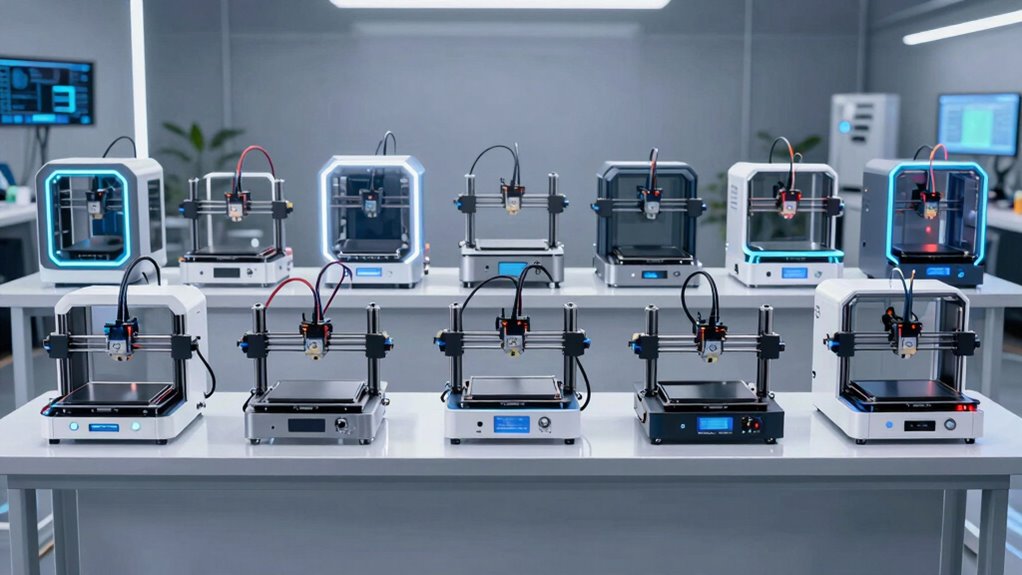

Finding the right 3D printer in 2026 involves balancing speed, quality, ease of use, and versatility. The Creality Ender 3 V3 SE stands out as the best overall choice for its reliable performance and affordability. For high-speed printing, the FLASHFORGE Adventurer 5M offers impressive speeds and auto-leveling features, making it ideal for rapid prototyping. Meanwhile, the Bambu Lab P1S provides a solid combination of user-friendly setup and multi-material support. Each of these options demonstrates different strengths and tradeoffs, which can be confusing for buyers. Continue reading for a detailed breakdown of each model’s pros and cons to find the perfect fit for your needs.

Get everyday essentials delivered free with Prime
- Fast, free delivery on millions of items
- Prime Video, Amazon Music and more included
- Member-only deals all year
Complete the kit


Key Takeaways
- The top models balance speed, print quality, and ease of use, with high-speed options often sacrificing some detail for faster output.
- Auto-leveling and multi-material capabilities are becoming standard features, streamlining setup and expanding project possibilities.
- Price varies significantly, with budget options offering good value but fewer advanced features, while premium models deliver high performance at a higher cost.
- Printer size and build volume are key considerations, especially for larger or more complex projects.
- Ease of assembly and user interface design can greatly impact the overall experience, especially for beginners.





More Details on Our Top Picks
Creality Ender 3 V3 SE 3D Printer Bundle with 4 Packs of PLA Filament
The Creality Ender 3 V3 SE stands out as the most balanced choice in this lineup, combining high-speed capabilities with user-friendly features like auto-leveling and a robust extruder. Its ability to print at 250mm/s offers faster turnaround times compared to the FlashForge Adventurer 5M, which maxes out at 600mm/s but lacks the same level of setup simplicity. The dual Z-axis and upgraded “Sprite” extruder deliver consistent, high-quality finishes, making it suitable for hobbyists and semi-professionals alike. However, the complex setup process and limited material compatibility mean it’s less suited for absolute beginners or those needing multi-material versatility. This model is ideal for users who want reliable, high-quality prints without sacrificing speed, provided they are comfortable with some initial calibration.
Pros:- High-speed printing up to 250mm/s reduces project times
- Automatic leveling with CR Touch simplifies setup
- Dual Z-axis ensures stable, precise layers
- Includes four color PLA filaments for immediate use
Cons:- Complex initial calibration may be intimidating for novices
- Limited to PLA, TPU, PETG – less versatile for advanced materials
Best for: Hobbyists and small-scale professionals seeking a reliable, high-speed printer with good material versatility and automatic leveling.
Not ideal for: Beginners with no technical experience or users needing multi-material or multi-color setups out of the box.
- Maximum Printing Speed:250mm/s
- Extruder:Full metal dual-gear “Sprite”
- Auto Leveling:CR Touch sensor
- Z-axis:Dual Z-axis lead screws
- Filament Type:PLA, TPU, PETG
- Included Filaments:4 packs (Black, White, Red, Blue)
Our verdict“This is a well-rounded choice for users who prioritize speed and precision but are comfortable with some setup complexity.”
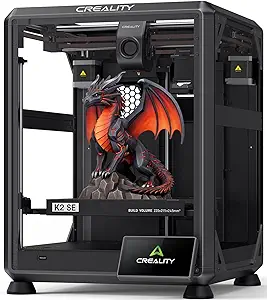
Creality K2 SE 3D Printer, 500mm/s High-Speed, Multi-Color Support, Auto Leveling, Solid Metal Frame, Direct Drive Extruder, 220×215×245mm Print Size
The Creality K2 SE is designed for speed and multi-color capabilities, supporting up to 500mm/s, which makes it ideal for rapid prototyping or large batch production. Its solid die-cast aluminum frame provides stability, and auto-leveling makes setup straightforward, especially compared with the more complex Ender 3 V3 SE. The support for multi-color printing with optional CFS adds versatility, but the need for the CFS system to unlock this feature can be a stumbling block for casual users. Its 220×215×245mm build volume is suitable for most small to medium projects, but the advanced features and large size may require a learning curve and more space. This pick is best for users who want speed and multi-color options without sacrificing stability.
Pros:- Outstanding print speeds up to 500mm/s for quick results
- Stable, durable frame supports high-precision work
- Auto-leveling simplifies initial setup
- Supports multi-color printing with optional CFS system
Cons:- Requires additional CFS system for multi-color functionality
- Larger footprint demands more workspace
- More complex setup for new users
Best for: Designers and professionals needing rapid turnaround for multi-color prototypes or small production runs.
Not ideal for: Beginners or hobbyists who prefer plug-and-play simplicity over advanced multi-material capabilities.
- Print Speed:500mm/s
- Build Volume:220×215×245mm
- Frame Material:Die-cast aluminum alloy
- Auto Leveling:Yes
- Support for Multi-Color:Yes (with CFS system)
- Extruder Type:Direct Drive
Our verdict“Best suited for experienced users who need fast, multi-color printing with reliable stability.”
FLASHFORGE Adventurer 5M 3D Printer, 600mm/s High-Speed, Fully Auto Leveling, Upgraded Direct Extruder, 280°C Nozzle, Dual-Sided PEI Coating Plate
The FLASHFORGE Adventurer 5M emphasizes speed and ease of use, with a maximum speed of 600mm/s and fully automatic leveling. Its upgraded direct extruder and 280°C nozzle support a variety of filaments, including some advanced materials. The dual-sided PEI coating plate enhances adhesion and simplifies print removal, making it suitable for quick turnaround projects. Compared to the Ender 3 V3 SE, it offers a more straightforward setup process, but its larger size and weight can be limiting for smaller workspaces. The limited detailed review data suggests it’s more focused on reliability and speed than complex multi-material capabilities. This model is a good fit for makers who prioritize speed and convenience over extensive feature customization.
Pros:- High-speed printing up to 600mm/s for rapid prototyping
- Fully automatic bed leveling for hassle-free setup
- Durable dual-sided PEI plate for easy print removal
- Supports high-temperature filaments up to 280°C
Cons:- Relatively large and heavy for compact spaces
- Limited customization options for advanced users
- Lack of multi-material support beyond filament compatibility
Best for: Small workshops or home users seeking fast, reliable, and straightforward 3D printing.
Not ideal for: Users needing multi-material flexibility or those with limited space due to its size.
- Max Speed:600mm/s
- Print Size:220x220x220mm
- Nozzle Temperature:280°C
- Auto Leveling:Yes
- Build Plate:Dual-sided PEI coating
- Extruder:Upgraded direct drive
Our verdict“A strong choice for users who need fast, dependable printing with minimal setup fuss.”
FLASHFORGE Creator 5 Pro 3D Printer, 4-Toolhead, Multi-Material & Color Printing, Heated Chamber, CoreXY, 600mm/s
The FLASHFORGE Creator 5 Pro delivers impressive versatility with four independent toolheads, enabling simultaneous multi-material and multi-color printing, making it ideal for professional and industrial applications. Its heated chamber up to 65°C opens up options for advanced filaments like ABS and PC, which are less feasible on less equipped models like the Ender 3 V3 SE. The CoreXY design contributes to high-speed, precise printing at up to 600mm/s, but the setup is complex and may intimidate hobbyists. The large dimensions and weight also demand significant space and calibration effort. Compared to the P2S Combo, it offers more independent toolheads but lacks some automation features, making it better suited for experienced users with specific multi-material needs.
Pros:- Supports four independent toolheads for multi-material printing
- Heated chamber supports advanced filaments like ABS, PC
- High-speed operation at 600mm/s for efficient production
- CoreXY configuration ensures precise, stable prints
Cons:- Complex setup and calibration process
- Large, heavy footprint demands significant workspace
- Higher cost and learning curve for newcomers
Best for: Industrial users and professionals requiring multi-material, multi-color production with high speed and precision.
Not ideal for: Hobbyists or small-scale users without technical expertise or space for a large, complex machine.
- Product Dimensions:16 x 14 x 18 inches
- Active Heated Chamber:65°C
- Print Speed:up to 600mm/s
- Number of Toolheads:4
- Supported Materials:ABS, PC, PA
- Safety Features:HEPA 13 filter, activated carbon
Our verdict“Best suited for professional environments where multi-material, multi-color, and high-speed printing are priorities.”
Bambu Lab P2S Combo, P2S 3D Printer & AMS 2 Pro, Multi-Color 3D Printing
The Bambu Lab P2S Combo combines rapid, high-precision printing with a streamlined workflow, featuring a print speed of 600mm/s and the innovative AMS 2 Pro for multi-material, multi-color capabilities. Its quick setup, automatic calibration, and built-in filament drying make it especially appealing to those who want professional-grade results with minimal fuss. Compared to the Ender 3 V3 SE, it offers a more modern, automated workflow, but the P2S alone does not support multi-color printing without the Combo version, which could be confusing for newcomers. The advanced features, including AI failure detection and smart airflow, target users who need consistent, high-quality output for complex projects. However, the complexity and higher price point might be barriers for casual hobbyists.
Pros:- Exceptional print speed up to 600mm/s for rapid production
- Automatic calibration and quick setup reduce downtime
- Supports multi-material and multi-color printing with AMS 2 Pro
- Smart airflow and filament drying improve consistency
Cons:- Supports multi-color only with the Combo, adding complexity
- Learning curve for mastering advanced features
- Higher price point may be prohibitive for casual users
Best for: Professional creators and advanced hobbyists who require seamless multi-color, multi-material printing with fast turnaround.
Not ideal for: Beginners or users with limited space or budget, as the system’s complexity and cost are significant.
- Print Speed:600mm/s
- Setup Time:15 minutes
- Filament Drying Temp:65°C
- Chamber Temp:50°C
- Features:AI detection, auto calibration, quick-swap nozzles
Our verdict“Ideal for experienced users demanding high-speed, multi-material, multi-color workflows with seamless automation.”
Bambu Lab P1S Combo 3D Printer with Multi-Color Printing and Auto Bed Leveling
This model stands out for its impressive multi-color and multi-material capabilities, supporting up to 16 colors for vibrant, complex prints. Compared with the Bambu Lab P1S, the Combo version offers greater versatility but requires connection to the Bambu Lab AMS for multi-color functionality, adding complexity and cost. Its fast print speeds and automatic bed leveling ensure high-quality results with minimal fuss. However, its weight of 47.5 pounds and limited compatibility with fiber-reinforced filaments can limit portability and material choices. This pick makes the most sense for users who prioritize color richness and speed in an enclosed design, willing to manage additional setup requirements.
Pros:- Supports up to 16 colors for vibrant, multi-material prints
- Fast printing speeds up to 500mm/s
- Automatic bed leveling ensures consistent quality
- Enclosed design improves performance with advanced filaments
Cons:- Requires connection to Bambu Lab AMS for multi-color capabilities
- Relatively heavy at 47.5 pounds, less portable
- Not suitable for fiber-reinforced composites
Best for: Creative professionals and hobbyists who need multi-color, multi-material printing at high speeds
Not ideal for: Space-constrained users or those working with carbon or glass fiber filaments, due to weight and filament restrictions
- Dimensions:15.31 x 18.03 x 15.31 inches
- Weight:47.5 pounds
- Maximum Speed:500mm/s
- Supported Filaments:PLA, PETG, TPU, PVA, PET ABS, ASA; Capable: PA, PC
- Acceleration:20000 mm/s²
- Auto Bed Leveling:Yes
Our verdict“This printer best suits users seeking multi-color, high-speed printing with excellent print quality in an enclosed setup.”
FLASHFORGE Adventurer 5M 3D Printer with Auto Leveling and High-Speed Printing
This printer excels with its rapid print speeds up to 600mm/s and a straightforward, all-metal coreXY structure, making it ideal for quick prototyping. In comparison to the FlashForge AD5X, the 5M offers a slightly simpler setup and a more compact design, but the AD5X’s multi-color support and larger build volume make it more suitable for multi-color or larger projects. Its weight of 22 pounds makes it portable enough for many users. This choice suits those who value speed and ease of use over extensive feature complexity.
Pros:- Automatic bed leveling simplifies setup
- High-speed printing up to 600mm/s accelerates workflows
- Fast warm-up and versatile 280°C extruder
- Remote monitoring via mobile app enhances usability
Cons:- Relatively heavy at 22 pounds, somewhat less portable
- Limited detailed feedback on long-term durability
Best for: Designers and educators needing a fast, straightforward 3D printer with remote control capabilities
Not ideal for: Users requiring multi-color or large-format printing, or those concerned with slightly lower customer ratings
- Dimensions:15.83 x 14.29 x 17.64 inches
- Item Weight:22 pounds
- Print Size:220x220x220mm
- Max Speed:600mm/s
- Extruder Temperature:280°C
- Nozzle:3S Detachable
Our verdict“This printer is ideal for users who need quick, reliable prints with minimal setup complexity and remote control features.”
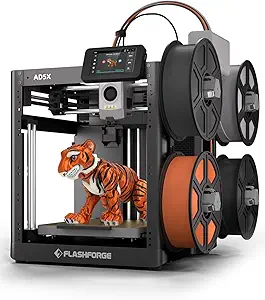
FlashForge AD5X Multi-Color 3D Printer, CoreXY, 600mm/s High-Speed, Auto Leveling, 300°C Direct Drive Extruder, 220x220x220mm Build Volume
The FlashForge AD5X pushes high-speed multi-color printing with speeds reaching 600mm/s, making it a strong choice for efficient multi-color projects. Compared to the Bambu Lab P1S ComboIts support for multiple nozzle sizes, including detailed 0.25mm options, makes it versatile for both fine and large prints. The 24.2-pound weight and sizable dimensions could be limiting for tight spaces, and the complex features might challenge newcomers. This printer fits best for users prioritizing speed and multi-color capability in a semi-industrial setting.
Pros:- Supports multi-color printing with up to 4 colors simultaneously
- Extremely fast speeds up to 600mm/s for rapid manufacturing
- Automatic bed leveling reduces setup complexity
- Versatile nozzle sizes for detailed or large-scale prints
Cons:- Customer feedback indicates inconsistent experiences
- Large and heavy, requiring ample space
- Complex feature set may be intimidating for beginners
Best for: Small studios or makers needing rapid multi-color production with flexible nozzle options
Not ideal for: Beginners or home users with limited space or those seeking a highly reliable experience
- Build Volume:220x220x220mm
- Max Printing Speed:600mm/s
- Extruder Temperature:300°C
- Nozzle Sizes:0.25mm to 0.8mm
- Item Weight:24.2 pounds
- Product Dimensions:16 x 14 x 18 inches
Our verdict“This high-speed multi-color printer is best suited for experienced users with adequate space who need rapid production capabilities.”
Bambu Lab P1S 3D Printer, Ready-to-Use FDM 3D Printer
The Bambu Lab P1S offers a ready-to-use FDM experience with multi-color and multi-material support, making it an appealing choice for newcomers and experienced users alike. Its high-speed capabilities (up to 500mm/s) and automatic bed leveling deliver reliable results, comparable to the FlashForge AD5X, but without the complexity of additional modules. Weighing 38.9 pounds, it balances portability with stability. Its limited compatibility with reinforced composites is a drawback for advanced users looking to print with carbon or glass fibers. This printer makes sense for those seeking an easy setup and consistent quality in an enclosed environment.
Pros:- Vibrant multi-color/multi-material printing capabilities
- High-speed printing reduces wait times
- Enclosed design enhances print quality with advanced filaments
- Automatic bed leveling for ease of use
Cons:- Requires connection to Bambu Lab AMS for multi-color printing
- Relatively heavy at 38.9 pounds, less portable
- Limited compatibility with reinforced composites
Best for: Hobbyists and beginners wanting a straightforward, multi-material 3D printer with good speed
Not ideal for: Advanced users needing compatibility with fiber-reinforced filaments or larger build volumes
- Dimensions:15.31 x 18.03 x 15.31 inches
- Weight:38.9 pounds
- Maximum Speed:500mm/s
- Supported Filaments:PLA, PETG, TPU, PVA, PET ABS, ASA; Capable: PA, PC
- Auto Bed Leveling:Yes
- Supported Materials:Multi-material
Our verdict“This printer is well-suited for hobbyists and beginners seeking reliable, multi-material prints in an enclosed, user-friendly design.”
Bambu Lab A1 3D Printer, Ready-to-Use FDM 3D Printer for Beginners and Kids
The Bambu Lab A1 is designed with simplicity and quiet operation in mind, featuring automatic calibration and active flow rate compensation. Its high-speed and precise printing (up to 10,000 mm/s² acceleration) make it appealing for educational settings or home use. Compared with the FLASHFORGE Adventurer 5M, the A1 offers a more compact profile and is tailored for ease of use, but detailed specifications like build volume are less prominent, and setup might challenge absolute newcomers. Its weight of 22 pounds makes it portable enough for classroom or home environments. This model is ideal for those starting out or teaching 3D printing to kids, prioritizing safety and quietness.
Pros:- Automatic calibration for hassle-free setup
- Active flow rate compensation improves print consistency
- Quiet operation ideal for classrooms or shared spaces
- Supports multi-color printing with AMS lite
Cons:- Requires AMS lite for multi-color, which may involve extra cost
- Limited details on build volume and materials
- Setup could be complex for users unfamiliar with 3D printers
Best for: Educators, parents, and beginners seeking a quiet, easy-to-use 3D printer for learning and small projects
Not ideal for: Advanced users or those needing large build volumes or complex multi-color capabilities
- Dimensions:21.76 x 20.83 x 12.87 inches
- Weight:22 pounds
- First Available:May 17, 2024
- Supported Filament:Multiple including PLA, PETG, TPU
Our verdict“This printer is best suited for beginners and educational environments focused on safety, quietness, and ease of use.”
Bambu Lab A1 Mini 3D Printer + LED Lamp Kit, Ready-to-Use for Beginners
The Bambu Lab A1 Mini stands out for its simplicity and quiet operation, making it ideal for beginners who want to start printing without a steep learning curve. Compared to the Creality Ender 3 V3 SE, which offers more customization options and higher build volume, the A1 Mini prioritizes ease of use over advanced features. Its automatic calibration and app integration streamline setup, while the included LED Lamp Kit sparks creative projects like decorative lights or personalized gifts. However, this model lacks the advanced capabilities professional users might desire, such as multi-material support or larger build sizes. Its tradeoff is that for users seeking straightforward, reliable printing with added creative potential, this is a smart choice.
Pros:- Simple setup and user-friendly interface
- Quiet operation suitable for home environments
- Includes LED Lamp Kit for creative customization
- Managed via Bambu Handy app for seamless control
Cons:- Limited advanced features for professional or complex projects
- Additional accessories may be needed for specific uses
Best for: Beginners, hobbyists, and families interested in easy setup and creative home projects
Not ideal for: Experienced makers or professionals needing large build volumes or multi-material support
- Type:3D Printer
- Model:A1 Mini
- Includes:LED Lamp Kit
- Connectivity:Bambu Handy app
- Features:Automatic calibration, quiet operation, high-speed printing
- Build Volume:Not specified, suitable for small projects
- Max Nozzle Temperature:Not specified
- Supported Filaments:Likely PLA, PETG, others compatible with beginner models
Our verdict“This printer is best suited for beginners and casual users seeking a quiet, easy-to-use machine with creative extras.”

How We Picked
To determine the best 3D printers for 2026, I considered several factors that matter to buyers: print quality, speed, ease of setup, build quality, and feature set. I prioritized models that offer a balance of performance and value, and paid close attention to user feedback and expert reviews. The ranking reflects a combination of these criteria, emphasizing versatility and reliability. Devices with advanced features like auto-leveling, multi-material support, and high-speed printing were given extra weight, as they greatly enhance usability and expand creative possibilities. Ultimately, the list aims to cover a range of needs, from beginners to experienced makers, by highlighting standout features and tradeoffs for each model.Factors to Consider When Choosing 3d Printer
Choosing the right 3D printer requires understanding your specific needs and how different features impact your workflow. Beyond raw specifications, it’s important to consider usability, maintenance, and future expandability. Here are key factors to keep in mind to make an informed decision and avoid common pitfalls.Print Quality and Resolution
High-resolution printing results in smoother surfaces and finer details, which is critical for detailed models or professional prototypes. Look for printers with at least 50-100 microns layer resolution for good quality, but keep in mind that higher resolution often means longer print times. Cheaper models may compromise on precision, leading to rougher finishes. Balancing resolution with speed and reliability is key—think about what matters most for your projects.
Print Speed
Speed can dramatically affect your productivity, particularly if you frequently produce large batches or prototypes. Some printers can reach speeds of 600mm/s, but this often results in lower quality or increased print failures. Most users should aim for a model that offers a good compromise—around 100-150mm/s—unless speed is your primary concern. Beware that pushing for ultra-fast printing may require more maintenance and higher costs.
Ease of Use and Setup
Beginners should prioritize models with auto-leveling, straightforward assembly, and intuitive interfaces. Manual bed leveling can be frustrating and time-consuming, especially for those new to 3D printing. Touchscreen controls, clear instructions, and minimal calibration requirements improve the experience and reduce downtime. Investing in a user-friendly device pays off by lowering the learning curve and minimizing troubleshooting.
Build Volume and Size
The size of the printer determines the maximum dimensions of your models. Larger build volumes enable bigger projects but also increase the printer’s footprint and cost. Smaller printers are more portable and easier to fit into limited spaces, yet may restrict your creative scope. Consider your typical project size and available workspace before choosing a model to avoid limitations or unnecessary bulk.
Material Compatibility and Extruder Features
Different printers support various filament types — from standard PLA to more advanced materials like ABS, PETG, or flexible filaments. Multi-material support and features like direct drive extruders expand your options but may add complexity and cost. Evaluate what materials you plan to use most often, and ensure the printer’s extruder and hotend are compatible to avoid frustrations or additional upgrades later.
Frequently Asked Questions
Is a more expensive 3D printer worth the investment?
Higher-priced models typically offer better print quality, faster speeds, and more advanced features like multi-material support and auto-leveling. If you require professional-grade results or plan to produce complex projects regularly, investing in a premium printer can be justified. However, for casual use or beginners, mid-range options often provide excellent value and sufficient performance without the hefty price tag.
How important is print speed for everyday use?
Print speed impacts how quickly you can complete projects, especially larger or multiple items. While faster speeds can boost productivity, they often compromise detail and reliability. For most hobbyists and small-scale projects, a moderate speed around 100-150mm/s strikes a good balance. Prioritize speed only if rapid prototyping or time-sensitive work is your main goal.
Can I upgrade a budget 3D printer later?
Many budget models are designed with upgrade paths in mind, allowing users to enhance features like hotends, extruders, or auto-leveling sensors over time. However, compatibility can vary, and some upgrades may be limited by the printer’s core design. It’s wise to check the manufacturer’s support for upgrades before buying, especially if you anticipate expanding your capabilities later.
What’s the most important feature for beginners?
For newcomers, ease of setup and operation are the most critical factors. Auto-leveling beds, user-friendly interfaces, and straightforward firmware reduce the learning curve and frustration. A reliable, well-supported model with plenty of tutorials and community help can make the transition into 3D printing smoother and more enjoyable.
Are multi-material printers worth the extra cost?
Multi-material printers open up creative possibilities by allowing the use of different filaments within a single project. They are especially useful for complex or multi-color models. However, they also tend to be more expensive and require more maintenance and calibration. If you mainly print simple models or are just starting out, a single-material printer may be more practical and budget-friendly.
Conclusion
For those seeking the best overall experience, the Creality Ender 3 V3 SE offers reliable performance at an accessible price. Buyers prioritizing speed and rapid prototyping should consider the FLASHFORGE Adventurer 5M, with its high-speed capabilities and auto-leveling. For beginners or those on a tighter budget, the Bambu Lab P1S provides a user-friendly entry point with solid features. High-end users or professionals needing multi-material support may find the FLASHFORGE Creator 5 Pro or the FlashForge AD5X better suited, despite the higher investment. Tailor your choice to your specific needs—whether it’s for hobby, education, or professional projects—and you’ll find a model that fits perfectly.
As an affiliate, we earn on qualifying purchases.Fall Picks
fall essentials