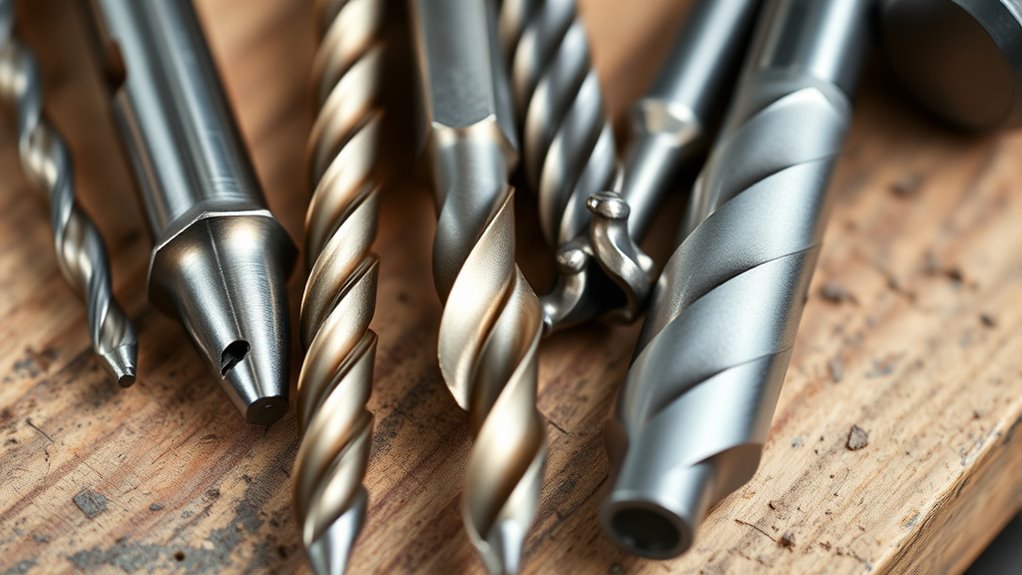

To choose the right drill bit, consider the material you’re working with. For wood, use high-speed steel or auger bits for smooth, accurate cuts. For metal, select cobalt or HSS bits designed for harder materials, adjusting your speed and pressure accordingly. For concrete or masonry, go for carbide-tipped masonry bits paired with a hammer drill. Knowing these basics helps you drill efficiently; more tips are available if you’re enthusiastic to learn further.
Key Takeaways
- Use high-speed steel (HSS) or auger bits for clean, precise woodworking projects.
- Select cobalt or HSS bits for drilling into harder metals like stainless steel.
- Opt for carbide-tipped masonry bits with a hammer drill for effective concrete or masonry work.
- Match drill bit type and coating to the material for optimal performance and longevity.
- Maintain and sharpen bits regularly, and use appropriate speed and pressure for each material.
Choosing the Right Drill Bit for Wood Projects
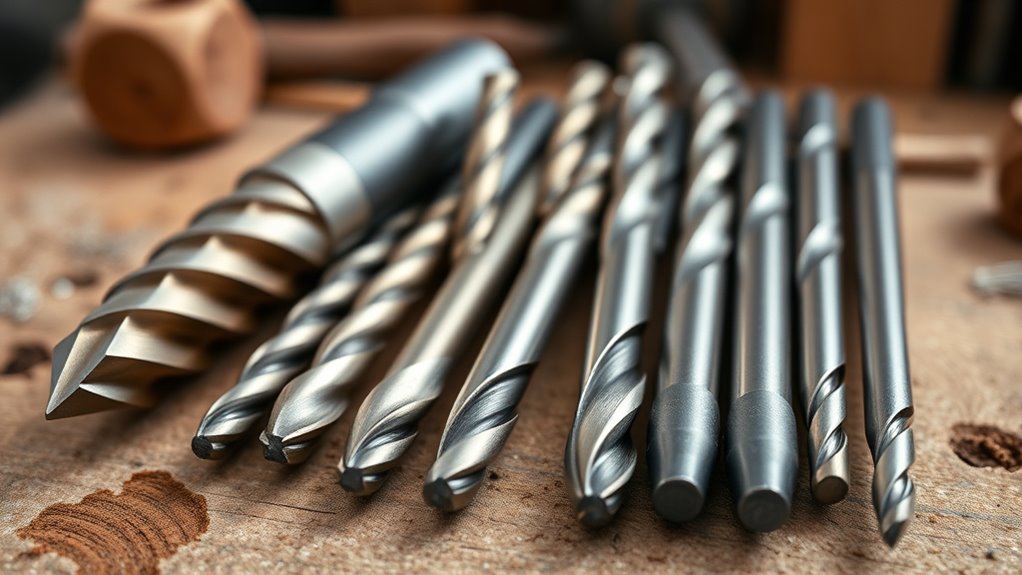
When working on wood projects, selecting the right drill bit is essential for achieving clean, precise holes and preventing damage to your material. You’ll want to choose bits specifically designed for wood, like high-speed steel (HSS) bits or auger bits. HSS bits are versatile and work well on soft and hardwoods, providing smooth cuts with less effort. Auger bits are ideal for deep holes, thanks to their twisted flutes and threaded screw tips that pull the bit through the wood efficiently. Look for sharp, pointed tips that help start your hole accurately. Coatings like titanium can reduce friction and extend the bit’s lifespan, ensuring cleaner cuts over time. Using the proper bit for your project minimizes splintering and ensures a professional finish. Additionally, understanding the role of material properties in drill bit selection can help you choose the most effective bit for your specific wood type and project requirements. Being aware of drill bit durability can also guide you in selecting bits that withstand the demands of your projects and provide consistent performance over time. Proper maintenance and choosing high-quality bits contribute to long-term efficiency, saving you time and effort during your woodworking projects. Recognizing the importance of proper bit sharpening can further enhance your drilling results and extend the lifespan of your bits. Moreover, considering the impact of drill speed on bit performance can help optimize your drilling process for better results.
Selecting the Best Bit for Metal Work
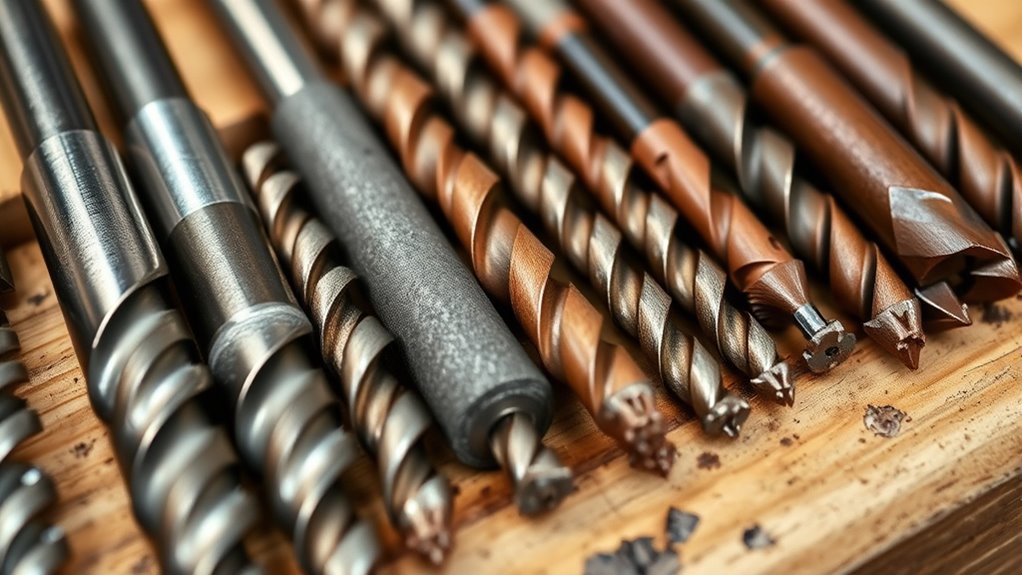
Choosing the right drill bit for metal work is essential to achieve clean, accurate holes and prevent damage to your tools or materials. For soft metals like aluminum, high-speed steel (HSS) bits work well. For harder metals, such as stainless steel or cast iron, cobalt bits are the best choice due to their heat resistance and durability. Use bits with a pointed tip to start accurately and reduce slipping. Coated bits, like black oxide or titanium, extend lifespan and improve performance. Keep in mind these key points:
- Cobalt bits excel on tough metals, with better heat dissipation
- HSS bits are suitable for soft metals and general-purpose tasks
- Coating reduces friction and extends bit life
- Use proper speed and pressure to avoid overheating
- Replace dull bits promptly to prevent damage
Selecting the right bit ensures efficiency and precision in metal projects.
How to Drill Effectively in Concrete and Masonry
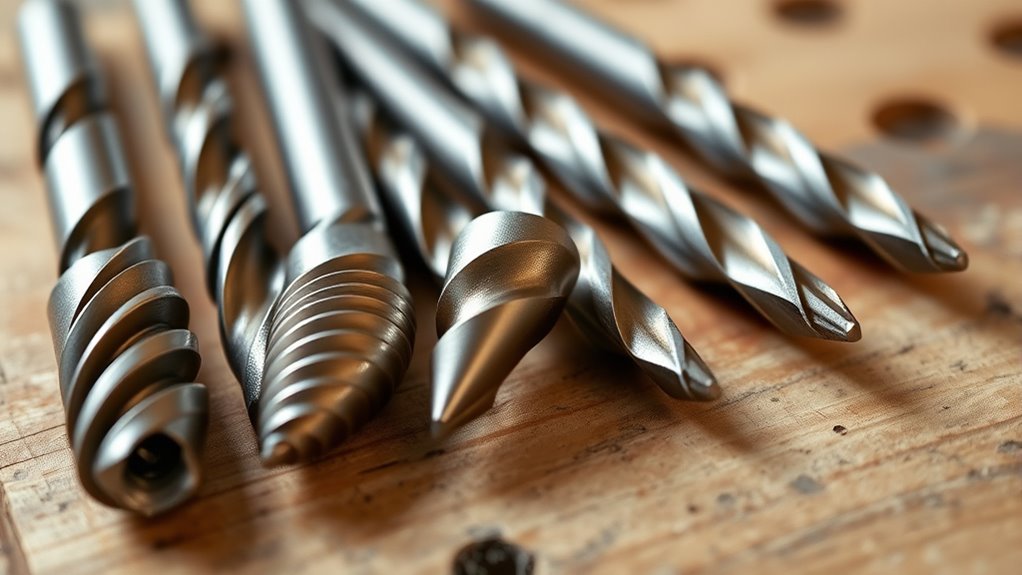
Drilling into concrete and masonry requires specialized tools and techniques to achieve clean, accurate holes without damaging your material or drill bits. Always use a hammer drill paired with a carbide-tipped masonry bit designed for this purpose. Mark the spot clearly and start with a small pilot hole to guide the larger bit. Apply steady, moderate pressure—don’t force the drill—letting the bit do the work. Keep the drill perpendicular to the surface for straight holes. Periodically withdraw the bit to clear debris and reduce heat buildup. Use water or a cooling spray if drilling deep or in hot conditions. For best results, guarantee your drill is set to hammer mode, and use slow, steady speeds to prevent bit wear and material cracking. Additionally, selecting the right drill bit for the material ensures optimal performance and longevity of your tools. Understanding material properties can also help you choose the most effective drilling techniques and tools for each project. Proper drilling techniques are essential to avoid damaging the material or compromising your work. Incorporating proper maintenance of your drill bits can extend their lifespan and improve drilling efficiency. Being familiar with power tool safety practices is crucial to prevent accidents and ensure a smooth drilling process.
Frequently Asked Questions
Can I Use a Wood Drill Bit on Metal Surfaces?
You shouldn’t use a wood drill bit on metal surfaces. Wood bits are designed with sharp pointed tips for soft materials and lack the toughness needed for metal. Using them on metal can cause the bit to dull quickly or break, and it may damage your workpiece. Instead, opt for high-speed steel, cobalt, or specialized metal bits to guarantee safe, efficient drilling and avoid damaging your tools or materials.
How Do I Identify a Cobalt Drill Bit?
To identify a cobalt drill bit, look for its distinctive dark gray or black color, often with a shiny or matte finish. Cobalt bits are typically marked or labeled accordingly, but if not, check the material composition—these bits are made from a high-speed steel alloy with cobalt added. They’re heavier and more durable than standard HSS bits, ideal for drilling hard metals like stainless steel.
Are Diamond-Tipped Bits Suitable for Drilling Into Concrete?
Diamond-tipped bits aren’t ideal for drilling into concrete. They’re best suited for glass, stone, and other hard minerals, thanks to their ability to cut through tough surfaces without chipping. For concrete, you’ll want to use carbide-tipped masonry bits with a hammer drill, as they’re designed to chisel through masonry efficiently. Using a diamond bit on concrete can be ineffective and may damage the bit or your drill.
What’s the Best Way to Prevent Bit Overheating?
Think of your drill bit as a runner in a race. To prevent overheating, you need to give it rest and keep it cool. Use lower speeds, apply gentle pressure, and pause periodically to let it cool down. Adding water or cutting fluid acts like hydration, reducing friction and heat. Regularly remove debris and choose coated or high-quality bits. This keeps your “runner” performing at its best without overheating.
Can I Switch Drill Bits Without Changing Tools?
Yes, you can switch drill bits without changing tools. Just hold the drill securely, press the chuck release, and carefully pull out the current bit. Then, insert the new bit into the chuck, tighten it firmly, and make sure it’s secure before starting. Always wear safety glasses and disconnect the drill from power if you’re working with an electric model to prevent accidents.
Conclusion
Think of your drill bits as a toolbox’s secret heroes, each ready to conquer a different challenge. When you pick the right one—wood, metal, or concrete—you’re guiding your project through a smooth, well-lit path, avoiding pitfalls and obstacles. With the right bit in hand, you’re the captain steering your ship safely to its destination. Trust your choices, and watch your work transform into a masterpiece, crafted with precision and confidence.