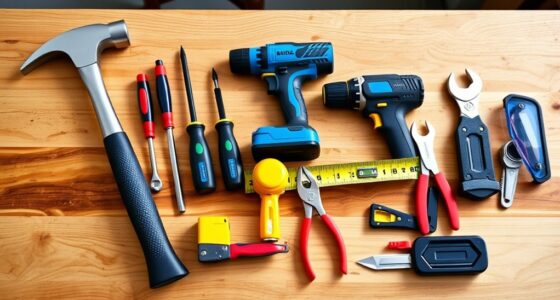
To choose the right drill, consider your need for portability versus power. Cordless drills offer mobility, making them great for outdoor, tight, or remote projects, while corded tools deliver consistent, heavy-duty performance. Think about how long you’ll work, your budget, and the environment. If convenience matters most, cordless may suit you better; for demanding tasks, corded might be ideal. If you explore more, you’ll find tips to match your project’s specific needs.
Key Takeaways
- Choose cordless drills for maximum mobility, outdoor use, and working in tight or remote spaces without power outlets.
- Opt for corded drills when high power, continuous operation, and heavy-duty tasks are required.
- Consider battery life, recharge time, and long-term costs when selecting cordless tools.
- Prioritize ergonomic features, weight, and safety controls for comfort and safety during prolonged use.
- Match your project needs and environment to the tool’s power source to ensure efficiency and cost-effectiveness.

EASE MOOSE Leather Sectional Couch, Oversized Modular Sectional Sofas, Wide Deep Seat Modular Couch, Scratch Resistant Faux Leather Material, L Shaped Sofa for Big Spaces,Light Grey
Oversized Deep Seat Sectional Sofa:Each individual seat size: 33.86 inches wide x 34.25 inches deep x 37.4 inches...
As an affiliate, we earn on qualifying purchases.
Advantages of Mobility and Portability

One of the biggest advantages of cordless tools is their unmatched mobility and portability. With no cords tethering you to a power outlet, you can move freely across job sites or work in tight spaces where cords would get in the way. This flexibility makes cordless drills perfect for outdoor projects, remote locations, or areas with limited electrical access. Multiple batteries allow you to extend your work time without waiting for recharge, keeping you efficient. Unlike corded models, which require proximity to a power source, cordless tools give you the freedom to work anywhere, anytime. This convenience not only speeds up your workflow but also reduces the hassle of managing extension cords and power cords tangled around your workspace. Additionally, battery technology continues to improve, providing longer run times and shorter recharge periods, further enhancing the practicality of cordless tools. The ongoing technological improvements in battery design are also contributing to these advancements. As power source innovations evolve, cordless tools are becoming more capable of handling demanding tasks with ease. Moreover, the increased ergonomic design of modern cordless drills enhances user comfort during extended use.
Canoly C16 Cold Press Juicer, 6" Extra Wide Feed Chute, 3-IN-1 Strainers (Juice & Sorbet & Nut Milk), Powerful AC Brushless Motor, Self Precut System, Juicer Machines with BPA-Free (Space Gray)
Canoly C16 3-in-1 Multi-Function Juicer: Features two strainers (Juice & Sorbet) to create fresh fruit/vegetable juice, creamy nut...
As an affiliate, we earn on qualifying purchases.
Power and Performance Differences
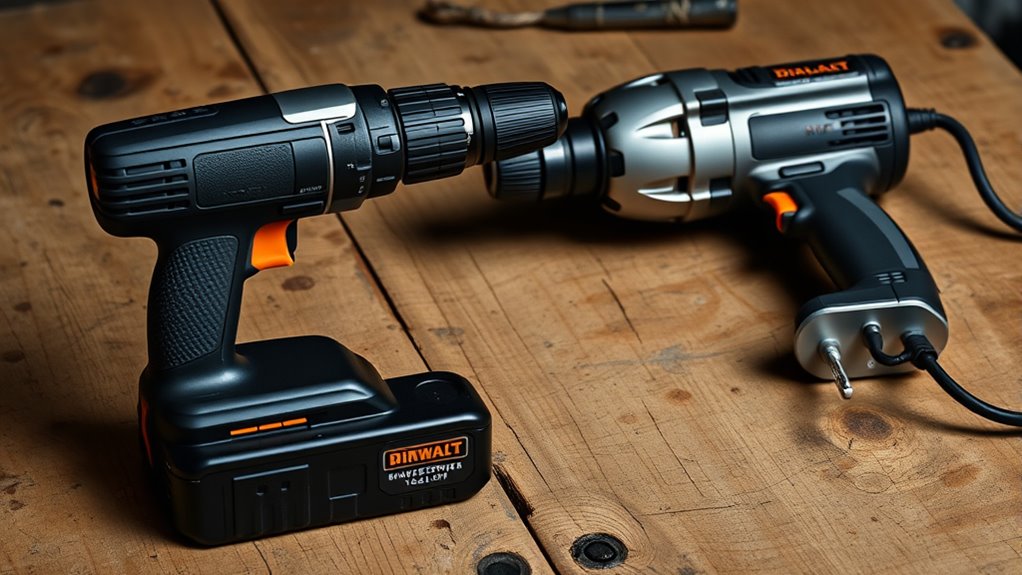
While the portability of cordless tools offers great convenience, their power and performance capabilities can vary substantially compared to corded models. Corded drills typically deliver higher top speeds and consistent power, making them ideal for heavy-duty tasks like concrete drilling. However, advancements in brushless motor technology have allowed cordless drills to surpass corded models in torque and efficiency. Lithium-ion batteries eliminate performance drops seen in older battery types, providing reliable power during use. Additionally, modern cordless tools often incorporate battery management systems, which help optimize battery life and performance. As technology continues to improve, some cordless drills now match or even exceed the power output of traditional corded models, expanding their versatility. Moreover, the integration of smart technology in some models allows for better monitoring of battery health and performance, further enhancing their reliability. While cordless angle grinders may have slightly lower RPMs, they still perform well for most grinding jobs. Keep in mind, corded tools excel in continuous operation without battery limitations, making them better suited for prolonged, demanding tasks. Your choice depends on balancing power needs with mobility preferences. Additionally, understanding toilet maintenance and proper disposal practices can help prevent plumbing issues caused by improper waste management.

TUUMIIST Juicer Machines, Cold Press Juicer with 5.3" Extra Large Feed Chute Fit Whole Fruits & Vegetables Easy to Clean, High Juice Yield, BPA Free (Black)
HIGH JUICE YIELD: Our 300 watt juicer utilizes slow-speed cold press technology to extract a high yield of...
As an affiliate, we earn on qualifying purchases.
Key Features and Controls to Consider

When choosing between cordless and corded tools, you’ll want to pay attention to features like adjustable torque settings and electronic kickback control. These controls help you work more precisely and safely, especially on challenging tasks. Understanding how these features function can make a big difference in your overall performance and tool longevity. Additionally, considering smart integration capabilities can enhance your tool’s adaptability and ease of use in modern environments. For instance, some modern drills include connectivity features that allow you to monitor battery life or update firmware through a smartphone app, making your tool more versatile and user-friendly. Incorporating user-friendly interfaces can further improve your experience by simplifying operation and customization. Recognizing ergonomic design is also essential, as it can reduce fatigue during extended use. Moreover, assessing power source options can help you determine which tool best fits your specific needs and work situations.
Adjustable Torque Settings
Adjustable torque settings are a crucial feature to contemplate because they give you greater control over your drilling or driving tasks. They help prevent overdriving screws or damaging materials by allowing you to set the right amount of force. With a clutch collar or digital control, you can adjust torque levels based on the project’s requirements. This feature is especially useful when working with delicate materials or driving fasteners to avoid stripping or breaking them. Utilizing precision controls ensures optimal performance and material safety during your projects. Additionally, understanding how water resistance impacts cordless tools can help you choose models suitable for outdoor or damp environments. Recognizing the importance of battery capacity can also influence the tool’s overall performance and runtime, especially for extended tasks. Proper maintenance, including checking and replacing airless spray filters, can further enhance the drill’s performance and longevity during demanding projects. Moreover, choosing tools with reliable safety features is essential for ensuring safe operation during demanding tasks.
Electronic Kickback Control
Electronic kickback control is a valuable feature to contemplate because it enhances safety and helps prevent accidents during operation. This system detects sudden tool stalls or jerks and automatically reduces power, giving you better control. When choosing a drill, consider these key points: 1. Responsiveness: Look for models with quick-reacting systems that minimize kickback impact. 2. Adjustability: Some drills allow you to customize the sensitivity, tailoring the response to different tasks. 3. Compatibility: Verify if the feature integrates smoothly with other smart controls or safety features on the drill. Additionally, understanding fire-starting kits can be important for safety preparedness, as they provide reliable ways to ignite fires in emergency situations. Being aware of electric dirt bike horsepower can also inform your choices when considering power and performance features in related tools or equipment.

Qcen Juicer Machine, 800W Centrifugal Juicer Extractor with Wide Mouth 3” Feed Chute for Fruit Vegetable, Easy to Clean, Stainless Steel, BPA-free (Black)
Upgraded 800W Motor - Centrifugal juicer machine with upgraded 800W high speed motor, more efficient and powerful than...
As an affiliate, we earn on qualifying purchases.
Ergonomics and User Comfort
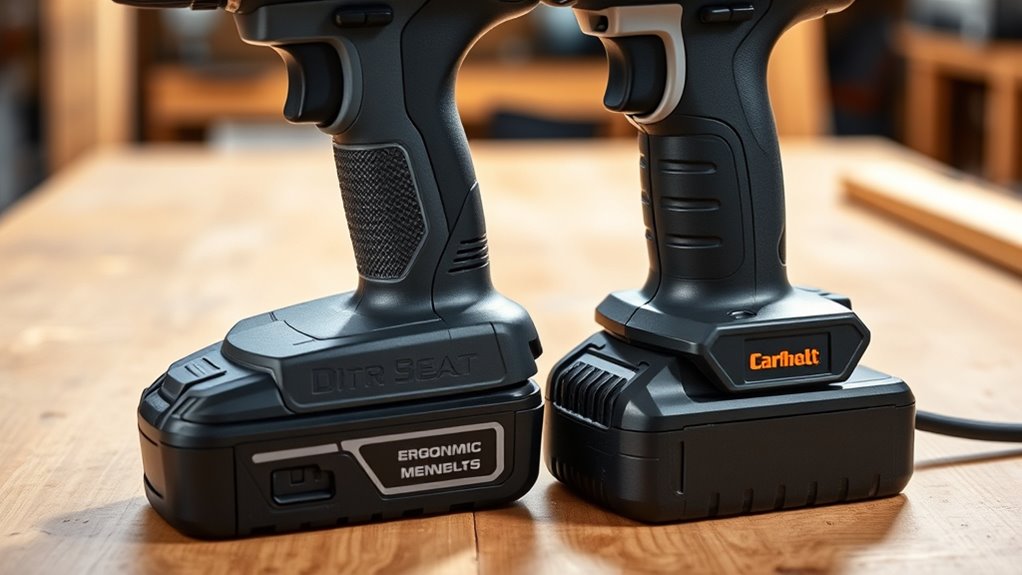
Cordless drills often provide superior ergonomics and user comfort because their lighter weight and compact design reduce fatigue during extended use. You’ll notice less strain on your arms and hands, especially when working overhead or in tight spaces. The lightweight build allows for better control and less effort, making longer tasks more manageable. The smaller size means you can maneuver easily in tricky spots where larger, bulkier corded drills might struggle. Additionally, cordless models tend to have well-designed grips that fit comfortably in your hand, enhancing stability and reducing discomfort. Overall, the improved ergonomics mean you can work longer without pain or fatigue, increasing productivity and making your experience more enjoyable.
Battery Life and Charging Requirements
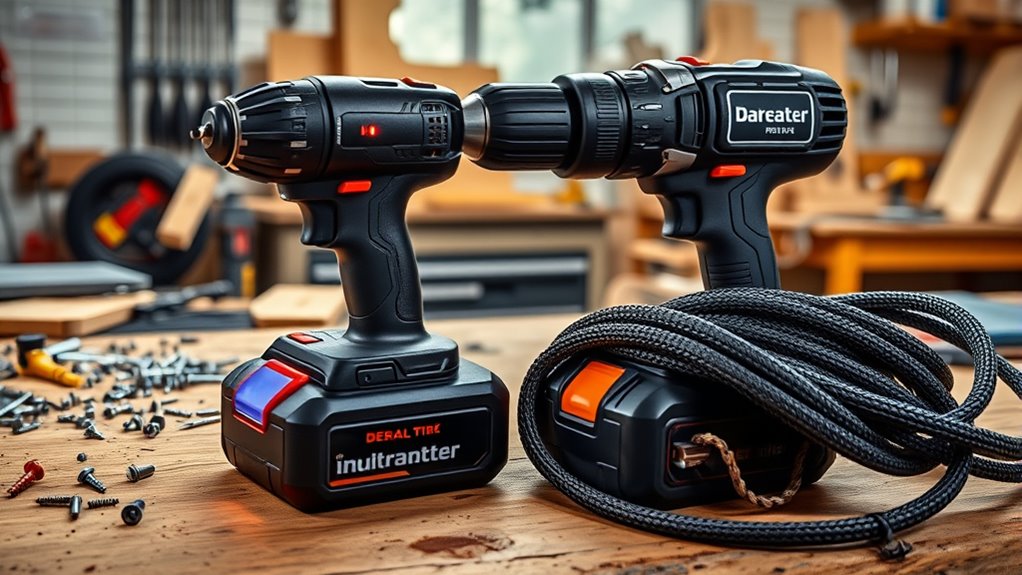
Battery life and charging requirements play a crucial role in your overall productivity with cordless tools. You need to think about how long your batteries last and how quickly they recharge.
Battery performance impacts your work efficiency; consider runtime, recharge speed, and battery lifespan for optimal cordless tool use.
- First, check the voltage and amp-hour rating to estimate runtime—higher ratings mean longer use between charges.
- Second, note the charging time; fast chargers can reduce downtime, with some batteries recharging in just 30 minutes.
- Third, keep in mind the battery’s lifespan, which typically lasts 3 to 5 years with proper care, meaning eventual replacement costs.
If you often work on extended projects, multiple batteries or fast-charging options can keep you going without interruptions. Corded drills, on the other hand, don’t need charging but limit your mobility.
Cost Implications and Long-Term Value
When choosing between cordless and corded tools, you should consider both the initial purchase price and ongoing maintenance costs. Cordless models often cost more upfront but may save you money over time with less wear and tear. Keep in mind that batteries and chargers can add to long-term expenses, affecting the overall value of your investment.
Upfront Purchase Price
Investing in power tools involves weighing the initial costs against long-term value. Corded drills usually cost less upfront, making them accessible for DIYers or occasional users. In contrast, cordless drills tend to have a higher initial price due to batteries and advanced features, but they offer greater flexibility. Specifically:
- Corded drills are more budget-friendly initially but may require additional expenses for extension cords and maintenance.
- Cordless drills require a larger upfront investment but eliminate costs related to cords and surge protection.
- Long-term, cordless tools can save money by reducing setup time and increasing productivity, especially on job sites without accessible power sources.
Your choice depends on how much you value immediate affordability versus convenience and future savings.
Ongoing Maintenance Costs
Are ongoing maintenance costs a significant factor when choosing between cordless and corded tools? Yes, they impact your long-term investment. Cordless tools require battery replacements every few years and charger upkeep, which adds to expenses. Meanwhile, corded drills have minimal maintenance, mainly just occasional motor checks. Here’s a quick comparison:
| Cost Aspect | Cordless Tools | Corded Tools | Notes |
|---|---|---|---|
| Battery Replacement | Needed every 3-5 years | Not applicable | Batteries can be costly over time |
| Charger Maintenance | Regular checks | Not needed | Chargers are generally durable |
| Power Source | No ongoing costs, just batteries | Continuous electricity use | Electricity costs are minimal but ongoing |
| Repair & Parts | Possible for batteries & electronics | Mostly motor or cord repairs | Usually lower for corded tools |
| Long-term Value | Higher due to battery lifespan | Lower maintenance, cheaper initially | Balance upfront costs vs. ongoing expenses |
Your choice depends on balancing initial costs and maintenance over the tool’s lifespan.
Making the Best Choice for Your Needs
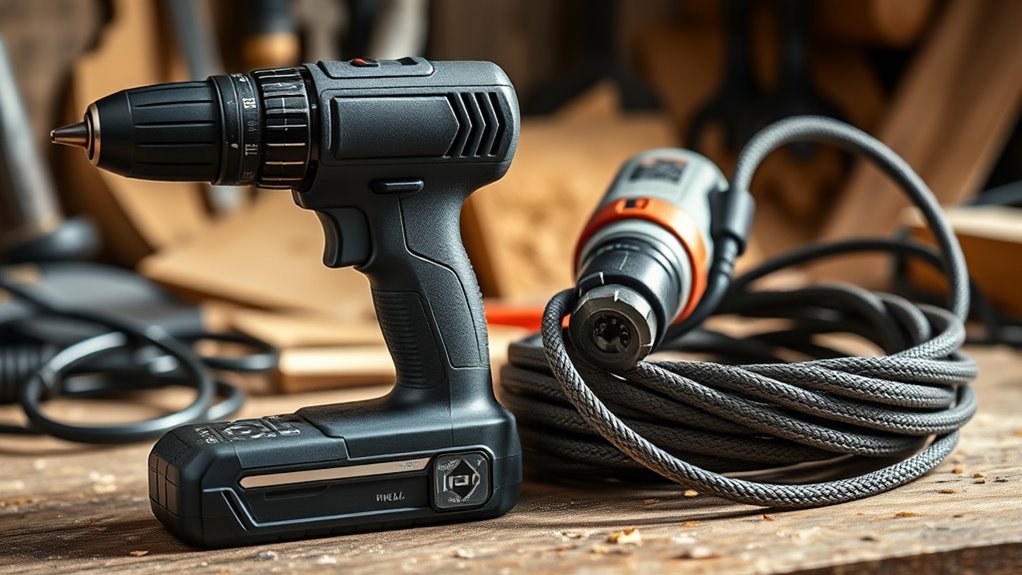
Choosing between cordless and corded tools depends on your specific project needs, workspace conditions, and budget. To make the best choice:
Choosing the right power tool depends on your project needs, workspace, and budget.
- Assess your mobility needs—if you often work in remote locations or tight spaces, a cordless drill offers unmatched portability.
- Consider power requirements—heavy-duty tasks like concrete drilling favor corded models, while lighter jobs can be handled effectively with cordless tools.
- Factor in long-term costs—cordless drills may have higher upfront costs but eliminate cord management, whereas corded tools are cheaper but less flexible.
Think about how often you’ll use the tool, the environment you’ll work in, and your budget constraints. Making an informed decision guarantees you select the right drill for your projects.
Frequently Asked Questions
Can Cordless Drills Handle Heavy-Duty Industrial Tasks?
Yes, cordless drills can handle heavy-duty industrial tasks, especially with brushless motors and high-capacity lithium-ion batteries. You’ll find they deliver impressive torque and efficiency, rivaling corded models. However, for the most demanding jobs, corded drills still offer superior continuous power and higher speeds. You should consider your specific needs, including power requirements, runtime, and portability, to determine if a cordless drill suits your industrial workload.
Are Cordless Tools Compatible Across Different Brands?
You can often use cordless tools across different brands if they share a compatible battery platform. Many manufacturers design their batteries to be interchangeable within their product lines, but not necessarily across brands. To avoid issues, check if the batteries and chargers are compatible with other brands or models. Using universal or cross-compatible batteries can save you time and money, ensuring you get the most flexibility from your cordless tools.
How Often Do I Need to Replace Batteries?
Batteries in your cordless drill are like your phone’s battery—eventually, they’ll need replacing. Typically, you’ll get 3 to 5 years of use before a replacement is necessary, depending on how often you work with it and proper care. Keep an eye on performance drops or longer recharge times, and don’t hesitate to swap it out when it starts holding less charge. Regular maintenance can help extend its life.
Do Cordless Drills Perform Well in Extreme Weather Conditions?
Cordless drills can perform well in extreme weather conditions, but their performance depends on the battery and the environment. Cold temperatures may reduce battery efficiency and runtime, so you might find the drill less powerful or shorter-lasting. In hot conditions, batteries can overheat if used continuously. To guarantee ideal performance, keep batteries warm in cold weather and avoid prolonged use in extreme heat. Proper care helps maintain your drill’s reliability.
Is There a Significant Safety Difference Between Corded and Cordless Drills?
You might notice safety differences between corded and cordless drills. With corded models, there’s a risk of electrical shock if the cord gets damaged or wet, and tripping hazards from the cord itself. Cordless drills eliminate these risks, reducing electrical shock hazards and trip hazards. However, always handle batteries carefully to prevent fires or leaks. Overall, cordless drills tend to be safer due to fewer electrical and tripping risks.
Conclusion
Choosing the right drill depends on your needs, whether mobility or power is more important. Did you know that cordless drills now offer up to 60 minutes of runtime on a single charge? This means you can tackle longer projects without interruption. By weighing features, comfort, and cost, you’ll find a drill that fits your tasks perfectly. Remember, investing wisely today can save you time and money in the long run.