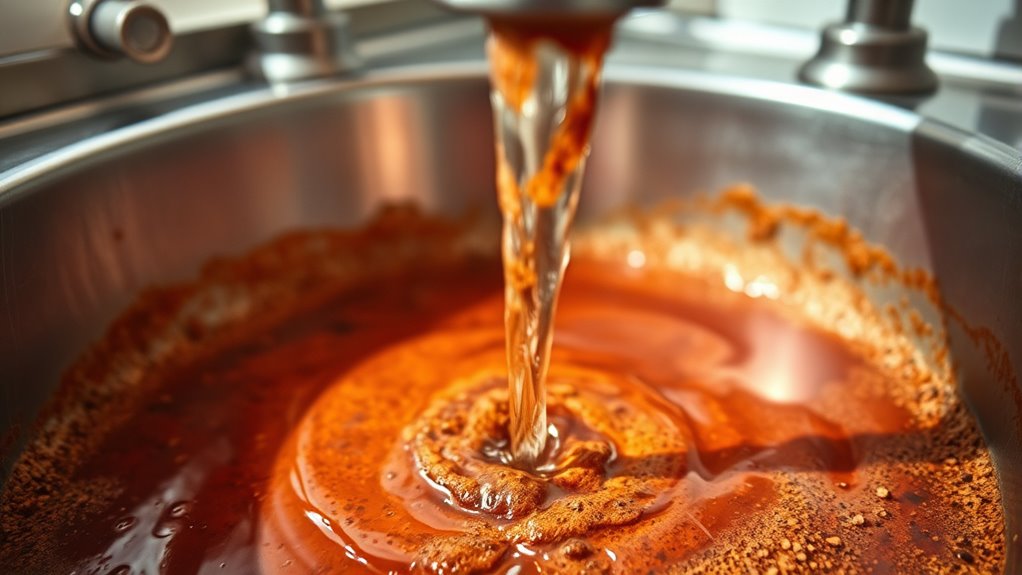

Brown tap water usually happens because of rust from aging pipes or mineral deposits from hard water. When pipes corrode or minerals settle inside, rust particles and minerals can get disturbed when you turn on the tap, causing discolored water. Fluctuations in pressure and temperature can also release these particles into your supply. To understand more about what causes your water to turn brown and how to fix it, keep exploring the details below.
Key Takeaways
- Rust particles from corroded pipes can discolor water, especially after periods of inactivity or pressure fluctuations.
- Mineral deposits like calcium and magnesium can settle and dislodge, causing brown or cloudy water.
- Deterioration of aging galvanized pipes releases rust and debris into the water supply.
- High water pressure and temperature changes accelerate pipe corrosion and mineral buildup.
- Maintenance and water testing help identify early signs of corrosion or mineral issues, preventing discoloration.
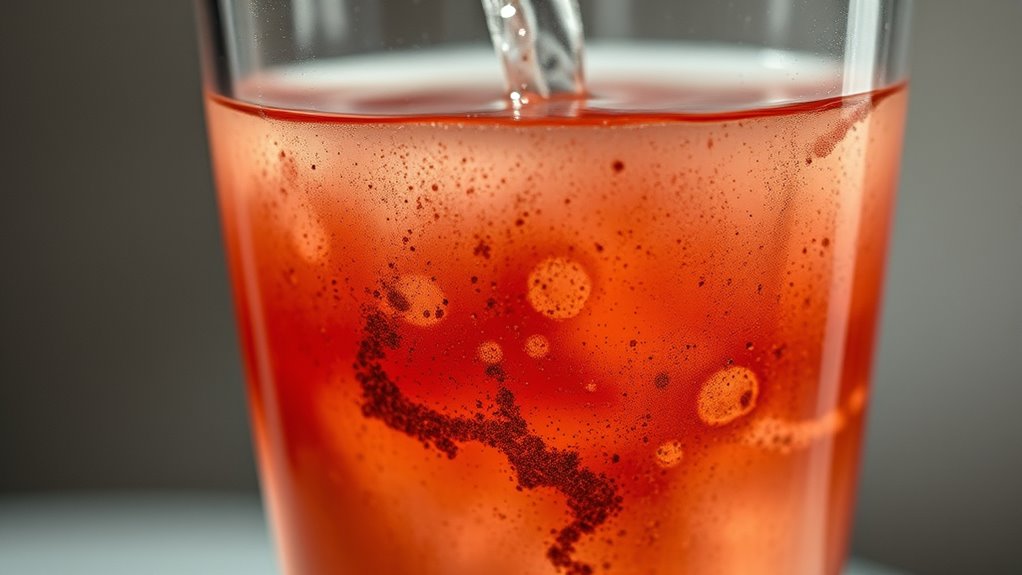
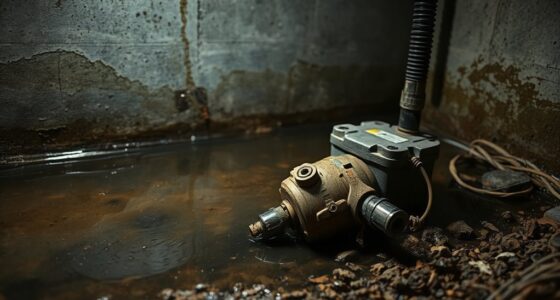
Discolored water can be unsettling, but understanding its causes can help you address the problem quickly. One common reason for brown or murky tap water is pipe corrosion. Over time, the metal pipes in your plumbing system can deteriorate, especially if they’re made of older materials like galvanized steel. As these pipes corrode, they release rust-colored particles into your water, giving it a brownish tint. This process is often accelerated by factors such as fluctuating water pressure, high mineral content, or even changes in water temperature. When corrosion occurs, tiny rust particles break loose from the pipe walls and flow through your plumbing, making their way to your tap. If you notice this discoloration after a period of inactivity, like in the morning or after the water has been unused for a while, it’s likely due to rust buildup being disturbed when you turn the tap back on. Additionally, pipe corrosion can be exacerbated by the presence of certain minerals and environmental conditions that accelerate metal deterioration. Regular water testing can help identify early signs of corrosion and mineral imbalance, allowing for timely intervention.
Another significant cause of discolored water is mineral deposits, which are common in areas with hard water. Hard water contains high levels of minerals such as calcium and magnesium. When water sits in pipes or appliances, these minerals can settle and accumulate over time, forming deposits on the inner surfaces of your plumbing. When you turn on your tap, these mineral deposits can be dislodged and suspended in the water, leading to a cloudy or brownish appearance. This is especially prominent in regions with high mineral content in the water supply or when water temperature changes cause minerals to precipitate out of solution. Additionally, mineral buildup can sometimes cause blockages or reduce water flow, which may disturb the flow and release mineral particles into your tap water. Regular plumbing maintenance helps prevent the buildup of harmful deposits and corrosion in your pipes. Recognizing the signs early can save you from more extensive plumbing issues later on.
Frequently Asked Questions
Can Brown Tap Water Be Safe to Drink?
Brown tap water isn’t necessarily safe to drink. It often results from pipe corrosion or mineral buildup, which can introduce contaminants. Water treatment plants work to guarantee safety, but if your pipes are corroding, metals like iron or manganese can leach into your water. It’s best to avoid drinking discolored water until you identify and fix the issue, possibly by flushing your pipes or consulting a professional for proper treatment.
How Long Does Discoloration Typically Last?
Discoloration usually clears up faster than a passing cloud, often lasting from a few hours to a few days. The water quality and the cause of the discoloration influence this duration. If rusty pipes or sediment stir up, expect the discoloration to persist longer, sometimes up to a week. Regularly check with your local water provider for updates, and avoid using the water for drinking or cooking until it clears.
Does Discolored Water Indicate an Emergency?
Discolored water usually isn’t an emergency, but it does signal a change in water quality that requires attention. If your tap water remains brown after flushing or plumbing maintenance, contact your water provider or a plumber. It could be caused by rust or sediment from aging pipes. Always monitor water color and clarity, and perform regular plumbing maintenance to prevent future issues and ensure safe, clean water.
Are There Health Risks Associated With Brown Water?
Don’t let it cloud your judgment—brown water can pose health risks. While rust and sediment usually aren’t harmful, they can carry bacteria or contaminants that affect water quality and your health. Prolonged exposure might lead to stomach issues or other health implications. It’s best to avoid drinking or using discolored water until you get it tested and cleaned. Prioritize your safety; when in doubt, consult professionals.
What Should I Do if My Water Remains Brown?
If your water remains brown, you should schedule water testing to identify contaminants and potential health risks. Additionally, consider a pipe inspection to check for rust or corrosion that might be causing discoloration. You can also run your tap for a few minutes to see if the water clears. If it doesn’t, contact your local water authority or a professional plumber for further assistance.
Conclusion
If your tap water turns brown, don’t panic—it’s often caused by rust, sediment, or pipe issues. Knowing the cause helps you act quickly and safely. Remember, “Prevention is better than cure,” so regularly check your plumbing and consider professional help if needed. Staying informed keeps your water clean and safe. Keep an eye on your taps, and you’ll enjoy clear water and peace of mind every day.