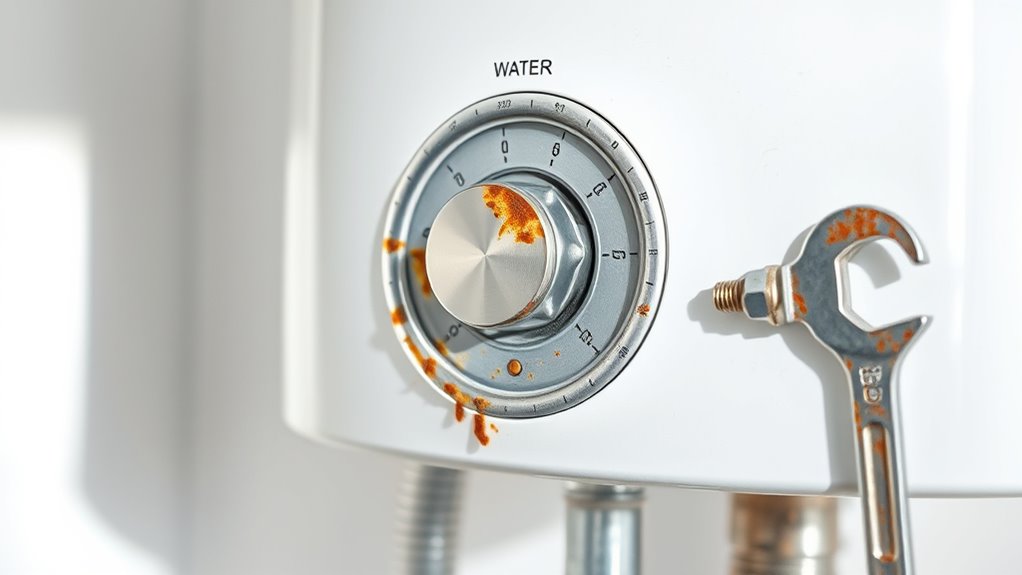
If your water heater isn’t working, check for sediment buildup, which insulates the heater and reduces efficiency. Make certain pressure isn’t too high from thermal expansion by installing a relief valve or expansion tank. Look for leaks or strange noises, as these often point to component issues or stress within the tank. Regular maintenance, like flushing the tank and inspecting parts, can prevent many problems. Keep going for detailed tips to troubleshoot and fix your water heater effectively.
Key Takeaways
- Sediment buildup insulates the tank, reducing heating efficiency; regular flushing prevents this issue.
- Thermal expansion causes pressure buildup; installing an expansion tank or pressure relief valve alleviates stress.
- Inconsistent or no hot water often results from sediment accumulation; flushing and maintenance restore performance.
- Leaks and noises may indicate pressure problems or tank stress; addressing thermal expansion and inspecting for damage helps fix these.
- Poor ventilation and improper temperature settings can lead to safety issues and system failure; ensure proper setup and maintenance.
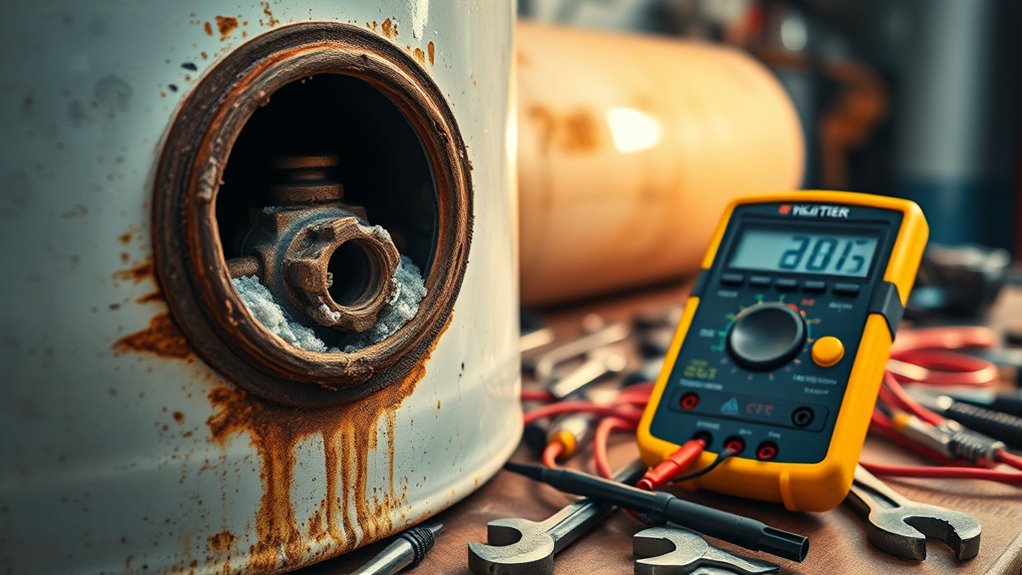
Are you experiencing cold showers or inconsistent hot water? One common culprit is a problem inside your water heater that you can often fix without calling a professional. When your water heater isn’t functioning properly, it’s helpful to understand some of the top reasons why. A key issue could be related to thermal expansion or sediment buildup, both of which can impair the unit’s performance. Thermal expansion occurs when water heats up and expands, putting extra pressure on the tank and its components. Over time, this pressure can cause stress and damage, leading to leaks or system failure. Sediment buildup, on the other hand, happens when minerals from hard water settle at the bottom of the tank. This layer of sediment acts like an insulator, reducing the heater’s efficiency because it prevents heat transfer from the heating element to the water. It can also cause the heater to overwork, leading to uneven heating or complete failure.
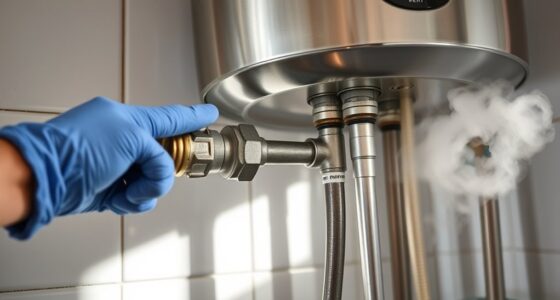
If your water heater isn’t producing hot water consistently, sediment buildup might be the issue. Flushing the tank can often resolve this; it involves draining the tank to remove accumulated sediment. Turning off the power or gas supply before draining is essential for safety. Attach a hose to the drain valve, open it, and direct the water into a drain or bucket. This process clears out mineral deposits and restores the heater’s efficiency. After flushing, refill the tank and turn the power back on. Regular maintenance like this can prevent sediment from building up and keep your heater running smoothly. Additionally, using water softeners can reduce mineral deposits and prolong the lifespan of your heater. Proper maintenance practices are key to avoiding costly repairs and extending the life of your water heater. Incorporating preventative care can further help identify issues early and maintain optimal performance.
Thermal expansion can also cause problems, especially if your system doesn’t have a thermal expansion tank or pressure relief valve in place. When water heats and expands without a proper outlet, pressure builds up inside the tank. This can lead to leaks, damage to the tank, or even burst pipes. Installing an expansion tank helps absorb this increased pressure, protecting your main heater. If you notice leaks or unusual noises, it might be a sign that thermal expansion is causing stress. In some cases, adjusting the temperature setting on your thermostat can reduce the amount of thermal expansion and pressure buildup. Keeping the temperature at around 120°F is enough to prevent scalding and reduce stress on the tank. Additionally, understanding the concept of pressure regulation can help prevent damage caused by thermal expansion.
Adding proper ventilation around the heater area can also prevent overheating and improve safety.
Frequently Asked Questions
How Often Should I Flush My Water Heater?
You should flush your water heater at least once a year to prevent sediment buildup and keep it running efficiently. Regular tank maintenance helps remove mineral deposits that can cause clogs or reduce hot water capacity. If you notice reduced hot water, strange noises, or longer heating times, it’s time to flush more often. Staying on top of these maintenance tasks guarantees your water heater stays in good shape.
Can Hard Water Damage My Water Heater?
Did you know hard water can damage your water heater unexpectedly? The mineral buildup from hard water causes corrosion and reduces efficiency over time. Water softening can prevent this by reducing mineral deposits, prolonging your heater’s life. If you notice reduced hot water flow or strange noises, hard water might be the culprit. Regular maintenance and water softening are essential to protect your heater from damage caused by mineral buildup.
What Safety Precautions Should I Take Before Troubleshooting?
Before troubleshooting your water heater, you should wear safety gear like gloves and goggles to protect yourself from hot water and debris. Always turn off the power supply or shut off the circuit breaker to prevent electrical shock. Make certain the water heater’s temperature is turned down, and if you’re working with gas, turn off the gas valve. Taking these precautions helps you stay safe during inspections and repairs.
How Do I Reset a Tripped Circuit Breaker for the Heater?
You should first locate your circuit breaker panel and find the breaker labeled for your water heater. If it’s tripped, it’ll be in the “off” position or somewhere between on and off. To reset, simply flip the circuit breaker fully to the “off” position, then push it back to “on.” Some breakers have a reset button; press it firmly before turning the breaker back on.
When Should I Replace My Water Heater Instead of Repairing?
You should replace your water heater when it surpasses its typical lifespan of 8-12 years, especially if it shows signs of replacement like rust-colored water, inconsistent heating, or frequent breakdowns. If repairs become costly or the unit’s efficiency drops considerably, it’s more practical to invest in a new one. Ignoring these signs can lead to leaks, water damage, or complete failure, making replacement the smarter choice.
Conclusion
When your water heater isn’t working, you can troubleshoot, identify, and fix common issues yourself. Check the thermostat, inspect the heating element, and examine the power supply. Reset the circuit breaker, drain the tank, or replace faulty parts as needed. By staying proactive, understanding the problem, and taking timely action, you guarantee your water heater runs smoothly. Don’t wait for problems to worsen—address them promptly, maintain your system, and enjoy reliable hot water whenever you need it.