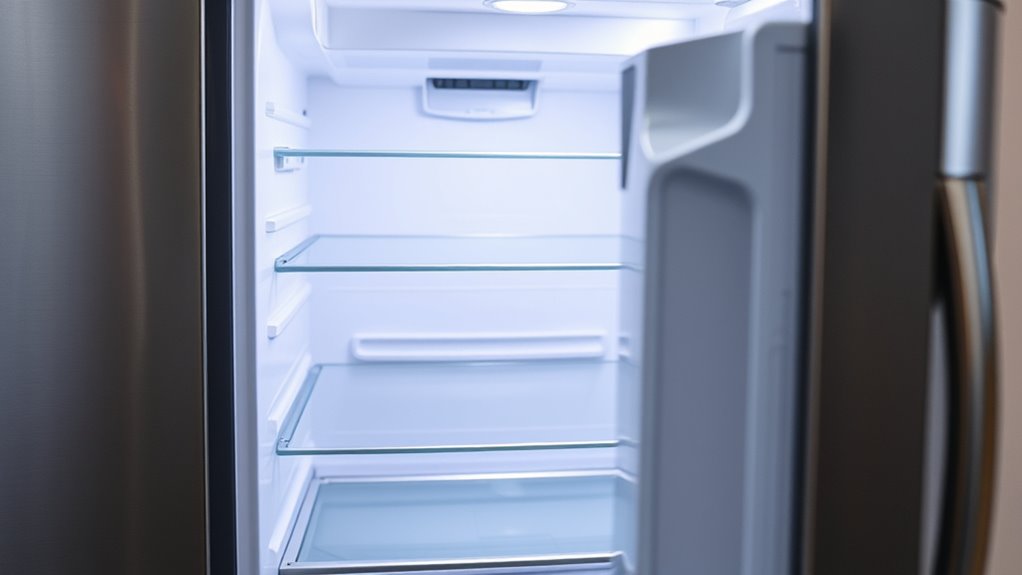

If your fridge isn’t cold enough, start by checking for ice buildup or frost, which can block airflow and signal a fan or defrost issue. Make sure the door seals tightly and listen for the fan running when doors are open—warm spots may mean the evaporator fan isn’t working properly. Inspect the defrost drain for clogs that cause ice buildup. Keep an eye on these common issues, and uncover more tips to fix your fridge efficiently.
Key Takeaways
- Check if the evaporator fan is running; lack of sound indicates it may be malfunctioning.
- Inspect for ice buildup around the fan or defrost drain, which can block airflow and cooling.
- Ensure the defrost drain is clear of debris to prevent frost and water pooling inside the fridge.
- Verify door seals are tight to maintain consistent temperatures and prevent warm air entering.
- If issues persist, consider professional diagnosis for compressor or sensor problems affecting cooling.

If your refrigerator isn’t cooling properly, it can be frustrating and disruptive. One common cause behind this issue is a malfunctioning evaporator fan. The evaporator fan circulates cold air throughout the fridge and freezer compartments, maintaining consistent temperatures. If the fan isn’t working, you might notice warm spots or uneven cooling. To check this, listen for the fan running when you open the fridge or freezer door. If you don’t hear it, the fan motor might be faulty, or the fan blades could be blocked by ice or debris. Sometimes, frost buildup can impede the fan’s movement, so inspecting for ice accumulation is essential. If ice is blocking the blades, defrosting the fridge might resolve the problem temporarily, but you should also identify the root cause, which could involve a defrost drain clog.
The defrost drain plays a vital role in preventing excess water from accumulating inside your fridge. When it gets clogged with debris, ice, or food particles, water from defrost cycles can’t drain properly. This can lead to water pooling at the bottom of the fridge or in the freezer, causing the evaporator coil to stay frosted over. A frozen-over evaporator coil restricts airflow, leading to poor cooling. To troubleshoot this, locate the defrost drain—usually at the back or bottom of the fridge—and clear out any blockages. Carefully flush the drain with warm water or use a pipe cleaner to remove debris. Keeping the drain clear prevents ice buildup, ensuring the evaporator fan can operate freely and circulate cold air efficiently. Additionally, regular maintenance of the refrigeration system can help prevent recurring issues and extend the lifespan of your appliance.
Another key step is to inspect the overall defrost system, which includes components like the defrost heater and thermostat. If these parts fail, your fridge may develop excessive frost on the evaporator coil, hampering airflow and cooling. Regularly defrosting your fridge helps prevent ice buildup, but persistent issues suggest a need to replace faulty parts. Additionally, ensure that the door seals are tight, as leaks can cause temperature fluctuations that lead to increased frost formation and strain on the cooling system. If you’ve checked the evaporator fan and defrost drain but still face cooling issues, you might need to consult a professional technician to diagnose more complex problems like compressor failures or faulty temperature sensors. Acting promptly can save you money and prevent food spoilage.

2026 Upgraded OEM WR60X26866 Refrigerator Evaporator Fan Motor, Compatible with GE Refrigrator, Replace V80E14MS2A3-57A611 WR60X10341, WR60X26030, WR60X10356, WR60X10357, Ap6278228-10 Years Warranty
【Our WR60X26866 Evaporator Fan Advantages】The wr60x26866 fridge fan requires only a simple installation. No software update required. The…
As an affiliate, we earn on qualifying purchases.
As an affiliate, we earn on qualifying purchases.
Frequently Asked Questions
How Often Should I Defrost My Refrigerator?
You should defrost your refrigerator when you notice frost buildup that’s more than a quarter-inch thick or ice blocking vents. Typically, this means every 6 to 12 months, but it depends on how often you open the door and humidity levels. Regular defrosting helps maintain ideal cooling and prevents ice from impairing airflow. Keep an eye on frost buildup to determine the right defrost frequency for your fridge.
Can a Dirty Condenser Coil Cause Cooling Issues?
Think of your condenser coil as the heart of your fridge—when it gets dirty, it can’t pump cool air efficiently. A dirty condenser coil causes cooling issues by blocking heat transfer. Regular condenser maintenance and coil cleaning clear away dust and debris, helping your fridge run smoothly. Don’t ignore this essential task; a clean coil keeps your fridge cold and saves energy, ensuring your food stays fresh longer.
What Is the Ideal Temperature Setting for My Fridge?
You should set your fridge temperature to around 37°F (3°C) for ideal food storage tips and energy efficiency. Keep the freezer at 0°F (−18°C) to guarantee proper freezing. Regularly check and adjust the temperature to prevent spoilage and save energy. Proper temperature settings help maintain food freshness and reduce your electricity bill, making your fridge more efficient and effective at preserving your groceries.
How Do I Know if My Thermostat Is Faulty?
You can tell if your thermostat is faulty by checking if your fridge isn’t maintaining the right temperature. Use a thermometer to see if the temperature matches your thermostat setting; if not, your thermostat may need calibration. If calibration doesn’t fix the issue, consider a thermostat replacement. Faulty thermostats often cause inconsistent cooling, so replacing it can restore proper temperature control and prevent your fridge from not cooling properly.
When Should I Call a Professional for Repairs?
Did you know that 70% of refrigerator repairs involve issues best handled by professionals? You should call a professional for repairs if troubleshooting doesn’t fix the problem, especially if you suspect a refrigerant leak or if your fridge still isn’t cooling after checking the thermostat. A professional inspection guarantees proper diagnosis and safe repairs, preventing further damage and keeping your food fresh. Don’t delay—expert help is the safest choice.

BZTT 8 PCS Refrigerator Drain Cleaning Tool – Fridge Water Line Cleaner Kit with Long Tube Brush Cleaner, Water Dispenser Cleaning Kit
Refrigerator Water Line Cleaner Kit: Refrigerator drain cleaning tool not only is it used for fridge water line…
As an affiliate, we earn on qualifying purchases.
As an affiliate, we earn on qualifying purchases.
Conclusion
When your fridge isn’t chilling like it should, think of it as a tired guardian of your groceries. With a little detective work—checking vents, door seals, and temperature settings—you can revive its icy spirit. Don’t let a warm fridge turn your kitchen into a sauna; instead, give it some TLC and watch it spring back to life. Remember, a well-tuned fridge is the silent hero keeping your food fresh and your kitchen cool.

Supco SU2004 Refrigerator Door Gasket Kit, Includes Magnetic Insert Strip – Designed To Fit Most Brands – 36 x 84 Inches
DOOR GASKET REPLACEMENT – The Supco SU2004 is a direct replacement door gasket that is designed to fit…
As an affiliate, we earn on qualifying purchases.
As an affiliate, we earn on qualifying purchases.

BlueStars DA61-06796A Refrigerator Clip Drain Evaporator – Solve The Ice Buildup Problem – Compatible with Samsung Refrigerators – Replaces DA61-06796A AP5579885 PS4145120 2683162 – Pack of 2
NO MORE CLOGGED: DA61-06796A Refrigerator Clip Drain Evaporator is at the bottom of a defroster rail so this…
As an affiliate, we earn on qualifying purchases.
As an affiliate, we earn on qualifying purchases.