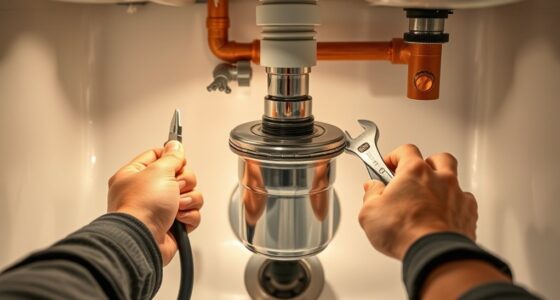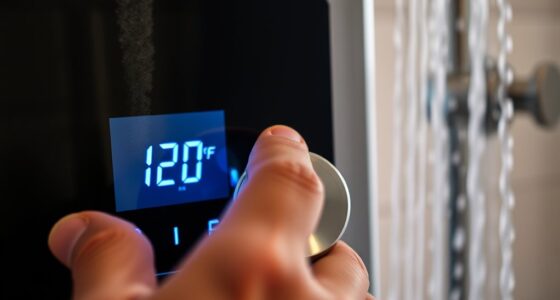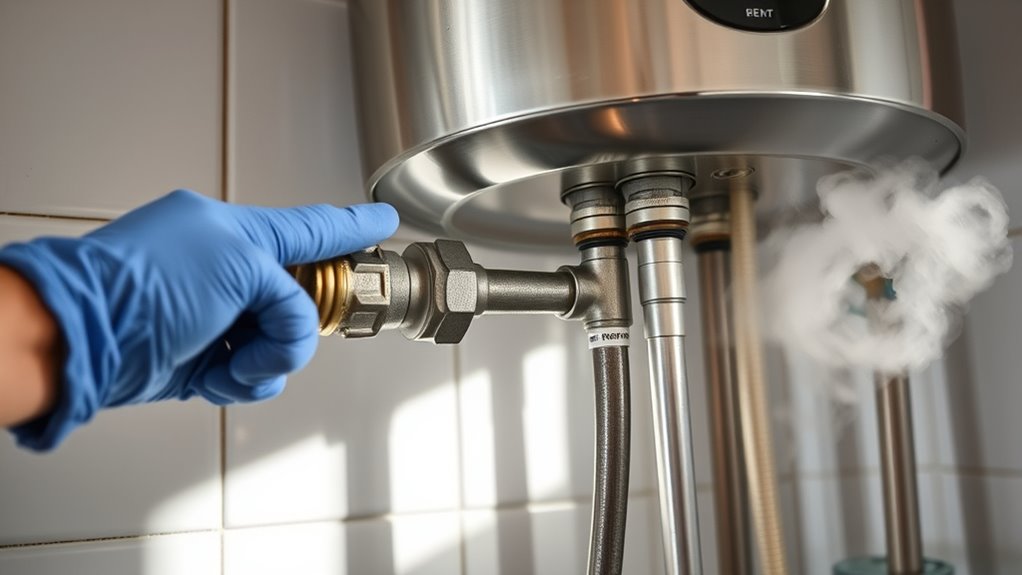
If you’re getting no hot water, start by checking if the pilot light is lit for gas models or the electrical connections for electric heaters. Verify the thermostat is set around 120°F, and inspect the pressure relief valve for leaks. Sediment buildup can also reduce efficiency, so consider flushing the tank. If these steps don’t resolve the issue, there might be a malfunction with components or safety features. Keep exploring to find more solutions.
Key Takeaways
- Check if the pilot light is lit; relight it if it’s out, following manufacturer instructions.
- Inspect the pressure relief valve for proper operation and leaks; replace if faulty.
- Ensure the thermostat is set around 120°F and flush sediment buildup to improve efficiency.
- Examine the gas control and ignition components for proper function and safety.
- If problems persist, contact a professional for diagnosis and repair to ensure safety and proper operation.
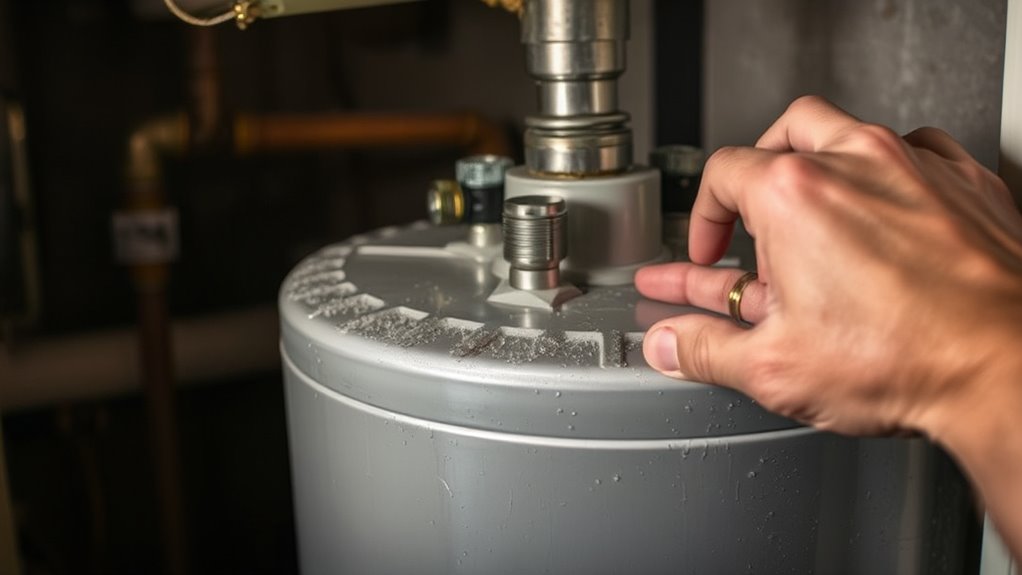
When your water heater isn’t working properly, it can disrupt your daily routine and cause frustration. One common issue is no hot water, which often points to problems with the pilot light. If you have a gas water heater, check if the pilot light is lit. If it’s gone out, you’ll need to relight it according to the manufacturer’s instructions. Usually, this involves turning the gas control knob to the “pilot” position, pressing it down, and using a match or lighter to reignite the flame. Keep in mind, if you notice a persistent smell of gas or can’t relight the pilot, it’s best to call a professional for safety reasons. Sometimes, the pilot light won’t stay lit due to a faulty thermocouple or a buildup of dirt and debris. Cleaning or replacing these parts can restore proper ignition and restore hot water to your taps.
If your gas water heater’s pilot light goes out, relight it carefully or call a professional for safety.
Another aspect to check is the pressure relief valve. This valve plays a crucial role in maintaining safe pressure levels inside your water heater tank. If the valve is stuck open or leaking, it can cause the water heater to shut down or prevent hot water from being delivered. To test it, carefully lift the lever on the pressure relief valve. If water flows out freely and stops when you release the lever, the valve is functioning correctly. However, if no water comes out or it continues leaking, you’ll need to replace the valve. A faulty pressure relief valve can also cause the tank to build up excessive pressure, which could be dangerous. Regularly inspecting this valve ensures it’s working properly and helps prevent potential accidents or damage. Additionally, understanding the navigation and mapping of your water heater system can help diagnose issues related to the control mechanisms that manage hot water flow. Proper system calibration can also prevent many common problems and improve efficiency.
Aside from these components, it’s also wise to check the thermostat settings, as improper settings can lead to no hot water. Ensure the thermostat is set to the appropriate temperature, usually around 120°F (49°C). If it’s too low, you won’t get hot water; if it’s too high, you risk scalding and increased energy costs. Additionally, sediment buildup at the bottom of the tank can insulate the water from the heat source, reducing efficiency and hot water availability. Flushing the tank periodically can help alleviate this problem.
If these troubleshooting steps don’t resolve the issue, or if you’re uncomfortable performing them, it’s best to contact a professional. Water heater problems can sometimes be complex or hazardous, especially when dealing with gas components or high-pressure systems. Taking prompt action and respecting safety precautions ensures you get your hot water back without risking injury or further damage. Remember, regular maintenance can prevent many common issues and keep your water heater functioning smoothly for years to come.
Frequently Asked Questions
How Often Should I Flush My Water Heater?
You should flush your water heater at least once a year to prevent sediment buildup, which can reduce efficiency and lifespan. A regular flushing schedule helps remove mineral deposits and keeps your unit running smoothly. If you notice reduced hot water flow or strange noises, consider flushing more often. Staying on top of this maintenance guarantees your water heater operates efficiently and lasts longer.
When Should I Replace My Water Heater?
You should consider replacing your water heater when it’s over 8-12 years old, as its lifespan typically reaches its limit. Keep an eye on signs like inconsistent hot water, increased energy bills, or frequent repairs. Replacement considerations include efficiency, size, and whether your system is compatible with modern features. Acting early can prevent inconvenient breakdowns and save you money in the long run.
Can a Broken Thermostat Affect Hot Water Supply?
It’s no coincidence that a broken thermostat can impact your hot water supply. When your thermostat malfunctions, it disrupts temperature regulation, causing your water heater to produce lukewarm or no hot water at all. You might notice inconsistent water temperatures or a complete lack of hot water. Replacing or repairing the thermostat is essential to restore proper temperature regulation and guarantee your water heater functions correctly.
Is It Safe to Repair a Gas Water Heater Myself?
It’s not entirely safe to repair a gas water heater yourself because of DIY safety risks and the dangers associated with gas heater risks. If you’re not experienced, you might accidentally cause a gas leak or fire. Always turn off the gas supply and call a licensed professional to handle repairs. Prioritize safety to prevent injury or damage, and never compromise on proper handling of gas appliances.
What Are Signs of a Failing Water Heater?
Imagine your water heater as a trusted companion showing signs of wear. If you notice sediment buildup in your tank or the pilot light flickering or going out, these are clear signs it’s struggling. You might also hear strange noises or experience inconsistent hot water. Such issues indicate a failing water heater, urging you to inspect and address problems promptly to prevent complete breakdown and costly repairs.
Conclusion
If your water heater isn’t cooperating, don’t let frustration boil over. By checking the basics and performing simple repairs, you’re guiding your hot water back to life like a skilled captain steering a ship through calm waters. Remember, many issues are fixable with a little patience and know-how. Keep a cool head, follow these steps, and soon you’ll be soaking in warm comfort again — because a working water heater is the heart of a cozy home.