If your shower has low pressure, start by checking the main water valve to make certain it’s fully open. Clean or replace your showerhead if mineral buildup or clogs are blocking water flow. Inspect the pressure regulator for any signs of malfunction and readjust or replace it if needed. Also, verify that your pipes aren’t blocked or corroded. Addressing these common issues can boost your shower’s pressure. Keep exploring to discover more helpful solutions.
Key Takeaways
- Check and fully open the main water valve to ensure maximum flow.
- Clean or replace your showerhead to remove mineral buildup and improve water flow.
- Inspect the pressure regulator for clogs or malfunctions; replace if necessary.
- Ensure the main water pressure remains adequate and adjust if possible.
- Examine plumbing for leaks, corrosion, or blockages that could restrict water flow.
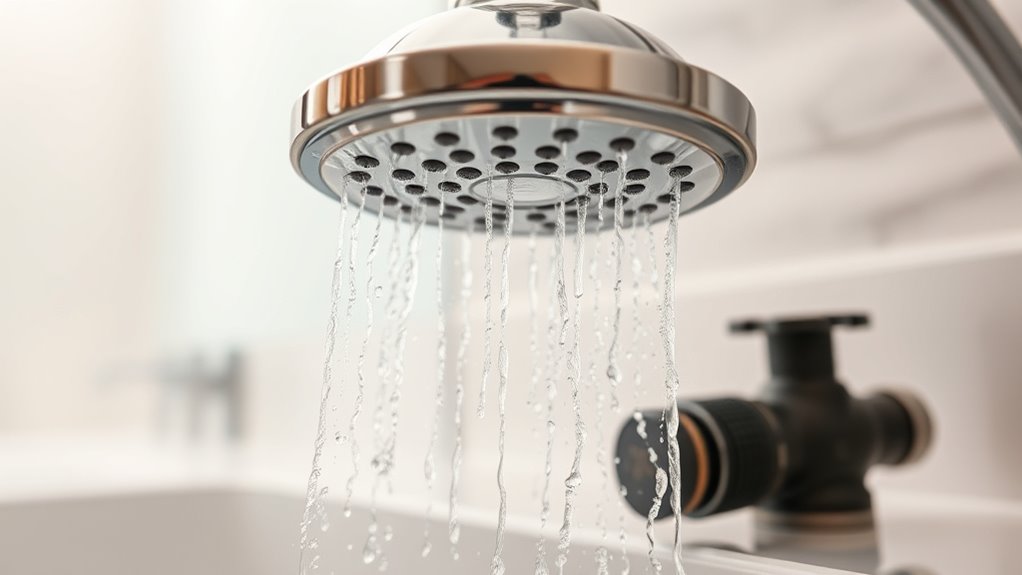
If your shower suddenly has low water pressure, it can be frustrating and disruptive to your daily routine. You rely on a steady water flow to start your day, and when that flow diminishes, it feels like your entire morning is thrown off. The good news is that many causes of low shower pressure are fixable, and understanding the basics can help you troubleshoot effectively. One common culprit is the pressure regulator, a device designed to control the water pressure entering your home. Over time, pressure regulators can become faulty or clogged, which reduces water flow to your shower. If you notice a sudden drop in pressure, it’s worth inspecting or replacing this component to restore proper water flow.
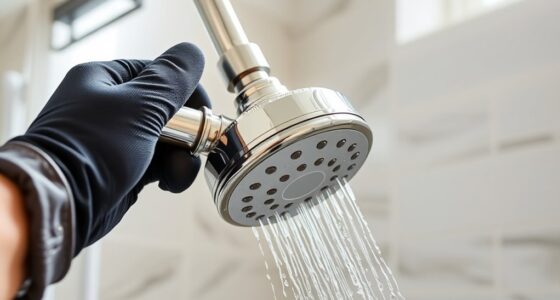
Another reason for low shower pressure could be mineral buildup or debris blocking your showerhead. Hard water deposits can accumulate within the nozzles, restricting water flow and causing uneven spray or weak water pressure. Unscrewing the showerhead and soaking it in vinegar can dissolve these deposits, restoring better flow. Make sure to rinse it thoroughly before reattaching to avoid clogging again. Sometimes, the issue isn’t with the showerhead but further upstream in the pipes. Sediment buildup, especially in older plumbing systems, can markedly reduce water flow, so inspecting your pipes for corrosion or blockages might be necessary if cleaning the showerhead doesn’t improve the situation.
You should also check your home’s main water valve. If it’s partially closed or not fully open, your shower won’t get the full water flow it needs. Sometimes, during maintenance or repairs, the valve can be accidentally turned or left partially closed. Turning it fully open can often instantly improve your shower pressure. Additionally, if you have a pressure regulator, adjusting it might boost water pressure. Some models have a screw or dial that you can turn to increase pressure, but be cautious—setting it too high can strain your plumbing system or lead to leaks.
Finally, consider whether other fixtures in your home are experiencing similar issues. If multiple outlets have low pressure, it could indicate a broader problem with your water supply, such as a leak or a problem with your municipal water service. In such cases, contacting a professional plumber can help identify and resolve the root cause. By inspecting pressure regulators, cleaning or replacing your showerhead, checking your main valve, and considering your overall plumbing system, you stand a good chance of increasing your shower’s water pressure and enjoying a more satisfying, invigorating shower experience.
A helpful step is to consider upgrading your plumbing system, as older pipes and fixtures can contribute significantly to low water pressure over time.

Hibbent All Metal 1 Pack Shower Head Flow Control Valve, G1/2 Brass Shut-off Valve with Metal Handle Lever, Shut OFF Water Flow Control Regulator for Handheld Shower, or Bidet Sprayer, Chrome
Easy Water Flow Adjustment: Hibbent shower head flow restrictor enables control of water flow, including volume regulation
As an affiliate, we earn on qualifying purchases.
As an affiliate, we earn on qualifying purchases.
Frequently Asked Questions
Can Mineral Buildup Cause Low Shower Pressure?
Yes, mineral buildup can cause low shower pressure by narrowing your pipe diameter. As minerals accumulate, they restrict water flow through the pipes, reducing pressure at the showerhead. To fix this, you might need to clean or replace aerators and consider flushing out mineral deposits from your pipes. Regular maintenance can prevent buildup and help maintain ideal water pressure, ensuring a more satisfying shower experience.
Does Pipe Diameter Affect Water Pressure in the Shower?
Yes, pipe diameter directly affects water flow and pressure in your shower. Smaller pipes restrict water movement, causing lower pressure, while larger pipes allow more water to pass through quickly, improving pressure. If your pipes are narrow or clogged, you’ll notice weak water flow. Upgrading to wider pipes or clearing obstructions can notably boost your shower’s water pressure, ensuring a more satisfying and powerful shower experience.
Is Low Water Pressure Linked to Municipal Supply Issues?
Think of municipal supply as the city’s water highway—when it’s clogged or under strain, your water pressure drops. Yes, low water pressure can be linked to municipal supply issues, especially during peak demand or maintenance. You might notice weaker flow during certain times, indicating a broader problem. Contact your local water authority to check for outages or pressure problems affecting your area, ensuring your shower gets the water flow it needs.
How Does Showerhead Design Impact Water Flow?
Showerhead design directly affects water flow by influencing spray pattern and efficiency. Materials like plastic or metal can impact durability; metal often lasts longer but may cost more. A well-designed showerhead creates a consistent spray pattern, optimizing water pressure and coverage. Adjustable settings let you customize flow, helping improve pressure if your current showerhead restricts water flow. Upgrading to a high-quality, well-designed showerhead can make a noticeable difference in your shower experience.
Can Water Pressure Problems Be Due to a Faulty Pressure Regulator?
If your shower pressure is low, faulty pressure regulator issues or faulty valve problems could be the culprit. While pipes and showerheads matter, a malfunctioning pressure regulator can drastically reduce flow. You might notice inconsistent pressure or sudden drops. Diagnosing these problems involves checking the regulator for leaks or corrosion. Fixing or replacing a faulty valve restores proper pressure, giving you a steady, satisfying shower experience.
vinegar soak showerhead
As an affiliate, we earn on qualifying purchases.
As an affiliate, we earn on qualifying purchases.
Conclusion
If you’re struggling with low shower pressure, taking these steps can make a big difference. For example, John noticed his morning showers felt less revitalizing, so he cleaned his showerhead and checked for blockages. Afterward, his water flow improved markedly, transforming his routine. Don’t overlook simple fixes like adjusting the pressure valve or installing a water-saving showerhead. With a little effort, you can enjoy a powerful, invigorating shower every time.

Shower Head Shut Off Valve, Brass G1/2“ Water Flow Control Valve for Shower head and Handheld, Water Pressure Regulator Replacement for Shower System(Brushed Nickel)
EASY WATER FLOW ADJUSTMENT: Our shower flow restrictor allows you to effortlessly control water volume or completely shut…
As an affiliate, we earn on qualifying purchases.
As an affiliate, we earn on qualifying purchases.

Winisok 17 Inch Water Meter Key With 4 Way Multi-Functional Utilities Key, Enforced Rebar Water Shut Off Tool Wrench T-handle for Curb Main and Water Meters, Underground Stop or Waste Valves
【Extended to 17 Inch for Easy Access】 – The WINISOK water meter key is upgraded to a 17-inch…
As an affiliate, we earn on qualifying purchases.
As an affiliate, we earn on qualifying purchases.