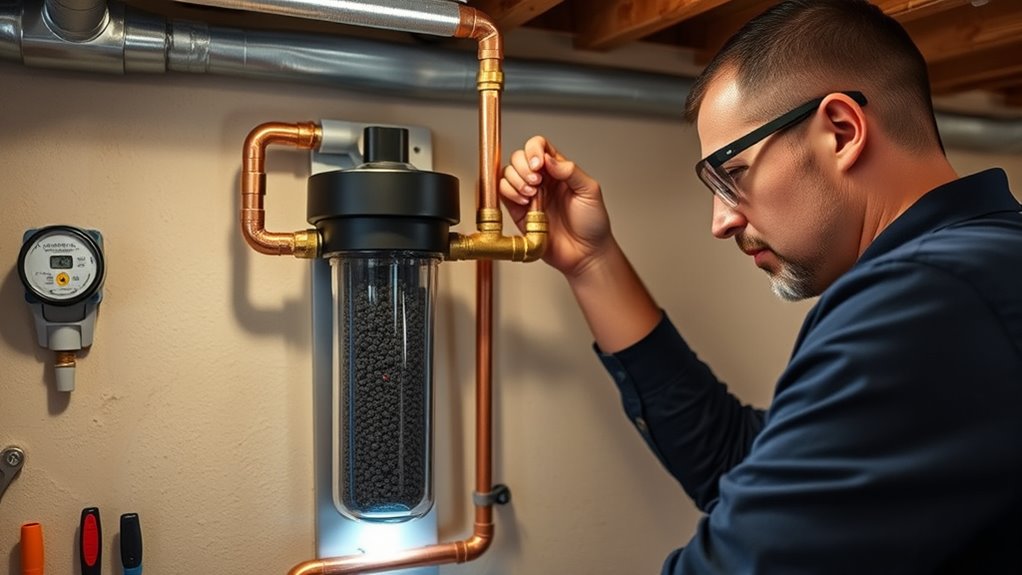

To install a whole house water filter, you need to choose the right system based on your water quality and contaminants. Proper installation involves connecting the unit to your main water line, ensuring correct flow direction, and flushing it to activate the filters. Regular maintenance, including filter replacement every 3-6 months, is essential for maximum performance. Staying informed about setup and upkeep helps guarantee clean, safe water for your home—you’ll find there’s more to learn to get it just right.
Key Takeaways
- Choose the right filtration system based on your water source and contaminants to ensure effective purification.
- Properly install the system by following manufacturer instructions, including flushing filters after setup.
- Regularly inspect for leaks, pressure changes, or damage to maintain optimal performance.
- Replace or regenerate media every 3-6 months as recommended to sustain water quality.
- Maintain system components and monitor pressure gauges to prevent clogs and prolong system lifespan.
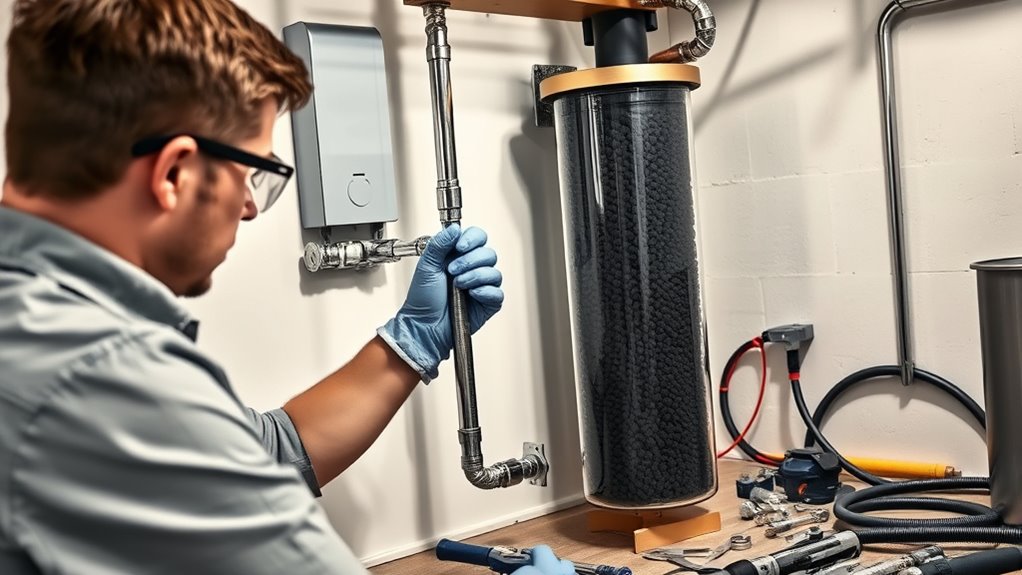
Installing a whole house water filter can considerably improve the quality of your home’s water by removing contaminants before it reaches your faucets. When you choose to install a filter system, you’re taking a proactive step toward safer, cleaner water for your entire household. The first thing you need to understand is the role of filtration materials. These materials are the core components that trap and eliminate impurities such as chlorine, sediment, heavy metals, and organic compounds. Common filtration media include activated carbon, which is excellent at absorbing chemicals and odors, and sometimes specialized media like KDF or resin beads for removing heavy metals. Selecting the right filtration materials depends on your water source and the contaminants you want to target. Proper installation is *crucial* for *optimal* performance and longevity of the system. After setup, you should flush the system to remove any residual particles and to activate the filtration materials. Regularly replacing or regenerating the filtration media is essential because these materials can become saturated with contaminants, reducing their effectiveness. Check the manufacturer’s recommendations for how often to change the filters—this can range from every three to six months, depending on your water usage and quality. Additionally, inspecting the system periodically for leaks or damage helps prevent bigger issues down the line. Keep an eye on pressure gauges if your system has them; a drop in pressure might indicate that the filtration media needs replacing or that there’s a clog somewhere in the system. Proper maintenance also involves cleaning the system’s housing and components as recommended by the manufacturer. This prevents build-up of debris and ensures smooth water flow. Remember, the quality of your filtration materials directly impacts the water quality in your home, so investing in good materials and adhering to maintenance tips will save you money and hassle in the long run. Staying informed about filtration media and system components can help you make better choices for your water quality. By staying attentive to these details, you’ll enjoy cleaner, safer water throughout your home, reducing the need for bottled water and minimizing exposure to harmful contaminants.

Loniko Smart Toilet with Bidet Built In, Heated Seat & Dual Auto Flush, Foot Sensor, Tankless Modern Elongated Electric Toilet with Warm Water Wash, Air Dryer, LED Display & 1000g MaP Flush, 1.28 GPF
🧻 [Powerful & Water-Saving Dual Flush System] This one piece smart toilet with bidet built in uses an...
As an affiliate, we earn on qualifying purchases.
Frequently Asked Questions
How Often Should I Replace the Filter Cartridges?
You should replace your filter cartridges every 6 to 12 months, depending on your maintenance schedule and water usage. Check the cartridge lifespan specified by the manufacturer, as some filters last longer than others. Regularly inspecting your filter helps prevent buildup and maintains water quality. If you notice a decrease in water flow or smell, it’s time to change the cartridges sooner. Staying on top of replacements guarantees your system works efficiently.
Can I Install a Whole House Filter Myself?
Yes, you can perform a DIY installation of a whole house water filter if you’re comfortable with basic plumbing skills. Follow clear instructions and shut off your water supply before starting. However, for a smoother process and to guarantee everything’s correctly installed, consider seeking professional assistance. This way, you reduce the risk of leaks or issues and make sure your filter system works efficiently from the start.
Will a Water Filter Improve Taste and Odor?
Yes, a water filter can substantially improve taste and odor, enhancing your overall water quality. It reduces impurities, chlorine, and organic compounds that cause unpleasant flavors and smells. By filtering out these contaminants, you’ll notice fresher, cleaner-tasting water. Installing a whole house filter ensures consistent water quality throughout your home, making every sip more enjoyable and your water more appealing, with clear improvements in taste and odor.
What Is the Cost Range for Installation?
Installation costs for a whole house water filter typically range from $500 to $3,000, depending on the system’s complexity and your home’s plumbing. You should include these costs in your budget planning to avoid surprises. Hiring a professional can ensure proper setup, which might add to the expense, but it guarantees peak performance. Consider your needs and compare quotes to find the best fit for your budget.
How Do I Know if My Water Needs Filtering?
Wondering if your water needs filtering? Pay attention to water quality cues like strange smells, cloudy appearance, or unusual taste. Test your tap water regularly for contaminants, and look for signs like discoloration or sediment. If your water contains high levels of chlorine, lead, or bacteria, filtering can improve contaminant removal. Trust your senses and testing results to decide whether a whole house filter is the right choice for safe, pure water.

WOODBRIDGE Smart Toilet with 1000g MaP Flush Score, Foam Shield, Moving Dryer, Blackout Flush, ADA Comfort Height, Auto Open & Close, Heated Seat, B0930S
✅ 1000g MaP Flush Performance: With a powerful 1000g MaP score and a built-in tank, it ensures strong,...
As an affiliate, we earn on qualifying purchases.
Conclusion
Installing a whole house water filter is like giving your home a fresh start, ensuring every drop is pure and clean. With the right tools and a little patience, you can transform your water supply into a crystal-clear stream of health. Remember, this upgrade is an investment in your well-being, so take your time and follow the steps carefully. Before long, you’ll enjoy the peace of mind that comes with knowing your water is as clean as a whistle.

HOROW T38 Artistic Smart Toilet, Bidet Toilet with Powerful Flush, Auto Open/Close Lid, Instant Warm Water, Elongated Heated Seat, Dryer, Night Light, Deodorization
For Low Water Pressure: Smart toilet built-in water tank and pump bring efficient and powerful flushing performance. The...
As an affiliate, we earn on qualifying purchases.

Smart Toilet with Warm Water Sprayer and Dryer, One Piece Bidet Toilet with Auto Dual Flush Foot Sensor Operation,Heated Seat Smart with Built In Fahrenheit LED Display
Powerful Flushing System: Designed with low water consumption (1.26 gallons per flush), this system ensures efficient and thorough...
As an affiliate, we earn on qualifying purchases.