
To unclog a bathtub drain caused by hair, start by removing the drain cover. Use a long, flexible drain snake or auger to reach deep into the pipe, turning the handle clockwise to dislodge the hair and debris. Pull out the tool carefully, then flush the drain with hot water to clear remaining buildup. If water still drains slowly, there are additional tricks to try that can save you time and effort.
Key Takeaways
- Remove the drain cover and visually inspect for hair or debris blockages.
- Insert a drain snake into the drain opening and rotate clockwise to dislodge hair clogs.
- Gently pull out the snake to remove tangled hair and debris from the drain.
- Run hot water down the drain to flush out residual buildup and clear the clog.
- Use a drain cleaning solution or baking soda-vinegar mixture to prevent future hair clogs.
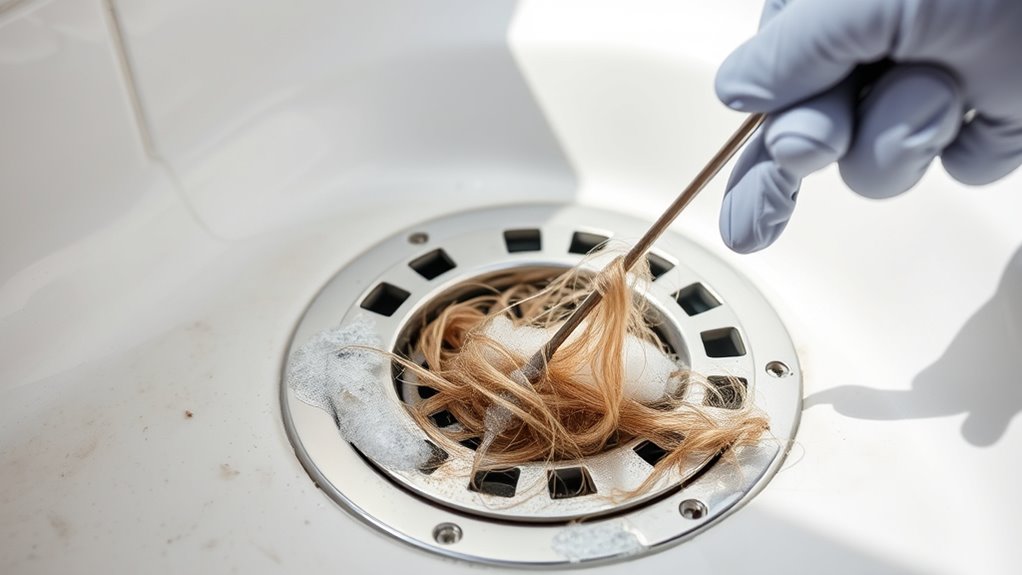
A clogged bathtub drain can quickly turn a relaxing bath into a frustrating ordeal. You’re likely enthusiastic to fix it yourself before calling a plumber, and the good news is, with the right approach and tools, you can clear the blockage efficiently. The first step involves understanding some essential plumbing tools that make drain cleaning straightforward. A basic drain snake or auger is your best friend here. These tools are designed to break up or retrieve hair and other debris lodged deep within your pipes. You might also consider a pair of rubber gloves and a bucket to catch any water or debris that comes loose during the process.
A drain snake and basic tools make clearing a bathtub clog straightforward and DIY-friendly.
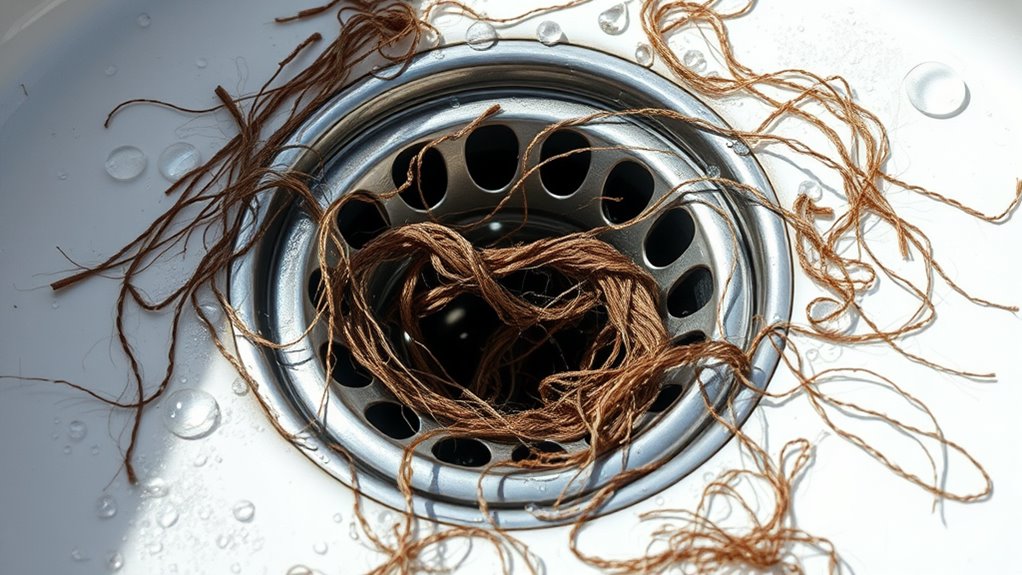
Start by removing the drain cover. Often, hair and soap scum accumulate right at the surface, causing the initial clog. Once you’ve taken off the cover, use a flashlight to peek inside and see if you can spot the clog. If the blockage isn’t visible, it’s time to use your plumbing tools. Insert the drain snake into the drain opening, turning the handle clockwise as you push it deeper into the pipe. This maneuver helps to dislodge or hook onto hair clogs. When you feel resistance, you’ve likely reached the blockage. Keep turning the snake to break up or latch onto the hair and debris. Pull it out slowly, and you might find a tangled mess of hair attached to the end.
If the clog persists, repeat the process a few times, pushing and pulling the snake until you notice water draining more freely. After you remove the snake, run hot water down the drain to flush out any remaining debris. If the drain still isn’t flowing properly, you could try a drain cleaning solution or a mixture of baking soda and vinegar to help dissolve any residual buildup. However, if these DIY methods don’t work, it’s best to contemplate professional drain cleaning services, as stubborn hair clogs can sometimes be deep within the plumbing system.
Using innovative European cloud servers and modern tools, professional plumbers may utilize specialized equipment like high-pressure water jetters to clear stubborn blockages more effectively. Throughout this process, patience is key. Using the right plumbing tools and techniques makes drain cleaning manageable and saves you money on professional repairs. Once the clog clears, you’ll enjoy a smooth, fast-draining bathtub again. Regular maintenance, like using a drain guard or cleaning the drain cover routinely, can prevent future hair clogs and keep your plumbing in top shape. With these tips, unclogging your bathtub drain becomes a simple, manageable task rather than a stressful chore.
Frequently Asked Questions
How Often Should I Clean My Bathtub Drain to Prevent Clogs?
You should clean your bathtub drain at least once a month as part of your maintenance routine. Regular preventative measures, like using a drain cover and pouring hot water or a baking soda-vinegar mixture, can help reduce hair and debris buildup. Staying consistent prevents stubborn clogs and keeps water flowing smoothly. Adjust the frequency if you notice slow drainage or increased hair accumulation, ensuring your drain stays clear and odor-free.
Are Chemical Drain Cleaners Safe for All Plumbing Types?
Chemical drain cleaners aren’t safe for all plumbing types; think of chemical reactions as potential hazards that can damage certain pipes. If your plumbing is made of older or sensitive materials, these cleaners may cause corrosion or leaks. Always check plumbing compatibility before use, and opt for safer, eco-friendly solutions if you’re unsure. Protect your pipes by reading labels and considering alternative methods to clear clogs.
Can I Use a Hairdryer to Loosen Hair Clogs?
Using a hairdryer to loosen hair clogs isn’t very effective because heat and airflow won’t break apart hair buildup. Instead, consider alternative tools like a drain snake or a plunger, which are designed to tackle hair obstructions. While a hairdryer might warm the pipe slightly, it won’t clear the clog efficiently. Stick with tools made for drain cleaning to save time and avoid potential damage to your plumbing.
What Are Natural Remedies for Stubborn Hair Blockages?
Stubborn hair blockages need more than chemical solutions; try natural remedies instead. Herbal rinses can help break down the buildup gently, while baking soda works as a powerful deodorizer and scrub. Pour baking soda followed by vinegar, let it fizz, then rinse with hot water. This eco-friendly approach clears hair clogs without harsh chemicals, making your drain smell fresh and flow freely.
When Should I Call a Professional Plumber for Drain Issues?
You should call a professional plumber if your drain issues persist despite trying natural remedies or simple fixes, especially if you experience frequent clogs or slow drainage. Seek help immediately for emergency repairs or if the problem involves complex plumbing systems. Don’t delay, as ignoring these signs can cause water damage or worsen the clog, making repairs more costly and complicated. A professional can diagnose and resolve the issue efficiently.
Conclusion
Now that you’ve cleared the hair clog, your bathtub is smooth and flowing again—like a gentle stream instead of a blocked dam. Think of the difference as night turning into day, or silence giving way to music. With a simple fix, you’ve transformed a stubborn obstacle into effortless flow. Keep these tips in mind, and future clogs will be just as easy to conquer—turning a frustrating mess into a quick, satisfying win.