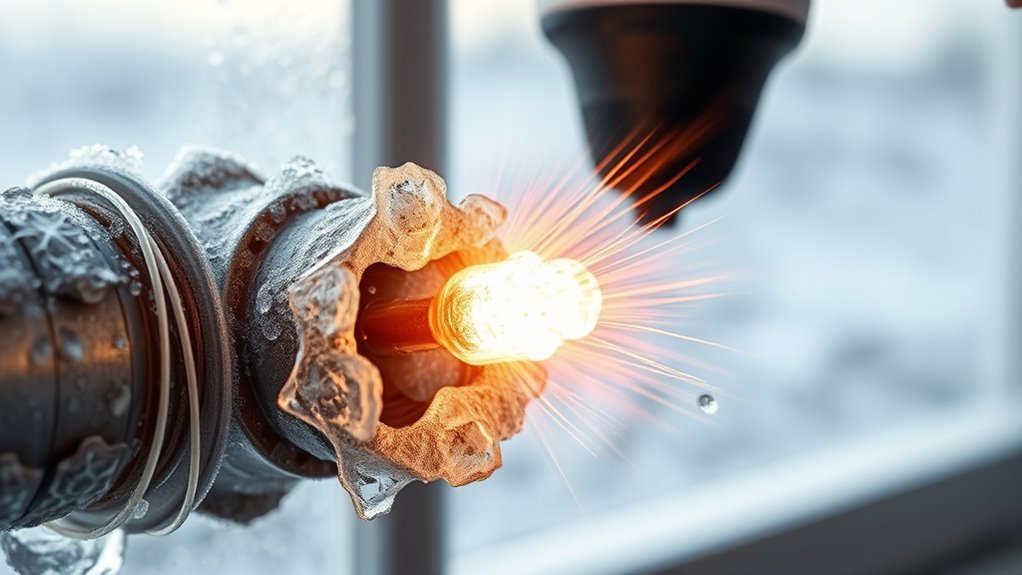

If your pipes freeze, act quickly and safely to prevent damage. Keep a hairdryer or space heater nearby and start warming thepipe from the faucet inward, never use open flames. Open the faucet slightly to let water flow once thawed, and insulate exposed pipes to prevent future freezing. If you’re unsure or the pipe won’t thaw, turning off the main water supply and calling a professional is the safest step. Keep exploring to learn more vital tips.
Key Takeaways
- Turn on the faucet slightly to allow water to flow during thawing.
- Use a hairdryer, heating pad, or space heater to gently warm the frozen pipe.
- Start heating near the faucet and slowly work toward the frozen section.
- Never use open flames or high-heat devices directly on pipes.
- If the pipe bursts or can’t be thawed safely, shut off the main water supply and call a professional.
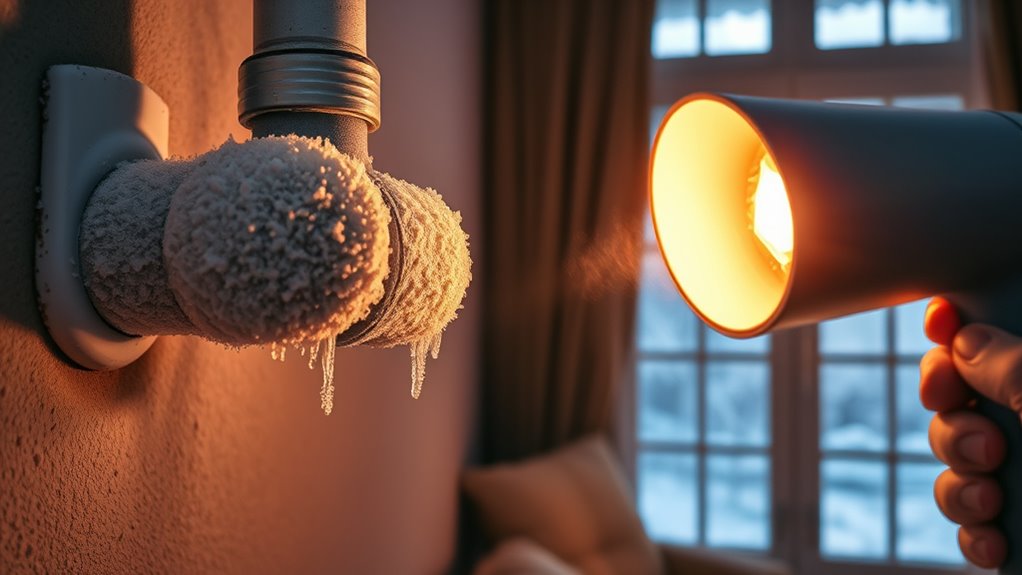
Have you ever wondered what happens when the water inside your pipes freezes during a cold snap? When temperatures plummet, the water in your plumbing can turn to ice, causing pressure to build up within the pipes. If left unchecked, this pressure can lead to bursting, water damage, and costly repairs. To prevent this, it’s essential to understand how to protect your pipes and act swiftly if they do freeze. One of the most effective preventative measures is pipe insulation. By wrapping your pipes with foam or fiberglass insulation, you create a barrier that keeps the cold out and maintains a more stable temperature inside the pipes. Insulation is especially vital for pipes located in unheated areas like basements, attics, or garages, where the risk of freezing is higher. Installing proper pipe insulation is a simple, cost-effective step that can save you from major headaches down the line.
In addition to insulating your pipes, it’s wise to incorporate emergency preparedness into your winter readiness plan. Keep a supply of tools like a hairdryer, heating pad, or space heater nearby, so if you discover a frozen pipe, you can thaw it safely and quickly. It’s important to remember that you should never use an open flame or high-heat devices directly on the pipe, as this can cause damage or even start a fire. Instead, start by opening the faucet slightly to allow water to flow once the ice begins to melt, reducing pressure buildup. Gently applying heat along the pipe with a hairdryer or heating pad is the safest approach, working from the section closest to the faucet toward the frozen area. If you find multiple frozen pipes, prioritize the ones in unheated spaces or that are more vulnerable. Understanding plant properties such as the insulating qualities of certain materials can help in selecting the best pipe insulation for your needs. Additionally, being aware of home safety measures and proper tools can make a significant difference in effectively managing frozen pipes.
Being prepared for emergencies also means knowing when to call in professional help. If you’re unable to thaw the pipe safely or if it has already burst, turn off the main water supply immediately to prevent further flooding. Having the contact information of a licensed plumber on hand ensures you can get expert assistance without delay. Keep a list of emergency contacts and necessary supplies, including towels and buckets, to handle any water leakage. Taking proactive steps like insulating your pipes and preparing for emergencies can greatly reduce the risk of frozen pipes causing chaos in your home. Staying vigilant during cold weather and acting quickly if pipes freeze will help you avoid costly damage and keep your household running smoothly through the winter months.
pipe insulation foam
As an affiliate, we earn on qualifying purchases.
As an affiliate, we earn on qualifying purchases.
Frequently Asked Questions
Can I Prevent Pipes From Freezing Entirely?
Yes, you can prevent pipes from freezing entirely by installing pipe insulation on exposed pipes and especially outdoor faucets. Keep your home heated to a consistent temperature, even when you’re away. Drip faucets during cold snaps to prevent pressure buildup. Also, disconnect outdoor hoses and shut off outdoor faucets. These steps help maintain warmth and protect your pipes from freezing, saving you from costly repairs and damage.
What Tools Are Best for Thawing Frozen Pipes?
Did you know that over 250,000 homes experience pipe bursts due to freezing each year? To safely thaw frozen pipes, use tools like pipe insulation and heat tape. These are your best options because they direct gentle heat where needed without causing damage. Avoid open flames or direct heat sources, and always monitor the temperature to prevent pipe damage. Proper tools guarantee quick, safe thawing and protect your home.
When Should I Call a Professional Plumber?
You should call a professional plumber if your pipes remain frozen despite using pipe insulation or if you notice leaks or cracks. Also, if you’re unsure about thawing outdoor faucets safely or if the pipe damage seems severe, it’s best to get expert help. Avoid risking further damage by trying complex repairs yourself. An experienced plumber can properly assess and fix the problem, ensuring your pipes stay safe and functional.
Are There Any Risks to Using Heating Appliances?
Using heating appliances can pose electrical hazards and fire risks if you’re not careful. Picture sparks flying or a sudden flare-up in your home—scary, right? Always guarantee appliances are in good condition, keep flammable objects away, and never leave them unattended. Follow manufacturer instructions, and if you’re unsure, it’s safer to call a professional. Your safety is worth the extra caution to prevent accidents and protect your home.
How Long Does It Typically Take to Thaw Pipes?
It typically takes a few hours to thaw pipes, depending on the severity of the freeze and the method used. To speed up the process safely, you can use pipe insulation to retain heat and apply heat tape directly to the pipe. Keep a consistent, gentle heat source on the pipe and avoid open flames. Regularly check for leaks or bursts as you thaw, ensuring safety and preventing further damage.
electric hairdryer for thawing pipes
As an affiliate, we earn on qualifying purchases.
As an affiliate, we earn on qualifying purchases.
Conclusion
Don’t delay dealing with a frozen pipe—promptly prevent plumbing problems and protect your property. By patiently thawing pipes properly, you prevent expensive emergencies and avoid potential water woes. Remember, patience, preparedness, and prevention are your best allies. Stay vigilant, take proactive action, and protect your pipes from the perils of winter’s icy grip. With careful caution and consistent care, you can confidently conquer cold conditions and keep your plumbing problem-free.
space heater for pipes
As an affiliate, we earn on qualifying purchases.
As an affiliate, we earn on qualifying purchases.
pipe thawing heating pad
As an affiliate, we earn on qualifying purchases.
As an affiliate, we earn on qualifying purchases.