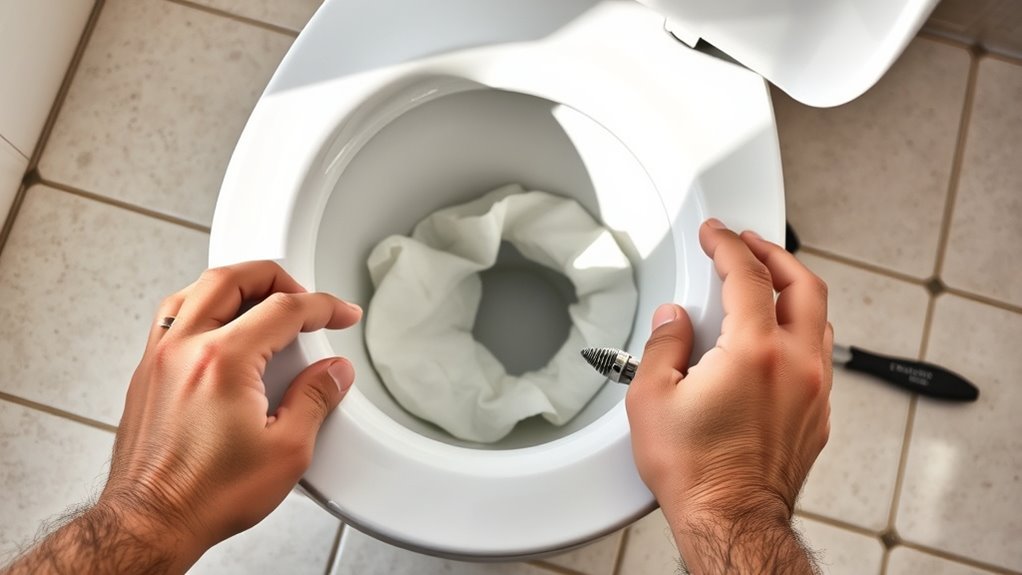

Start by shutting off the water supply and draining the tank fully. Remove the toilet by unscrewing the bolts and lift it carefully to access the flange. Remove the old wax ring and clean the area thoroughly. Place a new wax ring on the flange and carefully lower the toilet onto it, aligning the bolts. Tighten the bolts evenly, reconnect the water, and check for leaks. For detailed steps to guarantee a perfect seal, keep exploring the process.
Key Takeaways
- Turn off the water supply, drain the tank, and disconnect the toilet from the floor bolts before removal.
- Remove the old wax ring and thoroughly clean the flange and outlet area for a proper seal.
- Position a new wax ring centered on the flange or toilet outlet before lowering the toilet onto it.
- Carefully set the toilet, ensuring bolts align, then tighten bolts evenly without overtightening.
- Reconnect water, flush multiple times, and check for leaks or water seepage around the base.
Are you tired of leaks or unpleasant odors coming from your toilet? If so, it’s time to tackle the issue by replacing the wax ring. This task involves some basic steps, but it’s essential to do it carefully to prevent further problems. First, you’ll need to remove the toilet bowl, which is known as toilet bowl removal. This process requires shutting off the water supply, draining the tank, and unscrewing the bolts holding the toilet to the floor. Once the toilet is lifted, you can inspect the flange underneath. Often, a loose or damaged flange causes leaks or odors, so this is the perfect opportunity for flange repair if needed. Securing or replacing the flange guarantees a tight seal and prevents future issues.
Before proceeding, clean the area thoroughly. Carefully remove the old wax ring and any residual wax from the toilet’s outlet and the flange to create a clean surface. This step is *vital* because a dirty or uneven surface can compromise the new seal. When replacing the wax ring, position it properly on the flange or at the outlet of the toilet, depending on your setup. Make sure the ring is centered to *assure* a good seal once the toilet is set back in place. Lower the toilet carefully onto the flange, aligning the bolts with the holes in the base. Apply gentle pressure to seat the toilet firmly onto the wax ring, creating a watertight seal. Proper toilet bowl removal and flange repair are key to successful sealing and odor prevention.
Once the toilet is in place, tighten the bolts evenly, avoiding overtightening, which could crack the porcelain. Reconnect the water supply and turn it back on. Flush the toilet a few times to check for leaks around the base. If you notice water seeping out, it may mean the wax ring wasn’t seated correctly or that there’s an issue with the flange. If necessary, repeat the process, ensuring the flange is secure and the toilet is properly aligned. Proper toilet bowl removal and flange repair are *vital* steps to guarantee your new wax ring functions effectively and keeps your bathroom odor-free.

Hibbent Extra Thick Toilet Wax Ring Replacement Kit, Universal Toilet Seal Ring with Brass Toilet Floor Bolts and Retainer Washers, PE Flange Fits 3 Inch and 4 Inch Drain Pipes
Universal Toilet Wax Ring: The Hibbent toilet flange is compatible with 3-inch and 4-inch waste lines, suitable for…
As an affiliate, we earn on qualifying purchases.
As an affiliate, we earn on qualifying purchases.
Frequently Asked Questions
How Do I Know if My Wax Ring Is the Problem?
You’ll know your wax ring is the problem if you notice water pooling around the base of your toilet or persistent odors. Leak detection is key—check for water seeping out, especially after flushing or cleaning. If you smell foul odors near the toilet, it’s a sign the wax seal may be broken. Address these issues promptly to prevent further damage and guarantee your bathroom stays dry and odor-free.
Can I Replace the Wax Ring Without Removing the Toilet?
You can replace the wax ring without removing the toilet, but it’s like trying to fix a leaky pipe without turning off the water. To do this, you’ll need access to the toilet’s flange, often by removing the toilet’s cover or using a specialized tool. Keep in mind, if water leakage persists, removing the toilet for a proper seal replacement guarantees a better fix and prevents future issues.
What Tools Are Essential for Replacing a Wax Ring?
You’ll need essential plumbing tools like a wrench, putty knife, and gloves to replace a wax ring effectively. These tools help you loosen and lift the toilet safely. Sealant accessories, such as a new wax ring and possibly a sealant or plumber’s putty, are vital for a tight, leak-proof fit. Make sure to have these on hand before starting to guarantee a smooth process and prevent future leaks.
How Long Does a Wax Ring Replacement Typically Take?
Replacing a wax ring usually takes about 1 to 2 hours, depending on your experience and the complexity of the installation timeline. If you’re doing it yourself, it might take longer, especially if you’re new to DIY projects. A professional can complete the job faster because they know the process well. Overall, plan for some extra time to guarantee everything’s properly sealed and secure for long-lasting results.
Are There Alternative Seal Options Besides Wax Rings?
Yes, you have alternatives besides wax rings. Rubber gaskets are reusable and easier to install, making them a popular choice. Silicone sealants provide a flexible, waterproof seal, especially in areas prone to movement. You can opt for these options if you want a cleaner, less messy installation or need a temporary fix. Just guarantee the surface is clean and dry before applying these alternatives for the best results.

Oatey Fix-It Stainless Steel Flange Repair Ring, Adjustable Toilet Flange Repair Kit for Broken or Cracked Mounting Flanges, Secure Seal
REPAIRS BROKEN OR DAMAGED FLANGES: Easily fixes broken, cracked, or worn-out toilet mounting flanges without full replacement, restoring…
As an affiliate, we earn on qualifying purchases.
As an affiliate, we earn on qualifying purchases.
Conclusion
Replacing a wax ring is a straightforward DIY project that saves you money and prevents future leaks. With over 75% of household water damage caused by toilet leaks, tackling this task yourself can make a real difference. Just follow the steps carefully, and you’ll have a secure, leak-free toilet in no time. Remember, a simple seal replacement can save you hundreds in repair costs—so don’t hesitate to give it a try!

Plumber's Toilet Lift & Carry Tool | Easily Line up T-Bolts | USA & Patented | Pick Up Stix®
Adds lifting handle to toilet, Move Toilets with 1 Hand
As an affiliate, we earn on qualifying purchases.
As an affiliate, we earn on qualifying purchases.

DANCO All-in-One Toilet Installation Kit, Perfect Seal Wax Ring & Zero Cut Bolts, Toilet Repair, Wax-Free, Mounting Toilet Bolts (10879X)
NO MESS: Perfect Seal has a hidden wax ring which causes no mess and 3X's stronger seal than…
As an affiliate, we earn on qualifying purchases.
As an affiliate, we earn on qualifying purchases.