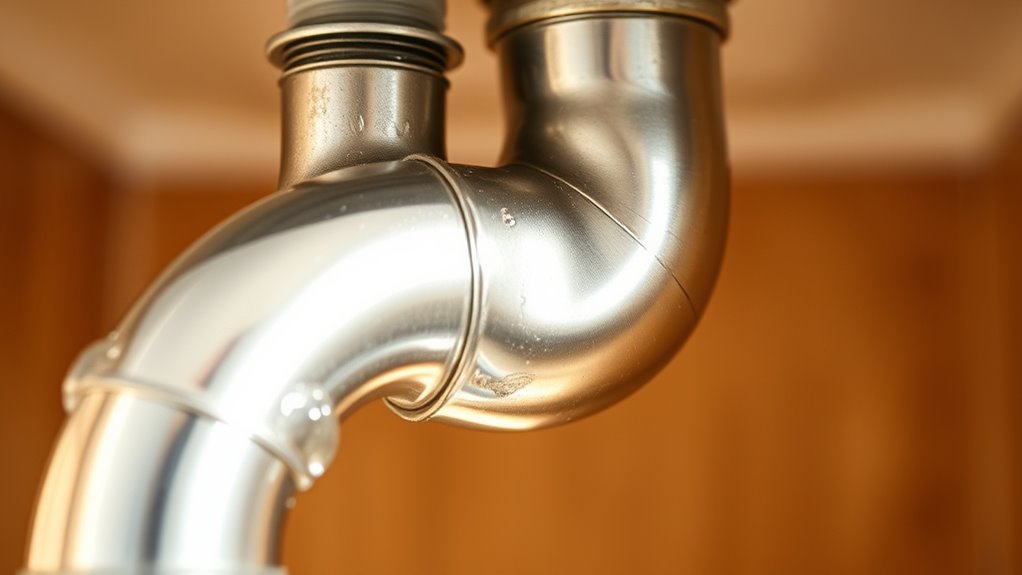

A P-trap is a U-shaped pipe located beneath sinks and drains that holds water constantly. This water forms a barrier that prevents foul odors from escaping into your home, keeping the air fresh. Proper installation and regular maintenance guarantee it functions well and avoids leaks. If you want to learn more about how this simple device keeps your space smelling clean and tips for maintenance, stay with us for detailed insights.
Key Takeaways
- P-traps hold water continuously, creating a barrier that blocks foul odors from escaping through drains.
- The U-shaped design traps debris and prevents sewer gases from entering indoor spaces.
- Proper installation ensures a secure seal, avoiding leaks that could allow odor leaks.
- Regular maintenance and cleaning prevent clogs and help maintain the water barrier.
- Ensuring the trap remains filled with water is essential for effective odor prevention.
Have you ever wondered what a P-trap is and why it’s essential in plumbing systems? If you’re tackling a bathroom or kitchen project, understanding this crucial component can save you headaches later. The P-trap is a U-shaped pipe located beneath sinks, bathtubs, or floor drains that holds a small amount of water at all times. This water acts as a barrier, preventing foul odors from creeping up through the drain and into your living space. Without it, unpleasant smells could infiltrate your home, making your environment uncomfortable and even unhealthy.
When it comes to installation guidelines, correctly installing a P-trap is vital for proper functioning. First, ensure the trap fits the pipe diameter and is securely connected to both the drain and the waste line. The trap should be positioned so that the water seal remains intact—no leaks, no gaps. Use appropriate fittings and thread sealant or plumber’s tape where necessary to prevent leaks. Also, make sure the trap is level and properly aligned with the drain outlet. Proper installation not only prevents leaks but also facilitates easy cleaning and maintenance. Remember to leave enough slack in the pipe to accommodate movement and prevent stress on the joints, which can cause leaks over time. Regular inspection and maintenance help ensure the trap functions correctly over its lifespan.
Despite its simple design, P-traps can encounter common issues that disrupt their function. One frequent problem is clogging, often caused by debris, hair, or soap scum buildup in the U-bend. This can lead to slow drainage or even complete blockages. Regular cleaning and avoiding pouring grease or large particles down the drain can help prevent this. Another common issue is dried-out traps, especially in seldom-used drains. When water evaporates over time, the odor barrier disappears, leading to unpleasant smells. To fix this, simply run water down the drain regularly or add a small amount of mineral oil to retain moisture. Leaks are also a concern, often resulting from loose fittings, worn-out seals, or improper installation. Tighten connections carefully, replace damaged washers, and verify that all parts are correctly assembled to keep your P-trap working efficiently.
Understanding these installation guidelines and common issues allows you to maintain your plumbing system properly. Regular inspection and timely repairs ensure your P-trap continues to do its job—keeping odors at bay and preserving a fresh, clean environment in your home. Additionally, considering the field‑of‑view of your plumbing setup can help you identify potential problem areas more easily. When installed correctly and maintained well, a P-trap remains a simple yet vital component that protects your indoor air quality and keeps your plumbing system functioning smoothly.
Frequently Asked Questions
Can P-Traps Be Installed Vertically?
You can’t typically install a P-trap vertically because its design relies on a horizontal or angled position to hold water and block odors. Vertical installation isn’t effective and can cause leaks or siphoning issues. When space is limited, consider alternative solutions like a bottle trap or flexible piping. Always follow manufacturer guidelines and local plumbing codes to guarantee proper installation and odor prevention.
How Long Do P-Traps Typically Last?
Your P-trap typically lasts between 5 to 10 years, depending on usage and maintenance. To prolong its trap lifespan, regularly clean it to prevent clogs and check for leaks. Avoid pouring harsh chemicals down your drain, as they can corrode the pipe. Periodic inspection and proper maintenance tips ensure your P-trap functions effectively, preventing odors and costly repairs. Keep an eye on signs of wear for peak performance.
Can P-Traps Be Reused After Removal?
Sure, you can reuse a p-trap after removal, but don’t get your hopes up about its longevity. Cleaning maintenance might restore its seal, but often, replacement procedures are more reliable. Carefully inspect for cracks or damage before reinstallation. If it’s in good shape, reusing it saves money. However, given the risks, many prefer replacing to guarantee a proper seal and prevent leaks, making maintenance easier and more effective.
Are P-Traps Suitable for Outdoor Use?
Yes, P-traps are suitable for outdoor drainage, but you need to take into account weather resistance. Choose P-traps made from durable materials like PVC or ABS, which withstand various weather conditions. Make certain of proper installation and regular maintenance to prevent cracking or leaks caused by temperature fluctuations or exposure to the elements. By selecting weather-resistant P-traps, you can effectively manage outdoor drainage while preventing odors and maintaining functionality.
What Materials Are P-Traps Commonly Made From?
P-traps are commonly made from materials like PVC, ABS plastic, copper, or cast iron. These materials offer excellent material durability and corrosion resistance, ensuring the trap lasts long and functions properly over time. PVC and ABS are lightweight, easy to install, and resistant to chemicals, making them popular choices for residential and commercial applications. Copper and cast iron provide high durability and corrosion resistance, ideal for more heavy-duty or outdoor use.
Conclusion
Now you see how a simple U-shape can make a big difference. It blocks odors, keeps your home fresh, and prevents leaks. It’s easy to install, easy to maintain, and easy to trust. The P-trap is your first line of defense against unpleasant smells, your silent protector beneath every sink. Keep it clean, keep it functional, and keep your home smelling clean. With a P-trap, you’re always protected, always prepared, and always in control.