
To clear your driveway faster and safer, start by applying ice preventers or sand before shoveling for extra traction. Wear boots with non-slip soles, and use ergonomic shovels to reduce strain. Focus on proper posture—bend at hips and knees, not the waist—and push snow rather than lift it whenever possible. Take regular breaks and stay hydrated to avoid fatigue. Keep these hacks in mind, and you’ll find more tips to make snow removal easier and safer.
Key Takeaways
- Apply ice preventers or de-icers before shoveling to reduce snow bonding and prevent ice buildup.
- Wear footwear with non-slip soles to improve traction and prevent slips during snow removal.
- Use proper shoveling techniques, bending at hips and knees, to avoid back injuries and increase efficiency.
- Take regular breaks, stay hydrated, and use ergonomic shovels to reduce fatigue and prevent strain.
- Clear snow in sections from top to bottom, focusing on light, fluffy snow for quicker, safer driveway clearance.
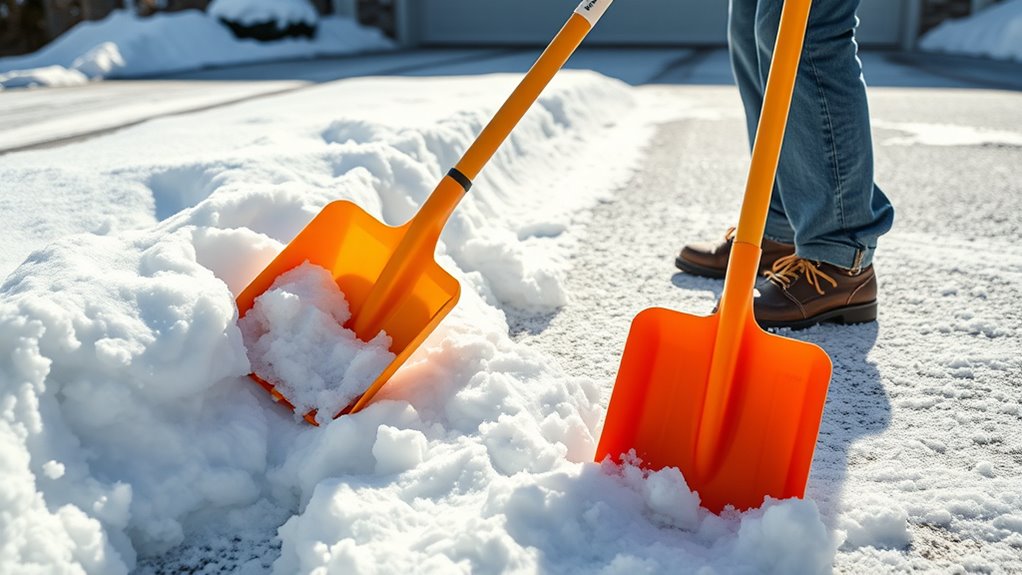
Shoveling snow can be a tough and tiring task, but with a few smart hacks, you can make it easier and more efficient. One of the most effective ways to prevent slipping and falling is by focusing on ice prevention. Before you start shoveling, sprinkle a layer of ice melt or sand on your driveway to create traction. This simple step can considerably reduce the risk of slipping, especially when the surface is icy or slick. Keep in mind that ice can be stubborn, so applying an ice preventer or de-icer beforehand helps keep the snow from bonding tightly to the pavement, making shoveling less strenuous.
Another vital aspect is wearing proper footwear. Your shoes or boots should have good traction, preferably with rubber soles designed for winter conditions. Avoid smooth-soled shoes that can easily slide on icy patches. Investing in a sturdy pair of winter boots with non-slip soles provides stability and safety. When you have the right footwear, you won’t have to worry as much about losing your footing, which can lead to falls and injuries. Additionally, choose footwear that keeps your feet warm and dry, so you stay comfortable and maintain focus on your task instead of discomfort.
Wear winter boots with non-slip soles for safety and warmth during snow shoveling.
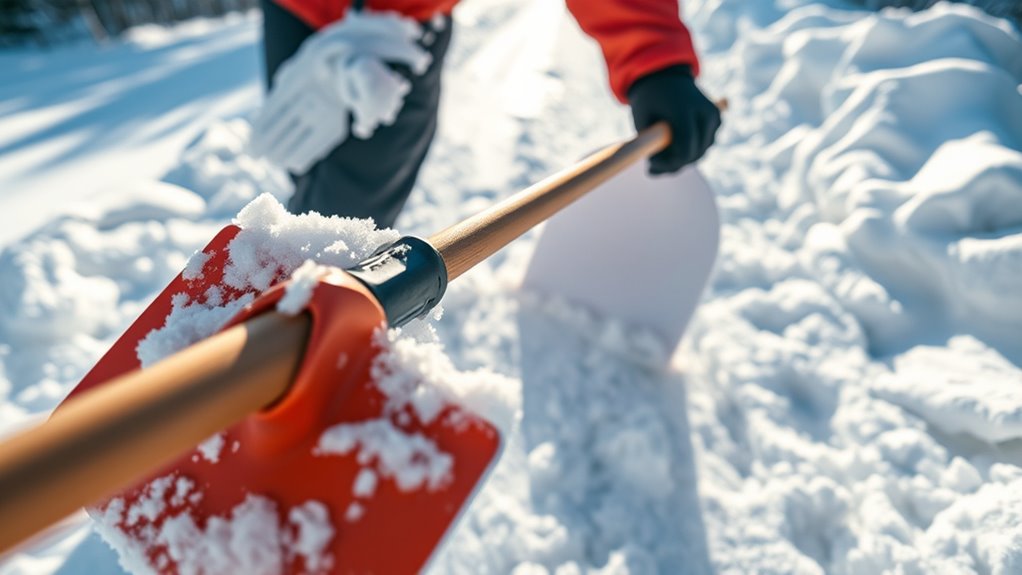
As you begin shoveling, adopt a proper posture. Bend at your hips and knees rather than your waist to reduce strain on your back. Use a shovel that is the right size for you—neither too big nor too small—so you can maintain control and reduce fatigue. When lifting snow, push it rather than lift whenever possible; this puts less stress on your body and speeds up the process. If you must lift, do so with your legs, not your back, and avoid twisting your torso.
Taking regular breaks is another helpful hack. Shoveling is physically demanding, and overexertion can lead to injuries or exhaustion. Hydrate well and stretch periodically to keep your muscles limber. Also, consider using ergonomic shovels designed to reduce strain—these tools help you push snow more efficiently and with less effort.
Finally, plan your approach based on the snow’s consistency. Light, fluffy snow is easier to move, while heavy, wet snow requires more effort. Clear your driveway in sections, starting from the top and working your way down, to prevent re-clearing already cleared areas. By incorporating these hacks—focusing on ice prevention, wearing proper footwear, maintaining good posture, taking breaks, and choosing the right tools—you’ll clear your driveway faster, safer, and with less fatigue.

YEITSNOW Snow Shovel for Driveway Ergonomic Design 17” Reinforced Heavy Duty Snow Removal Easy Assembled Tool in Winter Snowy Day for Garage Car Parking Port Workshop Barn
Ergonomic Design: The innovative curved Z-shape handle minimizes back strain and bending, allowing for comfortable, upright shoveling to…
As an affiliate, we earn on qualifying purchases.
As an affiliate, we earn on qualifying purchases.
Frequently Asked Questions
What Are the Best Snow Shovels for Heavy Snowfall?
For heavy snowfall, you should choose snow shovels with ergonomic designs that reduce strain on your back. Look for models made from heavy-duty materials like reinforced plastic or metal, which can handle thick, wet snow without bending or breaking. A wide scoop and adjustable handle make shoveling easier and faster, so you can clear your driveway efficiently and safely even with the heaviest snowfalls.
How Can I Prevent Back Injuries While Shoveling?
Did you know that snow shoveling causes over 11,000 injuries annually? To prevent back injuries, use proper lifting techniques—bend your knees, keep your back straight, and lift with your legs. Before starting, do stretching exercises to loosen your muscles. Take frequent breaks, push snow rather than lift it, and avoid twisting your torso. These steps help protect your back and make shoveling safer.
When Is the Safest Time to Shovel Snow?
You should shovel snow during the early stages of snowfall or once it’s finished, as timing considerations help prevent excessive buildup. Check weather forecasts to plan your shoveling when snow is light and not too icy. Avoid shoveling during extreme cold or when snow is heavy and wet, as these conditions increase injury risk. Clear your driveway in manageable sections, and always prioritize safety over speed.
Should I Use Salt or Sand on Icy Driveways?
Think of your icy driveway as a frozen pond—sometimes you need more than just a gentle nudge. Using salt or ice melt is your best bet. Salt de-icing methods are effective at lower temperatures, while sand provides traction but doesn’t melt ice. For ideal ice melt effectiveness, combine salt with sand for both melting power and grip. This way, you tackle ice from multiple angles, making your driveway safer faster.
How Can I Maintain My Snow Shovel for Longevity?
You can maintain your snow shovel for longevity by regularly inspecting the shovel blade and sharpening or replacing it when needed. Clean off any dirt or corrosion after each use to prevent rust. For ergonomic handle tips, ensure they’re secure and free of cracks, and consider applying a grip coating for comfort. Store your shovel in a dry place, and occasionally lubricate the moving parts to keep it in top shape.

Qiucdzi Womens Winter Snow Boots Warm Fur Lined Anti-Slip Ankle Booties Walking Shoes Non-Slip Outdoor Trekking Shoes Grey Size 10.5
Comfort&Warmth:Womens snow boots fully lined from the outsole to the insole,cover your feet with warmth all day,to wrap…
As an affiliate, we earn on qualifying purchases.
As an affiliate, we earn on qualifying purchases.
Conclusion
Think of snow shoveling as guiding a gentle river through winter’s icy landscape. With each smart move, you clear a path not just for your driveway, but for peace of mind and safety. Embrace these hacks as your trusted boat, steering smoothly through the storm. When you shovel wisely, you’re not just clearing snow—you’re carving a safe passage for yourself and loved ones to arrive home warm and secure, no matter how fierce winter gets.

Home and Country USA Glacier Grip Stone Dust Ice Traction – Non-Salt Grit for Snow & Ice, Improves Traction on Driveways, Walkways, Steps & Ramps (8 lb)
Instant Traction on Ice & Snow – Provides a rough, gritty surface that helps reduce slipping on icy…
As an affiliate, we earn on qualifying purchases.
As an affiliate, we earn on qualifying purchases.

Snow Shovel,Home Garage Snow Removal with Ergonomic Handle,Heavy-Duty Lightweight Shoveling Tool,Long Large Capacity Shovel for Garden Car Camping Outdoor (Blue)
【Wider Blade for 30% Faster Snow Removal】The enlarged shovel head significantly boosts single-scoop capacity, making it ideal for…
As an affiliate, we earn on qualifying purchases.
As an affiliate, we earn on qualifying purchases.