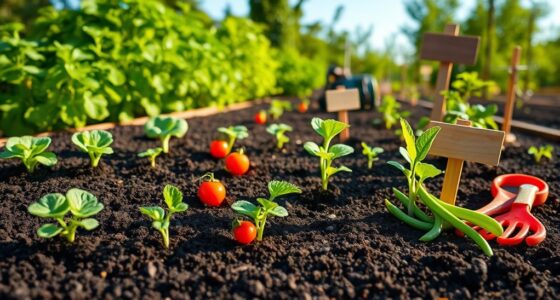
To prune shrubs and trees correctly, first choose the appropriate tools like shears, loppers, or saws based on branch size, and keep them sharp. Make clean cuts at a 45-degree angle just outside the branch collar to promote quick healing. Prune during dormancy or after flowering to prevent stress, removing dead, diseased, or crossing branches selectively. Following these principles helps guarantee healthy growth and appealing shape—keep going, and you’ll master effective pruning techniques.
Key Takeaways
- Use the appropriate tools (shears, loppers, saws) for branch size and make clean cuts at the branch collar facing the desired growth direction.
- Prune during dormancy (late winter to early spring) to promote vigorous growth and avoid stress.
- Remove dead, diseased, or damaged wood anytime; perform thinning and shaping cuts to improve light and air flow.
- Make cuts at a 45-degree angle, supporting the branch and avoiding leaving stubs; use three cuts for large limbs.
- Support young plants with stakes, assess growth patterns beforehand, and always prioritize safety with sharp tools and proper techniques.
Choosing the Right Tools for Pruning
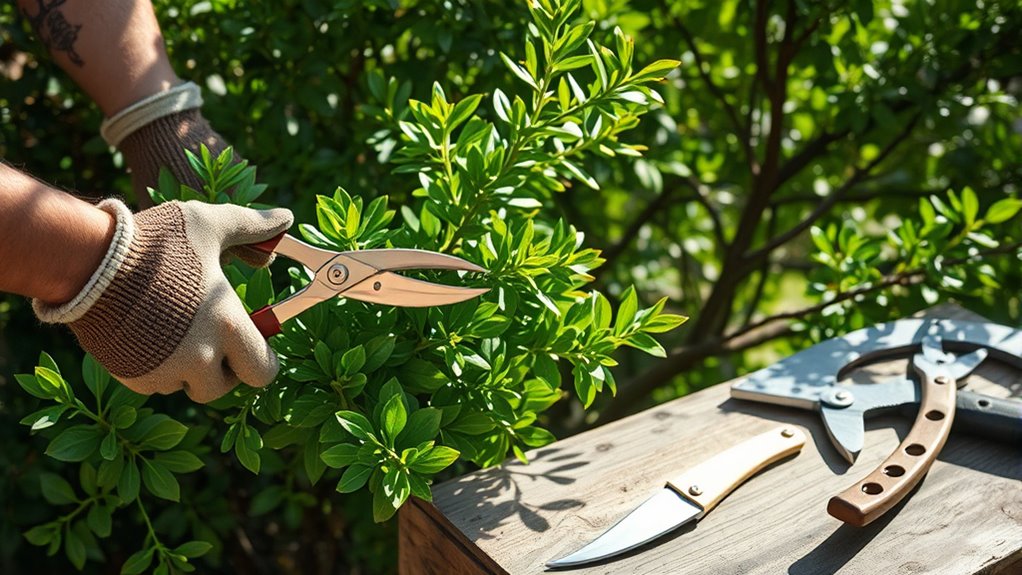
Choosing the right tools is essential for effective pruning and healthy plant growth. You want to match your tools to the branch size and type of cut needed. Hand shears work best for small twigs and thin branches under ½ inch diameter, providing precise control. Lopper shears give you more leverage for branches up to 1½ inches thick, making cuts easier. For larger woody limbs up to 6 inches, pruning saws are ideal, while chainsaws handle even bigger branches over 3 inches. Pole pruners extend your reach for high branches and combine saws and shears. Always make sure your cuts face the desired growth direction, and use sharp tools to prevent tearing or tissue damage. Selecting the right tool ensures cleaner cuts, faster healing, and healthier plants. Proper piercing aftercare is also crucial to prevent infection and promote healing, just as choosing the right pruning tools supports plant health. Using the appropriate tools also helps maintain color accuracy in your pruning marks, which is important for the overall health and appearance of your shrubs and trees. Additionally, understanding the correct technique for each tool can significantly improve your pruning results. Familiarizing yourself with tree and shrub growth habits can further enhance the effectiveness of your pruning efforts.
Understanding Types of Pruning Cuts

Understanding the different types of pruning cuts is key to healthy plant growth. You’ll primarily use heading cuts to shape and thin cuts to remove entire branches, each serving a specific purpose. Learning proper techniques guarantees your cuts promote healing and prevent damage. Additionally, employing proper techniques can help preserve the plant’s overall health and aesthetic. For optimal results, it’s also important to understand how sticking wall decor can be used to enhance your garden’s visual appeal without causing damage. Incorporating landscaping practices that complement your pruning efforts can further support the vitality of your plants and create a harmonious outdoor space. Recognizing plant responses to different cuts can also improve your pruning effectiveness and encourage robust growth. Moreover, understanding the importance of healthy kid play principles, such as fostering safe and nurturing environments, can inspire creative ways to incorporate natural elements into your garden design, making it a more vibrant and engaging space.
Heading vs. Thinning Cuts
Have you ever wondered how pruning can shape a shrub’s growth? The key lies in choosing between heading and thinning cuts. Heading cuts remove parts of a branch just above a bud, encouraging denser, bushier growth. Thinning cuts, on the other hand, remove entire branches at the base, opening up the plant’s interior for better light and air flow. Proper pruning techniques are essential to maintain healthy plants and achieve the desired form.
Proper Cutting Techniques
To guarantee healthy growth and minimize damage, it’s essential to make proper pruning cuts tailored to your plant’s needs. Use sharp tools for clean cuts that heal quickly. When removing a branch, cut just outside the branch collar to avoid damaging the trunk or stem. Make a slanting cut at about a 45-degree angle facing the direction of future growth to promote quick healing and water runoff. For thicker branches, make an undercut first to prevent tearing, then a top cut to remove the weight, followed by the final cut at the branch collar. Avoid leaving stubs or cutting too close to the trunk, as this can lead to decay. Proper cuts support healthy, vigorous growth and reduce the risk of disease. Understanding the science behind pruning can help you make more informed decisions and improve your plant’s overall health. Additionally, knowing how different pruning techniques influence healing can result in better long-term plant stability. Effective pruning techniques can also encourage desired growth patterns, which can enhance the aesthetic appeal and structure of your shrubs and trees. Recognizing the importance of timing in pruning can further optimize the recovery process and promote robust development.
Timing and Seasonal Scheduling
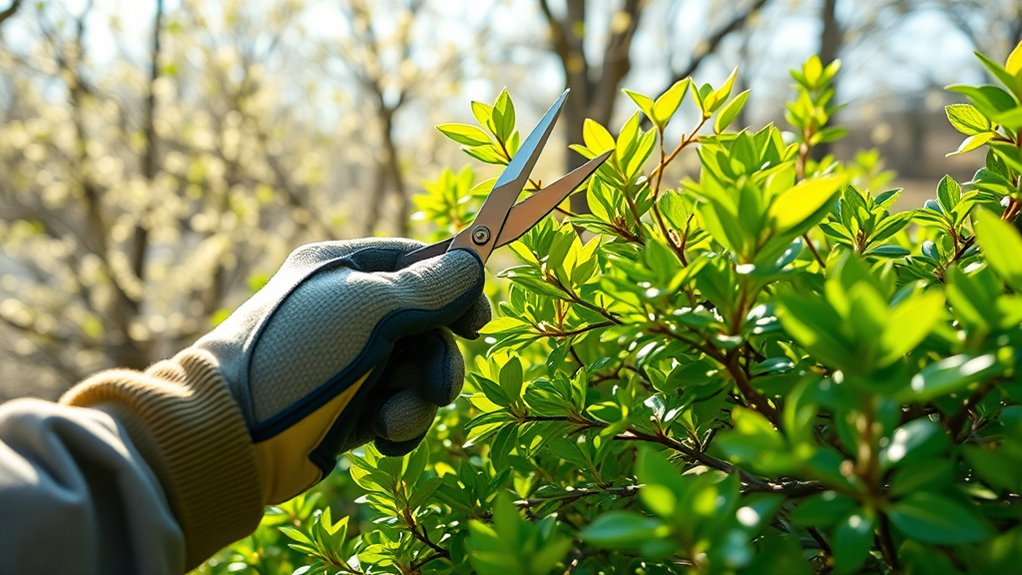
Timing is essential when pruning shrubs and trees, as doing it at the right season helps guarantee healthy growth and minimizes stress. Pruning during the dormant season, typically late winter to early spring, encourages vigorous new growth and reduces disease risk. For spring-flowering shrubs, wait 30-45 days after blooming to prune, preserving next year’s flowers. Avoid heavy pruning in late fall or winter in colder climates, as it can cause damage. Summer pruning, like deadheading, keeps plants tidy and encourages continued blooms. Light pruning of evergreens can be done in early spring or winter. Additionally, understanding proper pruning techniques can significantly improve plant health and appearance, and selecting the right tools ensures clean cuts and reduces plant injury. Regular inspection and sound therapy techniques can also help in maintaining the overall vitality of your garden plants, especially when combined with appropriate timing and seasonal scheduling for optimal results.
Principles for Healthy Plant Structure
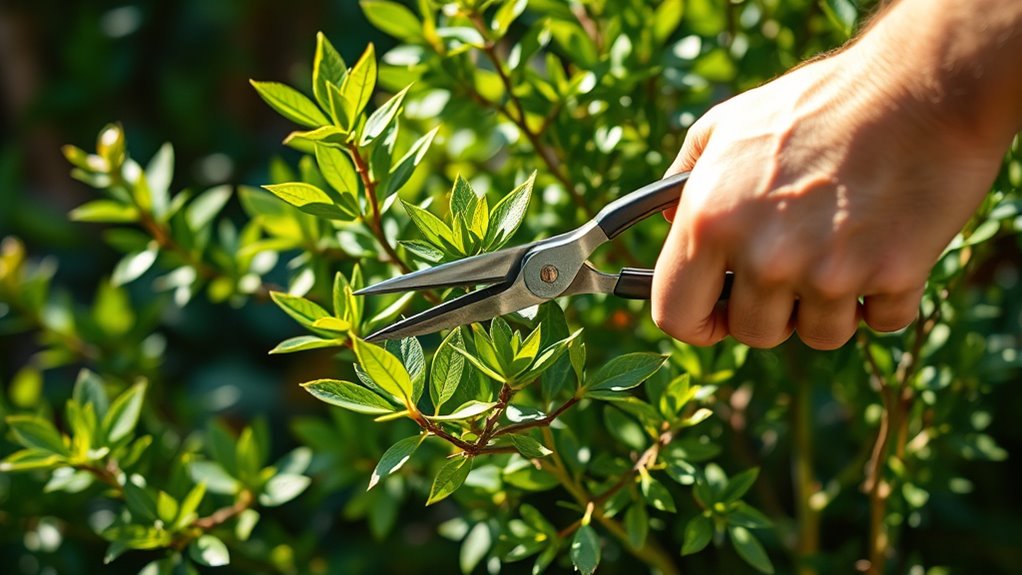
Maintaining a healthy plant structure begins with making strategic pruning decisions that promote strong, balanced growth. You should remove dead, diseased, or damaged wood anytime to prevent disease spread and boost vitality. During dormancy, cut crossing, crowded, or competing branches to enhance airflow and form. When removing large limbs, use three cuts: an undercut, a top cut to reduce weight, and a final cut to remove the stub. Avoid topping trees, as it weakens their structure. Make all cuts at a 45-degree angle just above buds facing the desired growth direction to promote quick healing. Always aim for natural shapes, and don’t remove more than a third of the plant’s mass in one session to prevent stress. Proper pruning supports healthy, resilient growth and a pleasing form. Additionally, understanding best garage door openers can help improve the security and functionality of your home environment. Using the right pruning tools can also make precise cuts easier and more effective.
Techniques Specific to Shrubs and Bushes
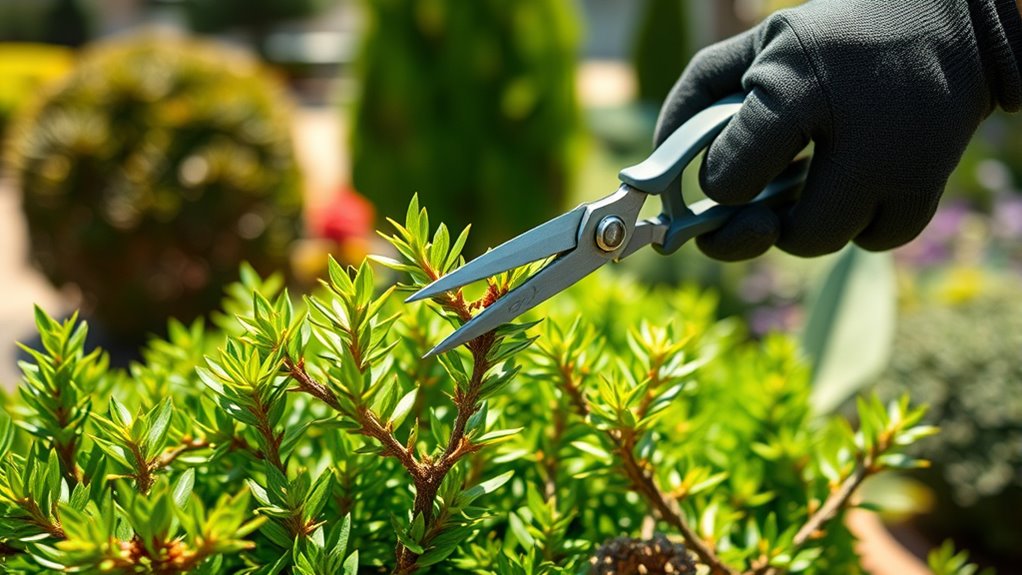
To control shrub size and shape, you’ll use techniques like heading back and renewal pruning. Heading back helps reduce growth and maintain a tidy appearance, while renewal pruning removes older wood to encourage new shoots. For more drastic changes, rejuvenation pruning can restore vigor by cutting shrubs back severely every few years.
Heading Back for Size
Heading back is a common pruning technique used to control the size and shape of shrubs and bushes. It involves cutting back branches to reduce overall growth and maintain a tidy appearance. When heading back, you should:
- Make cuts just above a bud facing the desired growth direction
- Focus on removing the outermost branches to limit size
- Avoid cutting into old, woody material to encourage new growth
- Use sharp tools to ensure clean cuts and quick healing
- Be careful not to remove more than one-third of the shrub in a single session
This technique helps keep your shrub manageable and attractive. It’s especially useful for shaping and controlling rapid growth, making your plants easier to maintain and ensuring they stay healthy.
Renewal and Rejuvenation
Renewal and rejuvenation are essential techniques for restoring the health and vigor of overgrown or neglected shrubs. Renewal pruning involves removing older, thicker wood near the base to stimulate fresh growth from the ground level. Rejuvenation is more drastic, cutting shrubs back severely every few years to revive their vitality. You should focus on cutting back to live wood, encouraging new shoots to emerge. This method clears out dense, woody stems and improves airflow and light penetration inside the shrub. Always prune selectively, removing the oldest stems first, and avoid removing more than one-third of the plant at once. Use sharp tools to make clean cuts, and plan rejuvenation during dormancy to minimize stress and maximize recovery.
Best Practices and Safety Precautions
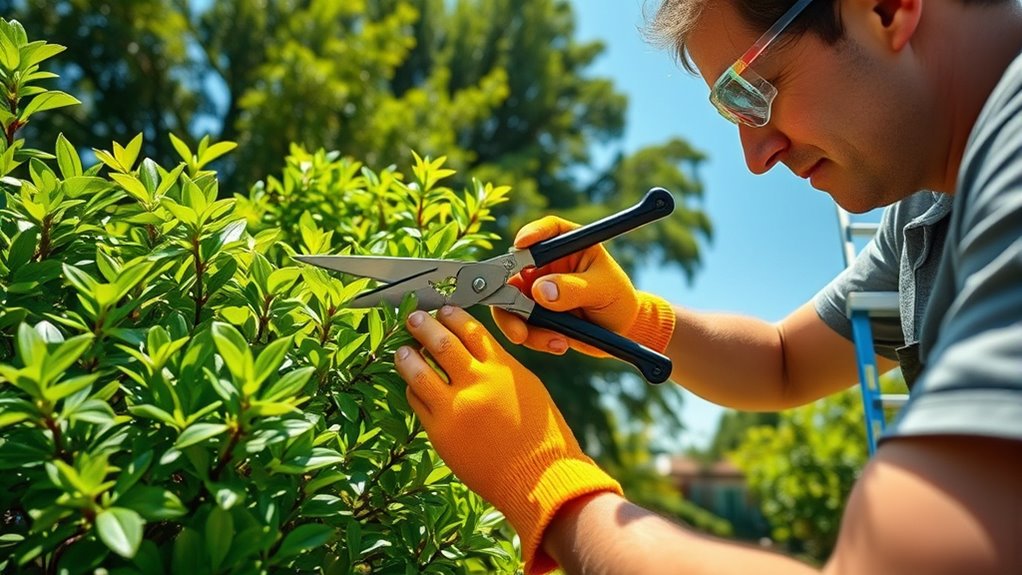
Practicing proper pruning techniques and safety measures is essential to protect both your plants and yourself. Always use sharp, clean tools to ensure smooth cuts, which help wounds heal faster and reduce disease risk. Never remove more than one-third of a plant’s mass at once to prevent shock. Support young shrubs with stakes to guide growth and avoid damaging the plant. Before pruning, assess the plant’s health and growth pattern to determine the best cut type, timing, and extent.
Key safety precautions include:
- Wearing sturdy gloves and eye protection
- Keeping tools sharp and well-maintained
- Pruning on stable, secure ladders or platforms
- Avoiding overhead pruning in windy conditions
- Using proper techniques to prevent slips and accidental cuts
Frequently Asked Questions
How Do I Identify the Best Buds for Pruning?
You identify the best buds for pruning by looking for healthy, plump buds facing the desired growth direction. Choose buds that are firm and have a color indicating vitality, usually around the same size as the leaf scar. Make your cut just above these buds, angling it about 45 degrees towards the bud, to encourage strong, healthy growth. Avoid dead or damaged buds for better results.
Can Pruning Help Prevent Disease Spread?
Cutting out diseased or dead wood is your best bet to prevent disease spread. When you prune properly, you remove infected tissue before it can infect healthy parts, giving your plant a fighting chance. Always use sharp tools for clean cuts, and make sure to dispose of the infected debris away from your plants. Think of it as nipping problems in the bud—stopping issues before they take root.
What’s the Difference Between Pruning and Trimming?
Pruning involves selectively removing specific branches or parts of a plant to promote health, structure, and growth. Trimming, on the other hand, is more about shaping and maintaining appearance, often cutting back outer growth. You focus pruning on health and form, while trimming keeps the plant looking tidy. Use pruning for dead or diseased wood, and trim for aesthetics and size control. Both improve plant well-being but serve different purposes.
How Do I Prune for Best Flowering Next Season?
To promote the best flowering next season, you should prune your shrubs and trees right after they bloom. This encourages new growth and guarantees buds form for the following year. Focus on removing dead, diseased, or crossing branches, and lightly shape the plant. Use clean, sharp tools and make cuts just above outward-facing buds at a 45-degree angle to support healthy, vibrant blooms come next season.
When Should I Avoid Pruning My Trees or Shrubs?
You should avoid pruning your trees or shrubs during late fall or late season, especially in colder climates, to prevent damage from harsh weather. Also, steer clear of heavy pruning right before or during the flowering period, as it can remove buds needed for blooms. Pruning during active growth or just before new growth begins can stress the plant and impede healthy development. Always wait until the right season for your specific plant type.
Conclusion
By mastering the right tools, timing, and techniques, you’ll foster healthier, more beautiful plants. Remember, each cut you make is a step toward better growth—like a quiet conversation between you and your shrubs, guiding them to thrive. When you prune with care and patience, you create a harmony that echoes nature’s own rhythm. Ultimately, the right approach isn’t just about maintenance; it’s about nurturing a connection that blooms quietly, yet powerfully, over time.