
To reduce mosquitoes naturally, start by eliminating standing water in containers, gutters, and low spots, and regularly trim vegetation to remove hiding spots. Introduce mosquito fish or apply Bti larvicides to target larvae safely. Use natural repellents like citronella or lemon eucalyptus oils, and plant herbs such as basil and lavender around your yard. Combining these strategies creates an eco-friendly, lasting solution that keeps mosquitoes away—discover more effective tips by continuing on.
Key Takeaways
- Eliminate standing water sources like buckets, gutters, and flowerpots to prevent mosquito breeding.
- Introduce mosquito-eating fish such as Gambusia into ponds and water features for natural larval control.
- Use natural repellents like lemon eucalyptus or citronella oils and plant insect-repelling herbs like basil and lavender.
- Trim overgrown vegetation and keep lawns well-maintained to reduce shaded resting areas for mosquitoes.
- Apply biological larvicides like Bti dunks in standing water to target larvae safely and effectively.
Habitat Modification and Source Reduction Strategies
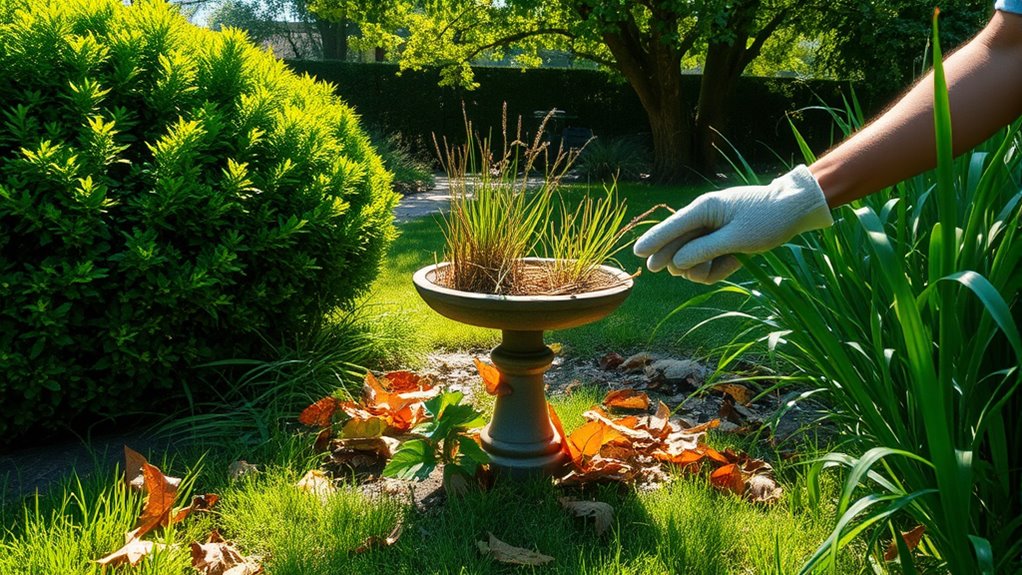
Habitat modification and source reduction are essential steps in controlling mosquito populations around your property. You should regularly eliminate standing water from flowerpots, gutters, buckets, and other containers, as these are prime breeding sites. Keep your lawn neatly mowed and weeds trimmed, especially near your foundation, to reduce resting areas for adult mosquitoes. Trim overgrown vegetation and clean out gutters to eliminate shaded spots where mosquitoes hide during the day. Fill low spots in your yard that collect water and ensure proper drainage. For ponds or water features, use circulation pumps, regularly change the water, or introduce mosquito-eating fish to prevent larvae from developing. Implementing effective storytelling techniques can also raise awareness about mosquito risks and promote community involvement in control efforts. Additionally, understanding halal standards for products used around your yard can help ensure the safety and compliance of any chemicals or treatments you might consider. Regularly inspecting your property and practicing source reduction can significantly decrease mosquito breeding sites and reduce their numbers. Incorporating community engagement strategies can further amplify the effectiveness of your mosquito control efforts. Being aware of environmental impact helps in selecting eco-friendly methods that do not harm beneficial insects or local wildlife. These proactive measures considerably reduce mosquito breeding and help keep your yard safer and more comfortable.
Employing Biological Control Methods Effectively
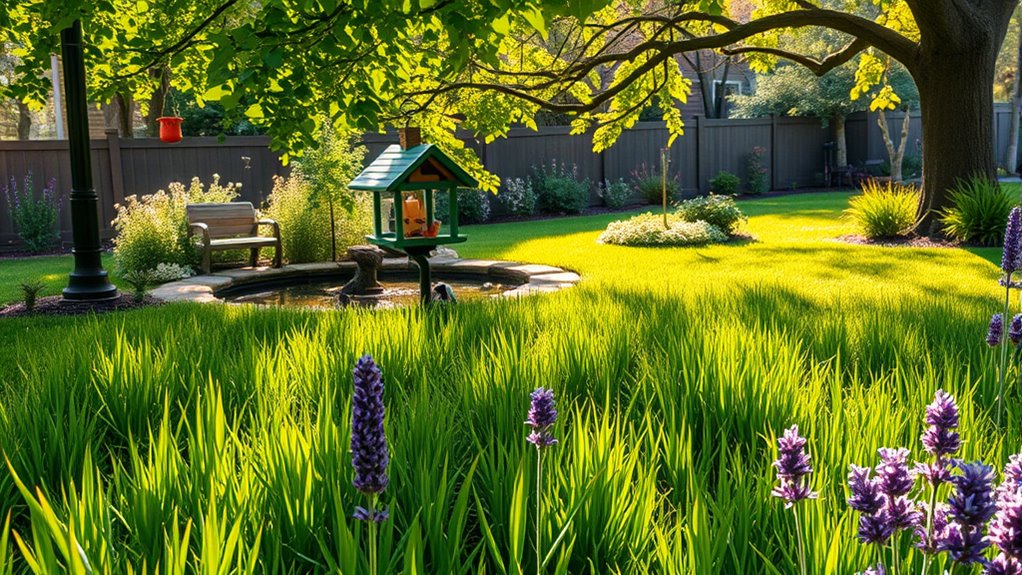
Biological control methods offer an environmentally friendly way to reduce mosquito larvae without relying on chemicals. To use these methods effectively, introduce mosquito fish like Gambusia into ponds, ditches, or water features, ensuring they’re appropriate for your area and local regulations. Place Bti dunks or pellets in standing water containers, which target larvae without harming beneficial insects or wildlife. When applying products like spinosad, follow label instructions carefully to avoid overuse. Encourage natural predators such as bats by installing bat houses, but remember they can’t eliminate all mosquitoes alone. Regularly monitor water bodies for larvae, replenishing or reapplying biological agents as needed, especially after heavy rain. Incorporating vetted biological controls into your mosquito management plan can significantly enhance your yard’s natural defenses against mosquitoes. Additionally, understanding the life cycle of mosquitoes can help you target control efforts more effectively throughout different stages. Being aware of the odor of mosquito larvae can also aid in early detection of breeding sites, allowing for prompt intervention. Using biological control methods can be more sustainable and safer for your family and pets compared to chemical alternatives.
Using Natural Repellents and Plant-Based Barriers

After establishing biological control methods, you can further reduce mosquito attraction by utilizing natural repellents and plant-based barriers. These methods create an additional layer of defense around your yard. Incorporating energy-efficient cloud servers and sustainable technology solutions can also support environmentally friendly pest management practices. Here are three effective strategies:
- Use essential oils like lemon eucalyptus, citronella, or peppermint in sprays or diffusers to repel mosquitoes naturally. These oils are proven to be effective natural repellents and safe for use around family and pets.
- Plant mosquito-repelling herbs such as basil, lavender, and citronella around your yard to deter pests and add visual appeal.
- Incorporate barrier plants like marigolds and neem trees that naturally repel mosquitoes and other insects. Utilizing integrated pest management techniques can optimize these natural methods for better results.
These natural solutions are environmentally friendly, safe for children and pets, and work best when combined with habitat modifications. Reapply repellents every few weeks during peak mosquito season for ideal protection.
Chemical-Free Larvicide Solutions for Standing Water
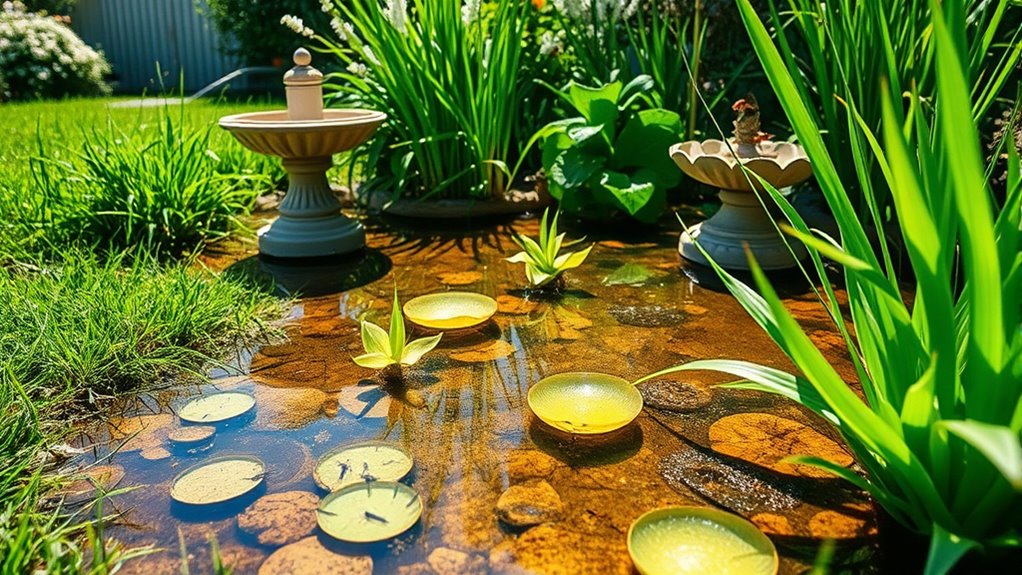
Chemical-free larvicide solutions offer an effective way to control mosquito populations in standing water without relying on chemical pesticides. One popular option is Bti mosquito dunks, which release naturally occurring bacteria that target mosquito larvae specifically, ensuring safety for other aquatic life. Pellet formulations are also available and can be easily applied to backyard ponds, birdbaths, or water features to prevent larvae from developing. Additionally, BTI-based traps attract egg-laying females using bait like wet straw or hay while bacteria eliminate their larvae, disrupting the mosquito life cycle effectively. These methods focus on preventing mosquito reproduction at the larval stage, reducing populations naturally. Using environmentally friendly larvicides helps protect beneficial insects and aquatic ecosystems while managing mosquito breeding sites. Implementing chemical-free larvicides provides a safe, targeted, and environmentally friendly approach to managing standing water breeding sites in your yard. Proper maintenance of water features and removal of standing water further enhances these efforts, as standing water management is crucial for effective mosquito control. Regularly inspecting and draining stagnant water from containers and gutters prevents mosquito breeding and complements larvicide applications, as well as eliminating breeding sites, creating a comprehensive mosquito control strategy that is both effective and eco-conscious.
Combining Approaches for a Comprehensive Mosquito Management

To effectively reduce mosquito populations, combining multiple control methods creates a more resilient and sustainable strategy. By integrating habitat modification, biological control, and natural repellents, you strengthen your defenses. Start with habitat modification by removing standing water, trimming vegetation, and filling low spots to eliminate breeding sites. Adding biological control, like introducing mosquito fish or Bacillus thuringiensis israelensis (Bti), to target larvae directly helps to control mosquito larvae more effectively. Incorporating environmental management practices can further reduce breeding grounds and support long-term mosquito control. Ensuring proper drainage and avoiding water accumulation in standing water sources prevents new breeding sites from forming. Enhance your efforts with natural repellents such as citronella or lemon eucalyptus oils to deter adult mosquitoes. Using natural pools that blend with your landscape can also minimize mosquito breeding habitats. This layered approach ensures that no single method is solely responsible for control, making it more effective and long-lasting. Together, these strategies create a thorough system that minimizes mosquito populations while maintaining a safe, eco-friendly environment.
Frequently Asked Questions
Are Natural Mosquito Controls Safe for Pets and Children?
Natural mosquito controls are generally safe for pets and children when used correctly. Essential oils like citronella and lemon eucalyptus act as repellents without harmful chemicals, and biological controls like mosquito fish or Bacillus thuringiensis israelensis (Bti) target larvae specifically. However, always follow product instructions, keep treatments away from pets and kids, and avoid applying concentrated oils directly on skin or near food areas to guarantee safety.
How Long Does It Take to See Results From Natural Methods?
While the gentle unfolding of progress varies, you can typically start noticing fewer mosquitoes within a few weeks of implementing natural methods. Consistent habitat modifications, biological controls, and repellents work together to gradually diminish their presence. Keep in mind, weather and local mosquito species influence results. Patience and regular upkeep are key, as these eco-friendly strategies build a more balanced yard environment, leading to a noticeable decline over time.
Can These Methods Completely Eliminate Mosquitoes From My Yard?
These methods can’t completely eliminate mosquitoes from your yard, but they substantially reduce their numbers. By regularly removing standing water, encouraging natural predators, and applying natural repellents, you create an environment less hospitable for mosquitoes. Keep in mind, weather and mosquito species affect results, so consistent effort is key. While you won’t get rid of every mosquito, these strategies can make your yard much more comfortable and less mosquito-prone.
Are There Any Environmental Impacts of Using Biological Control Agents?
Using biological control agents generally has minimal environmental impacts. You’re introducing natural predators like mosquito fish or bacteria such as Bti, which target mosquito larvae specifically. These methods don’t harm other wildlife or beneficial insects, reducing ecological disruption. However, you should guarantee proper application and follow local regulations, as introducing non-native species or overusing certain agents could potentially disrupt local ecosystems. Overall, biological controls are a safer, eco-friendly option.
How Do Weather Conditions Affect the Effectiveness of Natural Mosquito Control?
Weather’s like a wild card in mosquito control—high rain, wind, or heat can sweep away or dilute natural methods. Heavy rain can wash away mosquito fish or Bti, making control less effective. Hot, dry weather reduces mosquito breeding, but warm, humid conditions boost it. You’ll find that consistent, adaptable efforts work best, as weather can turn your backyard into a mosquito paradise or a no-fly zone overnight.
Conclusion
By blending habitat tweaks, natural repellents, and biological controls, you become a fortress against mosquitoes. Think of your yard as a well-guarded castle, where each method acts as a shield keeping these pesky intruders at bay. When you take these steps, you not only protect your outdoor space but also create a haven for you and your family. Together, these strategies form a powerful barrier—turning your yard into a mosquito-free sanctuary.