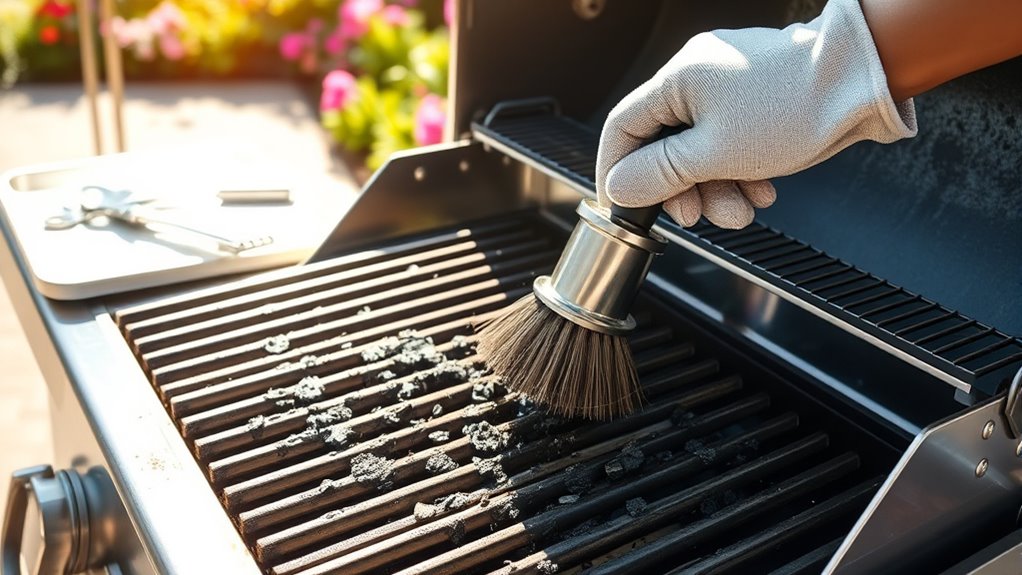
To get your BBQ grill summer-ready, gather tools like wire brushes, scrapers, sponges, and cleaners. Disconnect gas or unplug electrical parts, then remove and scrub all components like grates and flavorizer bars with warm soapy water. Clean interior surfaces and burners carefully, checking for clogs. Wipe down the exterior with polish, and inspect for damage. For a thorough job, follow safety tips and routine maintenance advice to keep your grill in top shape all season.
Key Takeaways
- Remove and clean grates, flavorizer bars, and heat deflectors using scrapers, abrasive pads, and warm, soapy water.
- Scrape interior surfaces and burners to eliminate grease buildup, ensuring proper gas flow and flame quality.
- Use chemical cleaners safely, following instructions, and rinse thoroughly to prevent residue damage.
- Polish exterior surfaces with a soft cloth and metal-safe polish to maintain appearance and protect against rust.
- Conduct final inspections of components, check gas connections for leaks, and ensure all parts are dry before storage or use.
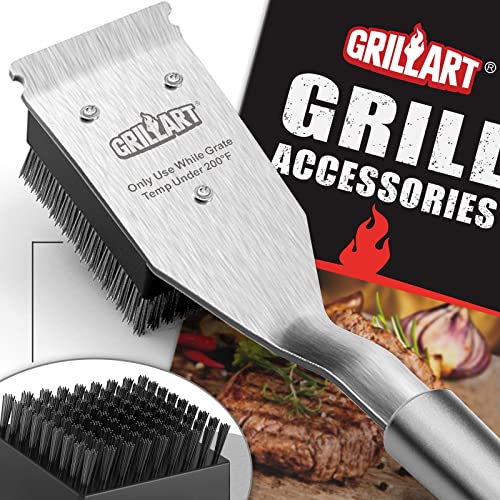
GRILLART Grill Brush and Scraper, Wire BBQ Grill Brush for Outdoor Grill, 16.5” Grill Cleaning Brush BBQ Grill Accessories, Safe Grill Cleaner Brush-Ideal Gift for Men/Dad BBQ Brush for Grill Cleaning
Effortless cleaning – Packed full of stiffer and denser stainless-steel bristles along with a tough grill scraper, you…
As an affiliate, we earn on qualifying purchases.
As an affiliate, we earn on qualifying purchases.
Gathering the Right Tools and Supplies for Cleaning
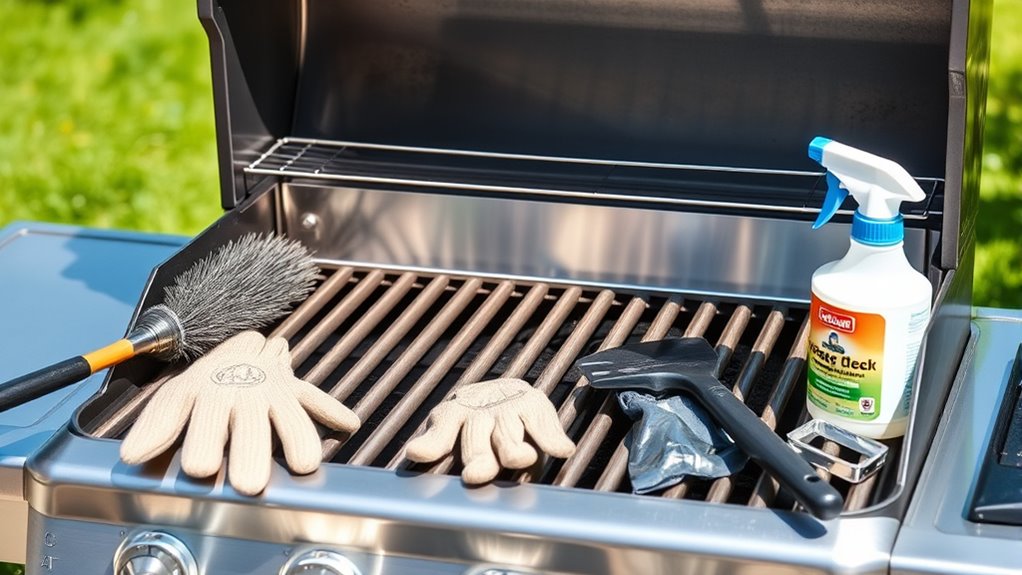
Before you start cleaning your grill, it’s essential to gather the right tools and supplies. You’ll need a putty knife or scraper to remove stuck-on food and debris, along with abrasive pads or non-scratch scrub sponges to scrub surfaces without causing damage. A wire brush or steel wool (use cautiously on stainless steel) helps clean grates and flavorizer bars. Keep dish soap and warm water nearby for degreasing, and microfiber cloths for drying and buffing to prevent water spots. Small brushes, like a toothbrush, are handy for tight spots and burner holes. Make sure to have cleaning chemicals, such as oven or grill-specific cleaners, for stubborn residues. Having these tools ready guarantees a thorough, efficient cleaning process that keeps your grill in top shape. Proper tool maintenance ensures your cleaning tools stay effective and last longer. Additionally, utilizing smart cleaning solutions, like automated brushes or cleaning robots designed for grills, can make maintenance easier and more consistent. Incorporating proper cleaning techniques can also help prevent damage and prolong the lifespan of your grill components. Regular cleaning using the right tools also helps maintain the appearance and performance of your grill, ensuring it’s ready for summer barbecues. To optimize your cleaning process, consider seasonal maintenance routines that align with your grilling schedule and usage frequency.

Citrusafe Complete Grill Cleaning Kit – Grill Cleaner Spray (16oz), Scrubber 3 Pack, Nylon Brush, Cookbox Scraper and Microfiber Cleaning Towel – Tools to Clean BBQ Grill Grates, Smokers, Ovens
BBQ Grill Cleaner: CitruSafe is a pioneer in the grilling industry by manufacturing the first spray specifically formulated…
As an affiliate, we earn on qualifying purchases.
As an affiliate, we earn on qualifying purchases.
Preparing Your Grill for a Deep Clean
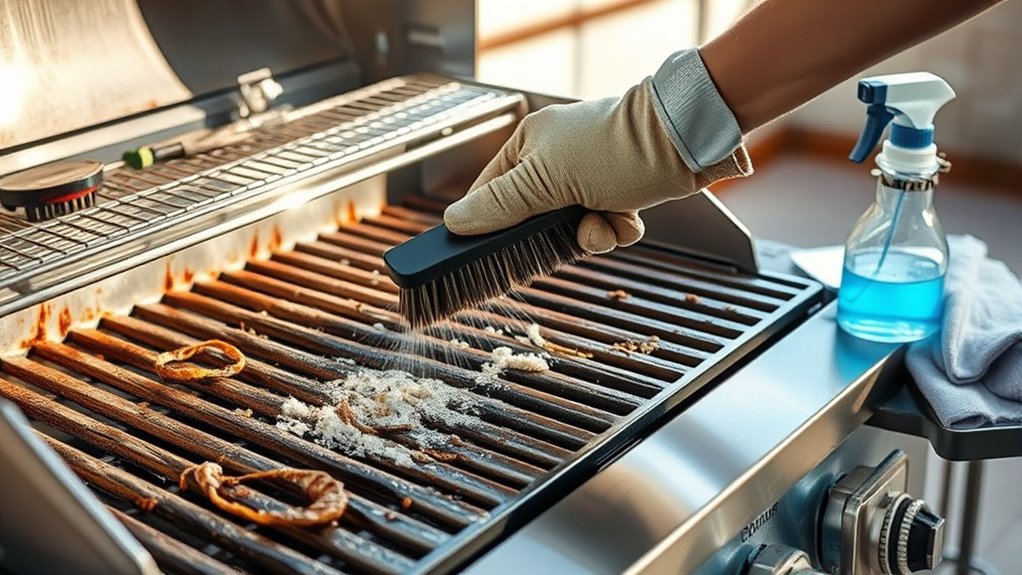
To prepare your grill for a deep clean, start by disconnecting the propane tank or unplugging any electrical components to guarantee safety. Once disconnected, move the grill to a well-ventilated area if possible. Clear the surrounding space to give yourself room to work comfortably. Remove all removable parts, like grates and flavorizer bars, to make cleaning easier. Protect nearby surfaces with plastic sheets or old towels to catch drips and debris. Check that you have all necessary tools nearby, such as scrapers, brushes, and cleaning solutions. This setup ensures a safe, efficient deep cleaning process. Incorporating proper ventilation during cleaning helps dissipate fumes and maintain safety. Additionally, understanding the importance of regular maintenance can extend the lifespan of your grill and ensure optimal performance. Regularly inspecting your grill for signs of wear and tear is also a key part of safe grill operation and maintaining its longevity. Maintaining a clean grill surface not only improves cooking quality but also prevents buildup of grease and debris that can pose fire hazards. Remember that seasonal cleaning can help keep your grill in top condition for the entire summer grilling season.

Weber Stainless Steel Griddle Scraper – Non‑Slip Easy‑Grip Handle with Hang Loop for Efficient Grease & Grime Removal, Dishwasher Safe
Scrape away the old and create something new with the Griddle Scraper. Its no-slip, easy grip handle and…
As an affiliate, we earn on qualifying purchases.
As an affiliate, we earn on qualifying purchases.
Removing and Cleaning Grill Components
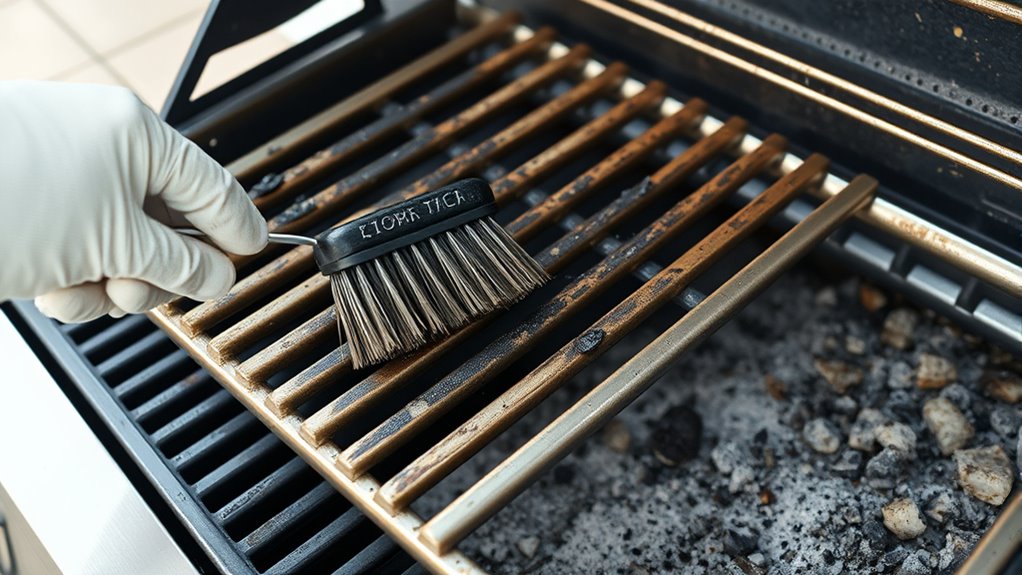
Start by removing all grill components, such as the grates, flavorizer bars, heat deflectors, and burner covers, to access all areas that need cleaning. Carefully lift each part to prevent damage and set them aside for separate cleaning. Use a putty knife or scraper to loosen stuck-on food and grease from the grates and other removable parts. Scrub these components with abrasive pads or non-scratch sponges, paying attention to corners and crevices. Clean the flavorizer bars and heat deflectors thoroughly, removing grease buildup. For stubborn residue, soak parts in warm, soapy water before scrubbing. Once all components are clean, rinse them with water and dry completely. This step ensures your grill is ready for a deep clean and peak performance. Proper cleaning not only maintains the grill’s appearance but also enhances its longevity and performance. Additionally, regular maintenance helps prevent rust and corrosion that can compromise your grill’s structure over time, especially when you understand materials and heat distribution. Incorporating the right cleaning techniques based on material composition can further extend the life of your grill.

Yoehka BBQ Grilling Accessories Set, 34Pcs Heavy Duty Grill Tools for Outdoor Camping, Grilling Gifts for Men Dad, Stainless Steel Barbecue Utensils Kit with Mats and Glove in Carrying Bag, Brown
34Pcs Complete Grilling Accessories Kit: Everything you will need to grill! It includes long-handled grill tongs, spatula, fork,meat…
As an affiliate, we earn on qualifying purchases.
As an affiliate, we earn on qualifying purchases.
Using Chemical Cleaners Safely and Effectively
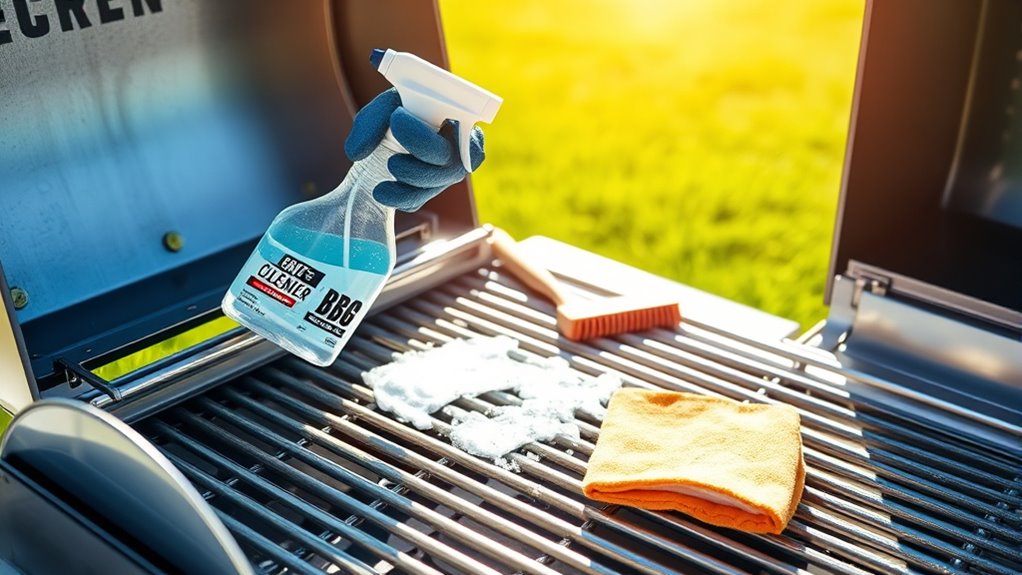
Using chemical cleaners safely and effectively is essential to protect your grill’s finish and guarantee a thorough clean. First, always read and follow the manufacturer’s instructions carefully. Confirm proper ventilation by working in a well-ventilated area or outdoors, and wear gloves and eye protection to avoid skin and eye irritation. When applying cleaners, spray or brush them on sparingly, focusing on stubborn spots. Let the cleaner sit for the recommended time before scrubbing gently. Rinse thoroughly with water afterward to remove any residue that could affect food flavor or damage your grill. Proper grill maintenance practices and hygiene practices can also help prevent corrosion and maintain the grill’s condition. Incorporating environmentally friendly cleaning products can further enhance the sustainability of your grill cleaning routine, aligning with sustainable practices. Additionally, understanding chemical cleaner safety protocols can help prevent accidental injuries during your cleaning process. Being aware of quality assurance principles can ensure you use the safest and most effective cleaning methods for your grill.
Cleaning the Interior Surfaces and Burners
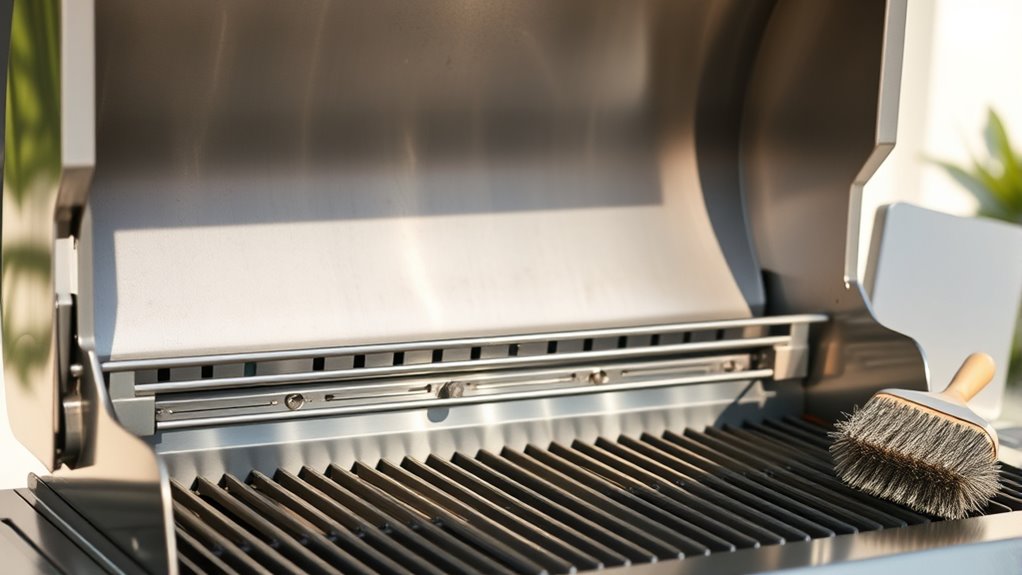
To keep your grill running smoothly, start by scraping away burnt-on food and grease from the interior surfaces. Next, use a scrub brush or sponge to clean all areas thoroughly, paying special attention to corners and tight spots. Don’t forget to carefully clean the burner holes to guarantee proper gas flow and prevent blockages. For optimal performance, regularly check the burner horsepower to ensure it remains within the recommended range for your model. Additionally, consider luggage and bag tips to store your cleaning tools efficiently and keep your workspace organized.
Scrape and Degrease Surfaces
Have you ever wondered how to effectively remove built-up grease and food debris from your grill’s interior? Scraping and degreasing are essential steps to keep your grill functioning smoothly. Start by using a putty knife or scraper to loosen stuck-on residue from the sides, bottom, and burners. Next, apply a degreasing solution or a mixture of dish soap and warm water to breakdown grease and grime. Use abrasive pads or non-scratch scrub sponges to scrub surfaces thoroughly without damaging them. Focus on these key areas:
- Scrape off large food particles and grease.
- Degrease with soapy water or specialized cleaner.
- Wipe surfaces dry with microfiber cloths to prevent water spots.
This process guarantees your grill stays clean, safe, and ready for summer cookouts.
Clean Burner Holes Carefully
Cleaning the burner holes is crucial to guarantee proper gas flow and even heat distribution. You want to use a small brush, like a tooth or pipe cleaner, to clear out any debris lodged inside. Gently insert the tool into each hole and wiggle it to remove blockages without damaging the burner. Avoid using sharp or heavy tools that could enlarge or deform the holes. For stubborn buildup, soak a small brush in warm soapy water or vinegar and scrub the holes carefully. Rinse with a damp cloth to remove residue. Always ensure the burners are cool before cleaning. Regularly checking and cleaning these holes helps maintain excellent flame quality and prevents uneven cooking or flare-ups.
Polishing and Maintaining the Exterior Finish

Maintaining the exterior finish of your grill is essential for both its appearance and longevity. To keep it looking its best, regularly clean and polish the surface. Use a soft cloth and warm, soapy water to wipe down dust and dirt. For stainless steel, apply a metal-safe polish to restore shine and protect against rust. Always buff in the direction of the grain to avoid scratches. Avoid abrasive tools on painted or coated surfaces to prevent damage.
- Use a microfiber cloth for buffing and removing water spots
- Apply a protective polish to preserve the finish
- Regularly clean knobs and handles to prevent dirt buildup
Routine Maintenance Tips for Summer Readiness
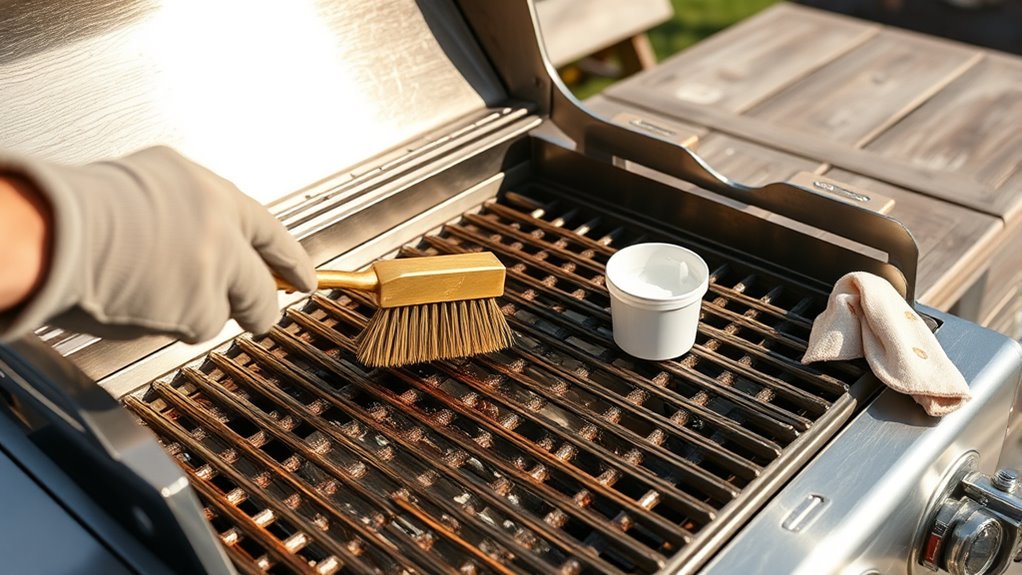
Preparing your grill for summer involves more than just a good clean; it requires ongoing maintenance to guarantee it performs safely and efficiently during peak season. After each use, brush the grates with a wire brush to prevent food buildup and reduce flare-ups. Empty grease trays regularly to minimize fire hazards and keep the grill clean. Schedule deep cleanings monthly or after heavy grilling sessions, including full disassembly for thorough scrubbing. Store your grill covered or in a sheltered spot to protect it from the elements and dirt. Periodically inspect for rust, damage, or worn parts, replacing components as needed to maintain safety and performance. Consistent maintenance ensures your grill stays in top shape, ready for summer barbecues and outdoor gatherings.
Troubleshooting Common Grill Cleaning Challenges
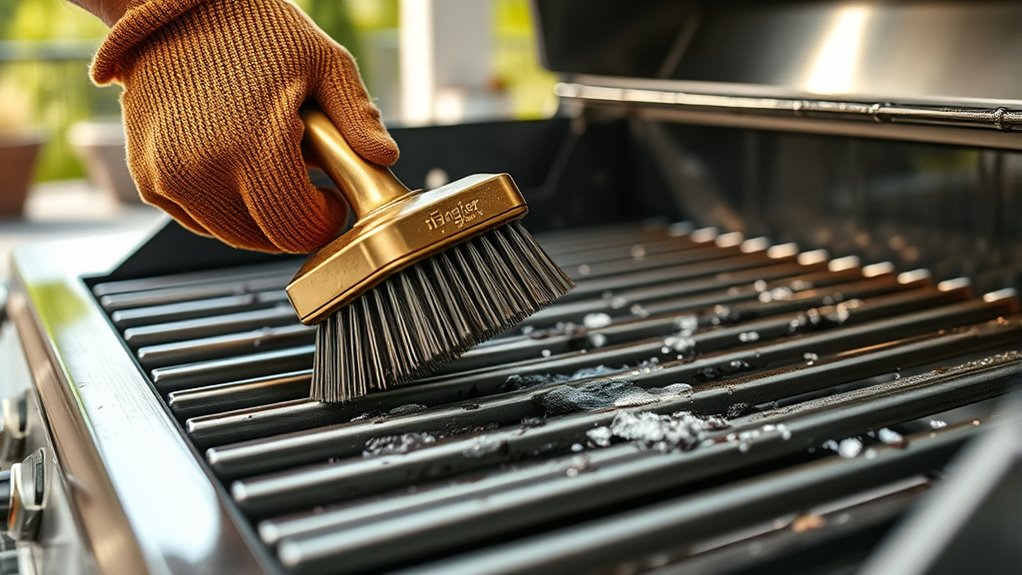
You might find stubborn grease buildup tough to remove, especially on older or heavily used grills. Hard-to-reach areas, like burner holes and corners, can also be tricky to clean thoroughly. Addressing these challenges quickly keeps your grill in top shape and ready for your next cookout.
Removing Stubborn Grease Buildup
Stubborn grease buildup can be one of the most challenging issues when cleaning a grill, especially after multiple uses or heavy cooking sessions. To tackle it, start by applying a grill-specific degreaser or a mixture of dish soap and warm water to loosen the grease. Let it sit for a few minutes to break down the residue. Then, use an abrasive pad or steel wool carefully on metal surfaces—avoiding delicate finishes. For particularly tough spots, a putty knife or scraper can help lift hardened grease without damaging the grill. Remember to rinse thoroughly and dry with a microfiber cloth to prevent water spots.
- Apply degreaser and let it sit
- Use abrasive pads or steel wool cautiously
- Scrape with a putty knife for stubborn spots
Cleaning Hard-To-Reach Areas
Reaching into tight spots can be one of the most challenging aspects of grill cleaning, especially around burner holes, corners, and beneath the flavorizer bars. To tackle these areas, use a small brush or pipe cleaner to loosen stubborn debris. A toothpick or bamboo skewer works well for clearing clogged burner holes without damaging them. For corners and tight spaces, a narrow scraper or a toothbrush with stiff bristles can reach into crevices. Compressed air or a handheld vacuum can help blow out dust and debris without making a mess. Be patient and gentle to avoid damaging delicate parts. Regularly inspecting and cleaning these hard-to-reach spots guarantees proper airflow, prevents flare-ups, and keeps your grill performing at its best all summer long.
Final Checks Before Storing or Using Your Grill
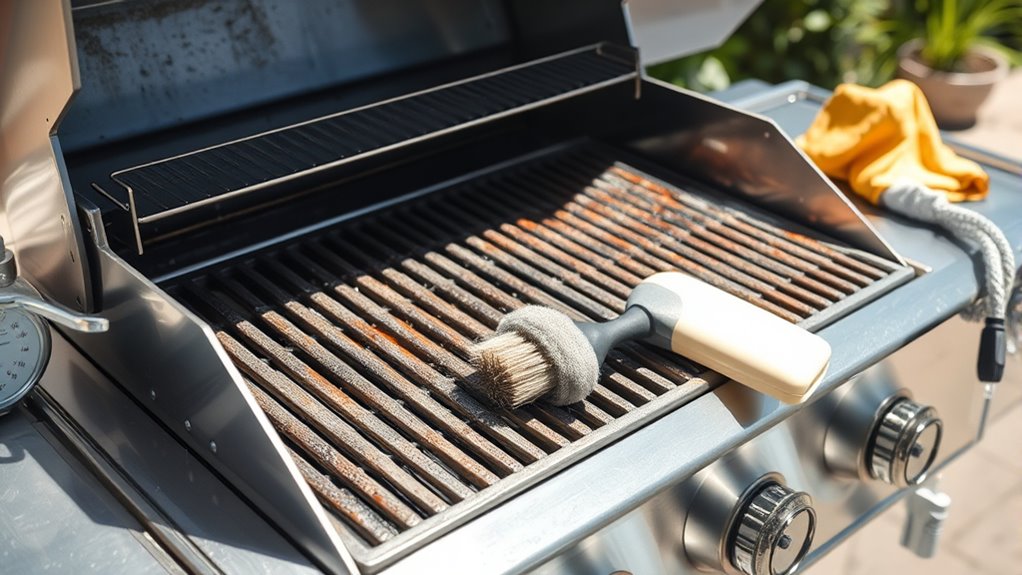
Before storing or using your grill, it’s essential to perform final checks to guarantee safety and peak performance. First, inspect all parts for damage, rust, or corrosion, and replace any worn components. Ensure the gas connections are secure and free of leaks by applying soapy water and checking for bubbles. Next, verify that the burners light properly and that the ignition system functions smoothly. Finally, clean and dry all surfaces to prevent rust and water spots.
- Check for gas leaks and secure connections
- Test burners and ignition for proper operation
- Wipe down surfaces and ensure dry, free of debris
Completing these steps helps avoid safety hazards and ensures your grill is ready for summer grilling or long-term storage. Proper final checks keep your grill in top shape year-round.
Frequently Asked Questions
How Often Should I Deep Clean My Grill During Summer?
You should deep clean your grill at least once a month during summer, especially after heavy use or grilling fatty meats. Regularly scrub the grates after each use to prevent buildup. Schedule thorough cleanings to remove grease, burnt residues, and debris inside and outside the grill. This keeps your grill performing well, prevents flare-ups, and extends its lifespan. Adjust cleaning frequency based on how often you grill and the type of food you cook.
Can I Use a Power Washer on My Grill?
You shouldn’t use a power washer on your grill. Power washers can force water into electrical components, damage delicate parts, and strip away protective coatings. Instead, opt for gentle cleaning tools like brushes, scrapers, and soft sponges. Scrubbing with these avoids costly repairs and preserves your grill’s finish. Keep your cleaning routine effective and safe by sticking to manual methods, ensuring your grill stays in top shape for summer grilling.
What Are Safe Alternatives to Chemical Cleaners?
You can use natural alternatives like a vinegar and water solution or baking soda paste to clean your grill safely. Mix equal parts vinegar and water for degreasing, or make a thick baking soda paste with water for stubborn spots. Use a sponge or scrub brush to apply these substances, then rinse thoroughly. These options are effective, eco-friendly, and won’t damage your grill’s finish or components.
How Do I Prevent Rust After Cleaning My Grill?
To prevent rust after cleaning your grill, you should dry all surfaces thoroughly with a microfiber cloth, especially metal parts. Apply a light coat of high-temperature cooking oil or vegetable oil to keep the metal protected and create a barrier against moisture. Store your grill in a dry, sheltered spot or cover it with a weather-resistant cover to shield it from rain and humidity. Regular maintenance helps keep rust at bay.
Is It Necessary to Season the Grill After Cleaning?
Yes, you should season your grill after cleaning. Seasoning creates a non-stick surface and protects the metal from rust. To do this, apply a thin layer of cooking oil to the grates and heat the grill for about 15 minutes. This process helps prevent food from sticking and keeps your grill in top shape for summer grilling. Make it a regular step after deep cleaning for best results.
Conclusion
Now that you’ve mastered the art of grill cleaning, you’re almost ready for summer’s best barbecues. But don’t rush to fire it up just yet—there’s one last step that could make all the difference. A simple, overlooked detail might surprise you, ensuring your grill performs flawlessly and safely. Ready to uncover this secret? Just a small final check could elevate your grilling game and keep those summer nights unforgettable.