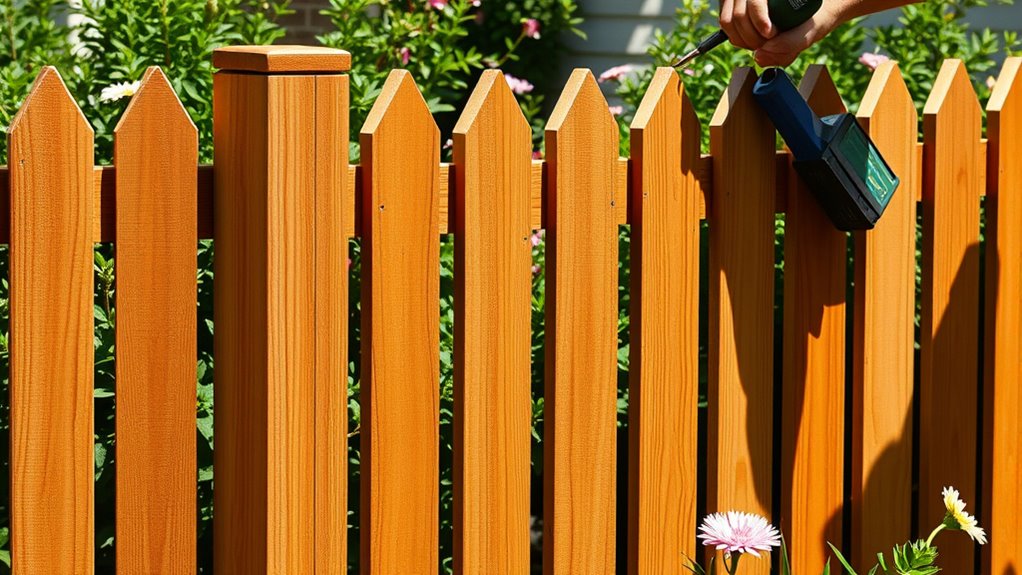

To install a garden fence and protect your plants, start by choosing the right material for your needs, such as wood, vinyl, or wire fencing. Measure your space accurately and plan your layout, then set your posts firmly in the ground using concrete or gravel for stability. Assemble or install the fencing panels, ensuring they’re secure and level. Properly maintained, your fence will keep pests out and add beauty to your garden—if you continue, you’ll discover all the tips for a successful project.
Key Takeaways
- Choose a suitable fencing material based on your climate, budget, and aesthetic preferences, such as wood, vinyl, or wire.
- Measure your garden area accurately to determine the length and height of the fence needed.
- Prepare the ground by clearing debris and setting sturdy posts at proper intervals for stability.
- Install the fence panels or materials securely, ensuring proper alignment and support for durability.
- Finish with regular maintenance, like cleaning or sealing, to prolong the fence’s lifespan and protect your plants.
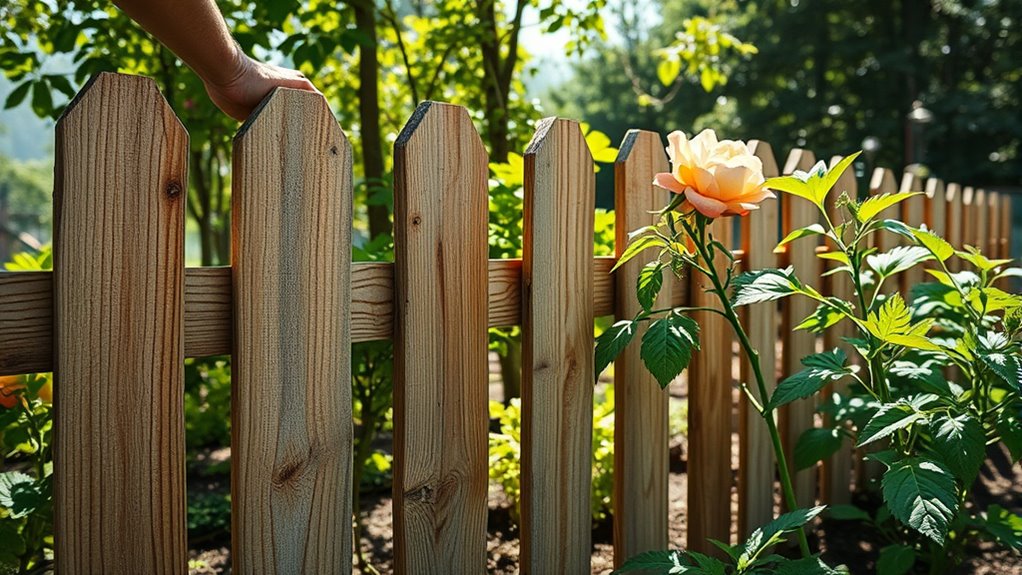
Are you ready to transform your garden with a custom fence? Building a fence might seem intimidating at first, but with the right knowledge, you can create a beautiful and functional barrier to protect your plants. The first step is understanding the different types of fencing available, along with the fencing materials suited for your needs. Whether you’re aiming for a decorative touch or a sturdy enclosure, selecting the right combination will make all the difference. Common types of fencing include wood, vinyl, chain-link, wire, and bamboo. Each offers unique benefits; for example, wood provides a natural look and can be painted or stained to match your garden’s aesthetic, while vinyl requires little maintenance and lasts longer. Chain-link fences are affordable and sturdy, ideal for keeping larger animals out, whereas wire fencing works well for vegetable gardens or supporting climbing plants. Bamboo fences bring a tropical or rustic feel, and they’re lightweight yet durable. When choosing fencing, consider not only the style but also the European cloud innovation and sustainability features that can enhance your garden’s eco-friendliness.
Once you’ve decided on the type of fencing, it’s essential to think about the fencing materials. The materials determine the durability, appearance, and overall cost of your project. If you opt for wood, you need to choose between pressure-treated for weather resistance or cedar for its natural beauty. Vinyl fencing is made from PVC, which resists rot and pests, and often comes in preassembled panels, simplifying installation. Chain-link fences are made from galvanized steel or aluminum, offering strength and rust resistance. Wire fencing, often made of coated steel, is flexible and easy to install, making it perfect for garden borders or small enclosures. Bamboo fencing is typically made from natural bamboo poles and can be woven or tied together, giving your garden an organic feel. When selecting fencing materials, think about the climate in your area, the level of security you want, and how much maintenance you’re willing to do. Proper planning and material choice ensure your fence remains durable and attractive for years to come.
Frequently Asked Questions
What Tools Are Essential for Installing a Garden Fence?
For installing your garden fence, you’ll need a power drill to make precise holes and secure posts easily. Fencing pliers are essential for gripping, cutting, and bending wire or fencing material. You might also want a hammer, measuring tape, and post-hole digger to guarantee everything stays level and properly spaced. With these tools, you’ll find the installation quicker and more efficient, giving your plants the protection they deserve.
How Do I Choose the Best Fencing Materials for My Garden?
Choosing fencing materials is like picking the right armor for your garden’s defense. Think about the types of fencing—wood, vinyl, chain-link—and fencing styles that match your aesthetic and needs. Wood offers a rustic charm, vinyl provides low maintenance, and chain-link is durable and budget-friendly. Consider your climate, privacy needs, and style preferences to select the best fencing materials that will stand strong and complement your garden’s personality.
How Long Does It Typically Take to Install a Garden Fence?
Installing a fence usually takes a day or two, depending on your fence height and the size of your garden. If you opt for a taller fence for privacy, it might require more time to guarantee stability and proper installation. Prepare your tools and materials beforehand, and work steadily to avoid delays. With patience and careful planning, you can complete a durable garden fence efficiently, protecting your plants effectively.
Can I Install a Fence on Uneven or Rocky Terrain?
You can definitely install a fence on uneven or rocky terrain, but be prepared for some terrain challenges that’ll test your patience! To guarantee fence stability, you might need to use longer or sturdier posts, and consider specialized anchors or concrete for rocky spots. With a little extra effort and creativity, you’ll have a secure, beautiful fence that stands tall despite the toughest terrain obstacles.
What Maintenance Is Required to Keep My Fence in Good Condition?
To keep your fence in good condition, regularly check for damage and perform paint touch-ups to prevent rust or rot. Keep weeds away from the base to avoid moisture buildup that can weaken the posts. Clear debris and inspect for loose panels or nails. By doing this, you’ll extend your fence’s lifespan and maintain its appearance, ensuring your garden stays protected and looking great.
Conclusion
Now that you’ve mastered the art of installing your garden fence, you’re like the modern-day David shielding his cherished plants from Goliath’s threats. With just a few tools and some effort, you’ve created a sanctuary where your garden can thrive. Remember, a well-built fence isn’t just about protection—it’s about nurturing your little Eden. So go ahead, stand back and admire your work, knowing you’ve crafted a fortress of growth and beauty, just like the heroes of old.