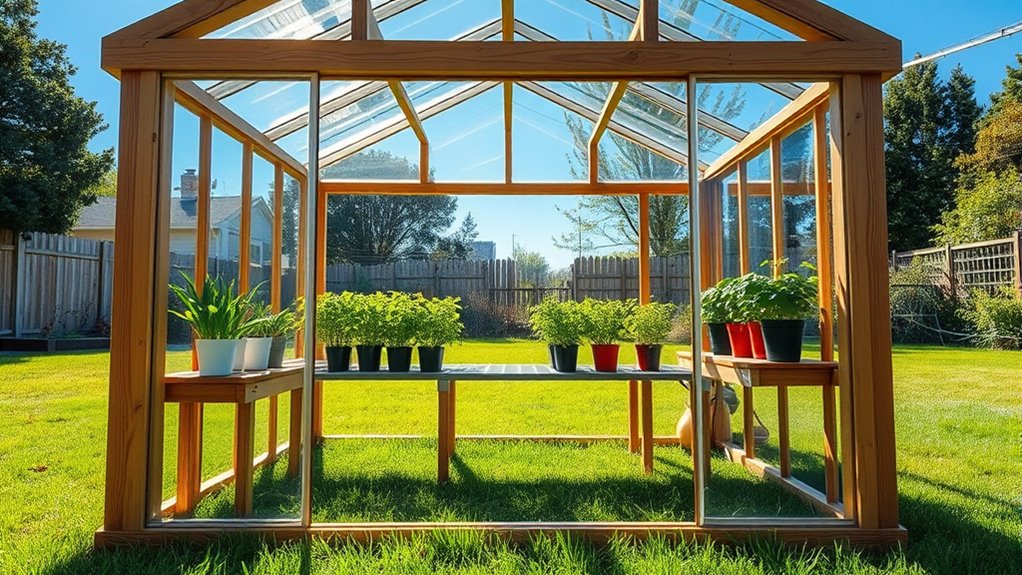

To construct a basic DIY greenhouse in your yard, begin by selecting an accessible, sunny location, and plan your design according to your available space and budget. Use affordable materials like PVC pipes or wood for the frame, and plastic sheeting or repurposed glass for the covering. Guarantee proper ventilation by adding vents or small windows, and secure everything tightly. If you’re curious about detailed steps that make this project straightforward and effective, keep going to discover more tips.
Key Takeaways
- Plan your greenhouse layout considering space, sunlight, and budget, including easy access and ventilation features.
- Choose affordable, durable materials like PVC or wood for framing and polyethylene or repurposed glass for covering.
- Build a solid foundation with trenches or blocks, then assemble the frame, sealing gaps for weather resistance.
- Install vents or windows for proper airflow, and seal gaps to maintain temperature and humidity control.
- Use the DIY greenhouse to extend your growing season, increase harvests, and create a personalized, cost-effective gardening space.
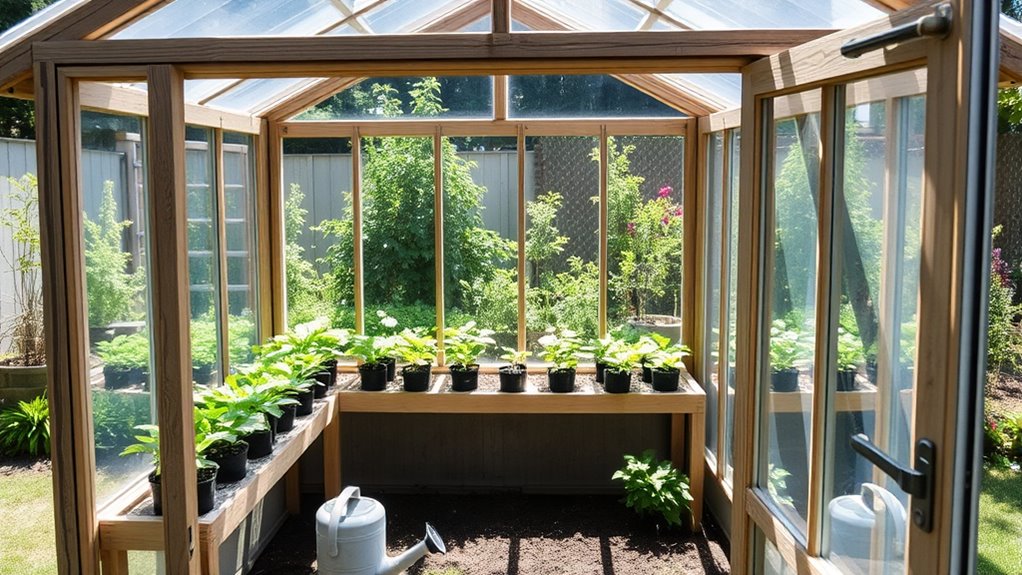
Ever wondered how to extend your growing season without breaking the bank? Building a DIY greenhouse in your yard is a practical and rewarding way to do just that. The first step is planning your garden design, which requires considering your space, budget, and what you want to grow. You don’t need a sprawling structure—just enough to protect your plants from early frosts and extend your harvest. Think about how much sunlight your site gets, and position your greenhouse to maximize exposure. A simple, functional design can be achieved with minimal fuss, but it’s important to keep accessibility and airflow in mind. Your garden design should incorporate easy access points, ventilation, and perhaps shelving to make the most of your space. Incorporating Free Floating elements like natural light and airflow can significantly improve plant health inside the greenhouse.
Once you have a rough plan, it’s time to focus on the greenhouse materials. The key is choosing affordable, durable, and easy-to-assemble options. Common greenhouse materials include PVC pipes, which are lightweight and inexpensive, or wooden frames if you prefer a more natural look. For the covering, clear polyethylene plastic sheeting is budget-friendly and effective at trapping heat, making it ideal for DIY projects. You could also consider repurposed windows or old glass panels if you want a more traditional appearance and have the resources. Whatever you choose, confirm that the materials you select are weather-resistant and provide good insulation to maintain a stable internal temperature.
Choose affordable, durable materials like PVC pipes, wood, or repurposed windows for your DIY greenhouse.
When building your greenhouse, start with a solid foundation. You might dig shallow trenches to secure the frame or use concrete blocks for stability. Assemble the frame according to your garden design, making sure everything is square and secure. Attach your chosen greenhouse cover tightly, sealing any gaps with tape or weatherstripping to prevent drafts and heat loss. Ventilation is vital—install small windows or vents that can be opened to regulate temperature and humidity. Adding simple shelving inside can help organize your plants and maximize your growing space. Remember, the goal is a straightforward structure that’s easy to maintain and effective at creating a microclimate for your plants.
Building your own greenhouse is about adaptability and resourcefulness. With a bit of planning, some basic tools, and the right greenhouse materials, you can create a functional, cost-effective space that extends your growing season. Whether you’re a seasoned gardener or just starting out, this DIY project puts you in control of your gardening environment, helping you get more from your plants and enjoy fresh produce year-round.
Frequently Asked Questions
What Are the Best Materials for Insulation?
The best materials for insulation include bubble wrap, foam panels, and polycarbonate sheets, which are all effective options for increasing energy efficiency. Bubble wrap is lightweight and easy to install, while foam panels provide excellent thermal resistance. Polycarbonate sheets also offer good insulation and durability. Choosing the right insulation options depends on your climate and budget, but these materials will help keep your greenhouse warm and energy-efficient year-round.
How Much Sunlight Does a DIY Greenhouse Need Daily?
Think of your plants as sun-seekers on a summer vacation—they need at least 6-8 hours of sunlight daily for healthy growth. Proper plant placement inside your DIY greenhouse guarantees they get enough sunlight hours, boosting productivity. If sunlight is limited, consider using grow lights. Remember, consistent sunlight exposure keeps your plants thriving, much like a perfect vacation spot keeps travelers happy and energized.
Can I Build a Greenhouse on Uneven Terrain?
Yes, you can build a greenhouse on uneven terrain. Start with proper soil preparation to guarantee stability, and consider foundation options like leveling the ground or building a raised platform. You might need to add gravel or concrete for extra support. By addressing unevenness early, you create a solid base that keeps your greenhouse stable and functional, giving your plants the best environment to thrive.
What Is the Average Cost to Build a Basic Greenhouse?
The average cost to build a basic greenhouse ranges from $500 to $2,000, depending on size and materials. For effective budget planning, conduct a thorough cost analysis, considering frame, covering, and ventilation costs. You can save money by selecting affordable materials like PVC piping and polycarbonate panels. Keep in mind that investing in quality materials may increase initial costs but ensures durability and better plant growth over time.
How Do I Prevent Pests Inside My Greenhouse?
You think your lush greenhouse is a pest-free paradise? Think again. To keep pests out, you need effective pest control strategies. Use natural repellents like neem oil or garlic spray, which act as your plant’s silent bodyguards. Keep the greenhouse clean, seal gaps, and remove debris. These simple steps create a barrier, turning your green haven into a pest-resistant fortress—without resorting to harsh chemicals.
Conclusion
Now that you’ve built your DIY greenhouse, you’re not just growing plants—you’re creating a miniature paradise right in your backyard! Picture lush, exotic vegetables and vibrant flowers thriving under your fingertips, transforming your yard into the envy of every neighborhood. With your new greenhouse, you could grow enough food to feed an army or host the most incredible garden parties ever. Get ready to impress everyone and turn your yard into a botanical wonderland—your green thumb has never been more powerful!