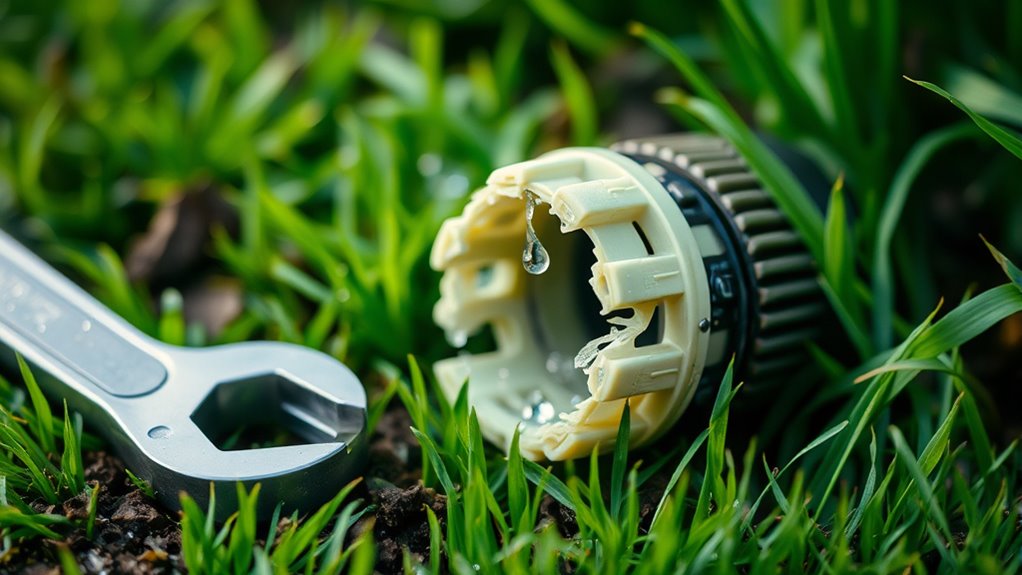

If your sprinkler is broken or leaking, start by turning off the system and inspecting the affected head. Remove the head and check for cracks, clogs, or debris. Clean or replace damaged parts, and tighten connections securely. If you notice leaks in pipes, dig carefully around the area, tighten fittings, or replace damaged sections. For more tips on fixing common issues and preventing future problems, keep exploring simple repair solutions you can try yourself.
Key Takeaways
- Turn off the sprinkler system before inspecting or repairing to prevent water damage.
- Remove the damaged sprinkler head by unscrewing it from the riser for examination.
- Clear debris or replace cracked nozzles, and ensure the head is properly reattached and tightened.
- Inspect pipes and fittings for leaks, then tighten or replace damaged parts as needed.
- Regularly maintain and clean sprinkler heads to prevent future clogs, cracks, or leaks.
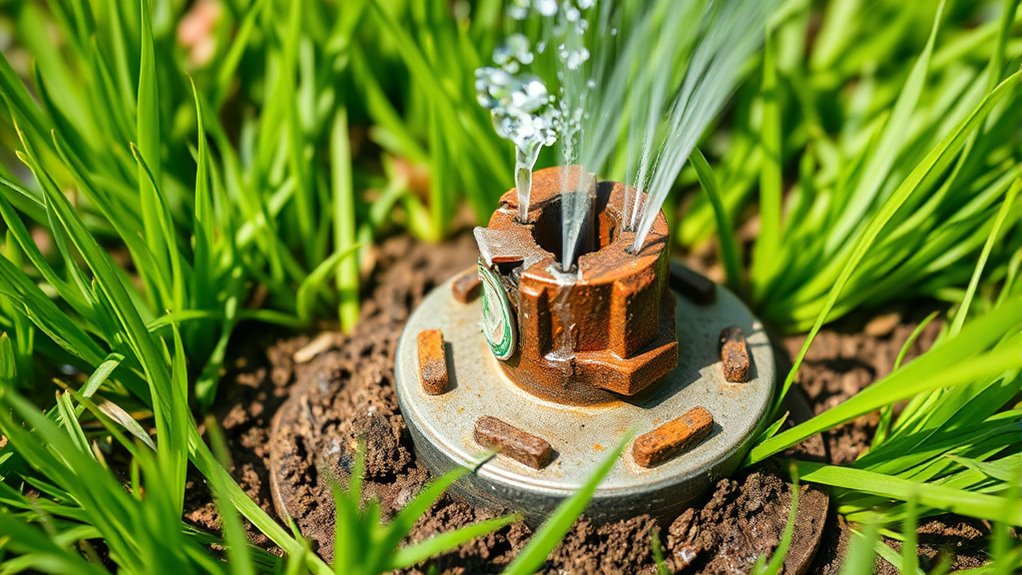
A broken sprinkler can disrupt your lawn’s health and waste water, but fixing it is often straightforward. When your sprinkler isn’t functioning properly, it’s likely due to a damaged head, clogged nozzle, or leaking pipe. Regular sprinkler maintenance helps prevent these issues and keeps your system running efficiently. By taking the time to inspect your sprinkler heads and connections periodically, you can catch problems early and avoid costly repairs. One effective way to minimize water usage and maintain a healthy lawn is by incorporating drought resistant landscaping. These hardy plants require less water and are more tolerant of drought conditions, reducing your reliance on a fully functional sprinkler system. Still, even drought resistant landscaping benefits from a properly maintained irrigation system to ensure consistent watering and optimal growth.
To start, turn off your sprinkler system and locate the problem area. If a sprinkler head isn’t popping up or spraying water unevenly, it might be clogged or damaged. Remove the head by unscrewing it from the riser, then inspect it for debris or cracks. Clear out any dirt or obstructions, and if the nozzle is damaged, replace it with a compatible new one. Tighten the head back into place, then turn the system on to test its operation. If it still doesn’t work correctly, check the alignment and height; sometimes adjusting the head helps improve coverage. Regular sprinkler maintenance like this not only saves water but also keeps your lawn uniformly green and healthy. Additionally, understanding the contrast ratio of your sprinkler heads can help you choose the right type for optimal coverage in different lighting conditions.
Leaks are another common problem. If you notice pooling water or unusually high water bills, you might have a leak in your system. Examine the sprinkler lines and fittings for cracks or loose connections. Use a shovel to carefully dig around the suspected area, then tighten fittings or replace damaged pipes. For minor leaks, applying a repair coupling can often do the trick without extensive work. If the leak persists, it might be worth consulting a professional to diagnose more complex issues.
Ultimately, maintaining your sprinkler system is essential for a thriving lawn and sustainable water use. By regularly inspecting, cleaning, and repairing your sprinklers, you avoid wasting water and promote healthy growth, especially when combined with drought resistant landscaping strategies. Proper sprinkler maintenance ensures your yard remains lush with less effort and resource expenditure, making your outdoor space both beautiful and eco-friendly.

Rain Bird 1804VAN 1800 Series Professional 4 Inch Pop Up Sprinkler Head, 4 Pack – Lawn Sprinkler with Adjustable 0-360 Degree Arc Nozzle Pattern, Up to 15 Ft Spray Distance, 1/2 in NPT Threaded Inlet
1804 Series 4" Pop-Up Spray
As an affiliate, we earn on qualifying purchases.
As an affiliate, we earn on qualifying purchases.
Frequently Asked Questions
How Often Should I Inspect My Sprinkler System?
You should inspect your sprinkler system at least once a month to keep it running smoothly. Regular inspections help you spot leaks, broken heads, or misaligned spray patterns that can disrupt your watering schedule. During system maintenance, check for clogs or damage and guarantee all components work properly. Consistent checks prevent water waste, save money, and ensure your yard gets the right amount of water without over or under-watering.
Can I Repair a Sprinkler Head Myself Without Professional Help?
Yes, you can repair a sprinkler head yourself with some DIY tips. Start by turning off the water supply and removing the damaged head carefully. Watch out for common mistakes like over-tightening or not replacing the sprinkler at the correct depth. Use the right tools and follow instructions closely. With patience and attention to detail, you can fix it properly and save money without professional help.
What Tools Are Necessary for Fixing Sprinkler Leaks?
Ready to tackle that leak? You’ll need basic tools like a wrench or pliers for sprinkler head replacement and leak detection techniques. A screwdriver helps loosen or tighten fittings, while a shovel clears the area for digging. Don’t forget a pair of gloves for safety. With these tools, you’ll quickly identify the leak source and fix it, saving time and money while keeping your sprinkler system in top shape.
How Do I Prevent Future Sprinkler Head Damage?
To prevent future sprinkler head damage, focus on proper landscape maintenance and thoughtful sprinkler system design. Regularly inspect your system, removing debris and avoiding foot traffic near heads. confirm heads are installed at correct heights and angles, and use protective covers if needed. Properly planned spacing and robust components reduce damage risks, keeping your system functioning efficiently and your landscape looking great.
Is It Better to Replace or Repair a Broken Sprinkler Head?
Deciding whether to repair or replace your sprinkler head is like choosing between a band-aid and a new song. If the damage is minor, repair might suffice, but for persistent issues or extensive damage, sprinkler head replacement is smarter. Repair versus replace depends on cost, age, and extent of damage. Generally, if repairs cost more than half the price of a new head, replacing it is the better choice for long-term durability.

Hourleey Garden Hose Repair Kit, 2 Sets Aluminum Alloy Garden Hose End Mender, Male and Female Water Hose Repair Fittings, Fit 5/8" and 3/4" Connector, with 4 Extra Hose Washers
GARDEN HOSE REPAIR CONNECTOR SET: Package include 2 female hose repair connector, 2 male hose repair connector, 4…
As an affiliate, we earn on qualifying purchases.
As an affiliate, we earn on qualifying purchases.
Conclusion
Now that you’ve tackled that stubborn leak or broken sprinkler head, your yard will breathe easy again, like a garden waking up after a long nap. Think of your sprinkler system as the heart of your lawn—when it beats smoothly, your yard thrives. With these simple fixes, you’re the hero restoring life and lushness to your outdoor space. So go ahead, enjoy the sight of your garden flourishing—your green thumb just got a little greener!

Rain Bird DRIPKITBAG Drip Irrigation Repair and Expansion Kit
Convenient and portable storage kit contains 102 professional grade universal Drip irrigation parts
As an affiliate, we earn on qualifying purchases.
As an affiliate, we earn on qualifying purchases.

Rain Bird 1804 Spray Head with 15van Nozzle; 0° to 360° Adjustable; 15' Radius (Pack of 5)
5 Rainbird 1804 spray heads
As an affiliate, we earn on qualifying purchases.
As an affiliate, we earn on qualifying purchases.