If your basement is wet, start by removing standing water with a sump pump or wet/dry vacuum, then improve airflow with fans, windows, and dehumidifiers to dry the space thoroughly. Keep humidity below 60% to prevent mold. To waterproof, seal cracks with high-quality sealant, maintain gutters, and ensure proper grading away from your foundation. For more detailed steps on drying and waterproofing, you’ll find helpful solutions to protect your home long-term.
Key Takeaways
- Remove standing water quickly with a sump pump or wet/dry vacuum, and improve ventilation with fans and dehumidifiers.
- Identify signs of persistent moisture or mold, such as odors, stains, or damp surfaces, and address them promptly.
- Apply waterproof sealants to basement walls and repair gutters to divert water away from the foundation.
- Enhance basement airflow with vents, clean drainage systems, and ensure proper yard grading to prevent future flooding.
- Conduct regular inspections for cracks or leaks, maintain waterproofing measures, and ensure proper drainage to prevent recurring moisture issues.
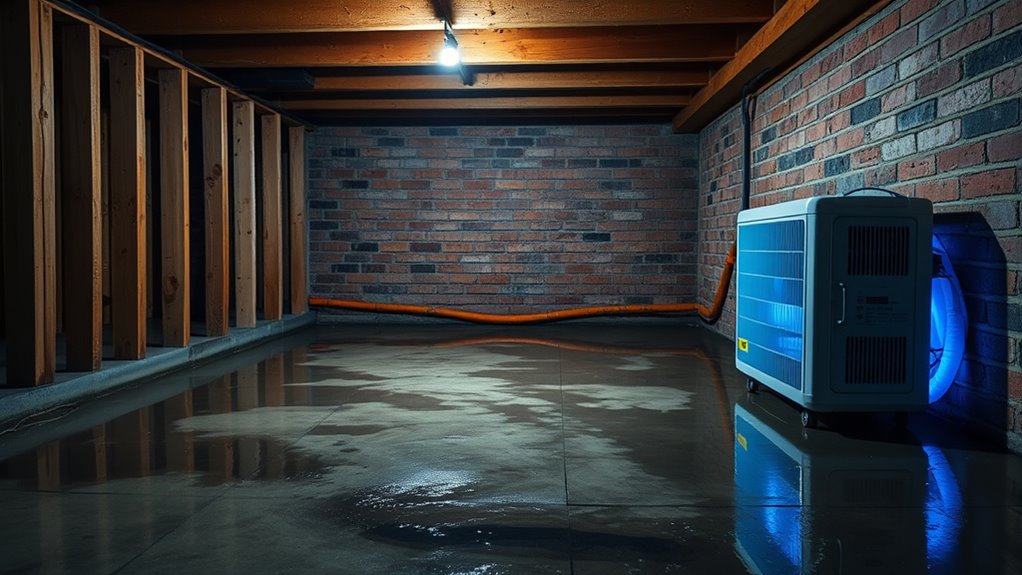
A damp or flooded basement can quickly lead to serious structural damage and mold growth if not addressed promptly. When moisture seeps into your basement, you might notice persistent basement odors that are difficult to eliminate. These odors often signal hidden moisture or mold, both of which can compromise your home’s integrity and your health. To prevent this, it’s vital to dry out your basement thoroughly and implement effective waterproofing measures.
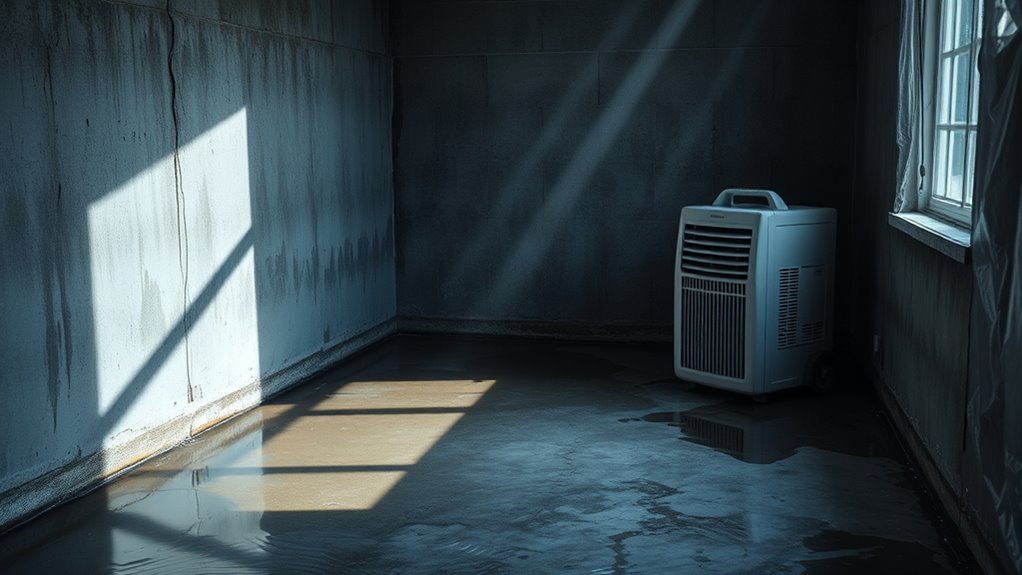
Start by removing any standing water as soon as possible. Use a sump pump if you have one, or rent a wet/dry vacuum for smaller amounts of water. Once the excess water is gone, improve ventilation by opening windows and doors, and set up fans to circulate air. Dehumidifiers are particularly effective because they extract moisture from the air, helping to dry out damp surfaces faster. Keeping the humidity level below 60% is essential for mold prevention, as mold spores thrive in humid environments. Regularly check your basement for signs of persistent moisture or musty smells, which can indicate mold growth lurking behind walls or under flooring. Additionally, installing a drainage system can help divert water away from your foundation, further reducing moisture infiltration. Proper drainage and grading are essential components of a comprehensive waterproofing strategy.
Remove standing water promptly, improve ventilation, and keep humidity below 60% to prevent mold growth.
After you’ve dried the space, it’s time to consider waterproofing solutions to prevent future issues. Applying a high-quality waterproof sealant to basement walls creates a barrier against moisture infiltration. Focus on areas where cracks or gaps are visible, and ensure that the sealant is suitable for your specific foundation type. Additionally, installing or repairing gutters and downspouts directs rainwater away from your foundation, reducing the risk of water seeping in. Landscaping your yard to slope away from the house also helps keep surface water away from the basement walls. An understanding of waterproofing methods can help you choose the most effective solutions for your home.
Another critical step in mold prevention is inspecting your basement’s ventilation system. Proper airflow discourages moisture buildup and discourages mold spores from settling and growing. If your basement has small or poorly sealed windows, consider installing window well covers or vents to improve airflow while keeping out water. Regularly cleaning and maintaining your basement helps identify potential problems early, such as cracks or leaks that could lead to future flooding. Understanding how drainage systems work can significantly enhance your waterproofing efforts and protect your home from water damage.

Aquastrong Sump Pump 1 HP 4500 GPH Submersible Water Pump Thermoplastic Portable Utility Pump High Flow Water Removal for Swimming Pool Garden Pond Basement Window Wells with 10ft Long Power Cord
Efficient Sump Pump: Aquastrong sump pump with 1HP powerful motor. Draining water up to 4500GPH Per Hour( 75…
As an affiliate, we earn on qualifying purchases.
As an affiliate, we earn on qualifying purchases.
Frequently Asked Questions
How Long Does It Typically Take to Dry Out a Wet Basement?
Drying out your wet basement usually takes between 24 to 72 hours, depending on the extent of water intrusion. You should start with water removal, using pumps or wet vacuums, then improve ventilation to speed up drying time. Keep in mind that more severe flooding or humidity might extend this process. Regularly check for damp spots or mold, ensuring your basement is thoroughly dry and safe before finishing.
Are There Eco-Friendly Waterproofing Options Available?
Like Robin Hood choosing sustainable arrows, you can opt for eco-friendly solutions that protect your basement. Eco-friendly waterproofing options include using sustainable materials such as recycled rubber, plant-based sealants, and natural drainage systems. These eco-conscious choices not only prevent water intrusion but also reduce environmental impact. By selecting sustainable materials, you’re investing in a greener future while keeping your basement dry and secure, proving that protection can be both effective and environmentally responsible.
Can DIY Waterproofing Be as Effective as Professional Services?
DIY waterproofing can be effective for minor issues, but it often falls short compared to professional services. You might successfully seal small cracks and apply waterproof coatings yourself, but for major leaks or extensive damage, professional comparison shows they use specialized equipment and techniques that ensure long-lasting results. If you’re unsure about your DIY effectiveness, consulting a professional can save you time and prevent future water problems.
What Are the Signs of Ongoing Water Infiltration After Waterproofing?
Did you know that over 60% of homes with waterproofing still experience water infiltration issues? If you notice persistent mold growth or a musty odor, these are signs of ongoing water infiltration even after waterproofing. You might see damp patches, peeling paint, or new water stains. Act quickly—these symptoms indicate that waterproofing efforts need reinforcement, as continued moisture can lead to structural damage and health risks.
How Often Should Basement Waterproofing Be Inspected or Maintained?
You should schedule a basement waterproofing inspection at least once a year, especially after heavy rains or harsh weather. This helps you catch small issues before they become major problems. Perform routine maintenance, like sealing cracks and checking drainage systems, every 6 to 12 months. Consistent inspection and maintenance guarantee your waterproofing remains effective, preventing water infiltration and protecting your basement’s foundation over time.

Stanley – SL18116P Wet/Dry Vacuum, 6 Gallon, 4 Horsepower Black
❤【LARGER CAPACITY】Stanley SL18116P Wet / Dry Vacuum has a larger capacity over 22 L, makes small clean-up jobs…
As an affiliate, we earn on qualifying purchases.
As an affiliate, we earn on qualifying purchases.
Conclusion
Dealing with a damp basement might feel like steering a quiet storm, but with patience and the right steps, you can restore calm. By drying thoroughly and sealing carefully, you’re gently coaxing your space back to stability. Think of it as nurturing a fragile bloom—each effort helping your basement flourish once more. With time and care, you’ll find your home’s foundation steady and secure, turning those wet blues into a peaceful, dry haven.

Liquid Rubber Basement and Foundation Repair Sealant – Waterproof Concrete Sealer & Crack Filler – Flexible Coating for Indoor & Outdoor Use – Waterproofing Paint – Black, 5 Gallon
SUPERIOR FLEXIBLE SEALANT: Liquid Rubber's foundation sealer creates a permanent waterproof membrane for basement waterproofing, foundation leak repair,…
As an affiliate, we earn on qualifying purchases.
As an affiliate, we earn on qualifying purchases.

Dehumidifier, 95OZ Dehumidifier for Home 1000 Sq.Ft – Quiet with Auto Shut Off & Relaxing 7 Color Ambient Light,Ideal for Livingroom, Bedroom, Basement(Black)
Semiconductor dehumidifiers use thermoelectric cooling to remove moisture from the air. They create a drier, more comfortable environment…
As an affiliate, we earn on qualifying purchases.
As an affiliate, we earn on qualifying purchases.