To replace a broken window pane safely, start by putting on thick gloves and safety goggles, then carefully remove loose shards and remaining glass with a putty knife or chisel. Measure the opening precisely and have new glass cut to size. Set the glass into the frame, apply glazing compound, and smooth it out with a putty knife. For detailed steps and tips, keep going—you’re about to learn the safest way to do it right.
Key Takeaways
- Wear thick gloves and safety goggles to protect yourself from glass shards during removal and installation.
- Carefully remove loose shards and remaining fragments using a putty knife or chisel, avoiding excessive force.
- Measure the window opening precisely and cut the replacement glass slightly larger for a proper fit.
- Handle the new glass with gloves and set it securely in the frame before sealing with glazing compound or putty.
- Clean the work area and your tools afterward to prevent injury and ensure a professional, safe repair.
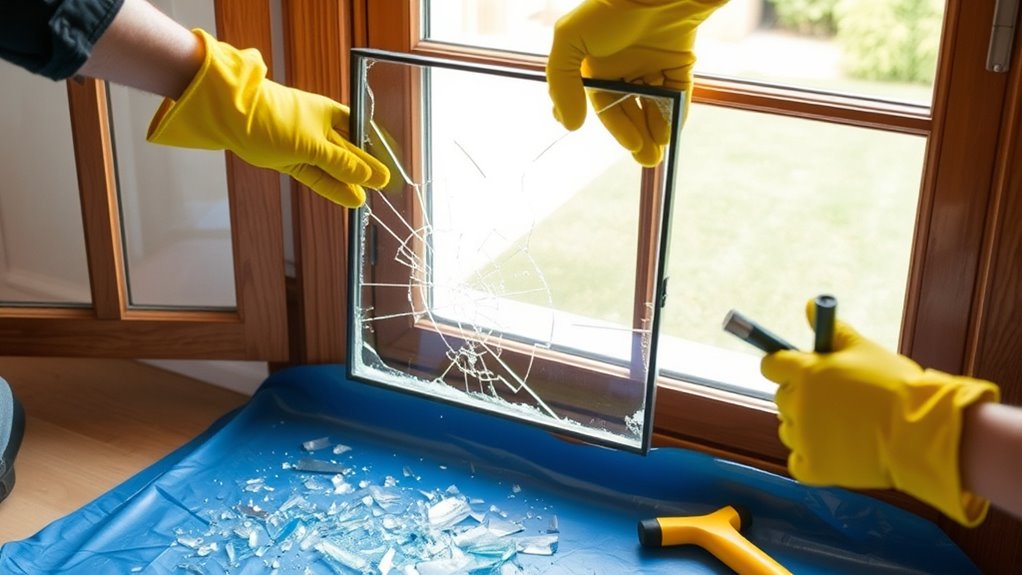
A broken window pane can happen unexpectedly, but replacing it is a manageable task if you approach it carefully. Before you begin, it’s vital to prioritize safety precautions to prevent injury. Glass shards can be sharp and dangerous, so wear thick gloves designed for glass handling and safety goggles to protect your eyes. Clear the area around the window to avoid stepping on or knocking over broken pieces. Keep a sturdy dustpan and broom nearby to sweep up debris safely later. Having the right tools needed for the job is essential; these typically include a utility knife or putty knife, a measuring tape, a chisel or pry bar, a caulking gun, and replacement glass cut to size. If you’re unsure about cutting glass yourself, many hardware stores can do it for you, ensuring the pane fits perfectly.
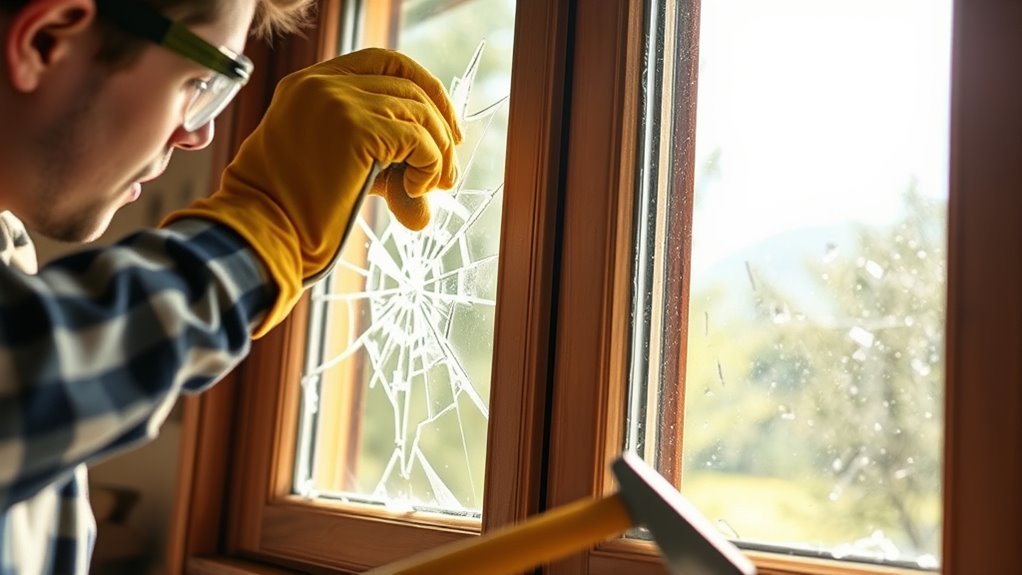
Once safety precautions are in place and tools gathered, remove the broken glass carefully. Start by removing any loose shards with your gloves, then gently pry out the remaining fragments using a putty knife or chisel. Be cautious not to apply too much force, which could shatter the glass further or damage the window frame. After clearing out the broken pane, clean the frame thoroughly, removing old putty or glazing compound to ensure a smooth surface for the new glass. Measure the opening precisely—measure both height and width—and cut your replacement glass accordingly, allowing a slight margin for fitting. Using proper cutting techniques can help ensure a clean edge and a better fit for your new pane. It’s also helpful to know the types of glass suitable for different window applications to select the best option. Additionally, understanding safety precautions when handling glass can significantly reduce the risk of injury during repairs.
Carefully remove loose shards, then gently pry out remaining fragments with a putty knife or chisel.
Before installing the new pane, wear your gloves to handle it carefully. Set the glass into the frame, making sure it fits snugly. Apply fresh glazing compound or putty around the edges of the glass to secure it firmly in place. Use a putty knife to smooth out the seal and ensure it’s even. If the window frame is wooden and has old, crumbling paint or glazing, scrape and sand it down before applying new putty. Once the glass is secured, clean the window surface and surrounding area, removing any dust or debris to maintain a professional appearance. Additionally, understanding the importance of safety when handling glass can significantly reduce the risk of injury during repairs.
Taking your time and following safety precautions throughout the process helps prevent accidents. Handling tools properly and being cautious with the glass ensures a smoother repair. If you’re hesitant about handling large or tricky panes, don’t hesitate to call in a professional. Replacing a broken window pane can be straightforward when you plan carefully, use the right tools needed, and prioritize safety at every step.
Frequently Asked Questions
What Tools Are Safest for Removing Old Glass?
You should use glass cutters to score and cut the old glass carefully, ensuring precise removal. Always wear rubber gloves to protect your hands from sharp edges and potential cuts. These gloves provide a good grip and safeguard against injury during removal. Keep a steady hand and work slowly to prevent accidents. Using these tools properly makes the process safer and minimizes the risk of injury.
How Can I Prevent Injury When Handling Broken Glass?
You can prevent injury when handling broken glass by wearing thick gloves and eye protection to guard against glass shards. Carefully handle the glass, avoiding direct contact with sharp edges, and use sturdy tools for glass cleanup. Wrap broken pieces in newspaper or cloth before disposal to prevent cuts. Always work slowly and deliberately, staying aware of handling sharp edges to minimize the risk of cuts and injuries.
Is It Necessary to Wear Protective Gear During Replacement?
Yes, you should wear protective gear during replacement. Always put on protective eyewear to shield your eyes from glass shards and cut resistant gloves to protect your hands from cuts. These precautions help prevent injuries while handling broken glass and installing the new pane. Don’t skip this step, as safety gear is essential for avoiding accidents and ensuring a smooth, safe repair process.
How Do I Dispose of Broken Glass Properly?
Disposing of broken glass can feel like handling a thousand tiny knives, but don’t worry—you’re in control. Carefully sweep up loose shards with a broom and dustpan, then wrap larger pieces in thick newspaper or cardboard. For glass disposal, check local recycling methods—many places accept broken glass for recycling. Always wear gloves and avoid bare hands to prevent cuts, and seal the waste securely before discarding to keep everyone safe.
Can I Replace a Window Pane Myself or Should I Hire a Professional?
You can replace a window pane yourself if you’re comfortable with DIY projects and follow safety precautions. Start by gathering the right tools and wearing gloves and eye protection. Use proper techniques for removing the old glass and installing the new one. Remember, if the window is large or difficult to access, hiring a professional might be safer and more efficient. Always prioritize safety and don’t rush the process.
Conclusion
Now that you know how to replace a broken window pane safely, you’re ready to tackle the job with confidence. Think of it like fixing a cracked mirror—you’ll restore clarity and beauty to your space. Just take your time, stay cautious, and follow the steps carefully. Before you know it, you’ll have a window as good as new, shining like a jewel in your home. You’ve got this!