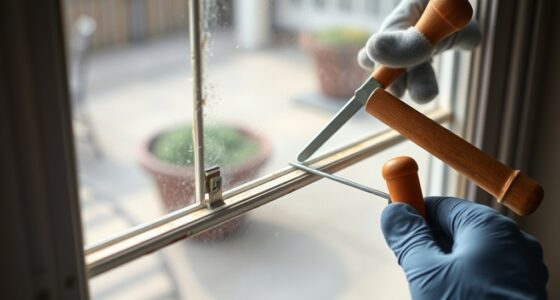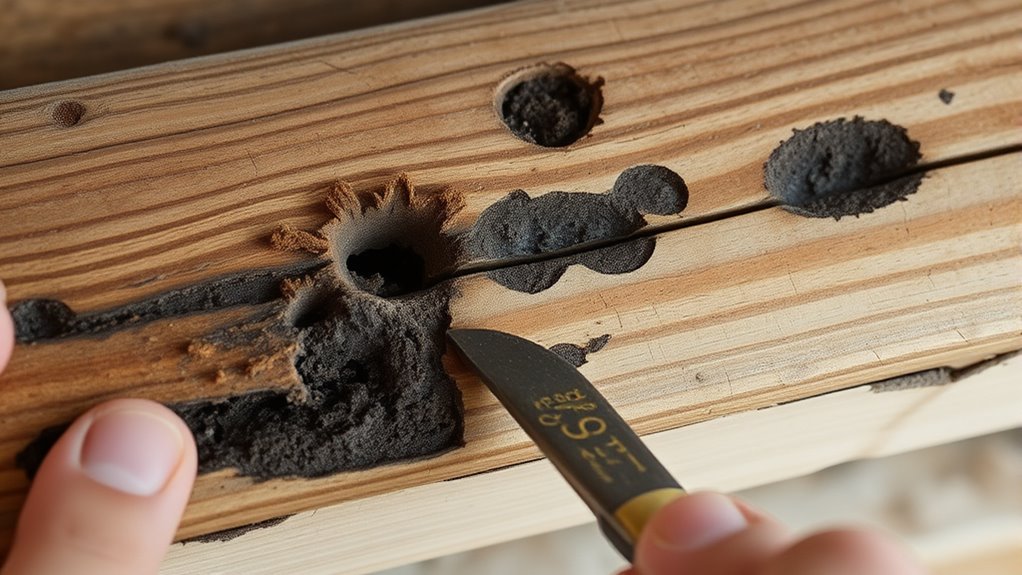

To check for rotted wood, look for discoloration, soft or spongy areas, cracks, and crumbling spots. Gently press on the wood; if it feels weak or becomes squishy, it’s likely decayed. Remove any visibly damaged wood and treat the area with a fungicide. When repair becomes necessary, replacing severely affected sections with rot-resistant or treated wood is best. Keep exploring to learn how to effectively prevent and repair wood rot.

Get everyday essentials delivered free — and shop member deals
- Fast, free delivery on millions of items
- Access to Prime Big Deal Days deals on October 6–7
- Prime Video, Amazon Music and more included
Key Takeaways
- Inspect wood for discoloration, soft spots, cracks, or crumbling areas to identify potential rot.
- Use a screwdriver or awl to gently test wood’s firmness; soft areas indicate decay.
- Remove decayed material carefully and treat remaining wood with fungicidal solutions.
- Replace severely rotted wood with pressure-treated or rot-resistant materials for durability.
- Prevent future rot by controlling moisture, ensuring proper drainage, ventilation, and applying protective coatings.
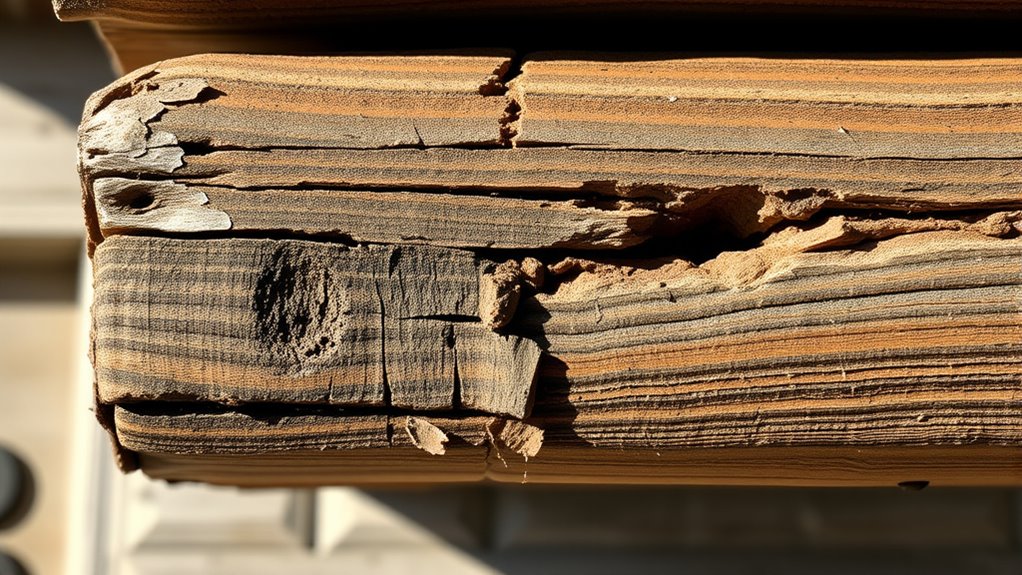
Have you ever wondered what causes wood to weaken and decay over time? Understanding the different types of decay can help you identify and address rotted wood before it causes more serious damage. Wood decay generally falls into three categories: surface decay, which affects only the outer layers; white rot, which breaks down cellulose and causes the wood to become soft and spongy; and brown rot, which primarily decomposes lignin, turning the wood brittle and darkened. Recognizing these types is essential because each requires a different approach for treatment and prevention.
Prevention methods are your first line of defense against wood rot. Regularly inspecting your wooden structures for signs of damage, such as discoloration, softness, or mold, can catch problems early. Applying protective coatings like sealants and paints creates a barrier against moisture, which is the primary culprit behind decay. Proper drainage and ventilation around your home also help keep wood dry, reducing the chances of rot developing. When you build or repair, using pressure-treated or rot-resistant wood can considerably extend the lifespan of your structures. These woods are infused with preservatives that repel fungi and insects, making them less susceptible to decay. Installing gutters and ensuring proper slope around your foundation helps divert water away from wooden surfaces, further reducing exposure to moisture.
It’s also wise to address any existing issues promptly. If you notice a section of wood becoming soft or discolored, it’s best to act quickly to prevent the decay from spreading. Removing the decayed material and treating the remaining wood with fungicidal solutions can halt the progression of rot. In severe cases, replacing affected wood might be necessary. When you do replace wood, opt for materials that are naturally resistant or treated for longevity. Maintaining a consistent inspection routine, especially after storms or heavy rain, will keep your structures in good shape and prevent minor issues from escalating into major repairs. Additionally, understanding the role of ventilation and moisture control can significantly improve your efforts to prevent wood rot in the long term. Incorporating proper construction techniques that minimize water exposure is also critical for long-lasting wooden structures. Regular maintenance, including cleaning gutters and repairing leaks promptly, further supports your rot prevention strategy. Being aware of wood treatments and preservatives can also help you select the best materials for durability and longevity. Staying informed about moisture management techniques can help you adapt your preventative measures as needed to ensure the integrity of your wooden structures over time.
pressure treated rot resistant wood
As an affiliate, we earn on qualifying purchases.
As an affiliate, we earn on qualifying purchases.
Frequently Asked Questions
How Long Does Untreated Wood Rot Take to Spread?
Untreated wood rot can spread quickly, often within a few months if moisture control isn’t maintained. You might notice signs of wood decay early, but if moisture persists, the rot can worsen rapidly, compromising structural integrity. To prevent this, regularly check for dampness and fix leaks. Addressing moisture issues promptly slows down wood decay, giving you more time to repair or replace affected wood before extensive damage occurs.
Can Wood Rot Be Completely Eliminated or Just Managed?
Did you know that untreated wood rot can spread up to 12 inches annually? While complete elimination is tough, with proper preventative measures and regular maintenance tips, you can greatly reduce its impact. You’ll want to identify and remove affected wood early, apply fungicides, and keep moisture levels low. Proper upkeep can effectively manage rot, extending your wood’s lifespan and preventing future issues.
Are There Eco-Friendly Treatments for Wood Rot?
Yes, eco-friendly treatments for wood rot do exist. You can choose sustainable treatment options like naturally derived preservatives or borate-based solutions, which are less harmful to the environment. These eco-friendly preservatives penetrate the wood deeply, preventing further decay without releasing toxic chemicals. By opting for these sustainable options, you protect your wood while minimizing environmental impact, ensuring your project stays eco-conscious and effective.
How Often Should I Inspect for Wood Rot?
You should inspect for wood rot at least twice a year, ideally during spring and fall. Incorporate this into your maintenance schedule to catch issues early. Regular inspections allow you to identify signs of rot before they worsen, saving you time and money. Pay close attention to areas exposed to moisture, like rooftops, basements, and around windows, so you can address problems promptly and maintain your home’s integrity.
What Are the Signs of Hidden or Interior Wood Rot?
You might notice hidden damage or interior decay if you see paint bubbling, warping, or soft spots on walls and floors. Often, the rot isn’t visible on the surface, so you should check for musty odors, discoloration, or mold growth. Tap the wood gently—if it sounds hollow or soft, it could indicate hidden damage or interior decay. Regular inspections help catch these signs early before structural issues develop.
As an affiliate, we earn on qualifying purchases.
Conclusion
Now that you’ve become a wood rot detective, don’t let those sneaky spores turn your home into a soggy sponge. Think of rotted wood as the bad actor in your DIY drama—slowly turning your beautiful structure into a soggy mess. Stay vigilant, fix problems early, and keep your home from turning into a mushroom-filled jungle. After all, nobody wants their house to resemble a fungi festival—so get to work before the wood throws in the towel!
gutter and drainage system for home
As an affiliate, we earn on qualifying purchases.
As an affiliate, we earn on qualifying purchases.
As an affiliate, we earn on qualifying purchases.
Fall Picks
fall essentials
As an affiliate, we earn on qualifying purchases.