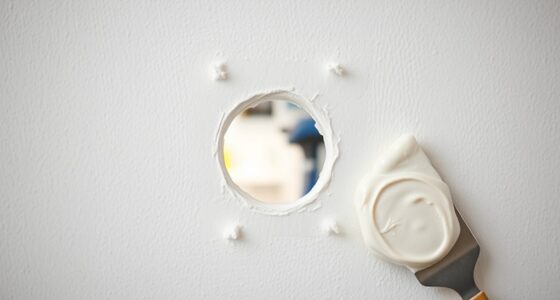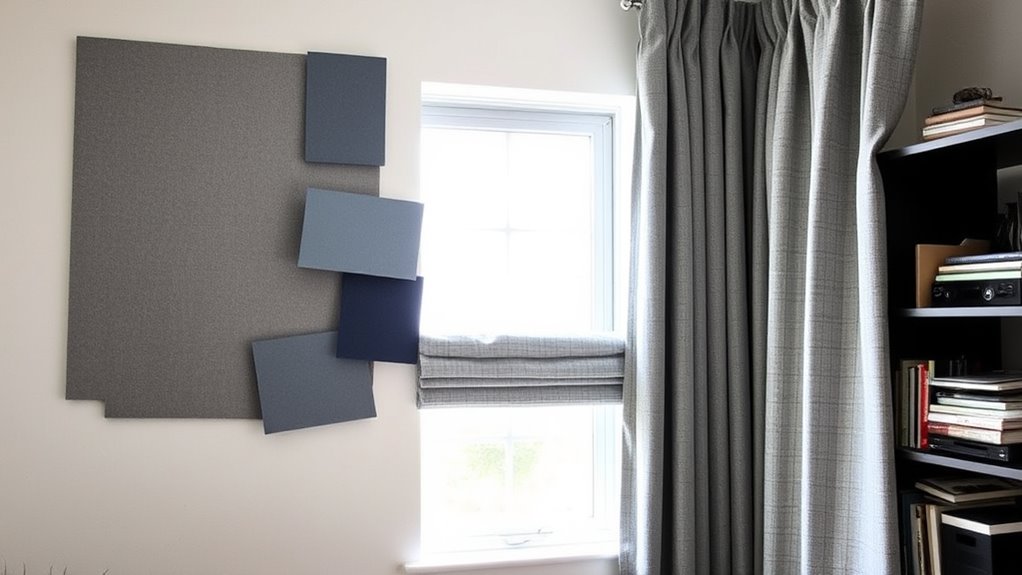

To soundproof a room on a budget, start by sealing gaps around doors and windows with weatherstripping or draft stoppers to block noise leaks. Use affordable acoustic panels or DIY options like household foam or egg cartons to absorb sound, especially on walls where sound bounces. Adding heavy curtains, rugs, and rearranging furniture can further dampen noise. Combining these simple tactics will make your space noticeably quieter—keep going to discover even more effective tips.
Key Takeaways
- Seal gaps around doors and windows with weatherstripping or draft stoppers to prevent sound leaks.
- Install affordable acoustic panels or DIY alternatives like household materials on walls to absorb sound.
- Use heavy curtains, rugs, and furniture to dampen noise and reduce echo within the room.
- Rearrange furniture, such as bookshelves, to act as additional sound barriers.
- Combine multiple methods—like sealing gaps and adding panels—for a layered, cost-effective soundproofing solution.
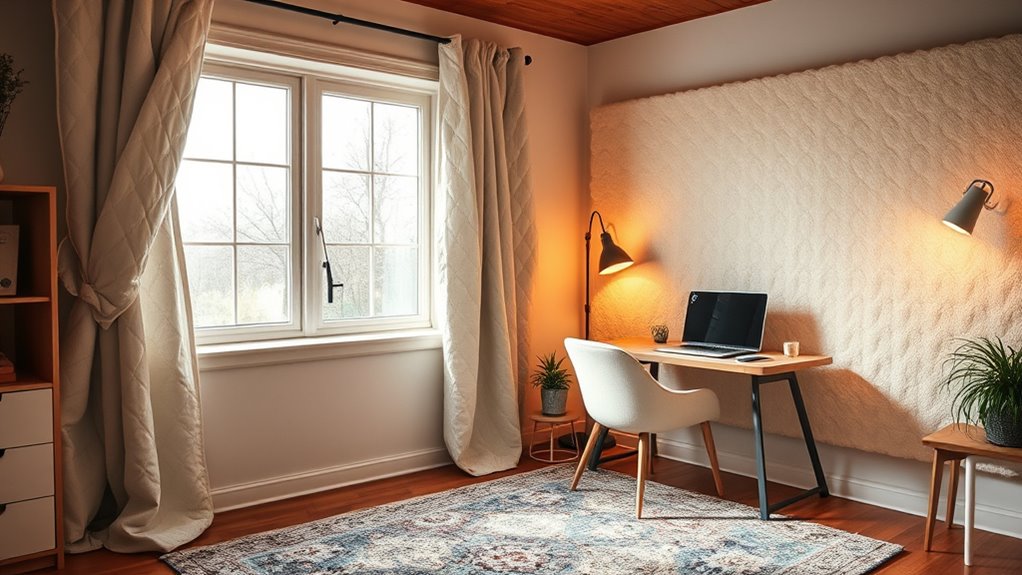
If noise disruptions are bothering you, DIY soundproofing offers an affordable and effective way to create a quieter space. You don’t need to spend a fortune on professional installations; simple solutions like acoustic panels and door seals can make a noticeable difference. Acoustic panels are a popular choice because they absorb sound waves, reducing echo and muffling noise from outside or adjacent rooms. You can find affordable, easy-to-install foam panels online or even make your own using household materials like dense foam or thick blankets. Position them strategically on walls, especially where sound tends to bounce or enter, such as near windows, shared walls, or the ceiling. Mounting these panels is straightforward—simply use adhesive strips or brackets, and you’re set to cut down on echo and noise transmission.
Another critical step involves sealing gaps around your doors, which are often overlooked but are major pathways for sound leaks. Installing door seals or weatherstripping is a low-cost way to block out unwanted noise. You can find adhesive-backed foam or rubber strips at hardware stores, and they’re easy to cut to size. When applied along the edges of your door frame, door seals create a tighter barrier, preventing sound from slipping through the cracks. Make sure to check for gaps at the bottom, sides, and top of your door, as these areas typically allow a lot of noise to pass through. Adding a draft snake or a door sweep at the bottom can also help improve sound insulation, especially if the door doesn’t sit flush against the floor. Additionally, understanding the soundproofing principles can help you choose the most effective strategies for your space.
In addition to acoustic panels and door seals, consider rearranging furniture to absorb sound better. Bookshelves filled with books, heavy curtains, or rugs can all help dampen noise and reduce echo within your room. These items are inexpensive and easy to move around, giving you flexibility in your soundproofing efforts. Keep in mind that the key is to create a layered approach: combining surface treatments with sealing gaps enhances your room’s overall soundproofing. While professional solutions can be costly, these DIY methods allow you to make meaningful improvements without breaking the bank.
Frequently Asked Questions
Can I Soundproof a Room Without Damaging the Walls?
Yes, you can soundproof a room without damaging the walls by using temporary solutions like wall reinforcement with acoustic panels or foam. These materials absorb sound and can be easily attached or removed, protecting your walls. You can also add rugs, curtains, or furniture to enhance sound absorption. This way, you improve soundproofing while keeping your walls intact and undamaged.
How Effective Are DIY Soundproofing Methods Compared to Professional Solutions?
DIY soundproofing methods can be quite effective for reducing noise, but they typically don’t match the soundproofing effectiveness of professional solutions. You have more control and can customize your approach, but professionals use specialized materials and expertise for maximum results. If you’re on a budget, DIY can improve noise levels, yet for complete sound isolation, investing in professional solutions yields better, long-lasting results.
What Are the Cheapest Materials for Soundproofing on a Budget?
You won’t believe how cheap and effective soundproofing can be. Start with cheap foam panels that absorb sound waves, making a noticeable difference. Pair them with DIY curtains—thick, layered, and hung properly—to block noise from outside. These materials are affordable yet surprisingly powerful, turning your room into a quieter sanctuary without breaking the bank. Don’t underestimate the impact simple, budget-friendly solutions can have on your space.
How Long Does DIY Soundproofing Typically Last?
DIY soundproofing can last anywhere from 5 to 10 years, depending on materials used. You need to consider durability lifespan and maintenance requirements; for example, foam panels may need occasional cleaning or replacement, while mass-loaded vinyl tends to be more durable with minimal upkeep. Proper installation also influences longevity—ensure everything is securely attached to maximize your soundproofing’s lifespan and effectiveness over time.
Are There Any Safety Concerns With DIY Soundproofing Materials?
You should be aware of safety concerns with DIY soundproofing materials, especially fire hazards and toxic fumes. Some adhesives, insulation, or sprays can be flammable or release harmful fumes if not used properly. Always work in well-ventilated areas, wear protective gear, and follow manufacturer instructions carefully. Choosing non-toxic, fire-resistant materials helps reduce risks, ensuring your DIY project remains safe for you and your home.
Conclusion
Now that you’ve learned how to soundproof your room on a budget, you’re armed with simple, effective tricks to turn your space into a peaceful oasis. Think of your room as a fortress, built brick by brick with everyday materials. With patience and a bit of effort, you’ll create a sanctuary where noise fades away like a distant echo. Your DIY efforts will transform your space into a quiet haven — proof that you don’t need to spend a fortune to silence the chaos.