If your electrical panel is over 20 years old, or if you notice frequent breaker trips, burn marks, or buzzing sounds, it’s a sign you may need an upgrade. Signs like flickering lights, burning odors, or unable to handle new appliances also point to potential issues. Properly functioning panels guarantee safety and prevent electrical fires. Keep an eye out for these clues, as understanding them can help you make informed decisions about your home’s electrical system.
Key Takeaways
- Frequent breaker trips or circuit outages indicate insufficient capacity or faulty components needing an upgrade.
- Visible damage, burn marks, or corrosion on the panel suggest safety hazards requiring replacement.
- An outdated panel over 20 years old may lack modern safety features and should be upgraded for safety.
- Adding new appliances or increased power demands can overload existing panels, signaling a need for an upgrade.
- Buzzing sounds, burning odors, or unusual panel behavior point to potential electrical faults needing professional assessment.
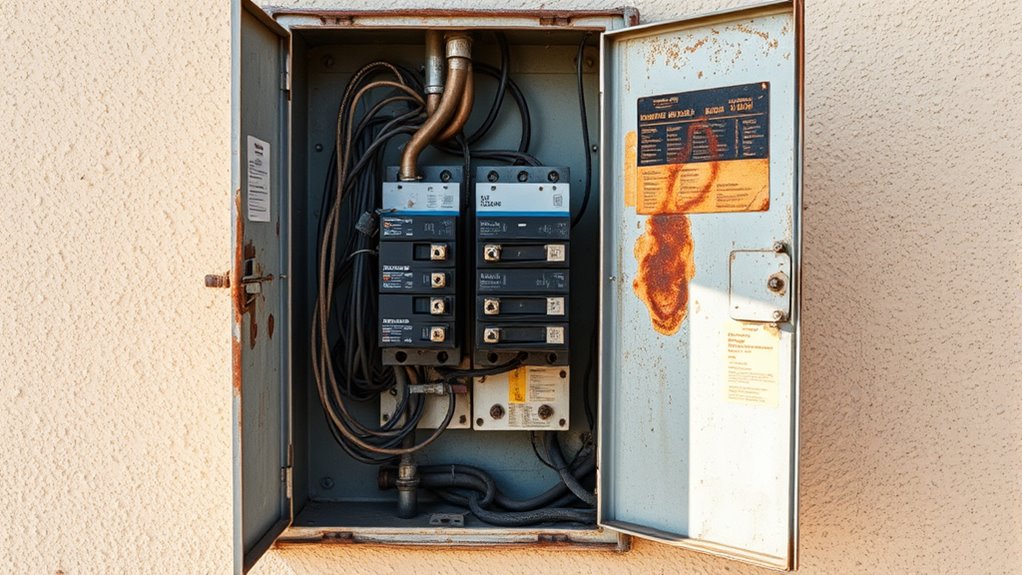
Ever wondered what a service panel is and why it’s so essential to your home’s electrical system? Your service panel, often called the breaker box, acts as the central hub that distributes electricity throughout your house. It protects your wiring and appliances by stopping the flow of electricity when there’s a fault, preventing potential fires or damage. Understanding the basics of your panel helps you recognize when it’s time for an upgrade, especially since the type of circuit breakers used and panel installation safety are crucial for dependable and safe operation.
Your service panel distributes electricity safely and requires proper maintenance and upgrades.
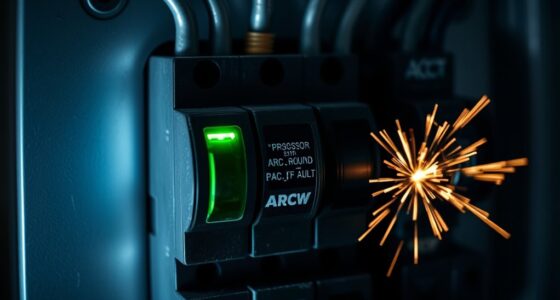
There are different circuit breaker types, including single-pole, double-pole, GFCI, and AFCI breakers. Each serves a specific purpose, offering varying levels of protection depending on your home’s needs. For example, GFCI breakers are essential in areas prone to moisture, like kitchens and bathrooms, because they shut off quickly if they detect ground faults. AFCI breakers help prevent fires caused by arc faults in wiring. Knowing which circuit breaker types your panel uses can help you determine if your system is up to current safety standards or if upgrades are necessary. Outdated panels may have only standard circuit breakers that don’t provide the enhanced protection newer technology offers. Upgrading to modern breaker types can improve your home’s safety, especially if your current panel is more than 20 years old.
Panel installation safety is another critical factor. If your service panel is outdated, damaged, or improperly installed, it can pose serious hazards. Signs of trouble include frequent breaker trips, burn marks, or a buzzing sound from your panel. When replacing or upgrading your panel, it’s vital to prioritize panel installation safety by hiring licensed electricians who follow current electrical codes. They ensure that the new panel is installed correctly, grounded properly, and that all connections are secure. Proper installation minimizes risks like electrical shocks or fires, giving you peace of mind that your home’s electrical system is safe and reliable.
Recognizing signs that you need an electrical panel upgrade isn’t just about convenience; it’s about safety. If your panel is old, frequently tripping, or if you’re adding new appliances that require more power, it’s time to consider an upgrade. An updated panel with the right circuit breaker types and professional installation ensures your home stays safe and functions efficiently. Don’t ignore warning signs—taking action now can prevent costly damage or dangerous situations down the line. Upgrading your panel can also improve energy efficiency and support future electrical needs, making it a wise investment for homeowners.

SimpliSafe 8 Piece Wireless Home Security System - Optional 24/7 Professional Monitoring - No Contract - Compatible with Alexa and Google Assistant , White
Simple to set up. Seriously secure - Get ready to protect right out of the box. Just plug...
As an affiliate, we earn on qualifying purchases.
Frequently Asked Questions
How Often Should I Have My Electrical Panel Inspected?
You should have your electrical panel inspected every 3 to 5 years, especially if you experience circuit overloads or notice issues like flickering lights or warm outlets. Regular inspections guarantee your panel’s panel location is accessible and safe, preventing potential hazards. If your home has outdated wiring or frequent electrical problems, more frequent checks are recommended to keep your system functioning safely and efficiently.
Can Upgrading My Panel Increase Home Value?
Upgrading your electrical panel can boost your home valuation and positively impact your property appraisal. Modern, up-to-code panels appeal to buyers and show you’re proactive about safety and efficiency. A new panel can also support added features like smart home systems, increasing desirability. Overall, an upgrade not only enhances safety but can make your home more attractive to potential buyers, possibly leading to a higher sale price.
What Are the Costs Associated With an Electrical Panel Upgrade?
When it comes to an electrical panel upgrade, you’ll want to know the cost estimate upfront. Typically, prices range from $1,500 to $3,500, depending on your home’s size and the complexity of the job. You should also consider budget considerations, as unexpected issues can pop up, making it prudent to set aside a bit extra. Being prepared helps ensure your project stays on track and within your means.
How Long Does a Typical Electrical Panel Replacement Take?
A typical electrical panel replacement takes about 2 to 4 hours. During this time, you’ll guarantee the new panel has the right circuit capacity and breaker compatibility to handle your home’s electrical load. Factors like wiring complexity and panel size can influence the duration. You’ll want a licensed electrician to efficiently manage the process, ensuring your system is safe and up-to-date with your current and future power needs.
Are There Any Safety Concerns During a Panel Upgrade?
Sure, upgrading your panel is like inviting a fire-breathing dragon into your home—dangerous if not handled properly. During the process, you’ll want to guarantee circuit safety is maintained, and fire hazards are minimized. Skilled electricians wear proper gear and follow strict protocols, so you stay safe. Don’t try this yourself; leave it to the pros, and you’ll avoid electrical mishaps and keep your home secure.

WiFi Door Alarm System, Wireless DIY Smart Home Security System, with Phone APP Alert, 8 Pieces-Kit (Alarm Siren, Door Window Sensor, Remote), Work with Alexa, for House, Apartment, by tolviviov
WIFI Network: WIFI connection, Only works on 2.4GHz WiFi network, does NOT support 5GHz WiFi networks.
As an affiliate, we earn on qualifying purchases.
Conclusion
Your electrical panel is the heart of your home’s power system, quietly working behind the scenes. When it shows signs of strain, it’s like a warning siren blaring in the night. Upgrading your service panel is like giving your home a fresh set of lungs, ensuring steady, safe energy flows. Don’t wait for a blackout to realize it’s time—stay ahead of the storm, and keep your home’s power running smoothly and safely.

UltraPro Personal Security Window and Door Alarm, 4 Pack, DIY Protection, Burglar Alert, Wireless Chime/Alarm, Easy Installation, Home Security, Ideal for Home, Garage, Apartment, White, 45174
Safe and Secure – Ward off would-be intruders with a 120-decibel alarm triggered by a high-quality magnetic sensor,...
As an affiliate, we earn on qualifying purchases.

SimpliSafe 5 Piece Wireless Home Security System - Optional 24/7 Professional Monitoring - No Contract - Compatible with Alexa and Google Assistant,White
Simple to set up. Seriously secure - Get ready to protect right out of the box. Just plug...
As an affiliate, we earn on qualifying purchases.