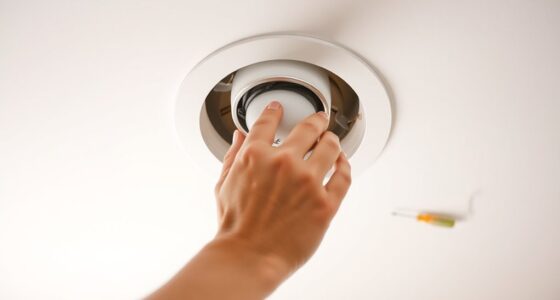
If your light fixture is loose or discolored, start by turning off the power at the circuit breaker to stay safe. Carefully tighten any loose screws securing the fixture to the ceiling or wall, ensuring it’s firmly in place. For discoloration, inspect for heat damage or aging components inside. If cleaning and bulb replacement don’t fix the issue, consider replacing the fixture with a heat-resistant, durable option. Keep going to discover more tips on fixing fixtures safely and effectively.
Key Takeaways
- Turn off power at the circuit breaker before inspecting or repairing the fixture.
- Tighten loose mounting screws and ensure the fixture is securely attached to the ceiling or wall.
- Check for signs of heat damage or aging, such as discoloration or material deterioration.
- Consider replacing the fixture if discoloration persists after cleaning and bulb replacement.
- Consult a professional electrician if you’re unsure about electrical safety or proper installation procedures.
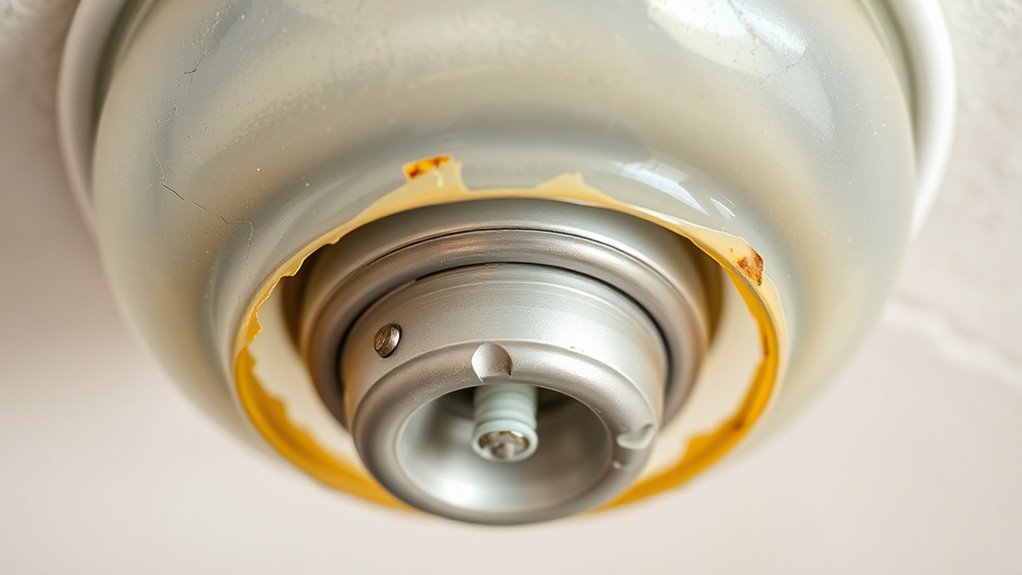
If your fixture still looks discolored or the light seems uneven after changing the bulb and cleaning, the problem might be with the fixture itself. Sometimes, the fixture can become loose over time, especially if it’s in an area prone to vibrations or if it’s been installed for a long period. You’ll want to turn off the power at the circuit breaker before attempting any repairs. Carefully tighten any loose screws connecting the fixture to the ceiling or wall mount. If the fixture is hanging unevenly or sways slightly, it’s a sign that the mounting brackets may need adjustment or replacement. Securely fastening the fixture ensures safety and prevents further damage. Additionally, understanding electrical safety protocols can help you avoid hazards when working with fixtures. Discoloration can also be a sign of heat damage or aging components. If cleaning and bulb replacement don’t resolve the discoloration, consider replacing the fixture altogether. Sometimes the materials inside, like wiring or connectors, degrade over time, which could lead to flickering or dimming. It’s also helpful to know how fixture materials influence the longevity and safety of your lighting. Proper installation and material durability can significantly extend the life of your fixtures. Being aware of common failure causes such as electrical issues or mechanical failures can help you diagnose problems more effectively. When replacing the fixture, double-check that your new one is compatible with your existing wiring and that you follow all safety guidelines. Also, selecting fixtures with heat-resistant components can improve durability and safety. If you’re unsure about handling electrical components, it’s best to call a professional, but many fixes are manageable if you take your time and follow instructions carefully.
Frequently Asked Questions
Can I Fix a Loose Light Fixture Without Turning off the Power?
You shouldn’t fix a loose light fixture without turning off the power because electrical safety is essential. Handling fixture maintenance while the power is on risks electrical shock or fire. Always switch off the circuit breaker before tightening or repairing any fixture. This guarantees you work safely, avoiding accidents. Remember, proper electrical safety practices protect you and make fixture maintenance easier and more effective.
How Do I Prevent Discoloration of My Light Fixtures Over Time?
Worried about fixture discoloration over time? Regular fixture maintenance is key. You can prevent discoloration by cleaning your light fixtures gently with a damp cloth and avoiding harsh chemicals. Also, replace bulbs with the correct wattage to minimize heat buildup, which causes discoloration. Keep fixtures out of direct sunlight when possible, and consider using LED bulbs—they emit less heat and last longer. These steps help maintain your fixture’s appearance and prolong its lifespan.
Is It Safe to Replace a Fixture With a Different Style Myself?
Yes, you can replace a fixture with a different style yourself, but make sure to verify fixture compatibility first. Turn off the power, and carefully disconnect the old fixture. When choosing a new one, ensure it matches your wiring and mounting needs. While style matching adds aesthetic appeal, prioritize safety and compatibility. If you’re unsure, consulting an electrician ensures a safe, proper installation and peace of mind.
What Tools Are Recommended for Fixing Discolored or Loose Fixtures?
You’ll need a screwdriver, wire strippers, and possibly a voltage tester to fix discolored or loose fixtures. Always turn off the power at the breaker before starting, and double-check with a voltage tester for safety. Use a ladder if needed, and wear gloves for protection. These tools, combined with DIY safety tips, help guarantee a safe and effective repair of your light fixture.
How Often Should I Inspect My Light Fixtures for Safety Issues?
Think of your lighting system as the heartbeat of your home; regular checks keep it healthy. You should inspect your light fixtures at least once every six months for safety issues. This routine lighting maintenance helps prevent problems that could threaten fixture longevity or cause hazards. Keep an eye out for loose fittings, discoloration, or flickering, and address issues promptly to make certain your home stays bright and safe.
Conclusion
When your light fixture starts wobbling or losing its shine, think of it as a sign your home’s heart needs some TLC. With a steady hand and a little patience, you can tighten, clean, or replace it—restoring its glow and peace of mind. Remember, safety is your guiding star—approach each fix like tending a delicate garden. Soon, your space will shine brighter, a beacon of your care and craftsmanship.