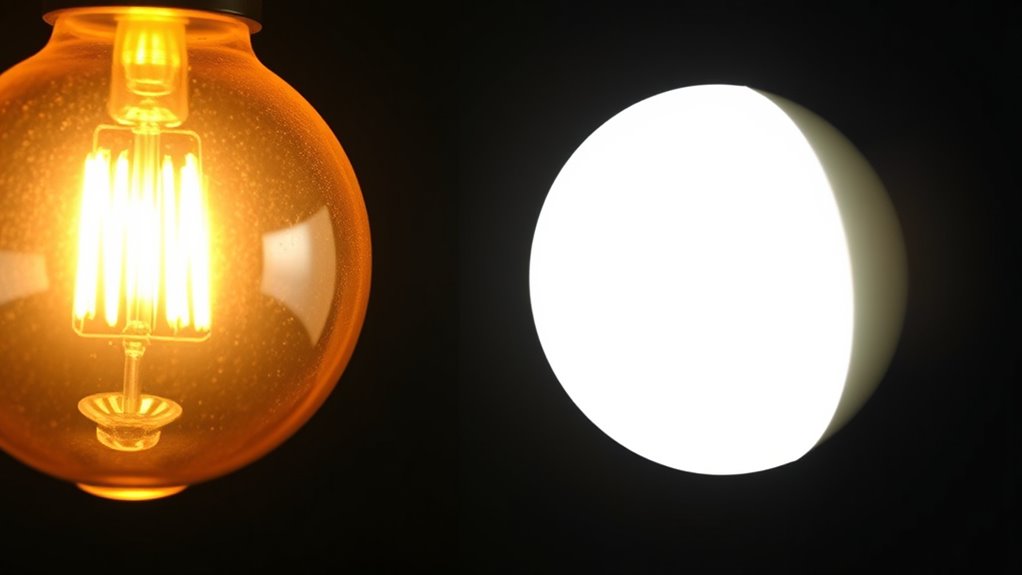

Switching from incandescent bulbs to LEDs saves you money by cutting your energy bills up to 80%. LEDs last up to 25 times longer, so you replace bulbs less often and reduce waste. They stay cooler and safer, lowering fire risks. Although LEDs cost more upfront, their durability and energy efficiency make them cheaper in the long run. Keep exploring to discover how switching benefits both your wallet and the environment.
Key Takeaways
- LEDs use up to 80% less electricity than incandescent bulbs, reducing energy bills.
- Longer lifespan of LEDs means fewer replacements and lower maintenance costs.
- Although more expensive initially, LEDs save money over time through energy efficiency and durability.
- LEDs produce less heat, decreasing fire risk and improving safety.
- Technological advancements continue to lower LED costs and improve performance, making them a smarter investment.

Have you ever wondered which type of light bulb is better for your home—LED or incandescent? The answer largely depends on what you value most: energy efficiency, environmental impact, or cost savings over time. LEDs are known for their impressive energy efficiency. They consume considerably less electricity than incandescent bulbs, often using up to 80% less energy. This means your monthly electricity bills can drop noticeably when you switch to LED lighting. The lower energy consumption isn’t just good for your wallet; it also benefits the environment. Because LEDs use less power, they reduce demand on power plants, lowering greenhouse gas emissions and decreasing your carbon footprint. If you’re environmentally conscious, choosing LED bulbs aligns with your desire to minimize your ecological impact.
Incandescent bulbs, on the other hand, are less efficient because they convert most of the energy they consume into heat rather than light. This inefficiency translates into higher energy bills and more frequent replacements, as incandescent bulbs tend to burn out faster. While they may be cheaper upfront, the long-term costs add up. Plus, their environmental impact is more significant due to higher energy consumption and shorter lifespan. If reducing your environmental impact is a priority, switching to LEDs is a smart move. Not only do they last much longer—sometimes up to 25 times longer—but their durability also means fewer bulbs end up in landfills, reducing waste and pollution.
Beyond efficiency and environmental factors, LED bulbs also offer benefits in terms of versatility and safety. They produce less heat, making them safer to handle and reducing the risk of burns or fires. Many LEDs are now available with adjustable color temperatures, allowing you to set the mood or enhance productivity in different areas of your home. As they last longer, you won’t need to change bulbs as often, saving you time and effort. While the initial investment might be higher, LEDs pay for themselves over time through energy savings and reduced replacement costs. Additionally, advancements in LED technology continue to improve their performance and affordability, making them an even smarter choice for consumers.
LED light bulbs 60W equivalent
As an affiliate, we earn on qualifying purchases.
As an affiliate, we earn on qualifying purchases.
Frequently Asked Questions
How Long Do LED Bulbs Typically Last Compared to Incandescent Bulbs?
You’ll find that LED bulbs typically last between 25,000 and 50,000 hours, far outlasting incandescent bulbs, which usually only last around 1,000 hours. The durability differences are significant, meaning you won’t need to replace LEDs as often. This extended lifetime comparison shows that LEDs are more durable, saving you money and hassle over time. Plus, their longevity makes them a smarter, more sustainable lighting choice.
Are LED Bulbs Safe for Outdoor Use in All Weather Conditions?
A bird in the hand is worth two in the bush, so you’ll want reliable outdoor lighting. LED bulbs are generally safe for outdoor use in all weather conditions, thanks to their outdoor durability and weather resistance. Just make certain you choose bulbs specifically rated for outdoor environments. Properly sealed and rated LED bulbs can withstand rain, snow, and humidity, making them a smart and safe choice for your outdoor lighting needs.
Can LED Bulbs Be Dimmed Like Incandescent Bulbs?
Yes, LED bulbs can be dimmed like incandescent bulbs if they have the right dimming compatibility. Look for LEDs labeled as dimmable, which are designed for bulb brightness adjustment. Keep in mind that not all LED bulbs are compatible with dimmer switches, so check the packaging for dimming compatibility to guarantee smooth operation. Using compatible dimmers will give you control over brightness and help you save energy.
Do LED Bulbs Contain Hazardous Materials Like Mercury?
No, LED bulbs don’t contain hazardous materials like mercury, unlike some older lighting options. This means they have a lower environmental impact during disposal and use. LEDs are safer for you and the environment, reducing concerns about toxic substances. You can confidently switch to LEDs knowing they’re eco-friendly, energy-efficient, and don’t pose health risks related to hazardous materials. This makes LEDs a smarter, safer lighting choice overall.
Are There Any Health Concerns Associated With LED Lighting?
You might be concerned about health issues with LED lighting, but generally, LEDs are safe for your eye health. However, prolonged blue light exposure from LEDs can cause eye strain or disrupt sleep patterns. To protect your eyes, consider using filters or dimming options, especially during evening hours. Overall, LEDs are a safe, energy-efficient choice, but being mindful of blue light exposure helps maintain your eye health.
energy-saving LED bulbs for home
As an affiliate, we earn on qualifying purchases.
As an affiliate, we earn on qualifying purchases.
Conclusion
Switching to LED bulbs is like planting a money-saving tree in your home. They use less energy, last longer, and cut down your bills, making your wallet happier over time. Incandescent bulbs are like a flickering flame—beautiful but fleeting and costly. By choosing LEDs, you’re planting seeds for future savings and brighter days. So, make the switch today and watch your savings grow like a sturdy, fruitful tree in your own backyard.
long-lasting LED light bulbs
As an affiliate, we earn on qualifying purchases.
As an affiliate, we earn on qualifying purchases.
adjustable color temperature LED bulbs
As an affiliate, we earn on qualifying purchases.
As an affiliate, we earn on qualifying purchases.