To reset a tripped breaker, first locate the main electrical panel and identify the switch that’s called for the circuit. Turn the breaker fully to ‘off’, then flip it back to ‘on’, feeling for resistance. If it trips again or stays off, or if you notice signs of damage, it’s best to call an electrician. You’ll find more tips on handling these issues safely as you explore further.
Key Takeaways
- Locate the main electrical panel and identify the tripped breaker, usually in the off position or between on and off.
- Unplug devices on the affected circuit and reset the breaker by switching it fully off, then back on firmly.
- Avoid resetting if the breaker trips again immediately or stays in the off position; investigate possible overloads or damage.
- Turn to a licensed electrician if the breaker continues to trip or shows signs of damage like scorching or burning smells.
- Always prioritize safety by checking for hazards, avoiding unnecessary resets, and seeking professional help when unsure.
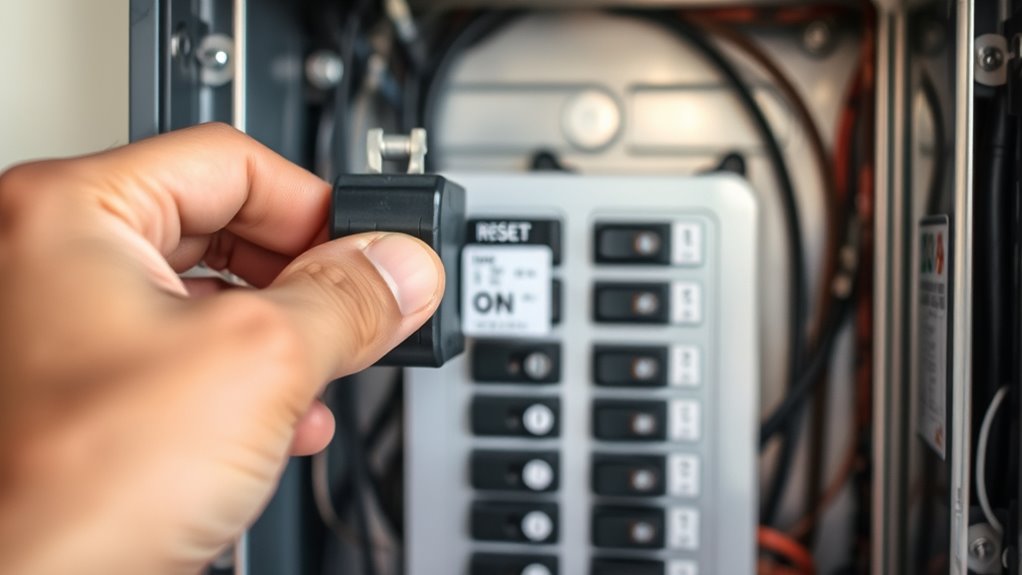
Have you ever experienced a sudden power outage in your home and wondered how to fix it? Often, the culprit is a tripped breaker. When this happens, it’s vital to approach the situation with caution, especially when it comes to circuit troubleshooting and breaker safety. Before jumping to conclusions, take a moment to identify the cause. A tripped breaker is a safety feature designed to prevent electrical overloads or short circuits from causing fires or damaging your appliances. So, it’s essential not to skip safety steps during the process.
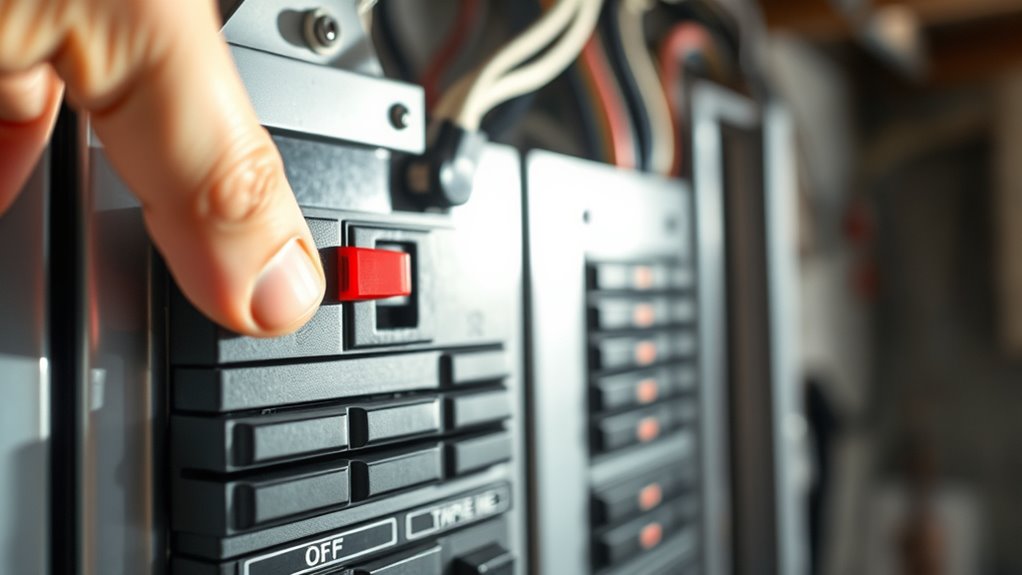
Start by locating your main electrical panel, which is usually inside a closet, basement, or garage. Once you’ve found it, open the panel carefully. You’ll notice switches labeled for different circuits. A tripped breaker will usually be in the ‘off’ position or somewhere between on and off. Before resetting, ensure you’ve addressed any underlying issues that caused the trip. Check for obvious signs of damage, such as burnt smells or scorched wires, and make sure no appliances or devices are causing overloads in particular outlets. If you suspect a specific circuit is overloaded, unplug some devices before resetting the breaker.
When you’re ready to reset, turn the breaker fully to the ‘off’ position first. This step is important because it helps prevent a sudden surge when you restore power. Then, firmly flip the switch back to the ‘on’ position. You should feel resistance when you do this, indicating the breaker has reset properly. If it stays in the ‘off’ position or trips again immediately, do not keep trying to reset it. Instead, this signals a deeper electrical problem that requires professional circuit troubleshooting and repair. Recognizing the importance of proper electrical maintenance can help prevent future issues and ensure safety. Additionally, understanding the causes of breaker trips can aid in diagnosing recurring problems and avoiding hazards. Repeatedly flipping a breaker can be unsafe and might cause further damage. Being aware of potential electrical hazards helps in taking appropriate precautions during troubleshooting. Seeking professional help when unsure is crucial to avoid electrical accidents and ensure the safety of your home.

HUAREW 5 AMP Resettable Fuse HVAC Tools Circuit Tester for Circuit Breaker 32V DC & 125/250V AC
Product features:It can detect abnormal situations such as overload, undervoltage, and short circuit, and automatically cut off the…
As an affiliate, we earn on qualifying purchases.
As an affiliate, we earn on qualifying purchases.
Frequently Asked Questions
How Do I Identify Which Breaker Has Tripped?
You can identify which breaker has tripped by first checking the breaker labels on your panel, which tell you what each controls. Look for a breaker that’s partially or fully switched to the “off” position or appears different from the others. If you’re unsure, consult your circuit map, if available, to match the affected area. Reset the breaker carefully, and if it trips again, consider calling an electrician.
Can a Tripped Breaker Cause Electrical Fires?
A tripped breaker is like a safety gate, preventing bigger problems. It can cause electrical fires if circuit overloads repeatedly occur without proper breaker maintenance, as worn-out components may spark. While a single trip usually isn’t dangerous, ignoring frequent trips increases fire risk. Always inspect your breaker panel, avoid overloading circuits, and call an electrician if trips happen often. Proper maintenance keeps your system safe and fire-free.
How Often Should I Reset My Circuit Breaker?
You should reset your circuit breaker only when it trips once or twice, and your electrical system health appears normal. Avoid frequent resets, as this signals underlying issues needing professional circuit breaker maintenance. If your breaker trips repeatedly, stop resetting it and call an electrician. Regular inspections help maintain your electrical system’s safety and efficiency, preventing potential fire hazards and ensuring your home’s electrical health remains intact.
What Tools Are Needed to Reset a Breaker Safely?
Imagine your safety as the lighthouse guiding your actions. To reset a breaker, you’ll need a non-contact voltage tester, insulated screwdrivers, and gloves—tools that act as your safety precautions. Always check circuit breaker labels before working. Turn off the main power if needed, and make sure your hands remain dry. These tools help you reset the breaker safely, but if you’re unsure, calling an electrician is always the wisest course.
Is It Safe to Reset a Breaker if I Smell Burning?
No, it’s not safe to reset a breaker if you smell burning. Electrical safety is vital, and a burning smell indicates potential wiring issues or overheating that could cause fire or damage. You should stop circuit troubleshooting immediately, turn off the breaker, and call a professional electrician. Resetting a breaker under these conditions might worsen the problem or pose serious risks, so always prioritize safety first.
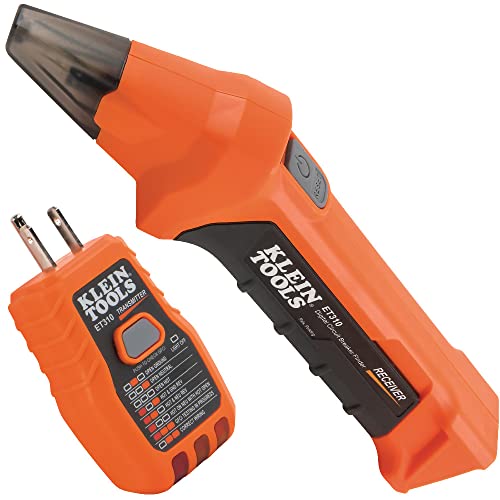
Klein Tools ET310 AC Circuit Breaker Finder, Electric and Voltage Tester with Integrated GFCI Outlet Tester
ACCURATE CIRCUIT BREAKER IDENTIFICATION: Quickly locate the correct breaker with precision using our circuit breaker finder, ensuring efficient…
As an affiliate, we earn on qualifying purchases.
As an affiliate, we earn on qualifying purchases.
Conclusion
Remember, resetting a tripped breaker is simple, but know your limits. If your breaker keeps tripping, it might signal a serious electrical issue—don’t ignore it. Did you know that electrical problems cause nearly 50,000 house fires each year? If you’re unsure or the breaker trips repeatedly, call a professional. Your safety is worth it. When in doubt, always consult an electrician to prevent potential hazards and keep your home safe.

Littversions Ultimate 48 Circuits Bidirectional Breaker Directory Label Kit with Colored Icons & Panel Markers for All Electrical Panel Strong Adhesive Durable Vinyl
ULTIMATE PANEL KIT LABELS: Kit includes 48 circuit directory, 53 Circuit Identification labels with colored icons, 48 Round…
As an affiliate, we earn on qualifying purchases.
As an affiliate, we earn on qualifying purchases.

Square D Schneider Electric 20A 1 Pole HO Breaker HOM120C
RELIABLE CIRCUIT PROTECTION: Designed as a 20 amp breaker single pole for safe and consistent circuit interruption in…
As an affiliate, we earn on qualifying purchases.
As an affiliate, we earn on qualifying purchases.