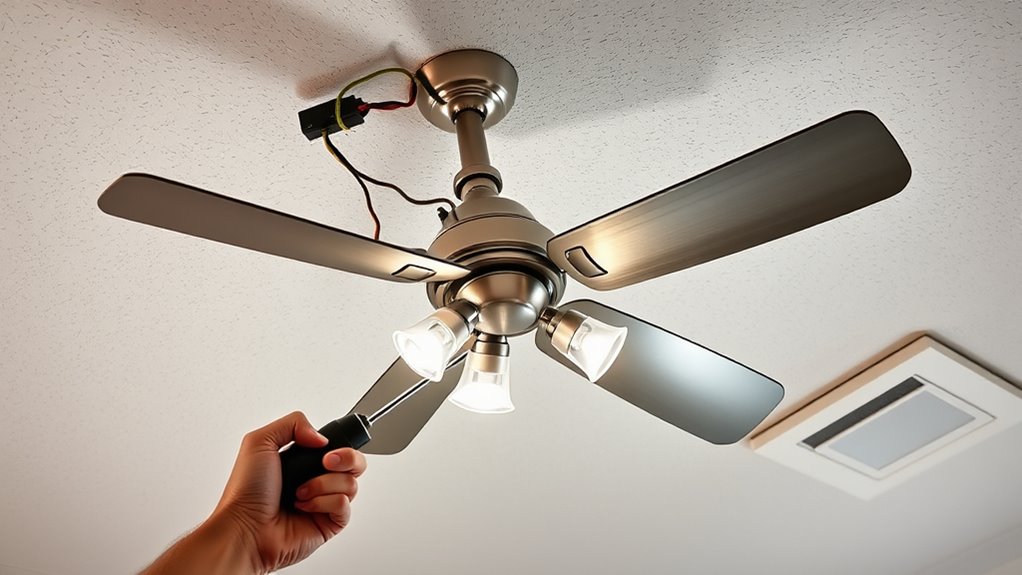

To replace a light fixture with a ceiling fan, turn off the power at the circuit breaker, then carefully remove the existing fixture and disconnect the wires. Mount a fan-rated ceiling box if needed, connect the fan wires to the house wiring—black to black, white to white, and ground properly—and secure the fan to the ceiling. If your fan has a remote or switch, set it up accordingly. To make certain of a safe and successful install, there’s more to consider if you keep going.
Key Takeaways
- Turn off power at the circuit breaker before starting any wiring work.
- Remove the existing light fixture, noting wire connections for reference.
- Assemble the ceiling fan according to the manufacturer’s instructions and connect wiring correctly.
- Mount the fan securely to a fan-rated ceiling box, ensuring stability and proper support.
- Turn the power back on and test the fan and light functions for proper operation.

Are you ready to upgrade your room’s lighting and airflow? Replacing a light fixture with a ceiling fan is a smart way to improve comfort and style, but it requires some planning and a bit of technical know-how. The first step is understanding the different ceiling fan types, which vary based on installation needs and room size. From flush mounts perfect for low ceilings to downrod-mounted fans suited for larger spaces, choosing the right type guarantees peak performance. Also, consider whether your new fan will include a light kit or be purely for airflow, as this affects wiring and mounting options.
Before diving in, turn off the power at the circuit breaker to avoid any electrical accidents. Remove the existing light fixture carefully, disconnecting the wires and noting how they’re connected. If your current setup has a switch controlling the fixture, you might want to upgrade to wireless switches for easier control. Wireless switches provide the convenience of turning your ceiling fan on or off from anywhere in the room, without the clutter of traditional pull chains or wall switches. Installing a wireless switch is straightforward and allows for more flexible control, especially if your fan has multiple speeds or lighting options.
Next, you’ll need to prepare the ceiling box to support your chosen ceiling fan type. Some fans require a fan-rated box, which is sturdier and designed for the weight and motion of the fan blades. Once the box is secure, assemble your ceiling fan according to the manufacturer’s instructions. Most fans come with detailed wiring diagrams; connect the wires from the fan to your house wiring, matching the black to black (hot), white to white (neutral), and grounding wire to the grounding screw or wire. If your fan includes a light kit, wire it accordingly, taking care to connect the switch wires if you plan to control the light separately. Recognizing passive voice in your wiring connections can help ensure a safer and more reliable installation.
Finally, mount the fan to the ceiling box, ensuring it’s secure and balanced. Many ceiling fan types come with different mounting options—some hang closer to the ceiling, while others have longer downrods for high ceilings. Once mounted, attach the blades, secure any light fixtures, and install your wireless switch kit if you opted for one. Turn the power back on and test your new setup thoroughly. With the right ceiling fan type and a wireless switch, you’ll enjoy improved airflow and lighting control, making your space more comfortable and modern.
Frequently Asked Questions
Can I Install a Ceiling Fan Without an Existing Light Fixture?
Yes, you can install a ceiling fan without an existing light fixture. First, verify your electrical wiring supports a ceiling fan, including the necessary wiring for fan control. Choose a suitable ceiling fan placement that provides enough clearance and proper support. Turn off power at the circuit breaker, then follow safety guidelines, connect the wiring correctly, and mount the fan securely. No light fixture is needed if you prefer just the fan.
What Tools Are Necessary for Replacing a Light Fixture With a Ceiling Fan?
Like a skilled conductor preparing for a symphony, you need essential tools to replace your light fixture with a ceiling fan. Grab a voltage tester for electrical safety, a screwdriver set for different ceiling fan types, wire strippers, pliers, and a ladder to reach your ceiling. Ensuring proper tools helps prevent accidents and guarantees a smooth installation, turning your space into a harmonious blend of functionality and style.
How Do I Choose the Right Ceiling Fan Size for My Room?
To select the right ceiling fan size, you need to take into account your room dimensions and fan blade size. Measure your room’s square footage, and for rooms up to 75 square feet, opt for a fan with a 29-36 inch blade span. For larger rooms, like 144-225 square feet, choose a fan with a 52-54 inch blade span. This guarantees ideal airflow and comfort in your space.
Is It Safe to Install a Ceiling Fan Myself?
Yes, it can be safe to install a ceiling fan yourself if you follow proper electrical safety guidelines and have some DIY installation experience. Make sure to turn off the power at the circuit breaker, use a voltage tester, and carefully follow the manufacturer’s instructions. If you’re unsure about wiring or electrical safety, it’s best to consult a professional to avoid potential hazards or damage.
How Do I Troubleshoot if the Ceiling Fan Isn’t Working After Installation?
Think of your ceiling fan as a finely tuned orchestra—if it’s not playing, you need to troubleshoot. First, turn off power and check electrical safety—ensure all connections are secure and no wires are loose. Then, restore power and test the fan’s speed settings; if it still doesn’t work, examine the wall switch and remote control. Sometimes, resetting the fan or replacing the fuse can bring harmony back.
Conclusion
Replacing your light fixture with a ceiling fan not only refreshes your space but also brings comfort and style effortlessly. As you turn on your new fan for the first time, you might notice how a simple upgrade can transform your room’s ambiance. Sometimes, life’s small coincidences—like finally completing a project—remind us that a little effort can make a big difference. Enjoy your refreshed space, knowing you’ve created something both functional and beautiful.