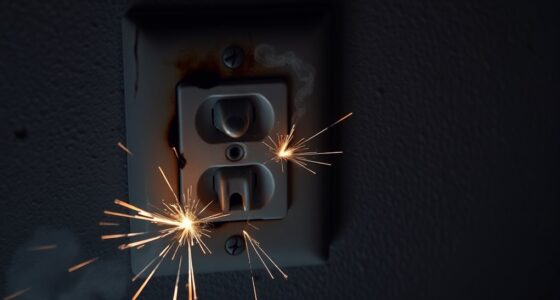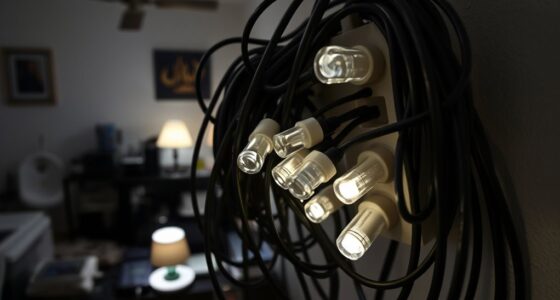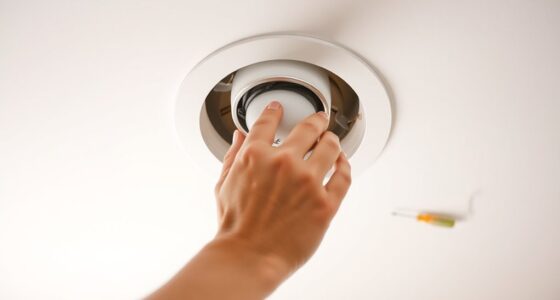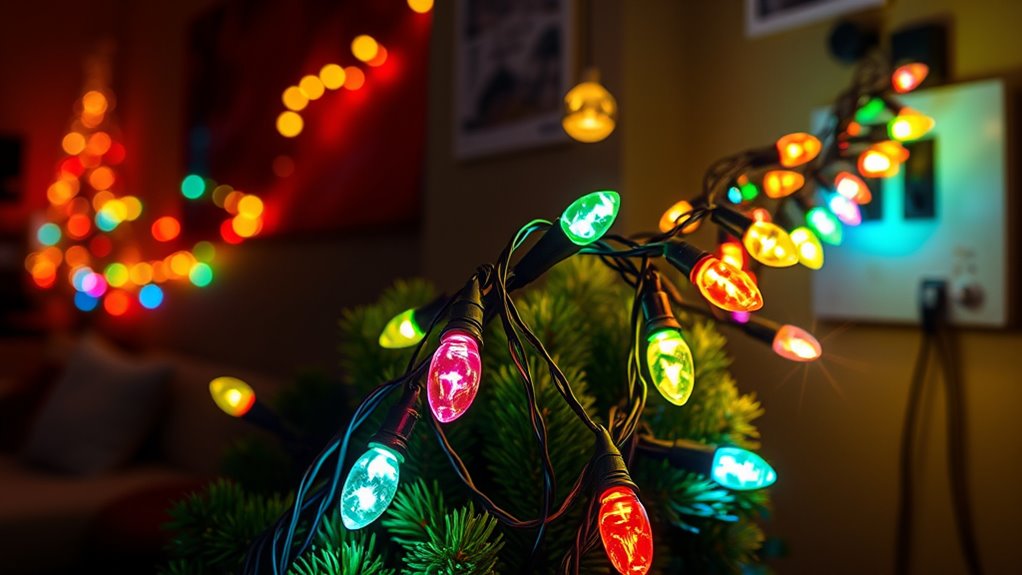

If your holiday lights keep blowing fuses, start by unplugging the string and inspecting the fuse compartment, replacing any blown fuse with the correct type and rating. Check each bulb for damage or looseness, as faulty bulbs can cause shorts. Avoid overloading circuits or using damaged wiring, and consider switching to LED bulbs, which generate less heat and reduce stress on the fuse. For more tips, you’ll find helpful solutions to keep your display shining bright.
Key Takeaways
- Check for damaged or loose bulbs, as they can cause shorts and blow fuses.
- Ensure the fuse type and rating match the manufacturer’s specifications when replacing.
- Avoid overloading circuits or power strips, and use those with built-in circuit breakers.
- Inspect wiring for signs of wear, damage, or exposed wires; replace if necessary.
- Switch to LED bulbs to reduce heat, stress on wiring, and fuse blowout frequency.
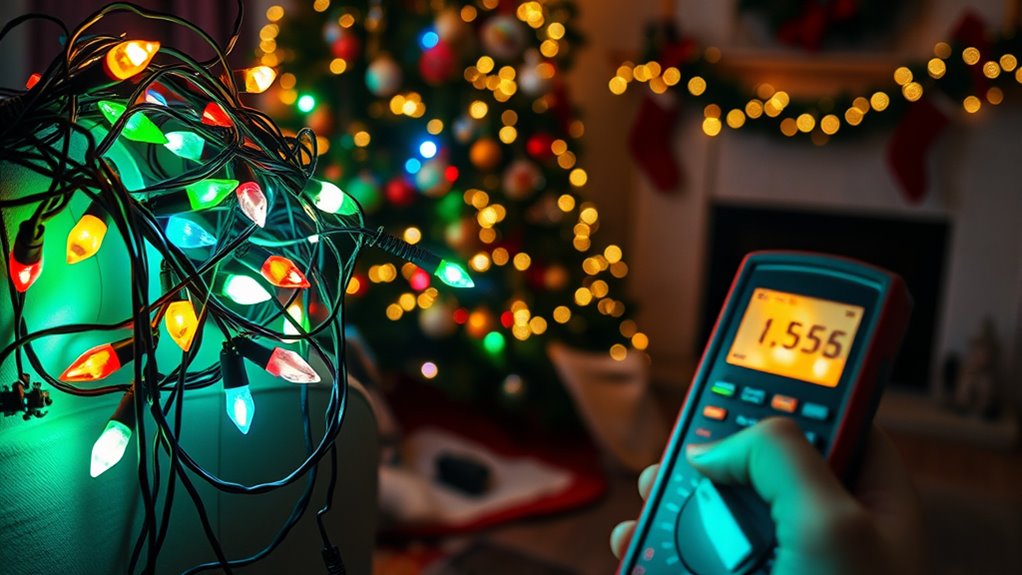
When your Christmas lights stop working, it can be frustrating, but most issues are easy to fix with a little troubleshooting. One common problem is blown fuses in your light strands. Often, this happens because of a power surge, a faulty bulb, or overloading the circuit. To start, unplug the lights and carefully inspect the fuse compartment, usually located in the plug. Replace blown fuses with the correct type—most sets specify the fuse rating. Using an LED bulb replacement can help prevent frequent fuse blowouts, as LED lights draw less current and are more durable than traditional incandescent bulbs. While replacing bulbs, check each one for damage or looseness, since a bad bulb can cause the entire string to short and blow a fuse.
Another vital aspect is power strip safety. When plugging your holiday lights into a power strip, ensure the strip can handle the total wattage of your lights. Overloading a power strip can cause overheating and blow the fuse or trip the circuit breaker, leading to more headaches. Always use a power strip with a built-in circuit breaker and avoid daisy-chaining multiple strips together. Instead, plug your lights directly into a wall outlet whenever possible. Also, make sure the power strip is in good condition—no frayed cords or scorch marks. Keeping safety in mind prevents electrical hazards and extends the lifespan of your holiday lighting.
If your lights continue to blow fuses despite replacing bulbs and ensuring proper power strip safety, consider the wiring of the lights themselves. Damaged or frayed wires can cause shorts, leading to blown fuses. Carefully inspect the entire length of the string, looking for any signs of wear or damage. Replace the entire string if necessary, especially if you find exposed wiring. Using LED bulbs in replacement is not only safer but also reduces the risk of fuse blowouts, as LEDs operate at lower voltages and generate less heat. Incorporating proper piercing body jewelry and ensuring quality materials can also prevent electrical issues in custom wiring setups.

Loniko Smart Toilet with Bidet Built In, Heated Seat & Dual Auto Flush, Foot Sensor, Tankless Modern Elongated Electric Toilet with Warm Water Wash, Air Dryer, LED Display & 1000g MaP Flush, 1.28 GPF
🧻 [Powerful & Water-Saving Dual Flush System] This one piece smart toilet with bidet built in uses an...
As an affiliate, we earn on qualifying purchases.
Frequently Asked Questions
Can Using Extension Cords Cause Fuse Blowouts?
Yes, using extension cords can cause fuse blowouts if you’re not careful. Poor extension cord safety, like overloading or using cords with inadequate fuse types, increases the risk. Always choose extension cords designed for outdoor use and match the fuse type to your holiday lights. Overloading cords or using the wrong fuse type can trip your fuse, causing your lights to stop working. Properly rated extension cords help prevent fuse blowouts and ensure safety.
Are LED Lights Less Likely to Blow Fuses Than Incandescent?
You might think LED lights are fragile, but they’re actually less likely to blow fuses than incandescent ones. Their LED longevity outshines incandescent durability, meaning they handle power surges better. Unlike incandescent bulbs, LEDs use less current, reducing fuse-blowing incidents. So, if you want holiday lights that last longer and are less prone to blowing fuses, switching to LEDs is your smart move — despite their “delicate” reputation.
How Does Outdoor Weather Affect Christmas Light Fuses?
Outdoor weather critically impacts your Christmas light fuses. Moisture damage from rain, snow, or high humidity can cause short circuits, leading to blown fuses. Cold temperatures may make wires brittle, increasing the risk of damage. To prevent this, always use weatherproof outdoor lights, guarantee connections are sealed, and avoid installing lights in wet conditions. Properly protecting your lights from moisture and harsh weather helps keep fuses from blowing and extends their lifespan.
Is It Safe to Replace a Blown Fuse Myself?
Yes, you can safely replace a blown fuse yourself if you follow proper DIY safety precautions. Turn off and unplug the lights before handling the fuse. Use the correct replacement fuse specified by the manufacturer to avoid damage or safety hazards. Make sure your hands are dry, and work in a clear, dry area. If you’re unsure or uncomfortable, consider consulting a professional to avoid potential risks.
What’s the Best Way to Prevent Fuse Blowouts Next Year?
Coincidentally, the best way to prevent fuse blowouts next year is to follow proper safety precautions and choose the right fuse. You should inspect your lights for damage, avoid overloading circuits, and always use fuses with the correct amperage rating. Additionally, unplug your lights when not in use and ensure connections are secure. This proactive approach helps safeguard your holiday display and keeps your festive spirit safe and bright.

WOODBRIDGE Smart Toilet with 1000g MaP Flush Score, Foam Shield, Moving Dryer, Blackout Flush, ADA Comfort Height, Auto Open & Close, Heated Seat, B0930S
✅ 1000g MaP Flush Performance: With a powerful 1000g MaP score and a built-in tank, it ensures strong,...
As an affiliate, we earn on qualifying purchases.
Conclusion
As you carefully inspect each strand, imagine the delicate dance of electricity weaving through tiny filaments, illuminating your home with festive cheer. When a fuse blows, it’s like a sudden hush in your holiday symphony, reminding you to check for worn wires or broken bulbs. With patience and a keen eye, you’ll restore the twinkling magic, turning your space into a warm, glowing haven. Soon, your lights will dance again, brightening your season with joyful brilliance.

HOROW T38 Artistic Smart Toilet, Bidet Toilet with Powerful Flush, Auto Open/Close Lid, Instant Warm Water, Elongated Heated Seat, Dryer, Night Light, Deodorization
For Low Water Pressure: Smart toilet built-in water tank and pump bring efficient and powerful flushing performance. The...
As an affiliate, we earn on qualifying purchases.

Smart Toilet with Warm Water Sprayer and Dryer, One Piece Bidet Toilet with Auto Dual Flush Foot Sensor Operation,Heated Seat Smart with Built In Fahrenheit LED Display
Powerful Flushing System: Designed with low water consumption (1.26 gallons per flush), this system ensures efficient and thorough...
As an affiliate, we earn on qualifying purchases.