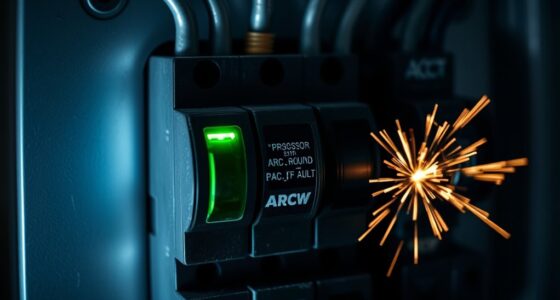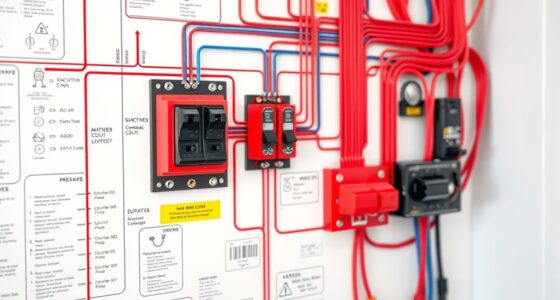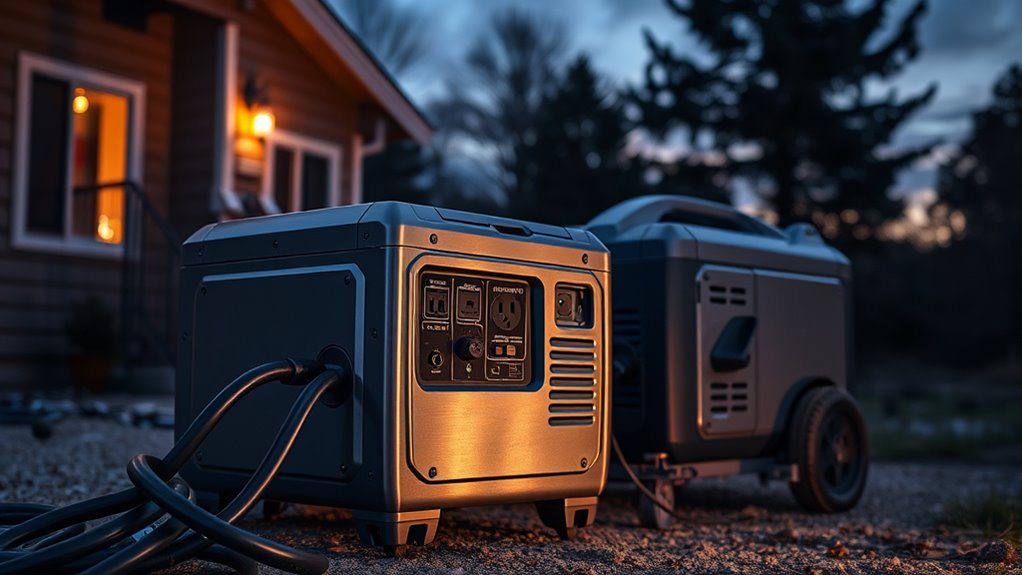

To safely run a generator during emergencies, always set it up outdoors in a well-ventilated area away from windows and vents, and never operate it inside enclosed spaces. Perform regular maintenance, check fuel levels, and inspect cords for damage. Turn off the generator before refueling, store fuel safely, and use a transfer switch to prevent back-feeding. Prioritize safety and proper procedures—continue further to learn essential tips for safe operation.
Key Takeaways
- Ensure the generator is well-maintained and in good condition before use.
- Operate the generator outdoors in a well-ventilated, stable area away from windows and vents.
- Use heavy-duty extension cords rated for outdoor use and avoid overloading the generator.
- Turn off all connected devices before shutting down and allow the generator to cool before refueling.
- Store fuel safely in approved containers and keep fire safety equipment nearby for emergencies.
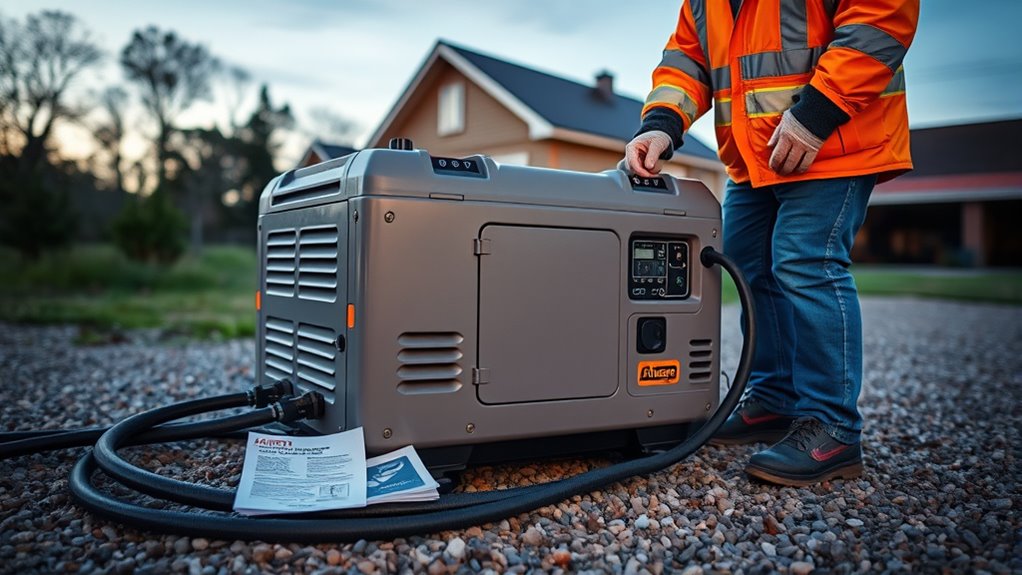
Are you prepared to rely on a generator during power outages? If so, understanding the essentials of safe generator use is vital for protecting yourself and your loved ones. Power safety should always come first, especially when operating a machine that produces dangerous levels of electricity. Before you even start your generator, make sure it’s in good condition and ready to run. Regular maintenance tips can help prevent breakdowns and ensure it functions efficiently when you need it most. Check the oil level, fuel supply, and air filter regularly, and follow the manufacturer’s instructions for routine inspections. Performing these simple maintenance tips not only prolongs your generator’s lifespan but also reduces the risk of accidents caused by mechanical failure.
When it’s time to use the generator, always position it outdoors in a well-ventilated area, away from windows, doors, and vents. Carbon monoxide buildup is a silent killer, and improper placement can lead to dangerous fumes entering your home. Never run the generator inside a garage, basement, or any enclosed space, even if doors and windows are open. To guarantee power safety, keep the generator on a flat, stable surface to prevent tipping or fuel leaks. Use heavy-duty extension cords rated for outdoor use, and avoid overloading the generator by plugging in only essential appliances. Overloading can cause the generator to overheat or malfunction, creating safety hazards.
During operation, stay alert and monitor the generator’s performance. Regularly inspect cords and connections for damage or wear. If you notice any issues, turn off the generator immediately and address the problem before restarting. When refueling, turn off the generator and let it cool down to prevent fuel spills or fires. Never add fuel while the generator is running or still hot. Store fuel in approved containers away from living areas, and keep a fire extinguisher nearby in case of emergencies. Remember that using a reliable transfer switch can significantly improve safety by preventing back-feeding and protecting utility workers.
Power safety also involves understanding how to shut down the generator properly. Turn off all connected devices before switching off the generator itself. Let it cool down completely before storing or performing any maintenance. Following these safety practices and maintenance tips will help you operate your generator reliably and safely during emergencies. Remember, a well-maintained and properly used generator can be a lifesaver, but only if you prioritize safety at every step. Staying vigilant, prepared, and informed ensures you can rely on your generator when power is most needed, safeguarding your home and family from potential hazards.

Generator Interlock Kit for Square D QO or Homeline 150 or 200 amp Panel – Generator Lockout Kit, Interlock Switch – 1 3/8" Spacing Between Main and Generator Breaker
PREMIUM MATERIALS – M35 Cobalt Drill Bit, Inox 304 Screws and Nuts, and high-quality Alloy Aluminum ensure long-lasting…
As an affiliate, we earn on qualifying purchases.
As an affiliate, we earn on qualifying purchases.
Frequently Asked Questions
Can I Run My Generator Indoors Safely?
You should never run your generator indoors because of the serious carbon monoxide risk. Poor indoor ventilation can cause dangerous buildup of this deadly gas, risking poisoning or death. Always operate your generator outside in a well-ventilated area, away from windows and doors. Keep it on a flat surface, and guarantee there’s enough airflow. Safety first—never compromise indoor ventilation when running your generator.
How Often Should I Perform Maintenance on My Generator?
They say, “A stitch in time saves nine,” and that applies to your generator too. You should perform regular maintenance based on your maintenance schedule, ideally every 50-100 hours of use or at least once a year. Keep troubleshooting tips in mind, like checking oil levels and inspecting spark plugs regularly. This keeps your generator running smoothly and extends its lifespan, ensuring you’re always prepared when needed most.
What Fuel Types Are Safest for Emergency Generators?
You should choose fuel types with high fuel stability and emission safety for your emergency generator. Gasoline, propane, and natural gas are common options, but gasoline can be less stable and produce higher emissions. Propane and natural gas tend to be safer because they burn cleaner and are more stable over time. Always store fuel properly, keep it in approved containers, and follow safety guidelines to prevent accidents.
How Do I Store Fuel for Long-Term Generator Use?
To store fuel for long-term generator use, you should use approved storage containers designed for fuel. Prior to storage, add fuel stabilization additives to prevent degradation over time. Keep the containers in a cool, dry, well-ventilated area away from heat sources, sparks, or flames. Regularly check and rotate your fuel supply to ensure freshness, and follow local regulations for storing and handling fuel safely.
Can I Connect My Generator Directly to My Home Wiring?
You shouldn’t connect your generator directly to your home wiring, as it can be dangerous and violates generator safety guidelines. Instead, use a transfer switch installed by a qualified electrician, which safely isolates your home wiring from the utility. This prevents backfeeding, reduces risk of electrocution, and guarantees safe generator operation. Always follow safety protocols and manufacturer instructions when integrating your generator with your home, and never bypass safety procedures.

POWGRN 100 ft 12/3 Outdoor Extension Cord Waterproof Heavy Duty with Lighted Indicator End 12 Gauge 3 Prong, Flexible Cold-Resistant Long Power Cord Outside, 15Amp 1875W SJTW Yellow ETL Listed
Up to 1875W Applications: Outdoor extension cord waterproof 100ft 12 gauge, 15 amp, 125 volts, 1875watts; Male power…
As an affiliate, we earn on qualifying purchases.
As an affiliate, we earn on qualifying purchases.
Conclusion
Now that you know how to safely run your generator, picture it as a steady heartbeat in the dark, pulsing life back into your home. When emergencies strike, it’s your vigilant companion, providing power and peace of mind. Handle it with care, respect its strength, and it’ll serve you reliably. Like a lighthouse guiding ships safely ashore, your responsible use guarantees you weather any storm with confidence and safety.

MUJURUR 100A Generator Transfer Switch, 24000W Heavy Duty Double Throw Safety Switch, 120/240V Manual Transfer Switch, Stronger Stability, Enlarged NEMA 3R Enclosure for Outdoor, 10-Year Warranty
【100 Amp Generator Transfer Switch】This transfer switch is perfect for shifting power from the utility grid to an…
As an affiliate, we earn on qualifying purchases.
As an affiliate, we earn on qualifying purchases.

4 Gallon Fuel Tank, Generator Gas Fuel Tank Universal Generator Gas Tank, Gasoline Storage Container with Spout Gauge Generator Petcock Filter 5-8KW Power Equipment
【HIGH-CAPACITY FUEL TANK】This durable 4-gallon gasoline tank is designed to extend generator runtime, making it ideal for long…
As an affiliate, we earn on qualifying purchases.
As an affiliate, we earn on qualifying purchases.