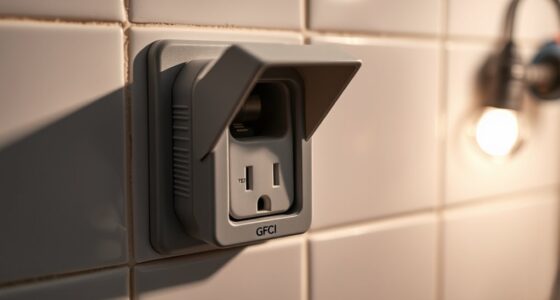

If you notice a burning smell coming from your electrical system, you should act immediately by unplugging affected devices and turning off the circuit breaker to prevent further damage or fire risk. Don’t ignore the scent, especially if it persists or worsens. Inspect appliances for visible damage and avoid using outlets with the odor. To stay safe, consider consulting a licensed electrician who can diagnose and fix wiring issues—you’ll find more essential tips to protect your home and prevent hazards.
Key Takeaways
- Immediately unplug affected devices and turn off the circuit breaker to prevent further damage or fire hazards.
- Avoid using the outlet or device until a qualified electrician inspects and repairs the issue.
- Inspect appliances for visible damage, melting, or burnt components, and replace or repair as needed.
- Spread electrical load across multiple outlets and circuits to reduce overload risk.
- Contact a licensed electrician promptly for thorough assessment and necessary repairs to ensure safety.
Have you ever noticed a strange, burning smell coming from your electrical devices or outlets? That scent is often a warning sign that something isn’t right with your wiring or appliances. Ignoring it could lead to serious hazards like electrical fires or damage to your home. One common cause of this smell is circuit overload, which happens when too many devices draw power through a single circuit at the same time. When you plug in multiple high-wattage appliances—like space heaters, toasters, or hairdryers—your electrical system can become overwhelmed. This strain causes the wires to heat up, sometimes emitting that unmistakable burning odor. If you notice this smell whenever you turn on certain appliances or plug into specific outlets, it’s a sign that your circuit may be overloaded.
A burning smell from outlets often signals circuit overload or appliance malfunction—act quickly to prevent hazards.
Another culprit behind that burning smell could be appliance malfunction. Faulty appliances with damaged wiring or internal components can overheat and emit a burning odor. You might notice this smell only when using particular devices, which signals that the appliance itself is the problem. Sometimes, internal wiring becomes frayed or burnt, causing electrical arcing or short circuits that produce a burning scent. If your appliance feels hot to the touch or if you see smoke or sparks, turn it off immediately and unplug it. Continuing to use malfunctioning appliances risks further damage or even electrical fires.
When you detect a burning smell, your first step should be to unplug the affected device or turn off the circuit breaker to cut power. Avoid using the outlet or device until you’ve identified and addressed the issue. If you suspect a circuit overload, reduce the number of devices plugged into that circuit, especially high-wattage ones. Spread out your electrical load across different outlets or circuits if possible. For appliance malfunction, inspect the device carefully—look for signs of damage, melting, or burnt components. If you’re unsure or if the smell persists after unplugging, it’s wise to call a licensed electrician. They can assess your wiring, identify underlying problems, and make necessary repairs to prevent future hazards. Recognizing early signs of wiring trouble can help prevent more serious issues like electrical fires and ensure your safety.
Never ignore a burning smell, even if you don’t see visible damage. It’s a clear warning that your electrical system is under stress or malfunctioning. Prompt action can prevent potential fires, protect your home, and keep everyone safe. Regular inspections of your wiring and appliances, along with cautious use, can help you catch these issues early before they escalate. Remember, electrical problems don’t improve on their own—they demand your immediate attention and professional help when needed.

First Alert SMI100-AC, Hardwire Interconnect Smoke Alarm with Battery Backup, 1-Pack
First Alert's Precision Detection advanced sensing technology complies with new industry standards to reduce cooking nuisance alarms and…
As an affiliate, we earn on qualifying purchases.
As an affiliate, we earn on qualifying purchases.
Frequently Asked Questions
Can a Burning Smell Come From Appliances Other Than Wiring?
Yes, a burning smell can come from appliances other than wiring, especially during an appliance malfunction or electrical overload. When an appliance overheats or malfunctions internally, it may emit a burning odor. To stay safe, unplug the appliance immediately, check for signs of damage, and avoid using it until a professional inspects it. This prevents potential electrical hazards and further damage to your home.
How Often Should I Have My Home’s Wiring Inspected?
You should have your home wiring inspected every 3 to 5 years to catch potential issues early. Ignoring signs of wiring trouble can lead to dangerous electrical fires. Regular inspection helps identify worn-out or damaged wiring, preventing costly repairs and safety hazards. Don’t wait for a burning smell or flickering lights—schedule your professional home wiring inspection now. Staying proactive keeps your home safe and wiring in top condition.
Are There DIY Fixes for Electrical Burning Smells?
You should avoid DIY electrical repairs if you notice a burning smell, as it signals serious wiring issues. Instead, focus on identifying wiring issues safely by unplugging affected devices and turning off the circuit breaker. Never attempt to fix electrical problems yourself unless you’re qualified. Call a licensed electrician to inspect and repair the wiring properly, ensuring your safety and preventing further damage. Your best move is professional help, not DIY fixes.
What Are the Long-Term Risks of Ignoring Wiring Issues?
Ignoring wiring issues is playing with fire, risking serious consequences. Long-term, it can compromise fire safety, leading to electrical fires or damage to your home’s wiring system. Over time, this neglect can cause electrical maintenance problems that become costlier to fix. Don’t brush off signs of trouble—addressing wiring issues promptly keeps your home safe and prevents small problems from turning into big disasters.
Is It Safe to Use Appliances After Detecting a Burning Smell?
You should not use appliances after detecting a burning smell, as it indicates potential wiring trouble and risks to appliance safety. First, unplug affected devices immediately, then conduct a wiring inspection to identify any damage. If you’re unsure or notice persistent issues, contact a professional electrician. Ignoring these signs can lead to fire hazards or further electrical damage, so prioritize safety and get expert help before resuming appliance use.

Aramox Manual Reset Circuit Breaker, 15A Thermal Switch, Current Overload Protection Device
【Multi-function】When the load exceeds the rated current, the reset button of the switch automatically shuts off the circuit…
As an affiliate, we earn on qualifying purchases.
As an affiliate, we earn on qualifying purchases.
Conclusion
If you notice a burning smell, don’t ignore it—think of it as a warning from your home’s soul, much like the siren’s call that saved many from unseen dangers. Acting quickly can prevent disaster and protect those you love. Remember, the safety of your home and family is worth more than any fleeting inconvenience. Trust your instincts, and when in doubt, call a professional—because sometimes, silence can be the loudest cry for help.

6Ft Power Strip Surge Protector – Yintar Extension Cord with 6 AC Outlets and 3 USB Ports for for Home, Office, Dorm Essentials, 1680 Joules, ETL Listed, (Black)
Power Strip with 6 Outlets & 3USB Ports: 6 AC Surge protector outlets(1680 Joules) including 1 Widely Spaced…
As an affiliate, we earn on qualifying purchases.
As an affiliate, we earn on qualifying purchases.

Klein Tools ET310KIT AC Circuit Breaker Finder Kit, Electric Tester, GFCI Tester, Leads, Adapters and Case
ACCURATE CIRCUIT BREAKER IDENTIFICATION: Quickly locate the correct breaker with precision using the transmitter and receiver of the…
As an affiliate, we earn on qualifying purchases.
As an affiliate, we earn on qualifying purchases.