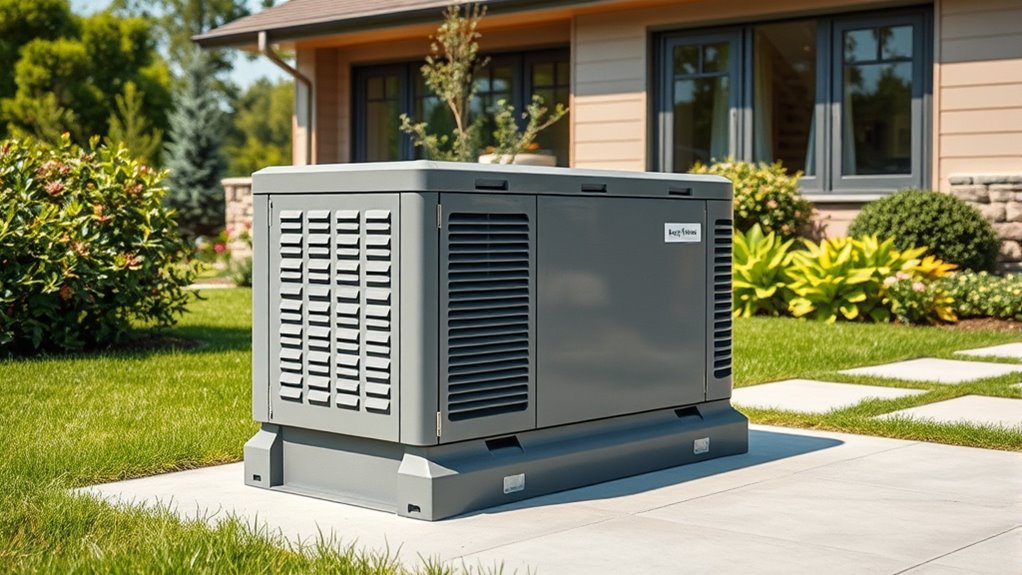

Choosing the right home backup generator means understanding your power needs, fuel options, and capacity. You’ll want a unit that can support essential appliances and electronics without overloading, so consider wattage requirements carefully. Decide on fuel types like propane or natural gas based on availability and convenience. Properly selecting and maintaining your generator guarantees reliable backup power during outages. Keep exploring to discover tips for making the best choice for your home’s needs.
Key Takeaways
- Assess your home’s essential appliances and total energy needs to determine the appropriate generator capacity.
- Choose a fuel type—gasoline, propane, diesel, or natural gas—based on availability, storage, and maintenance considerations.
- Match the generator’s wattage rating to your peak load requirements to ensure reliable operation during outages.
- Consider automatic transfer switches and installation requirements for seamless, safe power transfer during outages.
- Regularly maintain and test your generator to ensure it functions properly when needed.
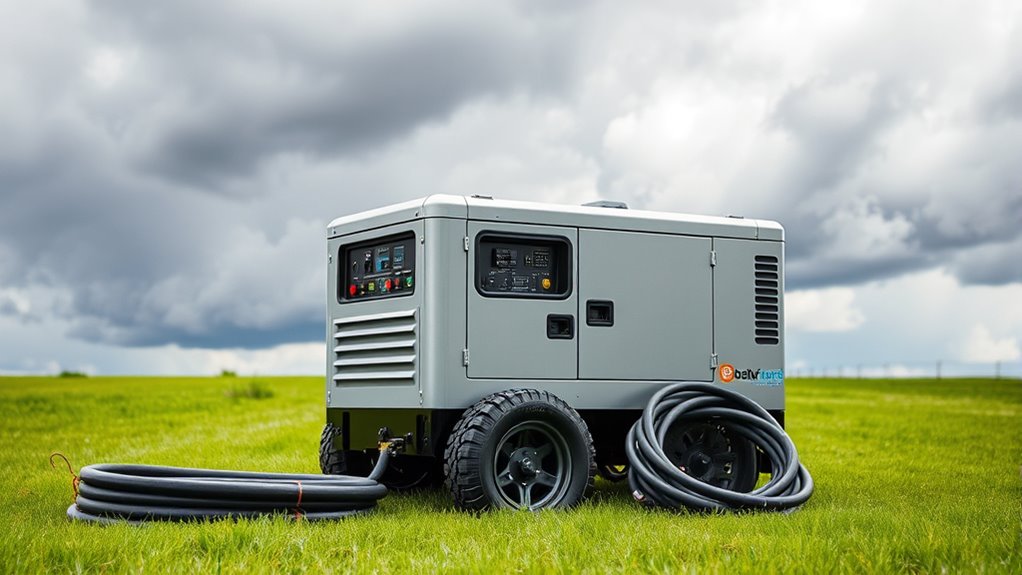
A backup generator is a indispensable device that keeps your home or business powered during outages. When choosing one, understanding its power capacity is essential, as it determines what appliances and systems you can run simultaneously. Power capacity is measured in watts or kilowatts and directly influences your generator’s ability to meet your energy needs. If you want to keep the lights on, refrigerator running, and a few essential outlets powered, you’ll need a generator with a sufficient wattage rating. For larger homes or businesses that require more power, a higher capacity unit ensures everything operates smoothly without overloads. Knowing your total energy consumption helps you pick a generator that can handle your peak load, providing peace of mind during storms or grid failures. Additionally, color accuracy in the generator’s components can impact the stability and quality of the power output, helping prevent damage to sensitive electronics.
Fuel types are another critical consideration that impacts your choice. Generators run on various fuels, each with its pros and cons. Gasoline-powered units are common for portable generators; they’re easy to find and generally affordable. However, gasoline has a shorter shelf life and can be more volatile to store long-term. Propane generators are a popular alternative, offering cleaner combustion and longer storage stability, making them suitable for backup use. They also tend to produce less maintenance issues over time. Diesel generators are known for their durability and higher power output, often used for larger applications or commercial settings. They’re more fuel-efficient for extended use but require more space and maintenance. There are also newer options, like natural gas generators, which connect directly to your home’s existing gas line, offering continuous fuel supply without the need for refueling. When selecting a fuel type, consider availability, storage, maintenance, and how often you’ll need to run the generator. If you’re concerned about fuel storage, a propane or natural gas generator might suit your needs better, as they can run for long periods without refueling.
home backup generator
As an affiliate, we earn on qualifying purchases.
As an affiliate, we earn on qualifying purchases.
Frequently Asked Questions
How Long Can a Backup Generator Run Continuously?
You can run a backup generator continuously for about 8 to 12 hours, depending on its fuel efficiency and load size. To prevent damage, avoid overworking it, and make sure it has enough fuel for the duration. Keep noise levels in mind, especially if you need to run it overnight or in a quiet neighborhood. Regular maintenance and proper fueling help maximize runtime and keep it operating smoothly.
Are There Specific Maintenance Requirements for Different Generator Types?
Ever wonder if all generators need the same upkeep? Yes, different types require specific maintenance routines. For example, standby generators need regular oil changes and coolant checks, while portable units might only need fuel system inspections. Proper generator maintenance guarantees peak fuel efficiency and longevity. Are you keeping up with your generator’s maintenance schedule? Regularly servicing your generator helps prevent breakdowns and keeps it running smoothly when you need it most.
What Safety Precautions Should I Follow When Operating a Generator?
When operating a generator, always follow safety precautions like proper generator installation and avoiding carbon monoxide buildup by operating outdoors in well-ventilated areas. Keep the generator dry and away from water sources, and never overload it. Use appropriate extension cords, and ensure emergency preparedness by having a fire extinguisher nearby. Regularly inspect the generator for maintenance needs, and never refuel while it’s running to prevent accidents.
Can I Connect Multiple Generators for Increased Power?
You can connect multiple generators for increased power, but it requires careful generator synchronization to guarantee they work together safely. You should also manage the power load properly to prevent overloads and damage. Use a transfer switch or a professional synchronization system to coordinate the generators, and always follow safety guidelines. Avoid daisy-chaining generators directly, as improper setup can pose serious risks to you and your equipment.
How Does Fuel Type Affect Generator Performance and Lifespan?
Fuel type is like the fuel in your car—some burn cleaner and last longer, affecting your generator’s performance and lifespan. Gasoline offers quick starts but needs frequent refueling, while diesel is more fuel-efficient and durable. Propane burns cleaner, reducing wear, and stores easily. Your choice impacts fuel efficiency, storage needs, and maintenance, so pick a type suited to your power needs and available fuel storage options for ideal performance.
automatic transfer switch for generator
As an affiliate, we earn on qualifying purchases.
As an affiliate, we earn on qualifying purchases.
Conclusion
Now that you know the basics of choosing and using a backup generator, you’re better prepared to keep your home running smoothly during outages. Remember, a backup generator isn’t just about convenience — it’s about peace of mind. So, aren’t you glad you took the time to learn how to keep your home powered? With the right generator, you can face any storm confidently, knowing you’re ready for whatever comes your way.
portable propane generator
As an affiliate, we earn on qualifying purchases.
As an affiliate, we earn on qualifying purchases.
home standby generator
As an affiliate, we earn on qualifying purchases.
As an affiliate, we earn on qualifying purchases.