To wash your walls and ceilings without damaging paint, start by gently dusting with a soft cloth or brush to remove loose dirt. Use a mild solution like dish soap mixed with warm water and apply it with a soft sponge or cloth, working in small sections from top to bottom. Rinse with clean water and dry thoroughly to prevent streaks. Carefully following these tips helps protect your paint, and continuing will reveal more expert techniques.

Get everyday essentials delivered free with Prime
- Fast, free delivery on millions of items
- Prime Video, Amazon Music and more included
- Member-only deals all year
Key Takeaways
- Identify your paint finish (flat, semi-gloss, satin) to select gentle cleaning methods.
- Dust surfaces thoroughly with a microfiber cloth or soft brush before wet cleaning.
- Use a mild soap solution and avoid harsh chemicals or abrasive scrubbers during washing.
- Work in small sections from top to bottom with a light touch, rinsing frequently.
- Dry walls immediately with a soft cloth to prevent streaks and moisture damage.
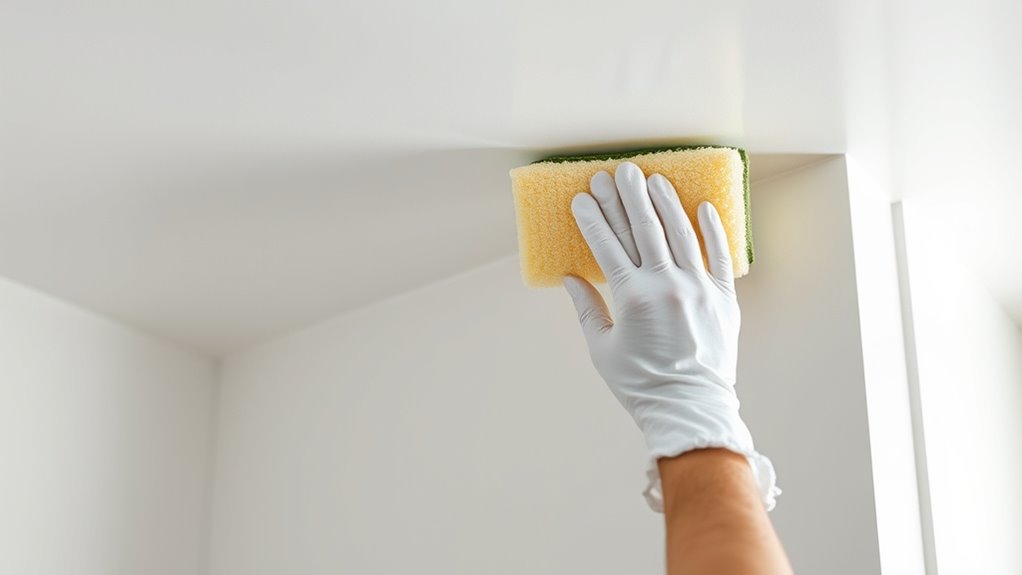
Cleaning walls and ceilings can be tricky, especially if you want to avoid damaging the paint. The key lies in choosing the right cleaning techniques that provide effective dirt removal without compromising your paint’s integrity. You need to be gentle but thorough, using methods tailored to protect your walls and ceilings from unnecessary wear or peeling. First, assess the type of paint and finish on your surface. Flat or matte paints are more delicate and require softer cleaning approaches, while semi-gloss or satin finishes can handle a bit more scrubbing. Knowing your surface helps you select the most appropriate cleaning techniques to ensure paint protection.
Start by dusting the surface with a microfiber cloth or a soft-bristled brush to remove loose dirt and cobwebs. This initial step minimizes the amount of grime that will later require wet cleaning, reducing the risk of streaks or paint damage. When it’s time to wash, opt for a gentle cleaning solution—mild dish soap mixed with warm water is usually enough for most surfaces. Avoid harsh chemicals or abrasive cleaners, as they can strip paint or cause discoloration. When applying the solution, use a sponge or soft cloth, and wring it out thoroughly so it’s damp, not soaked. Excess water can seep into seams or cracks, causing peeling or bubbling over time.
Dust surfaces first with a soft cloth to prevent damage during cleaning.
When cleaning, work in small sections, starting from the top and working your way down. Use a light touch, gently wiping the surface without applying too much pressure. Rinsing your cloth frequently to keep dirt from spreading around. For stubborn spots like grease or stains, you can add a small amount of vinegar to your cleaning solution, but always test on a small, inconspicuous area first. Rinsing with clean water afterward helps remove any soap residue that could attract more dirt. Additionally, proper ventilation during cleaning helps dry the surface quickly and prevents moisture buildup that could damage the paint.
To further protect your paint, dry the walls and ceilings with a clean towel or microfiber cloth immediately after washing. This step prevents streaks and water spots, which can sometimes lead to paint damage if left wet for too long. Remember, patience is essential—avoid scrubbing vigorously, and don’t rush through the process. Taking your time with gentle cleaning techniques ensures your paint remains intact and vibrant. Proper maintenance not only keeps your walls looking fresh but also prolongs the life of your paint, saving you money and hassle in the long run. By following these tips, you’ll effectively clean your walls and ceilings while safeguarding your paint’s beauty and durability.
As an affiliate, we earn on qualifying purchases.
Frequently Asked Questions
Can I Use a Pressure Washer on Painted Walls?
You can use a pressure washer on painted walls, but you should be cautious. The pressure washer risks damaging the paint if it’s too powerful or used improperly. To preserve the paint, set the pressure to a lower setting, keep the nozzle at a safe distance, and avoid spraying directly at seams or edges. This way, you clean effectively without risking paint peeling or chipping.
What Cleaning Products Are Safest for Delicate Paint?
You should opt for paint-safe cleaners like a mild dish soap diluted in water or specialized gentle cleaning solutions. These products are safe for delicate paint finishes. When cleaning, use gentle scrubbing techniques with a soft sponge or cloth to avoid damage. Avoid harsh chemicals and abrasive tools, which can strip or scratch the paint. Always test a small area first to confirm the cleaner won’t harm your walls or ceilings.
How Often Should I Wash Walls and Ceilings?
You should wash your walls and ceilings every 6 to 12 months to keep them fresh. Use gentle wall washing techniques, like a soft sponge or microfiber cloth, and avoid harsh scrubbing. For ceiling cleaning tips, start from the top and work down, using a mild cleaning solution. Regular maintenance prevents dirt buildup, keeps your paint looking new, and extends the life of your walls and ceilings.
Is It Necessary to Wear Protective Gear While Cleaning?
Think of protective gear as your shield in the cleaning battlefield. Yes, it’s necessary for cleaning safety. Wearing gloves and goggles keeps harmful dust, mold, or cleaning chemicals from harming your skin or eyes. Protective gear acts as your armor, preventing accidents and ensuring you clean effectively without worry. Prioritize your safety—wear your gear, stay protected, and turn cleaning into a safe, successful mission.
Can I Wash Walls With Just Water and a Cloth?
Yes, you can wash walls with just water and a cloth for gentle cleaning and wall maintenance. Use a soft, damp cloth to remove dust and light dirt without damaging the paint. Avoid harsh scrubbing or excessive moisture, which can cause paint damage. Regularly wipe your walls to keep them looking fresh and well-maintained, but always test a small area first to guarantee your method won’t harm the paint finish.
As an affiliate, we earn on qualifying purchases.
Conclusion
Now that you know how to clean your walls and ceilings without harming the paint, you can keep your home looking fresh and vibrant. Just remember, a gentle touch and the right tools make all the difference. Don’t be a Scrooge with your cleaning—treat your walls like fine art, appreciating their beauty. With patience and care, you’ll preserve their charm, proving that even in this modern age, a little old-fashioned attention still goes a long way.
mild dish soap for wall cleaning
As an affiliate, we earn on qualifying purchases.
As an affiliate, we earn on qualifying purchases.
As an affiliate, we earn on qualifying purchases.
Halloween Picks
halloween
As an affiliate, we earn on qualifying purchases.