
To degrease your kitchen like a pro, start by identifying grease hotspots such as stove surfaces, behind appliances, and walls near cooking zones. Gather effective degreasers, microfiber cloths, scrapers, and tools like steam cleaners. Clear surfaces, cover electronics, and make sure good ventilation. Use degreasers on stubborn spots, scrub floors and hidden areas, and clean ventilation systems thoroughly. Keep up with regular maintenance to prevent buildup—continue exploring for detailed steps to master a spotless, grease-free kitchen.
Key Takeaways
- Identify grease hotspots such as stove surfaces, behind appliances, and backsplash areas for targeted cleaning.
- Gather effective degreasers, microfiber cloths, brushes, and protective gear before starting.
- Remove surface residues by wiping with damp cloths and applying degreasing solutions, focusing on burners and knobs.
- Deep clean floors, walls, and hidden spots like behind appliances and under cabinets for thorough grease removal.
- Regularly maintain ventilation systems and clean filters to prevent grease buildup and ensure a hygienic kitchen environment.
Assessing Your Kitchen’s Grease Hotspots
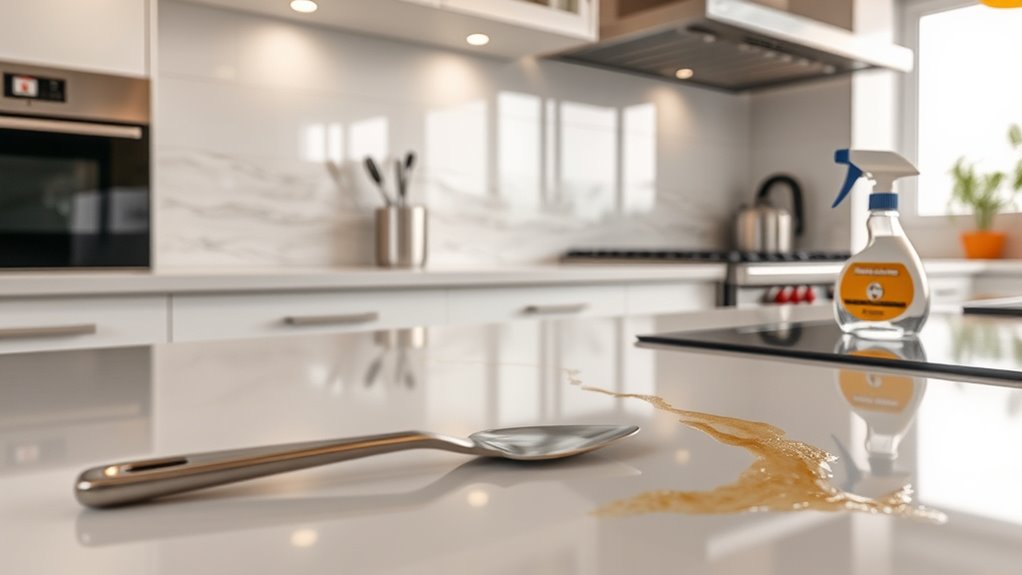
To effectively tackle grease buildup, you need to identify your kitchen’s main hotspots. Start by inspecting areas where cooking occurs regularly, like stove surfaces and oven interiors. Pay close attention to the range hood, as grease often accumulates on filters, vents, and exhaust fans. Check behind and under appliances such as fryers, mixers, and food processors—grease can hide in crevices and on handles. Walls and backsplashes near cooking stations tend to gather sticky residues from splatters. Don’t forget to examine the floors beneath cooking zones and around sinks, as grease drips and spills settle there. Additionally, understanding the importance of contrast ratio can help you appreciate how lighting conditions affect the visibility of grease stains, making them easier to spot and clean. Proper kitchen ventilation can further improve your cleaning strategy by reducing future grease buildup and maintaining a healthier environment. Incorporating lighting techniques can also make grease stains more visible during cleaning, ensuring no residue is missed. Being aware of natural cleaning solutions derived from herbalism applications can provide effective and eco-friendly options for degreasing. By pinpointing these hotspots, you’ll focus your cleaning efforts efficiently, making your deep clean more effective and reducing future grease buildup.
Gathering the Right Tools and Cleaning Products
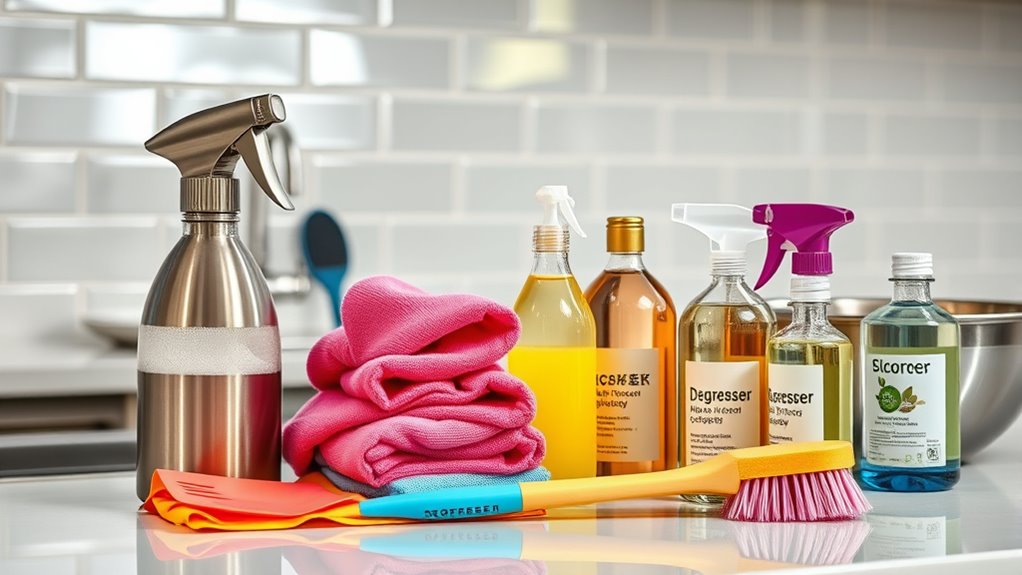
Equipping your kitchen with the right tools and cleaning products is essential for effective degreasing. Start with specialized degreasers designed for kitchen surfaces, including oven cleaners, stove degreasers, and heavy-duty floor cleaners. Use high-quality microfiber cloths, scrub brushes, and scrub pads to target stubborn grease spots. Steam cleaners are excellent for chemical-free cleaning in cracks and crevices. Keep disposable wipes and disinfectant sprays handy for quick touch-ups on counters, handles, and switches. Extension brushes help reach behind appliances and vents. Always select products labeled safe for food-contact surfaces to prevent contamination. Choosing tools that support proper air purifier maintenance can also enhance your overall kitchen environment. Having the right tools and products ready guarantees you can efficiently remove grease buildup, making your deep cleaning more effective and less time-consuming. Proper ventilation during cleaning also helps reduce airborne chemicals and ensures a safer environment. Additionally, understanding quality assurance principles can improve your cleaning routine by ensuring thoroughness and consistency. Regularly inspecting your cleaning supplies helps maintain cleaning standards and guarantees optimal performance during each use. Incorporating professional cleaning techniques can further boost the effectiveness of your degreasing efforts.
Preparing Your Workspace for Deep Cleaning
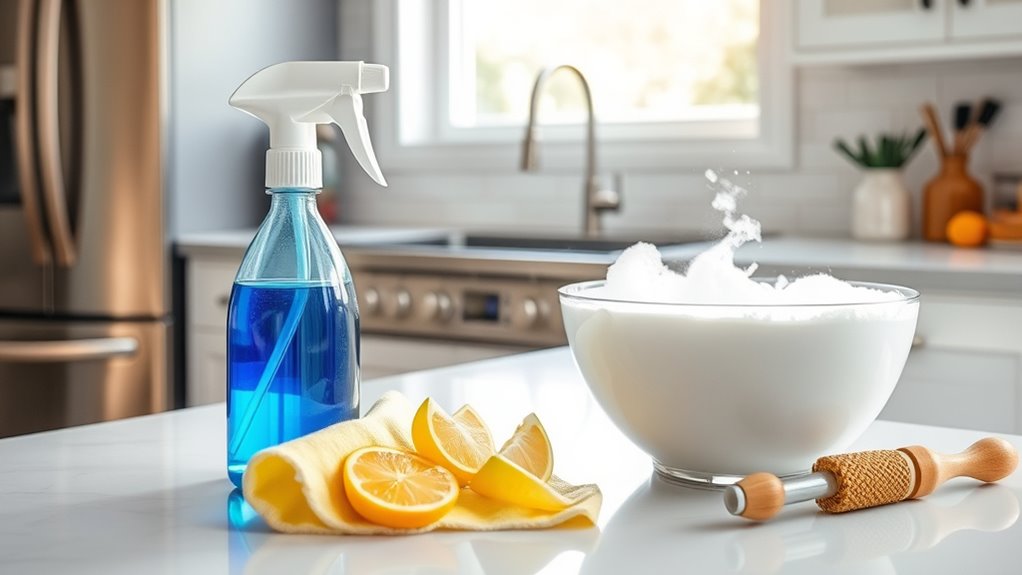
Start by clearing off your countertops to create open space for cleaning. Remove all food debris and dishes to prevent contamination and make wiping easier. Finally, protect surrounding areas with towels or plastic sheets to avoid damage from cleaning products or splashes. Consider covering nearby appliances with kitchen safety items to keep them clean and protected during the degreasing process. Additionally, ensuring proper ventilation can help reduce fumes and make the cleaning process more comfortable. Proper ventilation not only improves air quality but also helps dissipate lingering odors from cleaning agents. Using degreasing products designed specifically for kitchens can also enhance the effectiveness of your cleaning. For best results, choose electric power tools like handheld scrubbers to expedite stubborn grease removal.
Clear the Countertops
Have you ever noticed how cluttered countertops can hinder thorough cleaning? Clearing your countertops creates a clean workspace, making degreasing more effective. Start by removing small appliances, utensils, and any items that don’t belong. Wipe away crumbs, spills,, and loose debris with a damp cloth or paper towel. This step prevents debris from spreading during deep cleaning and exposes all surfaces needing attention. Organizing and putting away items in cabinets or drawers to free up space is also essential. Clearing the area also helps you identify grease buildup and stubborn spots that need extra scrubbing. Additionally, understanding how to use proper cleaning techniques effectively can improve your results. Employing appropriate tools can make the degreasing process faster and more thorough. Using effective degreasers designed specifically for kitchen surfaces can also enhance the cleaning process. Incorporating smart cleaning tools like automated vacuums or robotic scrubbers can help maintain a cleaner kitchen environment with less effort. Once your countertops are clear, you’ll be able to focus on applying degreasers and thoroughly cleaning every inch, ensuring a spotless, grease-free surface ready for the next cooking session.
Remove Food Debris
Why is removing food debris an essential step before deep cleaning? Because it clears the way for effective grease removal and prevents spreading bacteria. Start by gathering your trash bag and scraping off loose food particles from countertops, stovetops, and appliances. Use a scraper or a damp cloth to lift stuck-on residue without scratching surfaces. Check behind and under equipment for hidden debris that could cause odors or attract pests. Removing food debris also helps prevent cross-contamination, ensuring your deep cleaning targets grease buildup rather than leftover crumbs. Additionally, organizing your workspace creates a safer environment and makes the cleaning process more efficient. By eliminating these particles first, you make subsequent cleaning steps more thorough. Skipping this step can make degreasing less effective and compromise your kitchen’s hygiene and safety.
Protect Surrounding Areas
Preparing your workspace before deep cleaning is essential to prevent damage and guarantee safety throughout the process. Start by removing fragile items, utensils, and small appliances from counters and shelves. Cover nearby electronics, light fixtures, and furniture with plastic sheets or drop cloths to protect them from splashes and chemical fumes. Clear the area of clutter to ensure easy access to all surfaces and reduce trip hazards. Shut off power to appliances and unplug equipment that could be affected by moisture or chemicals. Ventilate the space by opening windows and turning on fans to disperse fumes. Proper preparation minimizes accidents, prevents damage, and creates a safe environment for effective, thorough cleaning.
Tackle Cooking Surfaces and Equipment
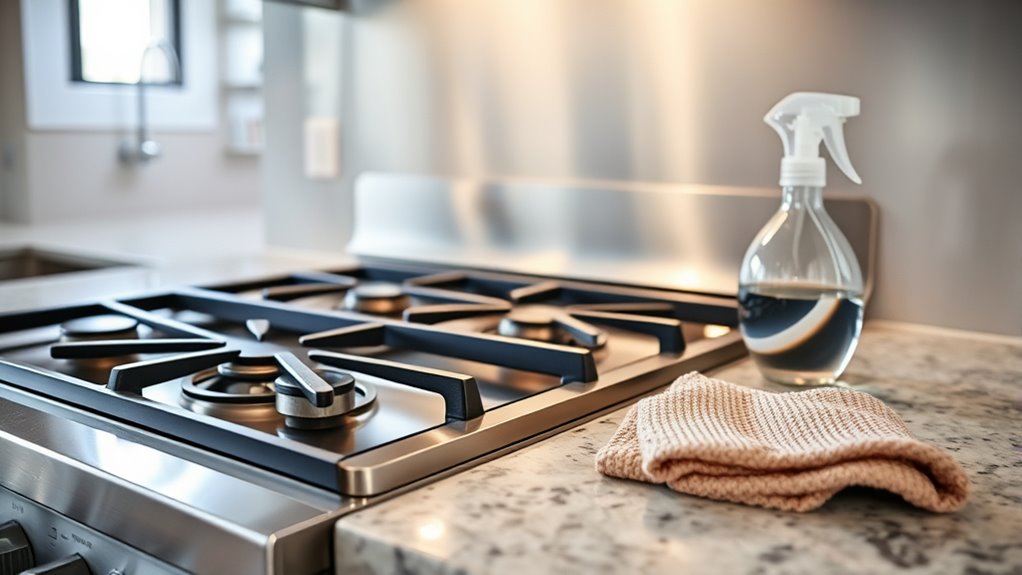
To effectively clean your cooking surfaces and equipment, you need to remove surface residues first. Using the right degreasers designed for kitchen grease helps break down oils and grime without damaging your appliances. This step guarantees a thorough clean and prepares everything for detailed sanitation.
Remove Surface Residues
Have you ever noticed how stubborn cooking residues cling to surfaces, making cleaning a challenge? To remove surface residues effectively, start by wiping down your countertops, stove, and appliances with a damp cloth. Use a degreasing cleaner suited for the surface—whether it’s ceramic, stainless steel, or glass—to break down greasy film. For tough spots, let the cleaner sit for a few minutes before scrubbing with a non-abrasive pad or brush. Pay special attention to burners, knobs, and drip trays where grease and food particles hide. Rinse thoroughly with clean water to remove any leftover residue and cleaner. Dry surfaces with a clean cloth to prevent streaks and streaks. Regularly removing surface residues keeps your kitchen hygienic and makes deep cleaning easier.
Use Appropriate Degreasers
Are you using the right degreasers to effectively clean your kitchen surfaces and equipment? Choosing the correct product guarantees grease breaks down without damaging your appliances.
- Use heavy-duty oven and grill cleaners for baked-on grease on racks and interior surfaces.
- Opt for enzymatic degreasers on porous surfaces like wooden cutting boards to eliminate residue without corrosion.
- Select chemical-based degreasers formulated specifically for stove tops and range hoods for quick, effective results.
- Rely on eco-friendly steam cleaners to remove grease from hard-to-reach areas without harsh chemicals.
Always read labels to match degreasers with your cleaning task. Proper selection prevents surface damage, enhances cleaning efficiency, and keeps your kitchen safe and spotless.
Clean Ventilation Systems and Exhaust Fans
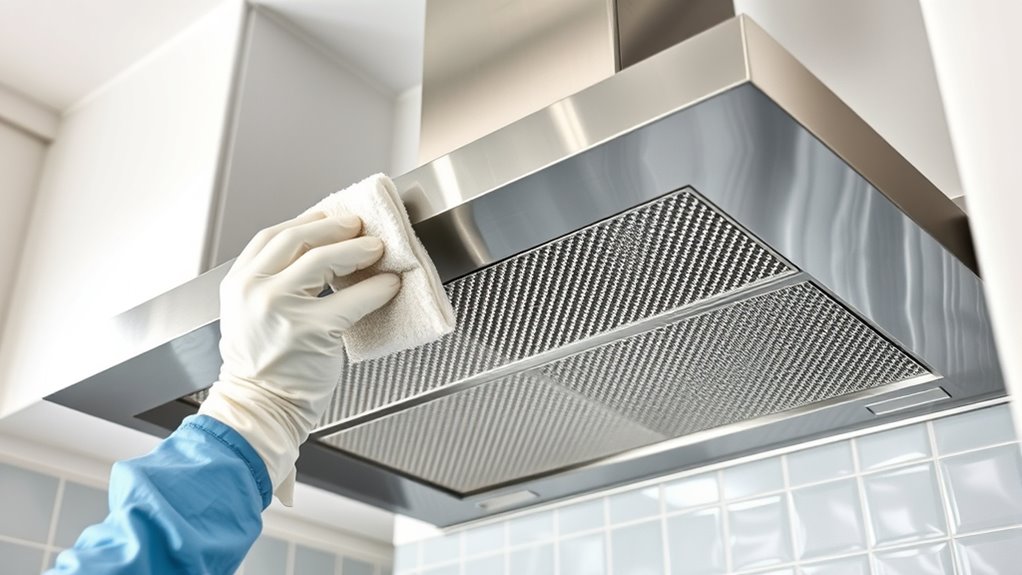
Cleaning ventilation systems and exhaust fans is essential for maintaining a safe and efficient kitchen environment. Grease and grime tend to build up in filters, ductwork, and fan blades, reducing airflow and increasing fire hazards. Start by turning off the system to prevent injury. Remove and soak filters in a degreasing solution, then scrub away built-up grease with a brush. Use a damp cloth or vacuum to clean accessible duct surfaces. For hard-to-reach areas, employ a steam cleaner or specialized cleaning tools to loosen stubborn grease. Wipe down fan blades thoroughly, ensuring no residue remains. Regular maintenance prevents foul odors, improves air quality, and reduces fire risks. Schedule deep cleanings monthly or more frequently in high-use kitchens for best safety and performance.
Deep Clean Floors, Walls, and Hidden Areas
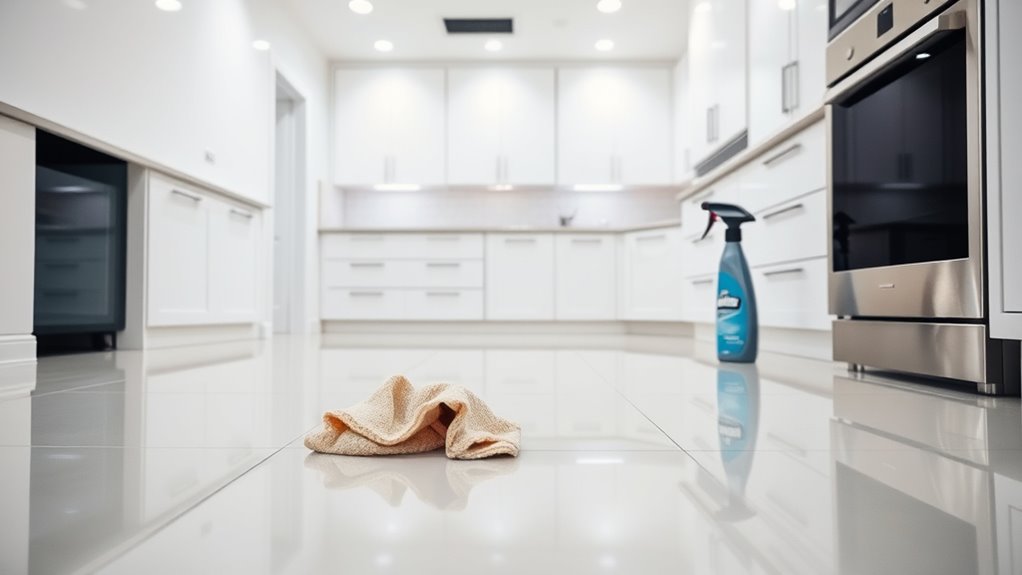
Deep cleaning floors, walls, and hidden areas is essential for maintaining a hygienic kitchen environment. Grease and grime tend to accumulate in these spaces, making regular cleaning vital.
- Start by sweeping or vacuuming floors to remove loose debris before applying a degreaser or floor cleaner. Use a stiff-bristled brush or scrubbing pad for stubborn spots.
- For walls, particularly near cooking zones, spray a degreasing solution and wipe down with a microfiber cloth. Pay special attention to corners and behind appliances where grease hides.
- Don’t forget hidden areas like grout lines, baseboards, and under cabinets. Use a small brush or toothbrush to scrub these spots thoroughly.
- Finally, clean and disinfect all surfaces to eliminate bacteria, ensuring your kitchen stays safe and spotless.
Degreasing Food Storage and Preparation Zones
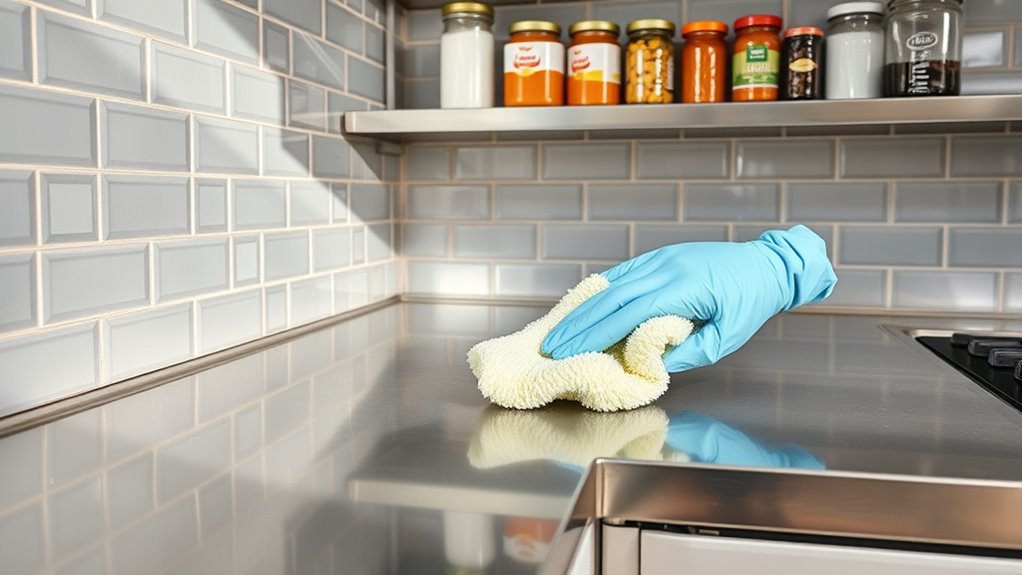
Grease and food residues frequently accumulate on food storage and preparation surfaces, making thorough degreasing essential for maintaining hygiene. You should regularly wipe down countertops, shelves, and inside drawers using a degreaser suited for kitchen grime. Pay special attention to handles, seals, and edges where grease hides. Use a scrub brush or microfiber cloth to target stubborn spots. To keep your cleaning effective, rotate your cleaning tools and disinfect them afterward. Here’s a quick guide:
| Surface Area | Recommended Tool | Key Tip |
|---|---|---|
| Pantry shelves | Microfiber cloth | Remove crumbs first |
| Inside drawers | Scrubbing pad | Focus on corners |
| Handles and knobs | Disinfectant wipes | Don’t skip these high-touch |
| Food prep surfaces | Degreasing spray | Rinse and dry thoroughly |
Final Sanitizing and Inspection
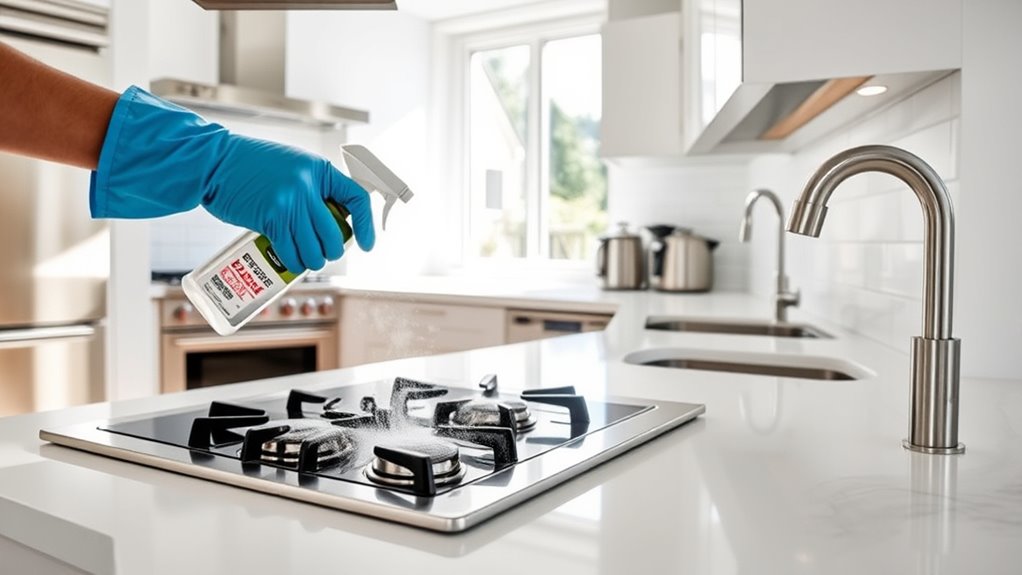
Before concluding your kitchen degreasing process, it’s essential to conduct a thorough sanitizing and inspection to guarantee all surfaces are hygienic and free of residue. First, wipe down all surfaces with a food-safe sanitizer to eliminate bacteria and lingering grease. Next, inspect high-touch areas like handles, switches, and knobs for missed spots or buildup. Third, check ventilation filters, ducts, and exhaust fans to ensure no grease remains that could pose fire hazards or air quality issues. Finally, verify that all appliances are clean, functional, and free of grease.
Ensure all surfaces are sanitized, inspect for residue, and verify ventilation and appliances are grease-free.
- Confirm all surfaces are sanitized and visibly clean
- Inspect for any missed grease or residue
- Check ventilation and exhaust systems
- Ensure appliances are spotless and in working order
Establishing a Regular Maintenance Routine
Establishing a regular maintenance routine is essential for keeping your kitchen consistently clean and safe. You should develop a schedule that includes daily tasks like wiping counters, cleaning handles, and sanitizing prep surfaces to prevent grease buildup. Weekly, focus on degreasing appliances, cleaning vent filters, and scrubbing floors and grout lines. Don’t forget to check and clean grease traps and exhaust systems to prevent fire hazards and odors. Use the right tools—such as degreasers, steam cleaners, and scrub brushes—and rotate cloths and towels to avoid cross-contamination. Keep a detailed log of cleaning activities and adjust your routine based on how busy your kitchen gets. Consistency in maintenance stops grease from accumulating, making deep cleaning easier and ensuring your kitchen remains hygienic and safe.
Frequently Asked Questions
What Are the Safest Degreasing Methods for Delicate Kitchen Surfaces?
For delicate kitchen surfaces, you should opt for gentle degreasing methods like warm water with a mild dish soap or a vinegar-water solution. Use soft cloths or sponges to avoid scratches, and always test a small area first. Steer clear of harsh chemicals or abrasive scrubbers, as they can damage surfaces. Regularly rinsing and drying helps prevent residue buildup without risking surface harm.
How Can I Remove Stubborn Grease Stains Effectively?
Oh, stuck with grease that’s clingier than your ex’s promises? You can tackle stubborn stains by applying a specialized degreaser directly, letting it sit to break down the grime. Scrub with a stiff brush or abrasive pad, then wipe clean with a damp cloth. For tough spots, repeat the process or try a steam cleaner—nothing beats hot steam for melting away the most rebellious grease!
Which Eco-Friendly Cleaning Products Are Best for Degreasing?
You should choose eco-friendly products like plant-based degreasers, white vinegar, and baking soda for effective kitchen degreasing. These natural options break down grease without harmful chemicals, making them safe for you and the environment. Use vinegar diluted with water for countertops and appliances, and sprinkle baking soda on greasy surfaces before scrubbing. Steam cleaners are also eco-friendly, killing bacteria without chemicals, and are excellent for tough spots.
How Often Should Ventilation Systems Be Professionally Cleaned?
You should have your ventilation systems professionally cleaned every three to six months. This schedule helps prevent grease buildup, which can cause fire hazards and reduce air quality. If your kitchen sees heavy cooking or high grease production, consider cleaning more frequently. Regular professional cleaning guarantees filters, ductwork, and exhaust fans stay efficient, maintaining a safe, hygienic environment and complying with health regulations.
What PPE Should Staff Wear During Heavy-Duty Degreasing?
Think of PPE as your shield in the battlefield of grease. During heavy-duty degreasing, you should wear chemical-resistant gloves to prevent skin irritation, safety goggles to protect your eyes from splashes, and a respirator mask if fumes are present. Also, don a long-sleeved, waterproof apron to guard your clothing. These precautions keep you safe from harmful chemicals, ensuring your cleaning mission is both effective and protected.
Conclusion
A thorough deep clean transforms your kitchen into a spotless, grease-free space. Remember, “A clean kitchen is a happy kitchen,” so keep up with regular maintenance to prevent buildup. Staying proactive makes deep cleaning easier and more effective, saving you time and effort in the long run. With these tips, you’ll maintain a fresh, hygienic environment where cooking feels like a breeze. Consistency is key—don’t wait until grease takes over; tackle it now.