

To keep spiders out naturally, try using essential oils like peppermint, eucalyptus, or citronella by spritzing them around windows, doors, and corners. You can also place citrus peels or crushed garlic near entry points for additional protection. Vinegar sprays with cinnamon oil work well, and keeping indoor plants like lavender and mint can repel spiders. Regularly cleaning and sealing cracks helps prevent their entry—discover more effective tips to fully keep spiders at bay.
Key Takeaways
- Use essential oils like peppermint, eucalyptus, or citronella in sprays around entry points and corners to deter spiders naturally.
- Rub citrus peels or crushed garlic along windows, doorways, and skirting boards to repel spiders with strong scents.
- Keep indoor areas clean by vacuuming regularly and sealing cracks to eliminate hiding spots and entry points.
- Incorporate spider-repelling plants such as mint, lavender, or thyme near windows and doorways for continuous scent barriers.
- Install mesh screens on windows and vents and reduce outdoor insect attraction to minimize indoor spider entry.
Harnessing Essential Oils for Spider Deterrence

Harnessing essential oils is an effective natural method to keep spiders at bay. You can use scents like peppermint, spearmint, citronella, cinnamon, and cloves, which spiders actively avoid. For indoor use, add 15-20 drops of peppermint oil to a spray bottle filled with water and spritz around doorways, windows, and corners. Rotating different oils prevents spiders from getting used to the scent, maintaining their repellent effect. Planting eucalyptus trees nearby releases a strong medicinal smell that wards off spiders naturally. Using essential oils regularly, especially during peak seasons, boosts your defenses without chemicals. Remember to keep sprays out of children’s and pets’ reach, as concentrated oils can be potent. Consistency is key to maintaining a spider-free home with these natural remedies.
Using Citrus and Garlic Solutions Effectively

Citrus and garlic solutions are simple, natural ways to repel spiders effectively. You can use citrus peels, like oranges and lemons, by rubbing them along skirting boards, windows, and shelves to deter spiders. Replacing or invigorating peels regularly maintains their scent and effectiveness. Garlic, despite its pungent smell, is also effective; placing crushed cloves in spray bottles filled with water allows you to spray corners, floors, and entry points where spiders may hide. To maximize results, consider these tips:
Use citrus peels and garlic sprays to naturally repel spiders effectively.
- Use fresh citrus peels weekly for continuous scent
- Combine garlic with water for a potent spray
- Focus on vulnerable areas like door thresholds and window sills
- Understanding natural pest control methods can help you find additional ways to keep your home free of unwanted pests.
- Regularly inspecting and maintaining these areas ensures the repellents remain effective and prevent infestations.
- Incorporating natural repellents into your routine can enhance your overall pest management strategy.
Crafting Vinegar-Based Repellent Sprays
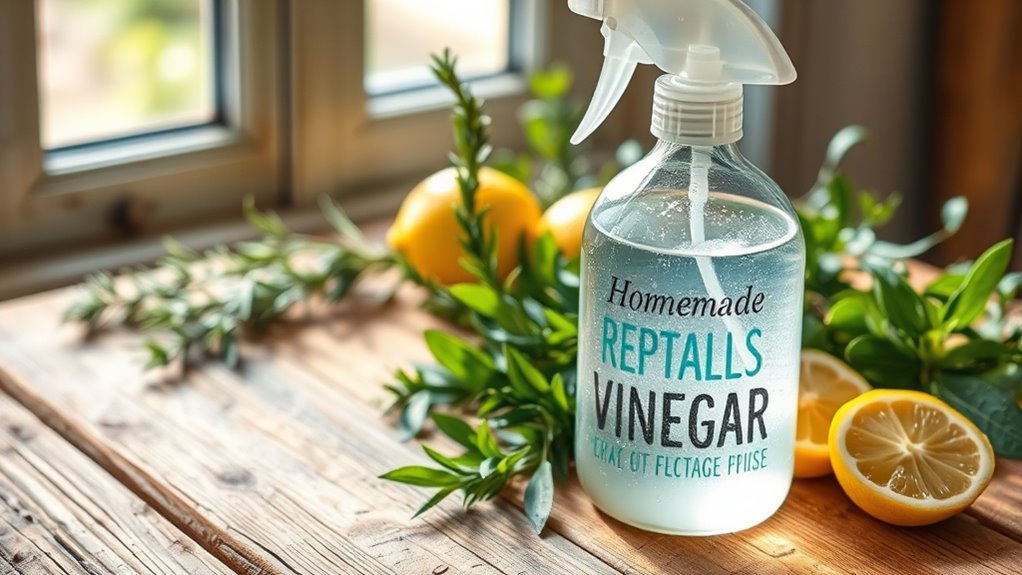
Vinegar-based sprays offer an effective and natural way to repel spiders while avoiding the strong scents of citrus and garlic solutions. To make your own, mix equal parts white vinegar and water in a spray bottle. For added potency, include 30 drops of cinnamon essential oil, which not only repels spiders but also kills them on contact. Shake well before each use. Spray this mixture along corners, cracks, window sills, and other entry points where spiders tend to crawl. You can also add a few drops of apple cider vinegar for extra effectiveness. Test the spray on a small area first to prevent staining. Reapply weekly or after cleaning to maintain a spider-free environment. Store the spray out of children’s and pets’ reach. Incorporating natural repellents aligns with sustainable solutions that promote eco-friendly pest management. Using safe and effective methods helps protect your household while maintaining an eco-conscious approach. Additionally, maintaining cleanliness and clutter control can significantly reduce spider habitats indoors. Implementing these natural methods can also reduce reliance on chemical pesticides, supporting environmentally friendly pest control practices.
Incorporating Indoor Plants as Natural Barriers

Indoor plants like mint, thyme, and lavender can serve as natural barriers against spiders by releasing scents that repel them. Placing these plants near windows, doorways, or in corners creates a continuous, subtle fragrance that deters spiders from settling indoors. These plants not only act as natural repellents but also enhance your home’s ambiance and air quality. To maximize effectiveness, you should:
- Position mint and lavender on sunny windowsills for year-round protection
- Use thyme in areas prone to spider activity, like basements or closets
- Combine multiple plants for a layered scent barrier
Regularly caring for these plants ensures they remain healthy and fragrant, maintaining their spider-repelling properties. Incorporating indoor plants offers a safe, attractive way to naturally keep spiders at bay without chemicals. Additionally, choosing plants with natural pest-repellent properties can further enhance your indoor defense strategy.
Implementing Practical Maintenance and Environmental Strategies

Maintaining a clean and organized home environment considerably boosts your efforts to keep spiders away. Regularly vacuum floors, corners, and hidden areas to remove webs, egg sacs, and spider residents. Seal cracks around windows, doors, and foundations to block entry points. Clear clutter, especially in storage spaces, to eliminate dark, undisturbed hiding spots. Keep outdoor areas tidy by removing debris, woodpiles, and dense vegetation near your home, which attract spiders. Install mesh screens on windows and vents to prevent entry. Proper lighting also helps: switch to yellow or sodium vapor bulbs outdoors, as bright white lights attract insects, which in turn draw spiders. Understanding spider behavior can further inform effective exclusion strategies. Additionally, knowing spider habitat preferences enables targeted efforts to make your home less attractive to these arachnids. Regularly inspecting and identifying spider species can help tailor your prevention techniques more effectively. Recognizing spider entry points allows you to focus on the most vulnerable areas of your home for sealing and exclusion. Being aware of common hiding spots helps in thorough inspections and removal efforts.
Frequently Asked Questions
Are Essential Oils Safe for Pets and Children Indoors?
You should be cautious with essential oils indoors if you have pets or children. Peppermint, lavender, and rose oils are generally safe when used properly, but tea tree oil can be toxic to dogs and cats. Always dilute oils and keep sprays out of reach. It’s best to consult a vet or doctor before using essential oils, especially around vulnerable pets or kids, to guarantee safety.
How Long Do Natural Repellents Typically Remain Effective?
Think of natural repellents as a gentle but persistent breeze pushing away spiders. Typically, their effectiveness lasts about a week with regular reapplication, especially during peak spider seasons. For best results, re-spray every few days, rotating scents to stay ahead of their adaptability. Consistent maintenance keeps the scent trail fresh, creating a barrier that spiders find unappealing, so your home remains less inviting over time.
Can I Combine Multiple Natural Methods for Better Results?
Yes, you can combine multiple natural methods for better results. For example, use essential oils like peppermint or lavender in sprays, rub citrus peels along window sills, and place mint or thyme plants nearby. Rotating scents prevents spiders from adapting and boosts effectiveness. Regularly reapply sprays, refresh plants, and seal entry points to maximize protection. Combining these strategies creates a more hostile environment, making it harder for spiders to settle in your home.
Do Certain Plant Species Attract or Repel Spiders?
Think of plants as nature’s own spider repellents or magnets. Certain species like mint, lavender, and thyme repel spiders, acting like silent guardians in your home. Conversely, some plants, like certain types of trees or dense shrubs, can attract spiders by providing shelter. To keep your space spider-free, plant the right herbs indoors or nearby, and remove dense, unkempt greenery that invites these unwelcome guests.
What Are Signs of a Significant Spider Infestation Indoors?
You’ll notice a significant spider infestation indoors if you see frequent webs in corners, along ceilings, or on furniture. Spotting multiple spiders, especially in dark, undisturbed areas, is a clear sign. You might also find egg sacs or small cobwebs cluttering spaces. Increased spider activity often indicates a larger problem, so regularly check hidden spots, and act quickly to prevent the infestation from spreading further.
Conclusion
By using natural methods like essential oils, citrus, garlic, and indoor plants, you can effectively keep spiders at bay. Regular maintenance and environmental tweaks make a big difference, too. Did you know that over 90% of spider species are harmless to humans? So, with these simple strategies, you can create a spider-free home while avoiding harsh chemicals. Keep these tips in mind, and enjoy a safer, pest-free space naturally.