
To keep bathroom mildew at bay, guarantee you maintain proper ventilation during and after showers by using exhaust fans or opening windows. Control humidity levels by running fans for at least 30 minutes afterward and keeping humidity between 30-50%. Clean and dry surfaces regularly, fixing leaks and sealing cracks to prevent moisture buildup. Monitoring moisture and addressing odors early can help prevent mold from hiding. Keep your bathroom dry and fresh—if you want to learn more, continue exploring effective mold prevention techniques.
Key Takeaways
- Improve bathroom ventilation by using exhaust fans and opening windows during and after showers.
- Keep humidity levels between 30% and 50% with dehumidifiers and moisture monitors.
- Regularly clean surfaces with vinegar or specialized mold cleaners, focusing on grout and corners.
- Repair leaks, seal cracks, and ensure proper insulation to prevent moisture intrusion and condensation.
- Address any musty odors or visible mold early with prompt cleaning and moisture control to prevent spread.
bathroom exhaust fan
As an affiliate, we earn on qualifying purchases.
As an affiliate, we earn on qualifying purchases.
Understanding Why Bathrooms Are Prone to Mold
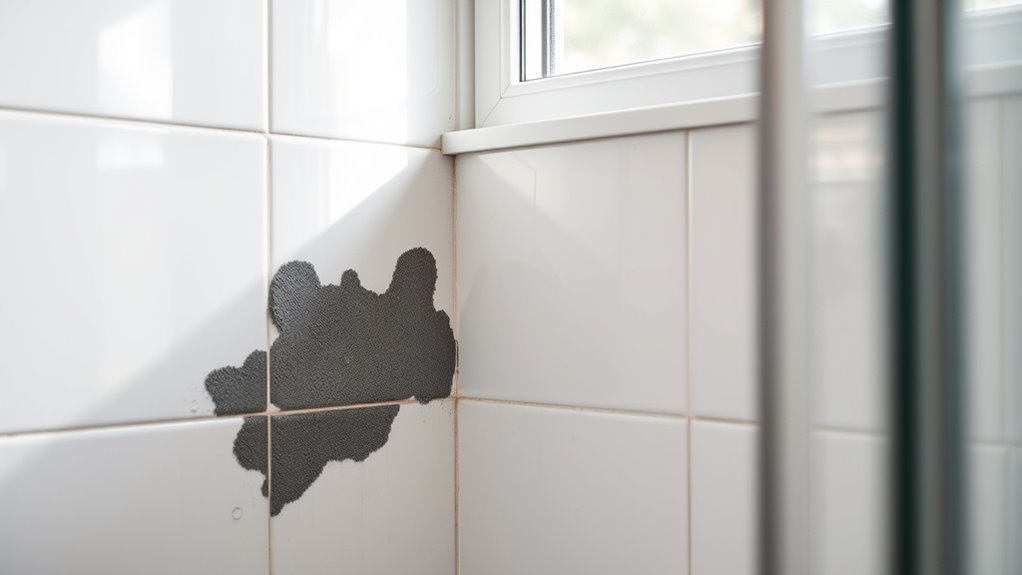
Bathrooms are particularly prone to mold growth because they provide a consistently high-moisture environment from frequent water use, steam, and condensation. Every shower, bath, or sink use releases moisture into the air, creating ideal conditions for mold spores to thrive. Poor ventilation traps this moisture, allowing humidity levels to rise above 50–60%, which markedly increases mold risk. Additionally, surfaces like walls, ceilings, and floors often collect soap scum, dirt, and moisture, providing nutrients for mold spores. Cold spots and heat from showers or baths cause condensation on surfaces, further encouraging mold growth. Without proper airflow or moisture control measures, these damp conditions persist, making bathrooms a prime spot for mold to develop and spread silently. Implementing ventilation systems such as exhaust fans or open windows can significantly reduce moisture buildup. Maintaining proper moisture levels and moisture control measures is essential for preventing mold buildup over time. Implementing humidity control devices can also significantly reduce the likelihood of mold proliferation. Regular cleaning and moisture monitoring can help catch potential issues early before mold becomes a problem.
moisture meter for home
As an affiliate, we earn on qualifying purchases.
As an affiliate, we earn on qualifying purchases.
Signs and Invisible Indicators of Mold Growth
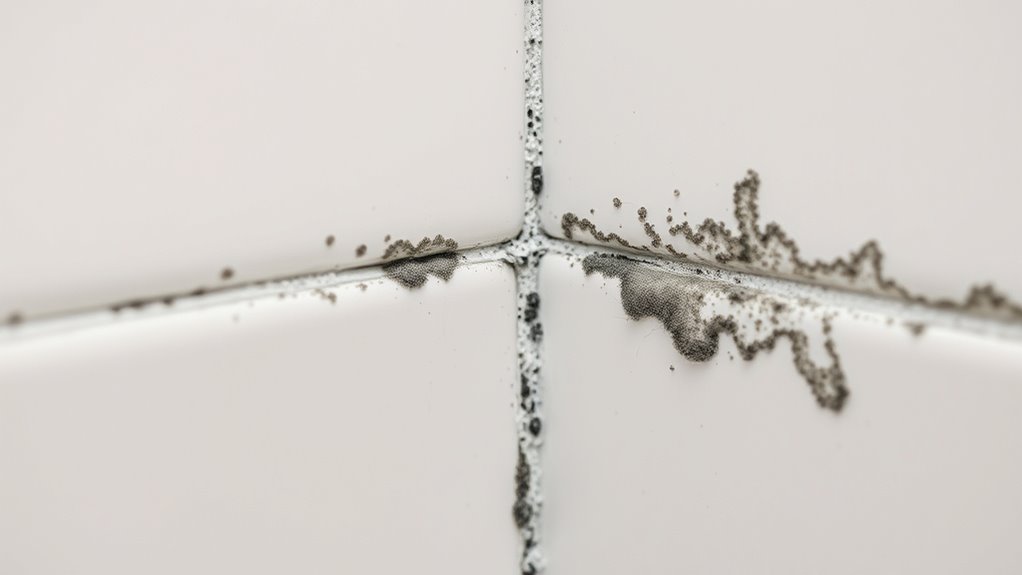
You might notice a persistent musty smell even when your bathroom looks clean—that’s often an invisible sign of hidden mold. Changes in surface color or texture, like dark spots or peeling paint, can also signal mold growth. Keeping an eye out for these signs helps catch mold early before it becomes a bigger problem. Additionally, moisture control and proper ventilation are vital in preventing mold from developing in the first place home environment factors. Regular inspections and understanding mold growth indicators can further aid in early detection and prevention. Being aware of ventilation systems and their maintenance can also significantly reduce the risk of mold development. Recognizing environmental conditions that promote mold growth allows for more effective preventative measures. Moreover, considering whole-house water filtration systems can help reduce excess moisture and improve indoor air quality, further deterring mold proliferation.
Hidden Mold Indicators
Invisible mold growth often goes unnoticed because it doesn’t always produce obvious signs like visible stains or black spots. You might be unaware of mold lurking behind walls or under flooring, silently releasing spores. You can also check for moisture levels in your home, as high moisture fosters mold growth. Watch for these hidden indicators:
- Persistent musty smell that doesn’t go away with cleaning or ventilation.
- Condensation buildup on cold surfaces, indicating excess moisture.
- Peeling paint or wallpaper, which can signal underlying mold issues.
- Soft or discolored drywall or ceiling areas that feel damp or spongy to touch.
- Unexplained health symptoms such as allergies or respiratory problems may also point to mold growth lurking out of sight.
- Additionally, monitoring humidity levels regularly can help identify conditions conducive to mold development. Maintaining proper airflow is essential for reducing indoor humidity and preventing mold spread.
- Regular inspections can help identify hidden mold before it causes significant damage or health issues.
These subtle clues suggest mold may be growing out of sight. Regular inspections and monitoring moisture levels help catch hidden mold early, preventing bigger problems down the line.
Musty Odor Signs
A persistent musty odor is often one of the clearest warning signs of unseen mold growth lurking behind walls or under floors. You might notice this smell even when there’s no visible mold or water damage. The odor results from mold spores releasing volatile organic compounds (VOCs), which spread through the air. If the smell lingers after cleaning or ventilation, it indicates mold may be growing out of sight. Sometimes, the odor intensifies in humid or poorly ventilated areas, signaling increased mold activity. Trust your nose—this invisible indicator often appears before any visible signs. Addressing musty odors promptly by improving ventilation, controlling humidity, and inspecting hidden areas can prevent mold from spreading further and causing health issues or structural damage. Modern kitchen technology can assist in monitoring humidity levels and air quality to help prevent mold growth. Additionally, using humidity control devices can help maintain optimal moisture levels and inhibit mold development. Regularly inspecting hidden areas behind walls and under floors can also catch mold early before it becomes a significant problem. Employing mold detection tools can further aid in early identification and remediation efforts.
Visible Surface Changes
Visible surface changes are among the most noticeable signs of mold growth in bathrooms. You might spot dark, fuzzy patches on ceilings, walls, or around fixtures. Discoloration may appear as brown, black, or green stains that seem to spread over time. You could also notice peeling or bubbling paint and wallpaper, indicating moisture behind surfaces. Sometimes, mold reveals itself through a slimy or sticky texture when you touch affected areas. Understanding mold growth patterns can help you identify early warning signs before the problem worsens. Being aware of moisture accumulation is crucial, as it creates the ideal environment for mold to thrive and spread unnoticed. These signs signal hidden mold lurking behind surfaces, requiring prompt action.
mold and mildew cleaner
As an affiliate, we earn on qualifying purchases.
As an affiliate, we earn on qualifying purchases.
The Importance of Proper Ventilation During and After Showers
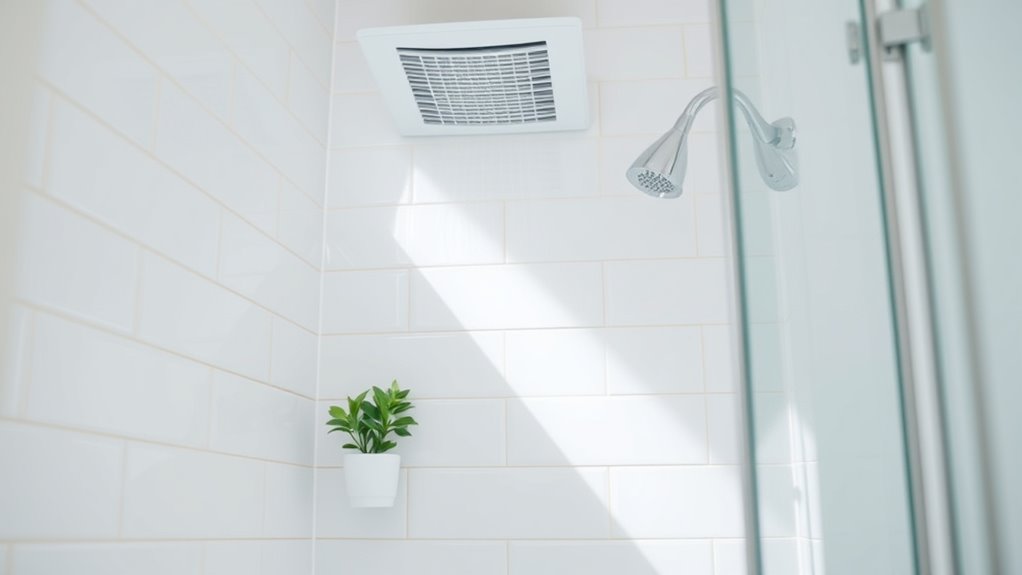
You should run your exhaust fan during and for at least 30 minutes after showering to remove excess moisture. If outdoor humidity is below 50%, keeping windows open during and after showers can also help disperse steam. Make sure your ventilation vents outside properly to prevent mold spores from lingering and spreading.
Run Exhaust Fans During
Running exhaust fans during and after showering is essential for controlling bathroom humidity and preventing mold growth. When you turn on the fan, it actively pulls moist air out of the space, reducing condensation and damp surfaces. This helps keep humidity levels below the 50-60% threshold that promotes mold. Imagine:
- The fan whirring loudly as steam quickly escapes through the vent.
- Warm, humid air being replaced by fresh, dry air from outside.
- Water droplets on ceilings and walls drying faster.
- The bathroom feeling less damp and more comfortable after your shower.
Keep Windows Open When
Opening windows during and after showers helps to substantially reduce indoor humidity levels by allowing moist air to escape and fresh air to enter. This natural ventilation quickly disperses steam and prevents humidity from accumulating on walls and ceilings, where mold spores thrive. When outdoor air is less humid—below 50%—keeping windows open enhances airflow and keeps moisture levels in check. It’s especially effective in bathrooms with good cross-ventilation or when combined with exhaust fans. Remember, if outdoor humidity is high, opening windows might introduce more moisture, so monitor conditions. Proper ventilation guarantees that damp air doesn’t linger, lowering mold growth risk and maintaining a healthier bathroom environment. Regularly opening windows is a simple, effective step in mold prevention.
Vent Outside Properly
Properly venting outside during and after showers is crucial for controlling bathroom humidity and preventing mold growth. When you guarantee moist air escapes, you reduce the chances of condensation and mold spores settling. To do this effectively, consider these steps:
- Turn on your exhaust fan before starting your shower to preempt humidity buildup.
- Keep the fan running for at least 30 minutes afterward to clear residual moisture.
- Make sure your fan vents directly outside, not into an attic or crawl space.
- When possible, open a window or door during and after showers to disperse steam into fresh air.
bathroom dehumidifier
As an affiliate, we earn on qualifying purchases.
As an affiliate, we earn on qualifying purchases.
Monitoring and Managing Bathroom Humidity Levels
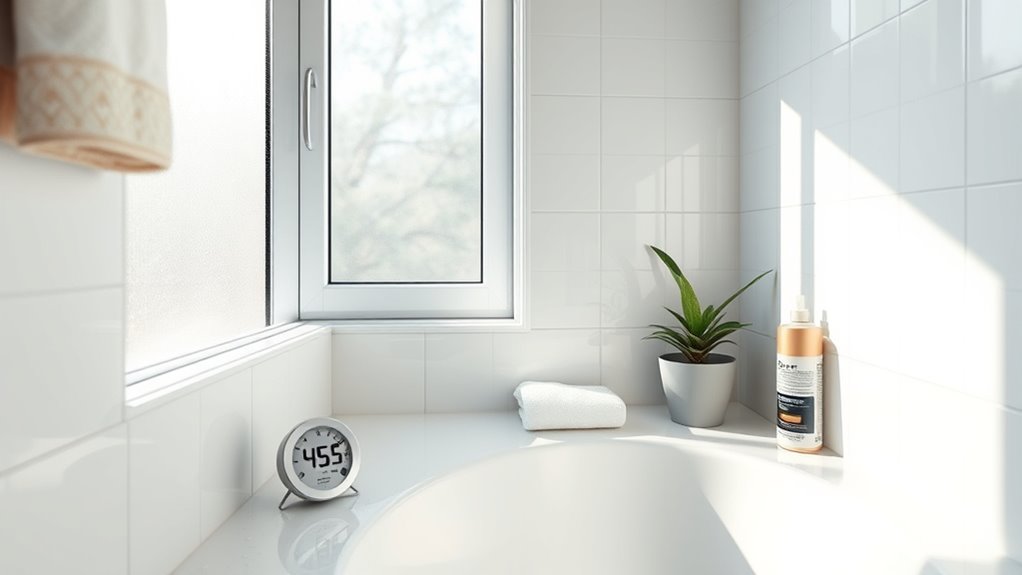
Monitoring and managing bathroom humidity levels is essential for preventing mold growth. You should aim to keep humidity between 30% and 50%, never exceeding 60%. Use a reliable humidity monitor to track moisture levels in real-time, especially during and after showers. If humidity stays high, consider running an exhaust fan or opening a window to disperse moisture. Dehumidifiers are also effective, but remember to regularly clean and maintain them. Proper insulation and controlling indoor temperature help reduce condensation on cold surfaces. Set your air conditioner to “auto fan” mode to stabilize humidity without circulating damp air. Consistently monitoring and adjusting these factors will create an environment less hospitable to mold, protecting your bathroom’s health and your home’s integrity.
Best Practices for Cleaning and Removing Small Mold Patches
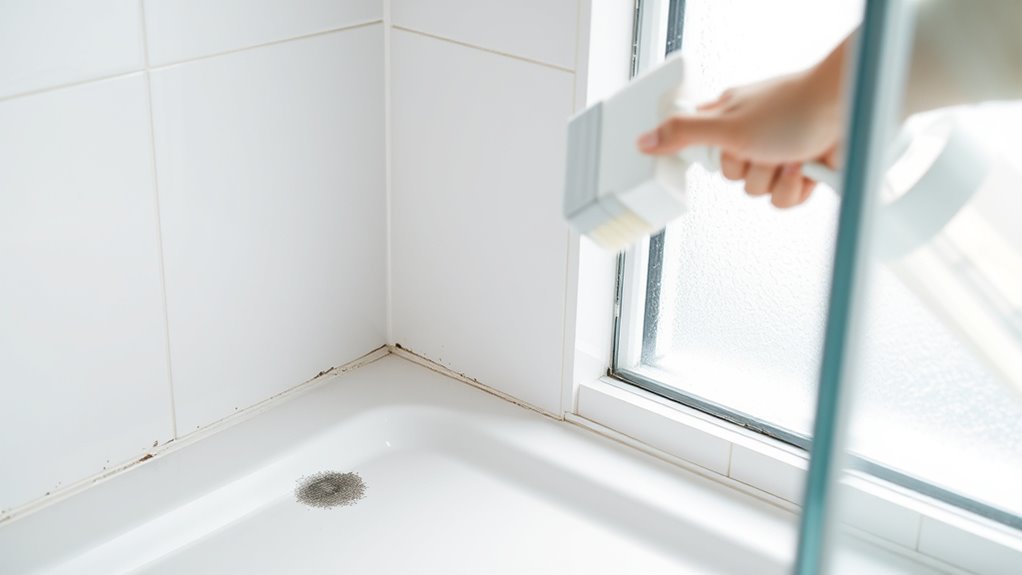
When tackling small mold patches in your bathroom, quick and effective cleaning is essential to prevent the mold from spreading or returning. You need to act promptly to keep it under control. Here are four best practices:
- Put on protective gear—an N95 mask, gloves, and goggles—to avoid inhaling spores or irritating your skin.
- Use a scrub brush or sponge to apply your cleaning solution—white vinegar, diluted bleach, or a commercial mold cleaner—directly on the affected area.
- Scrub thoroughly to lift mold from surfaces, paying attention to corners and grout lines.
- Rinse with clean water, dry the area completely, and increase ventilation to prevent future growth. Consistency is key to mold prevention.
Structural Repairs and Moisture Control to Prevent Mold
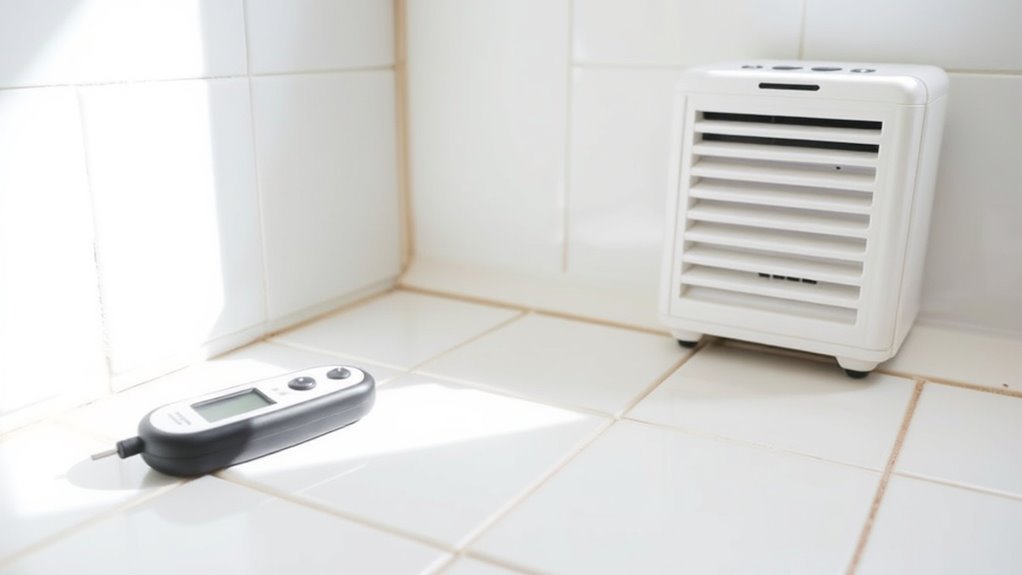
Addressing structural issues is essential for preventing bathroom mold because leaks and moisture intrusion create ongoing damp conditions that foster mold growth. Start by promptly repairing leaking pipes, fixtures, and any damaged seals around tubs, sinks, and toilets. Ensure windows, vents, and exhaust fans are properly sealed and functioning to prevent water entry and humidity buildup. Inspect your roof and walls for cracks or gaps that allow moisture to seep in, and seal them with weatherproof materials. Keep gutters clean and direct water away from your foundation to avoid basement or crawl space dampness. Improving insulation around cold surfaces, like exterior walls and pipes, reduces condensation. These steps limit persistent moisture, creating an environment less conducive to mold proliferation.
Advanced Techniques for Long-Term Mold Prevention
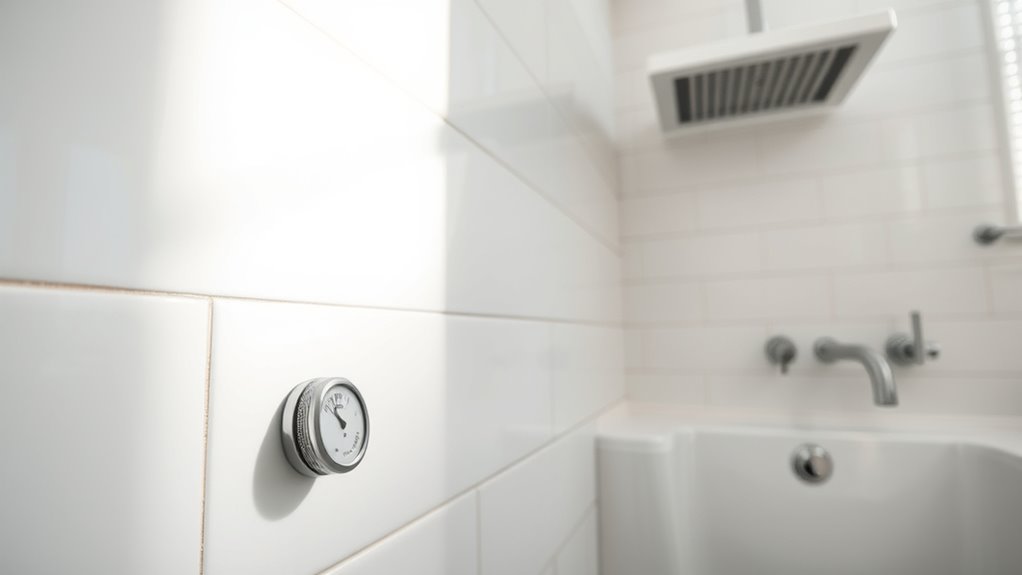
Advanced techniques for long-term mold prevention involve implementing integrated systems that proactively manage indoor humidity and eliminate mold spores before they can establish. You can achieve this by using smart technology and targeted treatments.
- Install antifungal foggers that disperse silver-based sterilizers into ceilings, walls, and floors, reaching hidden mold spores.
- Upgrade your HVAC with automation and sensors that adjust humidity levels based on real-time data.
- Use predictive analytics to forecast mold risks, enabling you to act before spores take hold.
- Limit water temperature and bathing time to reduce steam and moisture production at the source.
These approaches create a proactive defense, reducing mold growth and safeguarding your bathroom’s long-term health.
Selecting the Right Ventilation Equipment and Settings
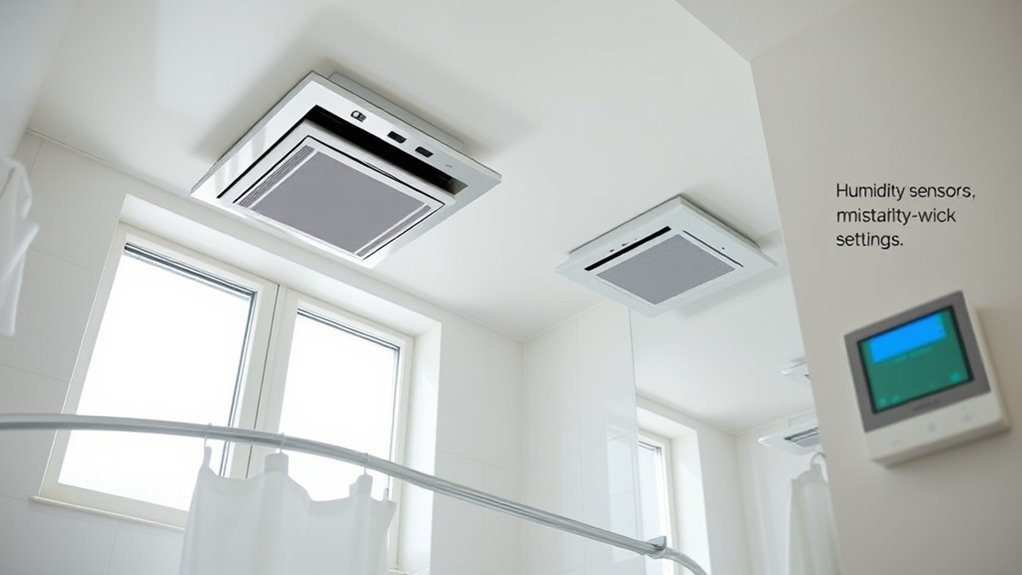
Choosing the right ventilation equipment and settings is essential for effectively controlling moisture and preventing mold growth in your bathroom. Select a high-quality exhaust fan rated for your space’s size, ensuring it vents outside and not into attics. Set the fan to run during showers and at least 30 minutes afterward to remove excess humidity. Consider using humidity sensors that automatically activate the fan when moisture levels rise. Proper settings guarantee continuous airflow, reducing condensation and mold risk.
| Equipment Type | Recommended Settings |
|---|---|
| Exhaust Fan | Run during and 30 mins after showering |
| Humidity Sensor | Activate fan at 60% humidity |
| Window Ventilation | Open during and after use |
| Dehumidifier | Maintain 40-50% humidity levels |
| Air Conditioner | Use auto fan mode for moisture control |
How to Reduce Moisture Production at the Source
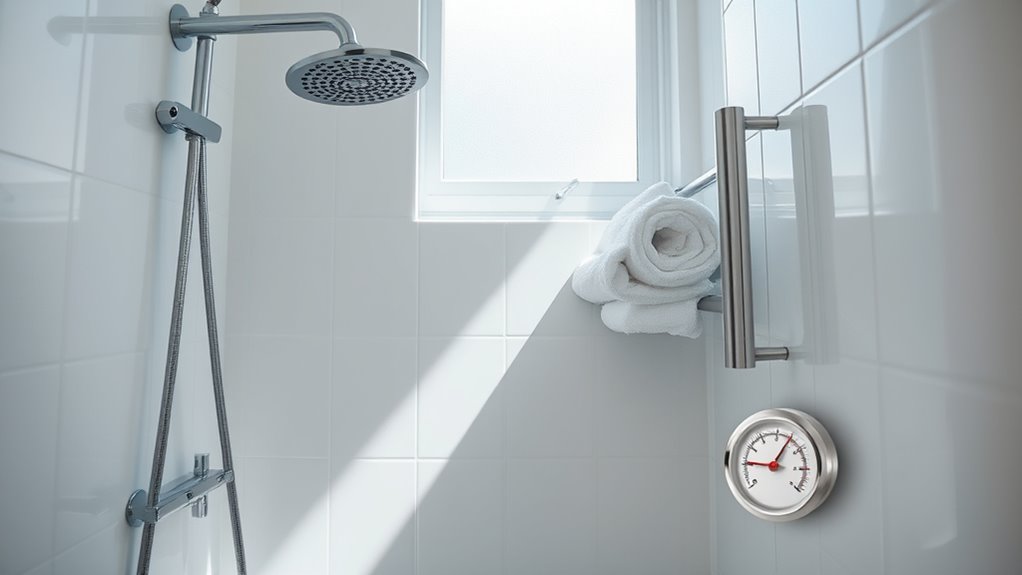
Reducing moisture production at the source is one of the most effective ways to prevent mold in your bathroom. You can do this by taking simple steps to cut down water use and steam.
Cut moisture at the source by reducing water use and steam to prevent bathroom mold.
- Limit shower time and water temperature – shorter showers with cooler water produce less steam.
- Use a shower splash guard or curtain properly to contain water, preventing excess splashing and dampness.
- Wipe down wet surfaces like walls and mirrors after showering to remove residual moisture.
- Fix leaks promptly, whether from faucets, toilets, or pipes, to stop continuous water seepage.
Regular Inspection and Maintenance Tips to Keep Mold Away
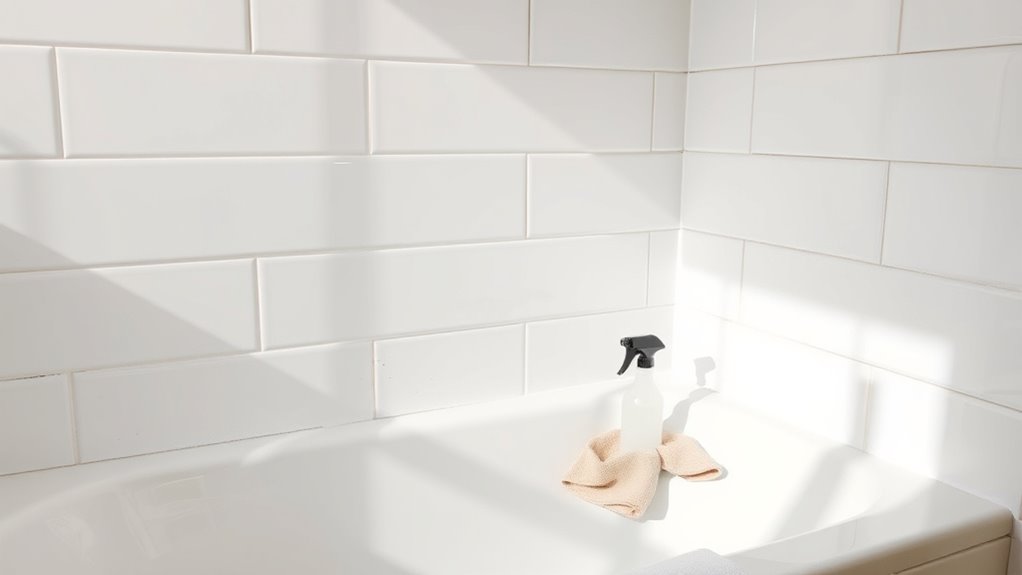
Regular inspection and maintenance are essential steps you can take to prevent mold from taking hold in your bathroom. Regularly check for signs of moisture buildup, such as peeling paint, water stains, or musty odors. Keep an eye on grout lines, caulking, and seals around tubs and sinks for cracks or deterioration, and repair them promptly to prevent leaks. Clean bathroom surfaces weekly with mold-inhibiting solutions like vinegar or specialized cleaners. Ensure exhaust fans are functioning properly and use them during and after showers to reduce humidity. Keep vents clear of dust and debris. Additionally, monitor humidity levels with a hygrometer, aiming to stay below 60%. Consistent upkeep and early detection help you catch problems before mold can establish itself.
Frequently Asked Questions
How Can I Prevent Mold Spores From Spreading to Other Parts of My Home?
You can prevent mold spores from spreading by ensuring proper ventilation during and after bathroom use, like running exhaust fans or opening windows. Keep humidity levels below 60%, and regularly clean surfaces with mold-killing solutions. sealing off the bathroom with plastic sheeting during cleaning helps contain spores, and repairing leaks prevents moisture migration. Wearing protective gear while cleaning minimizes the risk of spreading spores to other areas.
What Are the Best Methods to Detect Hidden Mold Behind Walls?
Think of hidden mold as a silent shadow lurking behind your walls. To detect it, use a moisture meter to identify damp spots, as mold thrives in humid areas. Look for discoloration, warping, or a musty smell that signals unseen growth. Consider hiring a professional for infrared imaging or air quality testing—these tools reveal mold’s secret hiding places, helping you catch trouble before it spreads further.
How Often Should I Replace or Upgrade My Bathroom Ventilation System?
You should replace or upgrade your bathroom ventilation system every 8 to 10 years, or sooner if it shows signs of inefficiency like excessive noise, reduced airflow, or persistent humidity issues. Regularly check your exhaust fan for proper operation and clean or replace filters as needed. Upgrading to a more energy-efficient model can improve moisture control, helping prevent mold growth and keeping your bathroom fresh and healthy.
Are There Eco-Friendly Alternatives for Mold Cleaning in Bathrooms?
Over 80% of homes have mold spores lurking unseen, so eco-friendly cleaning is essential. You can use white vinegar, which is both effective and natural, to kill mold without harsh chemicals. Baking soda also works as a gentle scrubber and deodorizer. These alternatives are safe for your family and environment, and they help you maintain a healthy bathroom while reducing chemical exposure. Regular use keeps mold at bay naturally.
What Steps Should I Take if Mold Returns After Cleaning?
If mold returns after cleaning, first identify and fix the moisture source, like leaks or poor ventilation. Increase airflow by running exhaust fans longer or opening windows. Use a mold-resistant coating on affected areas and maintain humidity between 30-50%. Regularly clean with vinegar or a bleach solution, wear protective gear, and monitor humidity levels with a device. Consistent moisture control is key to preventing future mold growth.
Conclusion
Think of your bathroom as a garden—you’re the gardener. By controlling moisture and ensuring good airflow, you nurture a healthy space free from mold’s creeping vines. Regular checks and proper maintenance act like tending to your plants, keeping mold at bay. With consistent care, you turn your bathroom into a thriving sanctuary, where mildew struggles to take root. Your vigilance is the sunlight that keeps mold in the shadows, allowing your space to stay fresh and mold-free.