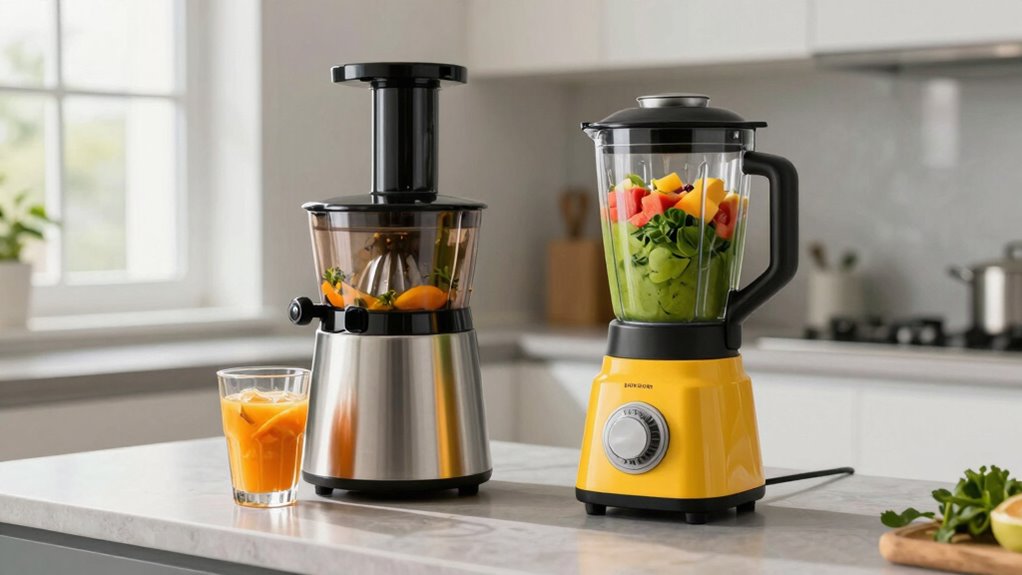

If you want quick, nutrient-dense drinks for energy boosts, a juicer is your best choice because it extracts pure juice, focusing on vitamins and antioxidants. For supporting digestion, fiber intake, and longer-lasting fullness, a blender is ideal since it keeps the whole produce intact, including pulp. Each tool serves a different goal, so understanding their benefits helps you choose the right one for your wellness routine. Keep exploring to find out which fits your needs best.

Get everyday essentials delivered free — and shop member deals
- Fast, free delivery on millions of items
- Access to Prime Big Deal Days deals on October 6–7
- Prime Video, Amazon Music and more included
Key Takeaways
- Juicers provide quick, concentrated nutrient shots ideal for rapid vitamin absorption and detoxification.
- Blenders preserve fiber and whole nutrients, supporting digestion, satiety, and blood sugar stabilization.
- Juicers produce light, easily digestible juices perfect for quick energy and hydration.
- Blenders create hearty smoothies that promote fullness and sustained energy release.
- Combining both appliances offers a comprehensive approach to diverse health and wellness objectives.
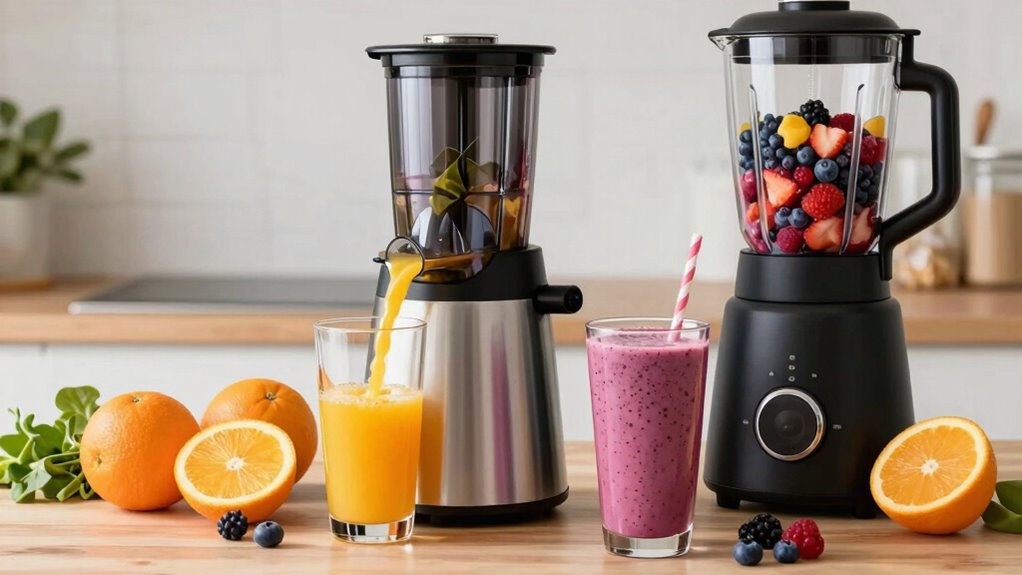
When it comes to achieving your wellness goals, choosing the right appliance can make a significant difference. Whether you’re aiming to boost your nutrient intake, improve digestion, or simply enjoy flavorful drinks, understanding how a juicer and a blender serve these purposes is key. If your goal is to enjoy pure, concentrated juice packed with vitamins and minerals, a juicer is likely your best bet. It extracts the liquid from fruits and vegetables, leaving behind pulp and fiber. This process creates beverages with distinct flavor profiles—bright, sharp, and refreshing—allowing you to savor the pure essence of your ingredients. Additionally, because juicers remove most of the fiber, the nutrient retention is focused on the vitamins, antioxidants, and enzymes that are easily absorbed by your body. This can be especially beneficial if you’re looking for quick nutrient absorption or a light, easily digestible drink. Incorporating free floating features such as backyard landscaping or outdoor amenities can enhance your overall wellness environment, making healthy habits more enjoyable and sustainable.
On the other hand, if your wellness goal involves consuming more fiber, supporting digestion, or creating versatile, hearty smoothies, a blender offers a different set of advantages. Blenders pulverize the entire fruit or vegetable, including the pulp and fiber, resulting in a thicker, more substantial drink. This fiber not only aids digestion and promotes feelings of fullness but also helps stabilize blood sugar levels. The flavor profiles of blended drinks are often more complex, as the blending process preserves all parts of the ingredients, allowing you to enjoy a richer, more textured taste. Nutrient retention in blenders tends to be high because you’re not removing any part of the produce; instead, the entire food is blended, keeping the full spectrum of nutrients intact. This makes smoothies an excellent option if you want to maximize nutrient variety and volume, especially when incorporating superfoods, nuts, or seeds. Moreover, the nutrient preservation process in blending ensures you retain a broader array of beneficial compounds, making it a versatile choice for various dietary needs.
Ultimately, your choice depends on your specific wellness goals. If you want a quick, nutrient-dense shot of vitamins with a clean, refreshing taste, a juicer is ideal. If you prefer a more filling, fiber-rich option that supports digestion and offers a broader range of nutrients, then a blender is your best tool. Both appliances serve different purposes and can complement each other in a balanced wellness routine. By understanding how they impact flavor profiles and nutrient retention, you can select the right device to help you meet your health and nutrition goals effectively.
best juicer for nutrient extraction
As an affiliate, we earn on qualifying purchases.
As an affiliate, we earn on qualifying purchases.
Frequently Asked Questions
Which Appliance Retains More Fiber, Juicer or Blender?
A blender retains more fiber than a juicer because it blends whole fruits, keeping the pulp and fiber intact. Juicers, on the other hand, separate the pulp during fruit extraction, resulting in less fiber in the juice. If your goal is to maximize fiber intake, using a blender is the better choice since it maintains the pulp and provides more nutritional benefits from the fiber.
Can a Blender Make Juice as Smooth as a Juicer?
A blender can make juice quite smooth, but it usually isn’t as refined as a juicer. You’ll get a thicker, more textured fruit consistency with a blender because it blends everything together, including some fiber. However, a blender retains more nutrients because it processes the whole fruit, including the fiber, unlike a juicer that separates the juice from the pulp. So, your choice depends on your preferred texture and nutrient focus.
Are Juicers Better for Detox Diets Than Blenders?
Juicers are generally better for detox diets because they preserve flavor and maximize nutrient concentration by extracting juice from fruits and vegetables. This process removes pulp and fiber, giving you a concentrated shot of vitamins and minerals quickly. Blenders, on the other hand, blend everything including fiber, which can dilute nutrient density. For detoxing, juicers help you get a more potent, nutrient-rich beverage fast.
How Do Cleaning Times Compare Between Juicers and Blenders?
Cleaning times for juicers are generally longer than for blenders due to their separate parts and straining components, which can make cleaning less convenient. Juicers often require more maintenance, such as rinsing or scrubbing filters and removing pulp, while blenders usually clean faster, especially if you use the self-cleaning feature. Overall, blenders offer better cleaning convenience, making maintenance easier and quicker.
Which Device Is More Energy-Efficient for Daily Use?
You might think blenders are more energy-efficient because they handle whole ingredients, but juicers often consume less power during quick operations. Generally, juicers have lower energy consumption, making them more power-efficient for daily use. They run faster and use less energy overall, especially if you prefer quick, nutrient-rich juices. So, if power efficiency is your priority, a juicer could be the better choice for daily routines.
high capacity blender for smoothies
As an affiliate, we earn on qualifying purchases.
As an affiliate, we earn on qualifying purchases.
Conclusion
Choosing between a juicer and a blender is like selecting the key to your wellness garden. The juicer is your sunrise, offering pure, vibrant juice to energize your mornings. The blender is your nurturing earth, blending everything into a nourishing harmony. Both tools cultivate your health—one awakens your spirit, the other sustains your growth. Embrace whichever opens the door to your best self, and let your wellness journey bloom with every sip and swirl.
personal juicer for detox drinks
As an affiliate, we earn on qualifying purchases.
As an affiliate, we earn on qualifying purchases.
As an affiliate, we earn on qualifying purchases.
Evergreen bestsellers Picks
bestsellers
As an affiliate, we earn on qualifying purchases.