
TL;DR

Get everyday essentials delivered free with Prime
- Fast, free delivery on millions of items
- Prime Video, Amazon Music and more included
- Member-only deals all year
United Russia’s approval ratings are declining, prompting the Kremlin to pressure the party for better election outcomes. President Putin has publicly emphasized the importance of improved results, signaling concern over current trends.
United Russia’s approval ratings are falling, according to recent polls, yet the Kremlin is demanding better election results in upcoming regional and national votes. President Vladimir Putin has publicly emphasized the importance of the party’s electoral success, signaling concern over the declining support and its potential impact on Kremlin stability.
Recent polling data indicates that United Russia’s ratings have dipped below 30% in several key regions, a significant decline from previous levels. Despite this, the Kremlin appears to be pressuring the party to improve its electoral performance ahead of scheduled elections, which include regional legislatures and possibly the State Duma.
Sources within the Kremlin and United Russia suggest that Putin has personally intervened in campaign strategies, calling for increased efforts to mobilize voters and counteract opposition movements. Officially, the party claims to be focused on voter engagement and campaign discipline, but analysts note that the pressure indicates concern over the party’s declining legitimacy and influence.
Experts point out that the Kremlin’s demand for better results is driven by fears of losing control over regional power bases and the potential for increased opposition activity, especially amid rising discontent over economic issues and governance.
Implications of Kremlin’s Election Pressure on Russia’s Political Stability
The Kremlin’s insistence on stronger election results despite declining ratings suggests concerns about political stability and control. If United Russia cannot secure the expected majorities, it could signal weaknesses in Kremlin dominance, potentially emboldening opposition forces and affecting policy continuity.
Furthermore, President Putin’s direct involvement indicates that the electoral outcome is seen as a vital factor in maintaining the current political order. The pressure also raises questions about the fairness and transparency of upcoming elections, with implications for Russia’s democratic processes and international reputation.
As an affiliate, we earn on qualifying purchases.
Declining Support for United Russia and Kremlin’s Response
United Russia has historically maintained a dominant position in Russian politics, often securing majorities in regional legislatures and the federal parliament. However, recent polls show a steady decline in support over the past year, attributed to economic challenges, public dissatisfaction, and opposition mobilization.
This trend has raised alarms within the Kremlin, which relies on United Russia’s electoral strength to legitimize its rule and implement policy agendas. The party’s declining ratings are part of a broader pattern of waning public trust, compounded by dissatisfaction with economic conditions and perceived corruption.
In response, President Putin and top officials have publicly emphasized the importance of electoral success and have taken steps to increase campaign efforts, including mobilizing party officials and leveraging state resources. The recent push for better results reflects the Kremlin’s view that electoral performance remains a key pillar of its political stability.
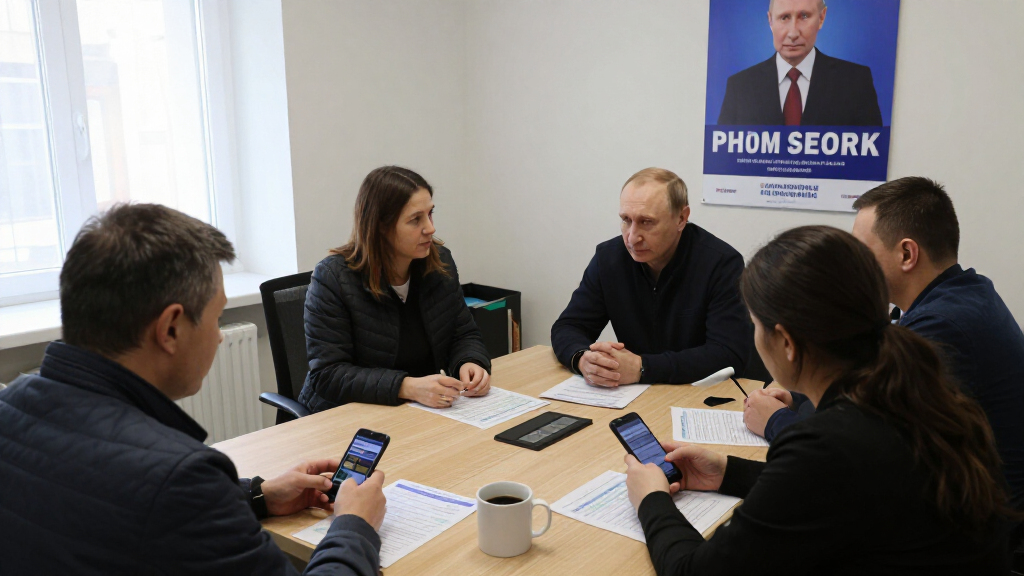
voter mobilization campaign materials
As an affiliate, we earn on qualifying purchases.
As an affiliate, we earn on qualifying purchases.
Unclear Factors Behind Support Decline and Kremlin’s Strategies
It is not yet clear what specific factors are driving the decline in United Russia’s ratings—whether economic issues, opposition activity, or public discontent. Additionally, the full extent of Kremlin influence on local and regional campaigns remains uncertain, as does the transparency of any electoral manipulation efforts.
As an affiliate, we earn on qualifying purchases.
Next Steps in Campaigns and Electoral Monitoring
Electoral campaigns are expected to intensify over the coming months, with increased mobilization efforts by United Russia and potential interventions by Kremlin officials. Observers will closely monitor campaign fairness, voter turnout, and regional results to assess whether the Kremlin’s demands translate into tangible improvements.
Further, international and domestic watchdog groups may scrutinize the electoral process for signs of irregularities, especially given the high stakes for Kremlin stability and the party’s political dominance.
As an affiliate, we earn on qualifying purchases.
Key Questions
Why are United Russia’s ratings falling?
The decline is attributed to economic difficulties, public dissatisfaction with governance, opposition mobilization, and general discontent with the ruling party’s performance, though specific causes are still being analyzed.
What does the Kremlin hope to achieve with these demands?
The Kremlin aims to ensure that United Russia maintains or improves its electoral results to legitimize its rule, control regional power bases, and prevent opposition gains that could threaten the current political order.
Is there evidence of electoral manipulation?
While specific evidence remains unconfirmed, concerns about transparency and fairness persist, especially given the political importance of the upcoming elections and the Kremlin’s active involvement.
How might this affect Russia’s democratic processes?
The increased pressure and potential interference could undermine electoral fairness, raising questions about the legitimacy of results and the health of Russia’s democratic institutions.
Source: rss
Halloween Picks
halloween
As an affiliate, we earn on qualifying purchases.