
When starting with binoculars, focus on understanding lens coatings, which improve brightness and image clarity, especially in low light. Learn about eyepiece adjustments like the central focusing wheel and diopter for sharp images and comfort. Knowing these basics helps you choose the right pair and get better views. Once you get familiar with these terms, you’ll find it easier to select and use binoculars effectively during your outdoor adventures. If you keep exploring, you’ll gain even more useful insights.

Get everyday essentials delivered free with Prime
- Fast, free delivery on millions of items
- Prime Video, Amazon Music and more included
- Member-only deals all year
Key Takeaways
- Understand binocular specifications like magnification and objective lens diameter for proper selection.
- Learn about lens coatings, such as fully coated or multi-coated, to assess image quality and durability.
- Familiarize yourself with eyepiece adjustments, including focusing and diopter settings, for clear viewing.
- Recognize the importance of proper alignment and focusing to achieve sharp images.
- Know how to interpret binocular specifications and features to match your specific outdoor or viewing needs.
Are you new to binoculars and feeling overwhelmed by all the technical terms? Don’t worry—you’re not alone. When you start exploring binoculars, it’s common to encounter words like “binocular lens coatings” and “eyepiece adjustments” that can seem confusing at first. But understanding these basic terms will help you make better choices and get the most out of your binoculars.
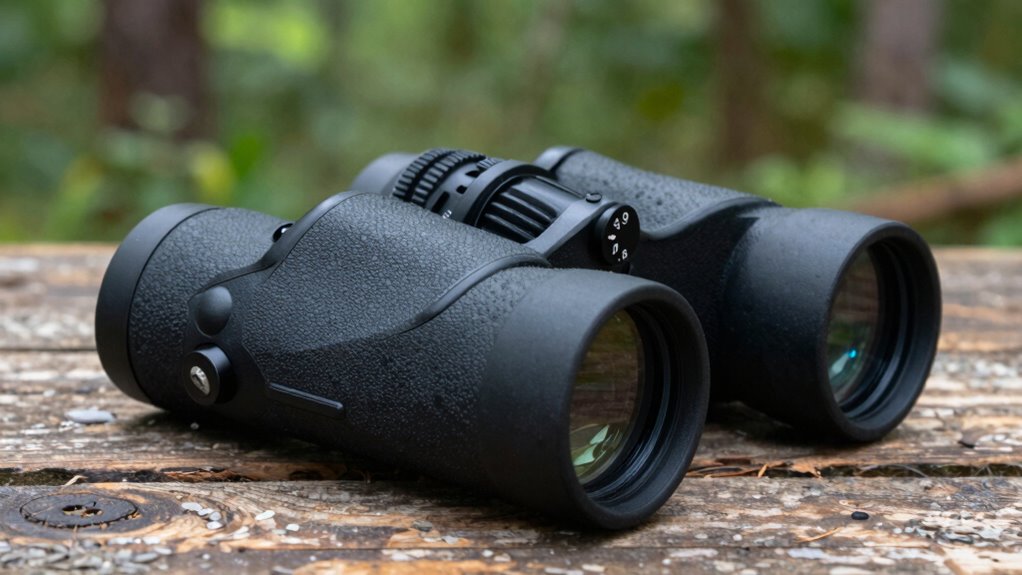
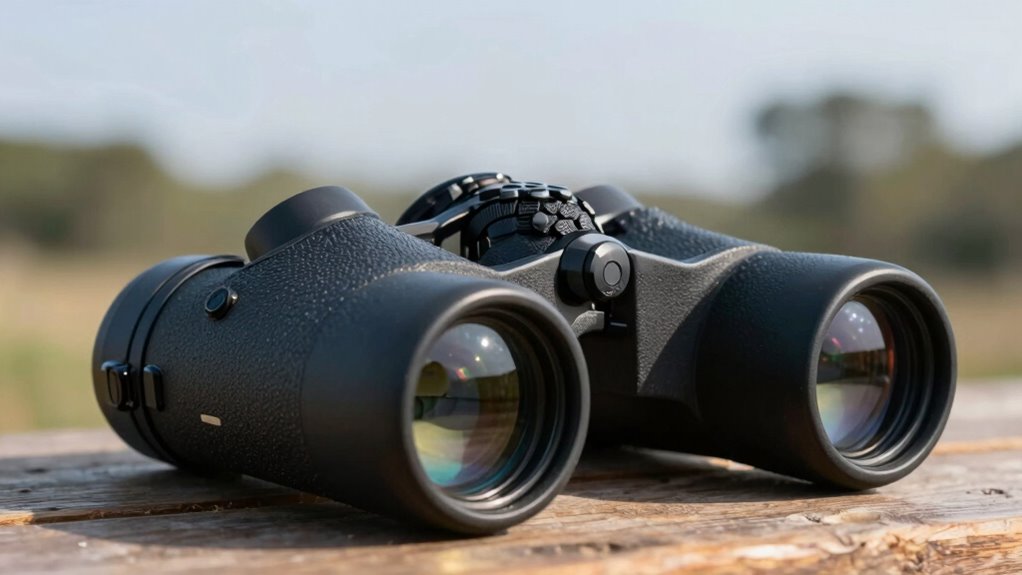
First, let’s talk about binocular lens coatings. These are special layers applied to the lenses to improve image quality. Coatings reduce glare, enhance contrast, and increase light transmission, making your view clearer and brighter. Different coatings serve different purposes; for example, fully coated lenses have at least one layer on all air-to-glass surfaces, while multi-coated lenses have multiple layers on at least one surface, providing even better clarity. Recognizing these terms helps you choose binoculars that give sharper images, especially in low-light conditions like dawn or dusk. Additionally, the quality of these coatings can significantly influence the overall image clarity, which is essential for detailed observation. Understanding the light transmission properties of coatings can further help you select binoculars that excel in specific lighting conditions. The type of lens coatings can also affect the durability and resistance to scratches or moisture, making maintenance easier.
Next, understanding eyepiece adjustments is key to customizing your viewing experience. The eyepiece is the part you look through, and many binoculars offer adjustments to focus the image to your eyesight. You’ll often find a central focusing wheel that sharpens the view for both eyes at once. Some models have diopter adjustments, usually located on one of the eyepieces, which allow you to fine-tune focus for differences between your eyes. Learning how to properly use these adjustments ensures you see a crisp, clear image without eye strain. It’s worth practicing these adjustments before heading out, so you’re comfortable with how your binoculars respond. Additionally, understanding lens coatings can help you select models that maximize light transmission and image clarity in various lighting conditions.
While these terms might seem technical, they’re actually straightforward once you understand their purpose. Recognizing the importance of lens coatings helps you prioritize brightness and clarity, especially if you plan to use your binoculars in challenging lighting conditions. Knowing about eyepiece adjustments allows you to personalize your view, making your experience more comfortable and enjoyable. As you gain confidence, you’ll start noticing how different features influence your viewing quality, and you’ll be better equipped to select the right binoculars for your needs. Proper alignment of the binoculars’ components ensures optimal image quality and reduces eye fatigue during extended use.
In the end, mastering these basic terms makes it easier to navigate the many options available. You’ll no longer feel lost when someone mentions coatings or focus adjustments because you’ll understand how they impact your viewing experience. With this knowledge, you’ll be ready to explore the outdoors, observe wildlife, or enjoy sporting events with clarity and confidence. Just remember, a little learning now leads to much richer viewing later.
binoculars with fully coated lenses
As an affiliate, we earn on qualifying purchases.
As an affiliate, we earn on qualifying purchases.
Frequently Asked Questions
How Do I Choose the Right Binoculars for Beginners?
To choose the right binoculars for beginners, focus on binocular magnification and field of view. Opt for a magnification around 8x or 10x, which offers a good balance between clarity and stability. Look for a wider binocular field of view to make it easier to locate objects and enjoy broader scenes. Consider weight and size too, ensuring comfort for extended use. This way, you’ll enjoy clear, steady views without feeling overwhelmed.
What Is the Best Way to Hold Binoculars Steady?
Holding binoculars steady can feel like trying to tame a wild beast, but with tripod stabilization or proper hand grip techniques, you can conquer it. Keep your elbows close to your body, use both hands, and gently squeeze the barrels for better control. For extended viewing, consider mounting your binoculars on a tripod. This minimizes shaky images and enhances your viewing experience, making distant objects crystal clear.
How Do I Clean and Maintain Binoculars Properly?
To clean and maintain your binoculars properly, start with gentle lens cleaning using a soft, microfiber cloth to avoid scratches. Use lens cleaning solution if needed, but avoid harsh chemicals. Store your binoculars in a dry, padded case to prevent dust and damage. Follow storage tips like keeping them in a cool, dry place and avoiding extreme temperatures. Regularly check for dirt or fogging and clean lenses promptly for clear, sharp views.
What Is the Difference Between Waterproof and Fog-Proof Binoculars?
Waterproof binoculars are designed with high water resistance, preventing water from entering even in heavy rain. Fog-proof binoculars, on the other hand, feature sealed optics with nitrogen or argon gas, stopping internal fogging caused by humidity or temperature changes. The key difference lies in seal quality: waterproof models offer superior water resistance, while fog-proof ones focus on maintaining clear views in humid or cold conditions. Choose based on your typical outdoor environment.
How Do I Interpret Binocular Specifications Quickly?
You can interpret binocular specs quickly by focusing on two key numbers: magnification and objective lens diameter. For example, “8×42” means eight times magnification and a 42mm lens. A larger field of view enhances your viewing area, while higher magnification improves clarity at a distance. Statistically, many users find 8×42 binoculars provide the best balance of clarity and ease of use for most outdoor activities.
adjustable focus binoculars for beginners
As an affiliate, we earn on qualifying purchases.
As an affiliate, we earn on qualifying purchases.
Conclusion
Now that you’ve learned these binocular terms, you’re practically a telescope of knowledge! With just a few words, you’re ready to uncover the universe’s secrets, spot a bird from a mile away, or even find Bigfoot if you’re feeling adventurous. These terms are your superpowers, transforming you into a binocular legend overnight. So go ahead, conquer the outdoors, and let your newfound vocabulary turn every glance into an epic discovery!
binoculars with diopter adjustment
As an affiliate, we earn on qualifying purchases.
As an affiliate, we earn on qualifying purchases.
low light binoculars for dusk and dawn
As an affiliate, we earn on qualifying purchases.
As an affiliate, we earn on qualifying purchases.
Fall Picks
fall essentials
As an affiliate, we earn on qualifying purchases.