
TL;DR

Get everyday essentials delivered free with Prime
- Fast, free delivery on millions of items
- Prime Video, Amazon Music and more included
- Member-only deals all year
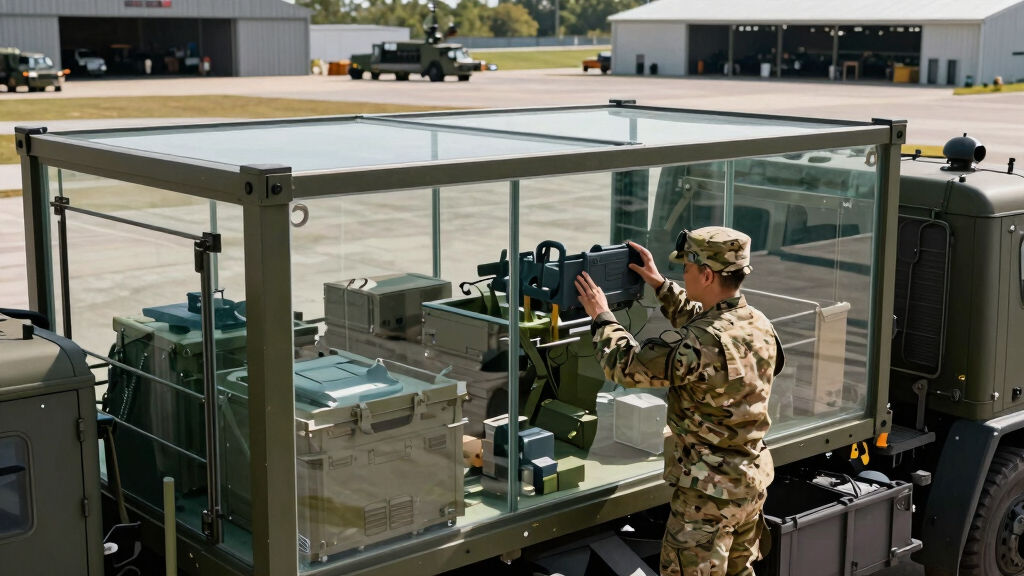
Military analysts warn that the U.S. Army’s logistics system, described as a ‘glass backbone,’ is vulnerable to failure in future conflicts. Key issues include outdated infrastructure and fragile supply chains, raising concerns about battlefield sustainability.
Military analysts warn that the U.S. Army’s logistics system is at risk of failure in future conflicts due to structural vulnerabilities, outdated infrastructure, and fragile supply chains. This assessment highlights a potential critical weakness that could impair battlefield operations and national security.
The warning comes from recent defense reports and expert analyses, which describe the Army’s logistics as a ‘glass backbone’—an analogy emphasizing its fragility. The system is responsible for supplying troops, equipment, and ammunition across vast distances, but current infrastructure has not kept pace with modern demands.
Key issues include aging transportation networks, insufficient modernization of supply depots, and overreliance on vulnerable supply routes. These vulnerabilities could be exploited by adversaries in future conflicts, potentially causing logistical breakdowns that would hamper military effectiveness.
Officials acknowledge that the logistics system has not undergone comprehensive overhaul in decades, and recent assessments warn that the current setup may not withstand the complexities of modern warfare, especially in contested environments where supply lines could be targeted.
Implications for Military Readiness and National Security
This vulnerability could significantly impair the Army’s ability to sustain prolonged engagements, especially in high-intensity conflicts where supply chains are critical. A breakdown could lead to shortages of essential equipment and supplies, ultimately affecting troop morale and operational success. For the broader public, it raises concerns about the readiness of U.S. forces to face future threats and the need for urgent modernization efforts.
military logistics supply chain tools
As an affiliate, we earn on qualifying purchases.
As an affiliate, we earn on qualifying purchases.
Historical and Current State of Military Logistics Infrastructure
The U.S. Army’s logistics system has historically been a strength, enabling rapid deployment and sustained operations in conflicts like World War II and the Gulf War. However, recent decades have seen underinvestment in infrastructure, with many supply depots and transportation networks aging without sufficient upgrades.
In recent assessments, defense officials have highlighted the growing gap between logistical needs and capabilities, especially as adversaries develop anti-access/area denial (A2/AD) strategies aimed at disrupting supply routes. The concept of a ‘glass backbone’ underscores the system’s increasing fragility in the face of modern threats.
“Our supply chains are stretched thin and rely heavily on aging infrastructure, which could be exploited by adversaries in a future war.”
— Major General Robert Hayes, Army logistics officer
As an affiliate, we earn on qualifying purchases.
Unclear Extent and Urgency of Systemic Failures
It is not yet clear how quickly these vulnerabilities could lead to a logistical collapse in a future conflict, or what specific measures are being prioritized to address these issues. The scope of potential failures remains a subject of ongoing assessment within defense circles.
transportation and logistics management products
As an affiliate, we earn on qualifying purchases.
As an affiliate, we earn on qualifying purchases.
Next Steps in Modernizing Army Logistics Infrastructure
Defense officials are expected to announce plans for infrastructure upgrades and supply chain resilience initiatives within the next year. Congressional funding debates and strategic reviews are likely to influence the pace and scope of reforms aimed at strengthening the ‘glass backbone.’
As an affiliate, we earn on qualifying purchases.
Key Questions
What does the ‘glass backbone’ mean in this context?
The term ‘glass backbone’ refers to the fragility of the Army’s logistics system, suggesting it is vulnerable to breaking under stress or attack due to outdated infrastructure and fragile supply chains.
Why has the logistics system become so vulnerable now?
Decades of underinvestment, aging infrastructure, and the evolving nature of modern warfare have exposed weaknesses in the supply network, making it less resilient to disruptions.
Could adversaries exploit these vulnerabilities?
Yes, experts warn that adversaries could target supply routes or infrastructure, causing logistical failures that impair military operations.
What is being done to fix these issues?
Defense agencies are planning infrastructure upgrades and resilience initiatives, with funding and strategic reforms expected in the coming year.
How urgent is this problem for national security?
The vulnerability poses a significant risk to future military readiness, especially in high-intensity conflicts, making it a priority for defense modernization efforts.
Source: hn
Halloween Picks
halloween
As an affiliate, we earn on qualifying purchases.